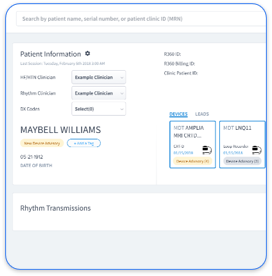
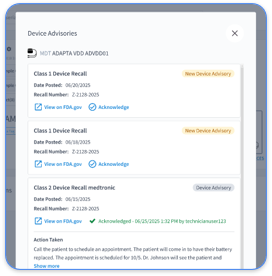
The comparison table below highlights platforms that unify multi-vendor CIED data streams and streamline daily clinical workflows.
| Platform | Vendor Neutrality | Key Features | Best For |
|---|---|---|---|
| Rhythm360 | Full (all OEMs) | AI triage, bi-directional EHR integration, mobile app, HF/HTN monitoring | Multi-vendor chaos elimination |
| PaceMate | Partial | Workflow automation, cloud-based platform | Former Paceart users |
| Murj | Full | Cloud automation, workflow optimization | Workflow-focused practices |
| Octagos | Full | AI filtering, bi-directional EHR integration | AI-driven insights |
Rhythm360 leads this comparison with comprehensive vendor neutrality and >99.9% data transmissibility supported by redundant feeds, computer vision, and AI-powered extrapolation. The platform’s AI triage system and mobile access make it the strongest option for practices that want to end multi-vendor portal management and increase both clinical efficiency and revenue capture.

PaceMate delivers solid workflow automation and appeals to practices moving away from legacy Paceart systems. Its partial vendor neutrality, however, prevents complete multi-vendor unification.
Murj offers full vendor neutrality and strong cloud automation, which suits practices that prioritize workflow improvements over advanced AI capabilities.
Octagos focuses on AI-driven filtering of non-actionable transmissions and supports robust EHR integrations. It still lacks the broader multi-modality support available in leading platforms.
Many practices that start with Implicity eventually encounter operational friction that affects both staff workload and patient oversight.
Incomplete Multi-Vendor Support: Some practices find gaps in manufacturer coverage, which forces continued use of multiple OEM portals to see a complete patient record.
Alert Fatigue and Non-Actionable Noise: Users describe heavy volumes of low-priority alerts that bury truly urgent events, delay responses, and increase anxiety about missed emergencies.
Manual Workflow Dependencies: Billing documentation and CPT code capture often rely on manual steps, which creates revenue leakage and administrative burden that cancels out expected efficiency gains.
Limited Mobile Access: Restricted mobile functionality keeps on-call clinicians from viewing critical data or responding to urgent alerts when they are away from the office.
These issues push practices to look for platforms that genuinely remove portal fragmentation while improving clinical decision-making and strengthening revenue performance.
Rhythm360 solves the core limitations of existing platforms through a comprehensive, AI-driven approach to vendor-neutral CIED management.
The platform ingests diverse data types such as APIs, HL7, XML, and unstructured PDFs. It then uses computer vision and artificial intelligence to build a single, unified view of each patient.
True Vendor Neutrality: Rhythm360 supports all major CIED manufacturers (Medtronic, Boston Scientific, Abbott, Biotronik) along with specialized devices like CardioMEMS pulmonary artery monitors. Redundant feed systems maintain >99.9% data transmissibility even when OEM servers experience downtime.
AI-Powered Alert Reduction: AI in CIEDs manages the explosion of remote monitoring data, reducing false alerts and predicting arrhythmic events up to 30 days in advance. Rhythm360’s intelligent triage system cuts critical response times by 80% and filters non-actionable notifications so teams can focus on true emergencies.
Revenue Optimization: Automated CPT code capture and documentation for 93298, 93299, and 99454 helps practices recover revenue that previously slipped through the cracks. Clients report up to 300% profitability increases through accurate billing compliance and new RPM service lines for heart failure and hypertension management.
Mobile Clinical Freedom: A secure, HIPAA-compliant mobile application lets clinicians review transmissions, sign reports, and coordinate care from any location. One recent case involved a Saturday morning ventricular tachycardia alert that prompted immediate anticoagulation therapy and likely prevented a stroke.
Rapid Implementation: Streamlined onboarding with bi-directional EHR integration for Epic, Cerner, and Athenahealth usually finishes within days to weeks. This approach limits disruption while delivering fast access to unified data and automation benefits.
The platform’s integrated communication hub supports automated patient messaging through a Twilio framework and maintains complete audit trails. Optional 24/7/365 oversight by certified cardiac technicians provides continuous clinical support. Schedule a demo for Implicity cardiac monitoring alternatives to see the full capabilities in action.
Data Completeness: Rhythm360 delivers >99.9% transmissibility, while Implicity users report gaps in multi-vendor coverage that require extra portal access to complete patient monitoring.
Alert Management: Rhythm360’s AI triage cuts response times by 80%. Implicity users report alert overload that contributes to clinician fatigue and slower interventions.
Revenue Impact: Rhythm360’s automated billing workflows support revenue increases of up to 300%. Implicity implementations often depend on manual steps that create documentation gaps and missed charges.
Integration Breadth: Rhythm360 supports a wider range of EHRs and covers multiple modalities, including CIEDs plus HF and HTN monitoring. Implicity offers a narrower integration ecosystem.
Pricing Flexibility: Rhythm360 uses SaaS-based pricing that scales with practice size and usage. This structure provides value-aligned options compared with more rigid subscription models.
Vendor-neutral CIED platforms deliver the strongest ROI when practices focus on CPT code compliance and streamlined workflows from day one.
Remote monitoring is a Class I recommendation for all CIED patients in the 2026 HRS Expert Consensus Statement Update, which makes comprehensive platform adoption both clinically essential and financially attractive.
Practices see maximum ROI when they automate documentation for codes 93298 (initial setup), 93299 (remote monitoring), and 99454 (RPM device supply). Many also expand services to include heart failure and hypertension remote physiological monitoring using codes 99453, 99457, and 99458.
Yes, all modern pacemakers support remote monitoring that sends device data, physiological parameters, and alert notifications to healthcare teams. Rhythm360’s vendor-neutral remote pacemaker monitoring pulls data from every major manufacturer into a single platform, which removes the need to log into multiple OEM portals for complete patient oversight.
Alert fatigue represents the main disadvantage of remote patient monitoring because clinicians can receive overwhelming volumes of non-actionable notifications that hide critical events.
AI-enhanced remote monitoring automates alert categorization, significantly reducing alert volume and saving personnel hours. Rhythm360’s AI reduces CIED alert fatigue by 80% through intelligent triage and clear prioritization.
Rhythm360 leads multi-vendor CIED platforms with broad manufacturer support, AI-powered data integration, and automated workflows that reduce manual work.
The platform’s vendor-neutral design removes portal fragmentation and delivers stronger clinical decision support and revenue performance than single-vendor or partially integrated solutions.
Vendor-neutral platforms improve outcomes by creating unified patient views that support faster responses to critical events and reduce missed alerts.
Comprehensive data integration removes information silos that slow clinical decisions and can compromise patient safety.
Leading vendor-neutral platforms such as Rhythm360 usually complete implementation within days to weeks, including EHR integration and staff training.
This streamlined onboarding process limits disruption and gives teams quick access to unified CIED data and automated workflow benefits.
Rhythm360 offers a complete solution for practices that want to end multi-vendor portal chaos while improving clinical outcomes and revenue capture. The platform’s vendor neutrality, AI-driven intelligence, and proven ROI make it a strong choice for forward-thinking cardiology practices. Schedule a demo today to transform your CIED management strategy and end portal hell for good.