Last updated: July 13, 2026
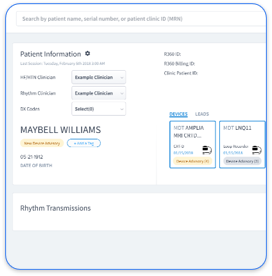
Most cardiology practices implant devices from more than one original equipment manufacturer (OEM). Each OEM, including Medtronic, Boston Scientific, Abbott, and Biotronik, operates a separate proprietary portal. Staff must log into each portal, reconcile incompatible data formats, and then manually enter findings into the EHR. These steps create a compounding set of operational problems.
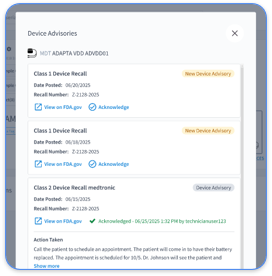
Alert fatigue grows directly out of this fragmentation. Non-actionable notifications from multiple legacy systems pile up without intelligent filtering. Clinicians then risk missing critical events such as new-onset atrial fibrillation, ventricular tachycardia, or device lead malfunction. Manual workflows also create financial leakage. Without a centralized system that tracks billable events and generates compliant documentation, practices miss revenue and see more rejected claims on complex remote monitoring CPT codes.
EHR integration challenges intensify the issue. A parallel monitoring workflow that does not write back to the patient's chart will eventually fall out of use. Practices evaluating platforms in 2026 are seeking solutions that remove these fragmentation points instead of adding another siloed tool. Understanding these pain points clarifies what to require from a unified platform.
Administrators and electrophysiologists evaluating a cloud based heart rhythm monitoring platform for cardiology practices can use the following criteria as a shared checklist and decision framework:
See how Rhythm360 addresses these seven criteria in a live demonstration configured for your practice.
Rhythm360, developed by RhythmScience, ingests data from Medtronic, Boston Scientific, Abbott, Biotronik, and additional manufacturers through direct APIs, HL7 messaging, XML feeds, and computer-vision PDF parsing. When an OEM sends an unstructured PDF report, Rhythm360's optical character recognition layer extracts and normalizes the relevant fields into a structured clinical record. Staff avoid manual transcription.
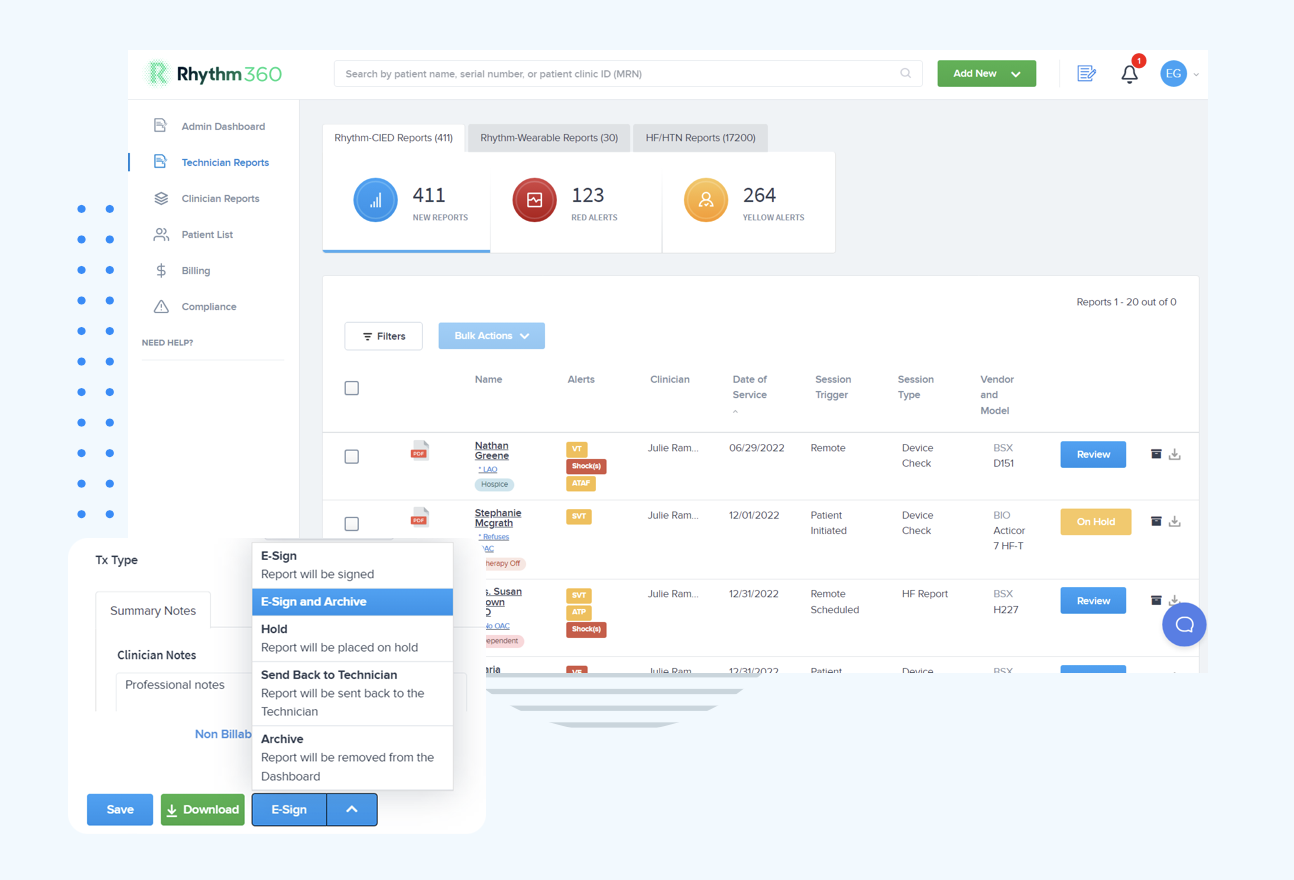
This multi-protocol ingestion architecture keeps workflows stable as the implant mix changes. Adding a new device manufacturer does not require staff retraining or another portal login. All device populations, including pacemakers, ICDs, implantable loop recorders, CRT devices, and CardioMEMS pulmonary artery monitors, appear in one dashboard. A device technician reviewing a patient's status no longer needs to identify the OEM before knowing where to look.
Data completeness affects patient safety as much as operations. Rhythm360 achieves greater than 99.9% transmissibility through a redundant data feed architecture. If an OEM server experiences downtime, a secondary feed pathway maintains data continuity. AI-powered extrapolation identifies connectivity gaps and flags them for clinical review instead of silently dropping transmission records.
The University of Chicago Medicine (UCM) implemented Rhythm360 to overhaul cardiovascular remote monitoring across its CIED and heart failure populations. Analysis of 2025 data shows UCM managed over 73,000 reports annually with stable dismissal rates, which demonstrates the platform's scalability under high-volume clinical conditions. Andrew Beaser, MD, Associate Professor of Medicine at UCM, reported that clinicians reviewed more transmissions daily and identified more abnormalities after implementation.
As data volumes grow across cardiology practices, “decision support, including AI-assisted decision support, will become increasingly important,” a perspective reflected in Rhythm360's platform architecture. This AI-powered approach appears throughout the platform's operational workflow.
Rhythm360 structures the complete monitoring cycle into a repeatable, auditable sequence:
The 2026 Medicare Physician Fee Schedule introduced two new RPM codes and raised reimbursement across the existing code set. Cardiology practices that understand the full code structure reduce documentation gaps, which are the leading cause of claim denials and OIG audit findings under Project OAS-25-05-008.
The active 2026 RPM and CIED remote monitoring code set includes:
The combined monthly Medicare reimbursement for RPM services (99454 + 99457 + 99458) is approximately $145 per patient. When stacked with CCM codes, the total can exceed $211 per patient per month. Documentation for 99445 must record the exact number of days readings were received. Documentation for 99470 must show 10–19 minutes of time explicitly, because vague time entries trigger audits.
Rhythm360's automated CPT documentation captures transmission day counts, clinical staff time, and interactive communication events continuously, removing the manual tracking burden that causes 15–30% of billable 99457/99458 minutes to be routinely lost in manual time logs, a pattern that makes manual logs the leading cause of RPM claim denials and OIG audit findings.
Rhythm360's onboarding process, including EHR integration setup, takes from a few days to a few weeks, which is significantly faster than the multi-month timelines for custom RPM-EHR integrations. The SaaS-based pricing model scales with clinic size and platform usage and avoids the large upfront capital expenditures of on-premise systems.
Total value of ownership extends beyond licensing costs. A 500-patient cardiology RPM program leaves more than $400,000 per year uncollected when the 20-minute rule, 16-day transmission rule, and 90-day device interrogation cycles are tracked manually. Rhythm360's automated billing documentation directly addresses this leakage. Practices using the platform have achieved up to a 300% increase in revenue generation through improved CPT capture, higher staff efficiency, and the addition of HF/HTN RPM service lines.
Staff retention also affects total ownership value. Device technicians who experience burnout from administrative overload and alert fatigue create hidden costs through turnover and retraining. By centralizing workflows and automating routine documentation, Rhythm360 reduces reliance on a single “super-user.” This approach improves retention and supports business continuity when staff transitions occur.
| Capability | Rhythm360 Specification | Documented Outcome |
|---|---|---|
| Vendor Neutrality | Medtronic, Boston Scientific, Abbott, Biotronik, and others via API, HL7, XML, and computer-vision PDF parsing | Single dashboard removes the need for multiple OEM portal logins |
| Data Transmissibility | Redundant data feeds, computer vision, and AI extrapolation | Exceeds 99.9% (see AI Reliability section) |
| AI Alert Triage | Real-time classification of critical, advisory, and routine transmissions, optional 24/7/365 CCT oversight | Up to 80% reduction in critical alert response times |
| EHR Integration | Bidirectional HL7 with Epic, Cerner, Athenahealth, eClinicalWorks, Greenway Health, and others | “Improved billing and accountability for our patients after the integration” — UCM |
| CPT Automation | Automated tracking of transmission days, clinical staff time, and interactive communications for 99445, 99454, 99457, 99458, 99470, 93296, and related codes | Up to 300% revenue improvement and recovery of previously lost billing |
| Mobile Access | HIPAA-compliant mobile application for transmission review, report signing, and care coordination | Continuous care coverage, including on-call and weekend scenarios |
| Scalability | SaaS pricing scales with clinic size and usage | UCM managed 73,000+ reports annually with stable dismissal rates in 2025 |
Solo electrophysiologist: A single-physician EP practice implanting devices from two or three manufacturers faces disproportionate administrative burden relative to its staff size. For these practices, Rhythm360's consolidation of all device data into one queue directly reduces the time spent managing multiple portals with minimal support staff. The platform's automated billing documentation for 93296 and RPM codes recovers revenue that solo practitioners often lose when administrative tasks compete with clinical time. Mobile access then allows the physician to respond to weekend alerts without returning to the office. Because solo practices rarely justify large capital investments, the SaaS pricing model removes the financial barrier that on-premise alternatives create.
Mid-size cardiology clinic: A clinic with multiple cardiologists and device technicians managing several hundred CIED patients gains the most from Rhythm360's AI triage and automated reporting. Staff no longer spend hours reconciling data across OEM portals, and bidirectional EHR integration eliminates parallel documentation workflows. Adding an HF/HTN RPM service line through Rhythm360's integrated chronic disease management module creates a new recurring revenue stream without proportional staffing increases.
Large integrated health system: High-volume environments require demonstrated scalability and consistent clinical performance. UCM's experience, supported by the 73,000+ annual reports mentioned earlier, provides direct evidence that Rhythm360 maintains throughput and reliability at enterprise scale. Clinicians at UCM reported the ability to address issues earlier, calling patients in for evaluation rather than waiting for a scheduled three-month visit.
Rhythm360 is a HIPAA-compliant platform with security controls designed for protected health information. All data in transit and at rest is encrypted. The platform maintains a full audit trail for every patient communication, report action, and data access event, which supports internal compliance reviews and external audits. The mobile application uses the same security architecture as the web platform, so clinicians accessing data remotely do not create additional compliance exposure.
Rhythm360's implementation process, including EHR integration setup, typically follows the timeline discussed earlier, a few days to a few weeks. The onboarding sequence does not require practice IT resources for standard integrations. Bidirectional HL7 connections with Epic, Cerner, Athenahealth, eClinicalWorks, and Greenway Health are established during this window. Staff training fits into the same timeline, and the platform is designed to reduce daily workflow burden from the first day of use.
Rhythm360's AI triage engine classifies incoming transmissions and filters non-actionable notifications before they reach the clinical queue. The goal is to surface only clinically significant events such as critical arrhythmias, device malfunctions, and decompensation indicators while suppressing routine findings that do not require immediate action. Practices using Rhythm360 have documented up to an 80% reduction in response times for critical alerts, reflecting faster identification of genuine events and less noise that slows recognition. Practices that require additional oversight can enable optional 24/7/365 monitoring by certified cardiac technicians supervised by physicians.
Rhythm360 automatically tracks the data points required for each billable code, including transmission day counts for 99445 and 99454, cumulative clinical staff minutes for 99457, 99458, and 99470, and interactive communication events. This documentation is generated continuously and stored with a full audit trail, which removes the manual time log vulnerabilities discussed in the CPT Codes section. The platform also supports 93296 billing by tracking 90-day device interrogation cycles automatically. Practices retain full visibility into captured versus potential revenue through the administrative dashboard.
Rhythm360 supports both CIED monitoring and chronic disease RPM in a single environment. The platform provides distinct but integrated service lines for Rhythm-CIED, which includes pacemakers, ICDs, implantable loop recorders, CRT devices, and CardioMEMS monitors, and for HF/HTN remote physiological monitoring. Both service lines share the same clinical workspace, so a patient with an ICD who also participates in a heart failure RPM program appears in one unified record. This architecture supports CPT code stacking strategies, such as combining 93296, 99454, 99457, and 99458, that generate the highest per-patient reimbursement under 2026 Medicare rules.
A cloud based heart rhythm monitoring platform for cardiology practices becomes the right investment when a practice meets one or more of the following conditions:
Rhythm360 is designed to address each of these conditions within a single platform. Practices that recognize their current workflows in this list are positioned to achieve measurable improvements in clinical response times, staff efficiency, and billing capture within weeks of implementation.
Schedule a demo to walk through a live demonstration of Rhythm360 configured for your practice size and device population.
Fragmented OEM portals, manual alert triage, and undocumented billable time reflect workflows built around single-vendor tools instead of a unified platform. Rhythm360 provides a vendor-neutral, AI-powered cloud based heart rhythm monitoring platform for cardiology practices that consolidates data from all major device manufacturers, automates CPT documentation across the full 2026 code set, and integrates bidirectionally with the EHR systems practices already use. The outcomes are quantifiable, including up to an 80% reduction in critical alert response times, up to 300% improvement in revenue generation, and scalability demonstrated at more than 73,000 annual reports in a live academic medical center deployment.
Schedule a demo and see how Rhythm360 can replace fragmented workflows with a single, auditable, revenue-focused monitoring platform for your practice.