Critical Alert Solution Demo: Cardiology Remote Monitoring

Key Takeaways From the Rhythm360 Critical Alert Demo

  • Rhythm360’s unified dashboard replaces fragmented OEM portals and consolidates CIED data from Medtronic, Boston Scientific, Abbott, Biotronik, and others for seamless monitoring.

  • AI-powered alert triage filters non-actionable noise and prioritizes critical events like VT, AFib, and device malfunctions to cut response times by 80%.

  • The mobile app supports on-call responses to weekend emergencies with full access to patient data, history, and care coordination tools.

  • Automated EHR integration and reporting support compliant billing for CPT codes 93298, 93299, and 99454, which drives large, measurable revenue gains.

  • You can experience these capabilities firsthand by scheduling a Rhythm360 demo tailored to your cardiology remote monitoring workflows.

Prerequisites for a High-Value Rhythm360 Critical Alert Demo

Your practice should already manage CIEDs from multiple manufacturers such as Medtronic, Boston Scientific, Abbott, or Biotronik. A basic understanding of remote patient monitoring (RPM) workflows and CPT codes 93298, 93299, and 99454 helps you connect demo features to billing outcomes.

The simulation walks through real clinical scenarios, including weekend emergencies, device interrogations, and documentation requirements for reimbursement. You will see time-saving workflows, clear revenue strategies, and mobile features that address common cardiology remote monitoring pain points.

Step-by-Step Rhythm360 Critical Alert Solution Demo

Step 1: Log In to the Unified Rhythm360 Dashboard

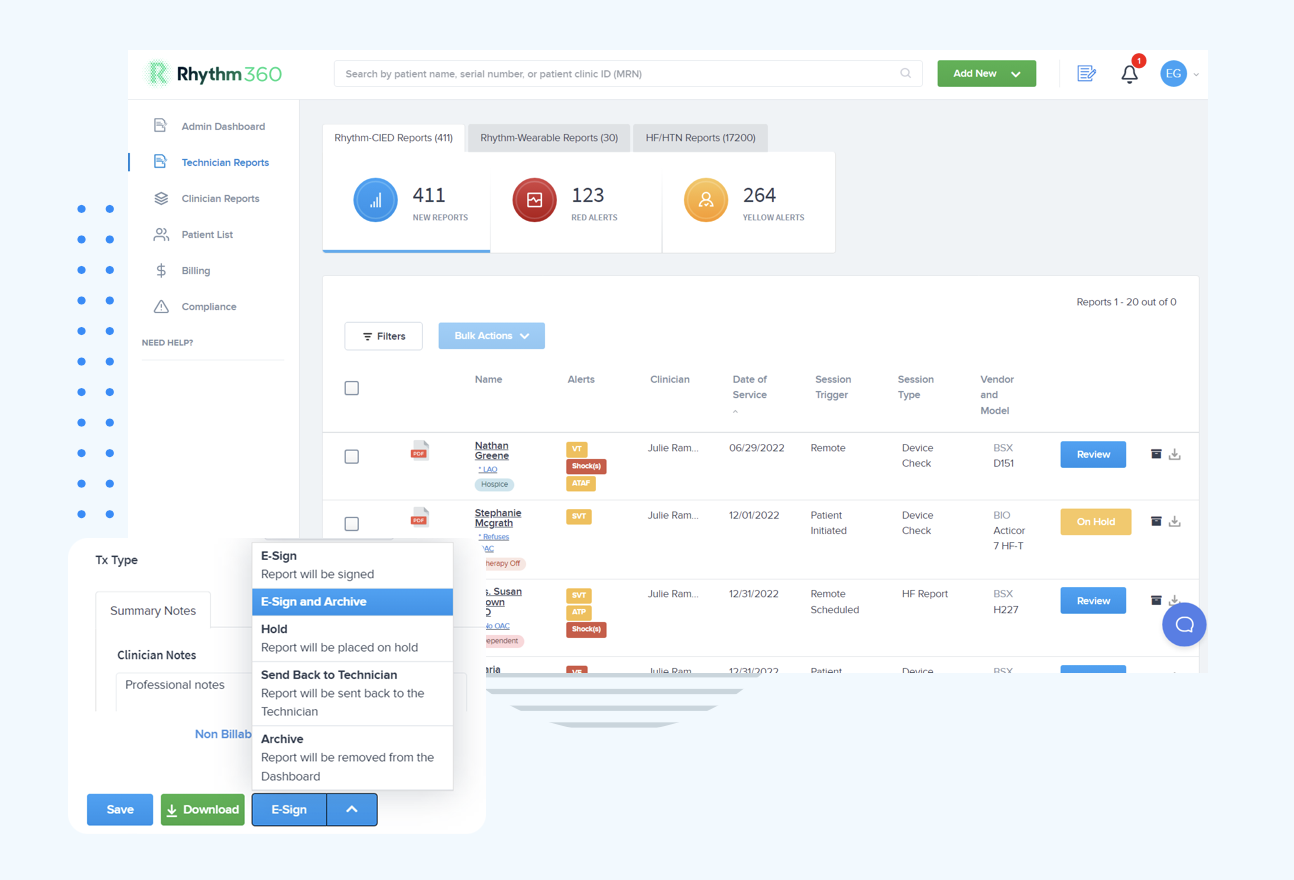
The demo starts with access to Rhythm360’s unified dashboard that consolidates data from all major OEM portals. Traditional workflows require separate logins for each manufacturer, which slows teams and increases risk.

Rhythm360’s vendor-neutral CIED monitoring platform ingests data through APIs, HL7 integration, and AI-powered PDF parsing with computer vision. The dashboard displays patient populations across all device types with >99.9% data transmissibility achieved through redundant data feeds and intelligent extrapolation algorithms.

Rhythm360
Rhythm360

Step 2: Review the CIED Patient Population Overview

The population views surfaces compliance gaps, pending transmissions, and billable events across your entire CIED patient base. Color-coded indicators highlight patients who need immediate attention, overdue follow-ups, and clear revenue opportunities. This centralized view removes the need to check multiple OEM portals one by one. Your team reduces administrative overhead and avoids missed critical alerts caused by fragmented data access.

Step 3: See AI-Powered Alert Triage in Action

Rhythm360’s AI alert filtering shows how machine learning algorithms prioritize clinically significant events and suppress non-actionable noise. Research has validated that AI-powered triage systems significantly reduce alert fatigue while maintaining clinical safety standards, and the demo illustrates this principle in real time.

The walkthrough shows live processing of VT episodes, new-onset AFib, and device malfunctions, with critical alerts escalated immediately and routine notifications batched for scheduled review. This intelligent filtering delivers the response time improvements highlighted earlier for urgent cardiac events.

Step 4: Respond to Weekend Alerts Through the Mobile App

The mobile segment of the demo focuses on a weekend AFib alert handled through Rhythm360’s HIPAA-compliant smartphone application. Clinicians can review transmission data, access patient history, and coordinate anticoagulation protocols from any location. The mobile interface supports report signing, patient communication, and care coordination tasks. On-call coverage remains fully functional without dependence on office workstations.

Step 5: Automate Reporting and EHR Integration

Bi-directional EHR integration with Epic, Cerner, and other major systems demonstrates streamlined data flow for CPT code documentation. The platform automatically generates compliant reports for 93298, 93299, and 99454 billing and populates patient records with transmission summaries. This automation removes manual transcription steps, reduces errors, and supports accurate revenue capture for remote monitoring services.

Step 6: Track ROI in the Admin Dashboard

The administrative interface displays practice performance metrics such as response time improvements, revenue capture rates, and staff efficiency gains. Real-time tracking highlights substantial profitability gains from improved billing workflows, lower administrative overhead, and expanded RPM service lines. Unlike competitors such as PaceMate or Implicity, Rhythm360 includes comprehensive ROI analytics with 24/7 certified cardiac technician (CCT) oversight and Twilio-integrated communication tracking.

Now that you have seen the platform through a step-by-step walkthrough, you can review the core features that power these capabilities in more detail.

Rhythm360 Features That Power Critical CIED Alerts

Vendor-Neutral CIED Integration Across Manufacturers

Rhythm360 unifies data from all major device manufacturers through standardized APIs, HL7 messaging, and intelligent PDF processing. This broad integration removes data silos and supports near-perfect data capture through redundant feeds and AI-powered gap filling during OEM server downtime. Your team gains a single, reliable source of truth for all CIED transmissions.

AI Alert Filtering That Reduces Alert Fatigue

Machine learning algorithms analyze transmission patterns and separate clinically significant events from routine device checks. The system reduces alert fatigue in cardiology by suppressing non-actionable notifications and prioritizing life-threatening arrhythmias, device malfunctions, and heart failure indicators that require rapid intervention. Clinicians focus on the alerts that matter most.

HF and HTN RPM Alerts for Chronic Disease Management

Integrated heart failure and hypertension remote physiological monitoring extends beyond traditional CIED alerts. Rhythm360 tracks weight changes, blood pressure trends, and medication adherence indicators alongside device data. This combined view supports proactive chronic disease management and includes automated billing support for RPM CPT codes.

Feature

Traditional OEM Portals

Rhythm360

Response Time

Hours to days

80% reduction

Revenue Capture

Fragmented billing

300% increase

Data Fidelity

Variable by OEM

>99.9% transmissibility

Real-World ROI: Reducing Alert Fatigue in Cardiology

Clinical implementations show Rhythm360’s impact on patient outcomes and practice efficiency. A weekend VT alert flagged through AI triage enabled immediate device reprogramming and helped prevent potential syncope or sudden cardiac death. Another case involved Saturday morning AFib detection that led to same-day anticoagulation initiation and a meaningful reduction in stroke risk.

“Rhythm360 caught new-onset AFib on Saturday morning—our patient was on anticoagulants by afternoon. Without this system, the alert might have been missed until Monday, potentially leading to a stroke,” reports a practicing electrophysiologist using the platform.

Quantified outcomes include an 80% reduction in critical alert response times, a 300% increase in practice revenue through optimized billing and expanded services, and clear improvements in clinician satisfaction due to lower administrative burden and less alert fatigue.

Pro Tips to Get the Most From Your Critical Alerts CIED Demo

Configure AI triage settings during the demo to see how filtered workflows reduce alert fatigue while preserving sensitivity for critical events. Ask the team to show redundant data feeds that maintain the exceptional transmission fidelity described earlier, even when OEM servers experience outages. Enable mobile notifications for on-call coverage so you can visualize the response time gains in real scenarios. Expand the demo scope to include HF and HTN RPM alerts for a complete chronic disease management view and additional revenue streams.

Schedule a demo to explore advanced configuration options that match your practice’s specific workflow requirements.

FAQ: Rhythm360 Critical Alert Solution Demo for Cardiology

How does Rhythm360 demo critical alerts for CIEDs?

The Rhythm360 demo walks through real clinical scenarios such as weekend emergencies, device malfunctions, and routine follow-ups. You experience the unified dashboard that consolidates data from multiple OEM portals, the AI-powered alert triage that filters non-actionable notifications, and the mobile app used for on-call response. The demonstration also covers automated report generation, EHR integration workflows, and administrative analytics that display metrics like response time reductions and revenue gains.

What is AI triage in cardiology remote monitoring?

AI triage applies the machine learning approach demonstrated in Step 3 of the walkthrough to CIED transmissions. The system learns from historical transmission patterns and automatically escalates urgent cases while batching routine notifications. This approach reduces alert fatigue by up to 80% without compromising clinical safety, because life-threatening events still receive immediate attention.

How does vendor-neutral monitoring compare to PaceMate or Implicity?

Rhythm360’s vendor-neutral approach unifies data from all major CIED manufacturers through standardized APIs and intelligent processing, while many alternatives focus on narrower device sets. The platform delivers near-perfect data capture through redundant feeds, 24/7 CCT oversight, and comprehensive RPM integration for heart failure and hypertension monitoring. This broader scope supports stronger ROI through expanded service lines and more efficient billing workflows compared with limited-scope competitors.

How can cardiology teams reduce alert fatigue with remote cardiac monitoring alerts?

Cardiology teams reduce alert fatigue by using intelligent filtering systems that separate actionable events from routine notifications. Rhythm360’s AI algorithms analyze transmission patterns, suppress non-critical alerts, and prioritize urgent arrhythmias and device malfunctions. The platform consolidates multiple OEM portals into a single interface, which removes redundant logins and fragmented workflows. Mobile access supports timely responses away from the office, and automated reporting further lowers administrative workload.

How do heart failure RPM alerts integrate with CIED monitoring?

Rhythm360 integrates heart failure RPM alerts with traditional CIED monitoring through a unified platform that manages both rhythm disorders and chronic disease indicators. The system tracks weight fluctuations, blood pressure trends, and medication adherence alongside device transmissions to provide comprehensive patient oversight. This integration supports proactive heart failure management and billing for both CIED and RPM CPT codes, which increases practice revenue and improves outcomes through coordinated care.

End Alert Fatigue and See Rhythm360 in a Live Demo

Rhythm360’s critical alert solution demo for cardiology remote monitoring turns fragmented workflows into streamlined, profitable operations. The platform’s AI triage, vendor-neutral integration, and mobile access deliver the dramatic response time improvements and revenue gains outlined above while easing clinician burnout.

Schedule a demo today to reduce alert fatigue and strengthen your cardiology practice’s remote monitoring program.

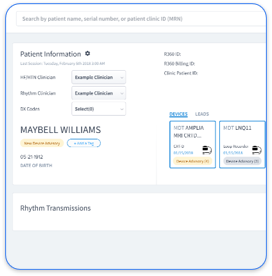
Advisory Tags
Our automatic tagging and tracking keeps getting better - identify, manage and track multiple advisories more efficiently.
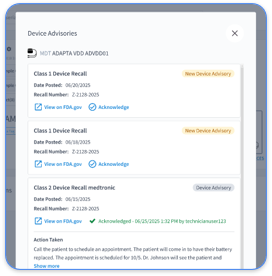
View and Acknowledge Recalls
Staff can document steps taken to resolve the recall for continuity of communication, tracking, and accountability.
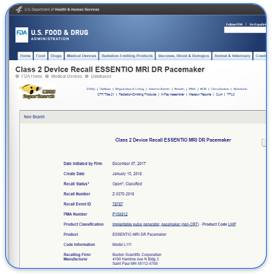
Links Straight to FDA
Rhythm360 provides direct access to all the advisory details you need without additional searching and clicks.