The following table reveals a clear pattern for multi-OEM practices. Several platforms deliver pieces of the puzzle, yet only Rhythm360 combines vendor neutrality, AI triage, and automated billing into one replacement for PaceMate.
| Platform | Vendor-Neutral/AI Score | EHR Integration | Billing/ROI Features | Pricing Model |
|---|---|---|---|---|
| Rhythm360 | 9.5/10 - Full multi-OEM, AI triage | Epic, Cerner, Athenahealth | Automated CPT, 300% revenue boost | SaaS, usage-based |
| Murj | 7/10 - Limited neutrality | Basic HL7 | Manual billing support | Fixed monthly |
| Implicity | 8/10 - AI focus, OEM-tied | Select EHRs | Basic reporting | Per-patient |
| Octagos | 6/10 - AI filtering only | Bi-directional available | Limited automation | Tiered pricing |
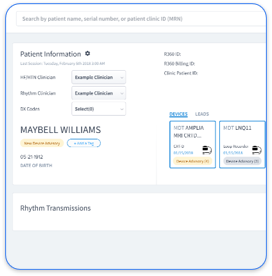
Rhythm360 sets the benchmark for vendor-neutral PaceMate alternatives by unifying multi-OEM data through advanced API integration, HL7 messaging, and computer vision technology. The platform achieves >99.9% data transmissibility by ingesting information from all major device manufacturers, including Medtronic, Abbott, Boston Scientific, and Biotronik, into a single dashboard. This unified data foundation enables AI-powered triage systems that deliver the 80% response time improvement mentioned above by automatically prioritizing critical alerts and routing them to the right clinical staff.
The same unified approach powers automated CPT code capture for 93298, 93299, and 99454 billing, enabling practices to increase profitability by 300% through previously missed revenue recovery. Rhythm360 includes bi-directional Epic, Cerner, and Athenahealth integrations, along with a HIPAA-compliant mobile application that supports on-call accessibility for remote teams. One recent case study showed a clinic cutting critical alert response times from hours to minutes, which allowed early atrial fibrillation detection and prevented a stroke.
Rhythm360 also supports Heart Failure and Hypertension RPM programs through CardioMEMS integration and automated patient communication powered by Twilio. This combination lets practices manage complex chronic populations while maintaining consistent outreach and documentation. See how Rhythm360 eliminates PaceMate challenges in a personalized walkthrough.

While Rhythm360 delivers full multi-OEM support, Murj represents a step down in vendor neutrality despite its strong workflow automation capabilities. Murj performs well for streamlining routine device checks and generating standardized reports, especially in single-OEM environments. These strengths make it a reasonable option for practices that rely heavily on one manufacturer.
Murj falls short for clinics that want a true PaceMate replacement across multiple manufacturers. AI-powered alert prioritization remains limited, and billing support stays largely manual, which restricts revenue capture. The platform offers basic HL7 integration, yet it lacks the deeper data normalization that complex device populations require. Pricing follows a fixed monthly model that can feel rigid and less scalable for growing or fluctuating patient volumes.
Compared with Rhythm360’s fully neutral approach, Implicity focuses on AI-driven cardiac monitoring while remaining partially tied to specific OEM relationships. The platform delivers advanced algorithmic analysis of device data, with strong performance in arrhythmia detection and automated report generation. These capabilities appeal to practices that prioritize analytics and clinical insights.
OEM dependencies limit Implicity’s ability to serve as a single hub for all device manufacturers. This constraint creates silos similar to those that practices aim to remove when leaving PaceMate. The system integrates with select EHR platforms but does not provide comprehensive billing automation. As a result, practices still rely on manual processes to capture revenue, which reduces the overall financial impact of the platform.
Octagos offers AI-powered filtering of non-actionable transmissions and can support bi-directional EHR integration, which helps reduce alert fatigue. The platform focuses on intelligent notification prioritization so staff can spend less time on low-value alerts. This focus improves day-to-day workload for teams that feel overwhelmed by transmission volume.
Octagos does not match Rhythm360’s breadth of capabilities for billing automation and mobile accessibility. Automated billing features remain limited, which constrains potential ROI for busy cardiology practices. The AI engine centers on noise reduction rather than deeper clinical decision support, so its value decreases in complex patient management scenarios that require richer context and triage logic.
Medtronic CareLink delivers robust monitoring for Medtronic devices but recreates the vendor silos that many practices now want to remove. The platform works reliably for single-manufacturer clinics that operate primarily within the Medtronic ecosystem. These practices can manage device data effectively without switching portals.
Multi-OEM clinics face fragmented workflows because CareLink requires separate logins and processes for Abbott, Boston Scientific, or Biotronik devices. The platform does not include AI-powered triage or automated billing features that support modern efficiency standards. Integration options stay focused on Medtronic’s environment, which limits its usefulness as a comprehensive PaceMate replacement.
Boston Scientific LATITUDE provides comprehensive monitoring for Boston Scientific devices, with reliable data transmission and clinical reporting. These strengths make it a solid choice for practices that use Boston Scientific hardware almost exclusively. The platform supports core monitoring needs within that ecosystem.
Like other OEM-specific portals, LATITUDE introduces workflow fragmentation for clinics that manage multiple device manufacturers. The system offers basic EHR integration but does not extend into advanced AI capabilities or automated revenue cycle management. Practices that need unified workflows and measurable financial gains will find LATITUDE less effective than vendor-neutral platforms such as Rhythm360.
Abbott Merlin.net delivers strong monitoring for Abbott’s cardiac device portfolio but maintains the manual workflows and vendor limitations that many practices want to move beyond. The platform works well for Abbott-only environments yet becomes cumbersome when other manufacturers enter the mix. Separate access for non-Abbott devices keeps teams in multiple portals.
Merlin.net lacks AI-powered alert prioritization, which leaves staff to manage triage manually. Billing support also remains manual, missing opportunities for automated CPT code capture and the revenue gains that come with it. Having examined Merlin.net alongside other OEM tools, it becomes clear that vendor-specific portals cannot match the unified experience of a platform like Rhythm360.
Rhythm360 closes every major gap left by PaceMate by combining true vendor neutrality, AI-powered reliability, and integrated communication in a single platform. The system supports all OEMs, delivers the dramatic response time improvements detailed above, and includes 24/7 certified cardiac technician oversight with a built-in Twilio communication hub. These capabilities align directly with 2026 regulatory requirements for data interoperability and HIPAA compliance, which now make vendor-neutral platforms essential for sustainable operations.
The 300% profitability increase documented in practice case studies stems from eliminating the billing gaps that plague manual monitoring workflows. Automated CPT capture and streamlined processes reduce missed charges and administrative rework. As AI-powered RPM becomes the 2026 standard of care, Rhythm360’s comprehensive approach positions cardiology practices for long-term clinical and financial success.
Selecting the optimal PaceMate alternative starts with vendor neutrality, because without multi-OEM support you recreate the same silos that PaceMate introduced. Once you confirm true neutrality, evaluate AI capabilities and EHR integration depth to understand how each platform will affect daily workflows and clinical efficiency. These factors determine how quickly staff can respond to alerts and document care.
Next, assess billing automation and mobile accessibility to ensure the platform delivers measurable ROI through automated CPT capture and reliable data flows. These features directly influence revenue and staff workload. Beyond core functionality, consider implementation timelines, pricing scalability, and ongoing support quality so your chosen platform can grow alongside your practice.
Yes. Rhythm360 supports all major CIED manufacturers, including Medtronic, Abbott, Boston Scientific, and Biotronik, through comprehensive API integration, HL7 messaging, and computer vision technology. The platform normalizes data from these disparate sources into a unified dashboard, which removes the need for multiple OEM portal logins and simplifies daily workflows.
Rhythm360 surpasses PaceMate by delivering true vendor neutrality, AI-powered alert triage, automated billing compliance, and secure mobile access. While PaceMate creates workflow silos across different OEM portals, Rhythm360 unifies all device data with the industry-leading transmissibility rate described above and maintains the response time improvements already discussed.
Rhythm360 is built specifically for multi-OEM environments and provides seamless data integration across all major manufacturers. OEM-specific platforms require separate workflows and logins, while Rhythm360 offers a single source of truth for comprehensive patient management and documentation.
All reputable PaceMate alternatives, including Rhythm360, maintain full HIPAA compliance with encrypted data transmission, secure cloud infrastructure, and detailed audit trails. Rhythm360 also extends these protections to its mobile access, using enterprise-grade security protocols to safeguard PHI outside the clinic.
Practices often see 300% revenue increases through automated CPT code capture, reduced administrative overhead, and stronger billing compliance. Time savings from unified workflows and AI-powered triage add further value by improving clinical efficiency and reducing staff burnout across the care team.
Rhythm360 emerges as the clear leader among 2026 PaceMate alternatives by combining vendor neutrality, AI-driven efficiency, and comprehensive revenue optimization in one platform. Its ability to unify multi-OEM data while automating critical workflows positions cardiology practices for sustainable growth in an increasingly complex healthcare environment. Experience the future of cardiac device monitoring with a live Rhythm360 platform demonstration.