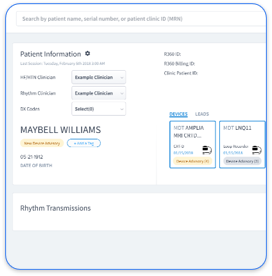
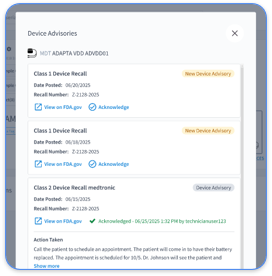
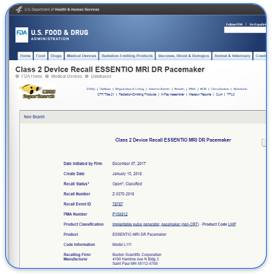
Rhythm360 connects Medtronic, Abbott, Boston Scientific, and Biotronik devices in one platform, while many competitors remain tied to proprietary ecosystems.
AI-powered alerting with computer vision cuts critical response times by up to 80% and sharply reduces alert fatigue.
Automated billing for 2026 Medicare RPM codes (99453, 99454, 99457) can support up to a 300% increase in RPM revenue for cardiology practices.
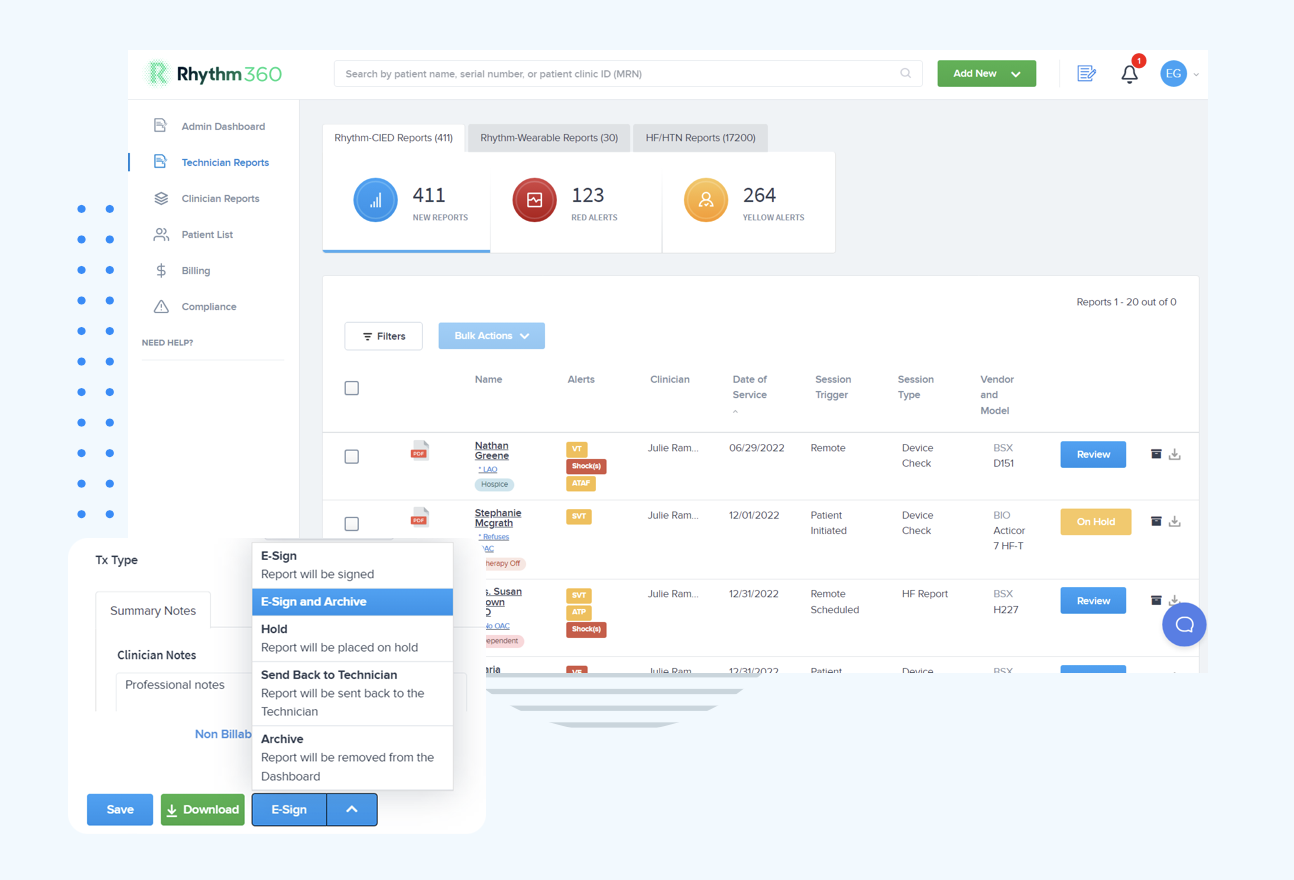
Bi-directional Epic and Cerner integration with unified CIED and heart failure dashboards removes data silos between device portals and the EHR.
Contact Rhythm360 today to see how a unified platform can streamline your heart failure remote monitoring program.
To help you evaluate which platform fits your practice, the following table compares Rhythm360 with leading competitors across vendor compatibility, clinical intelligence, and measurable outcomes.
Platform | Vendor Neutrality & EHR Integration | AI Alerts & Billing Automation | Outcomes & Implementation |
|---|---|---|---|
Rhythm360 | Full OEM neutrality (Medtronic, Abbott, Boston Scientific, Biotronik), bi-directional Epic/Cerner integration via HL7 | AI triage with computer vision, automated CPT code capture (99453/99454/99457), mobile app with Twilio communications | Faster critical alerts, significant RPM revenue growth, >99.9% data transmissibility, days-to-weeks implementation |
Rimidi | EHR SMART on FHIR integration, chronic disease focus, limited CIED vendor support | Guideline-based alerts, basic RPM billing support, patient surveys integration | 95% hypertension control at Brevard Health Alliance, standard implementation timeline |
Philips | Limited OEM integrations, proprietary device ecosystem, basic EHR connectivity | Traditional threshold alerts, manual billing processes, limited AI capabilities | Hospital-focused outcomes, longer implementation cycles, moderate data reliability |
Medtronic | Proprietary Medtronic devices only, limited cross-vendor compatibility | AI-driven predictive analytics for heart failure fluid monitoring, basic billing support | Strong for Medtronic-only practices, data silos with other OEMs, extended setup |
Rhythm360’s multi-vendor coverage solves a core problem for cardiology practices that manage patients with devices from several manufacturers in parallel. This multi-vendor reality is where Rimidi’s limitations become clear, because its narrower CIED support still forces electrophysiology teams to juggle separate systems for device monitoring. See how unified monitoring works in your practice with a personalized demo.
Rimidi Strengths:
Strong EHR integration using SMART on FHIR standards
Proven heart failure and hypertension management capabilities
Comprehensive patient survey integration for holistic care
Collaborative implementation approach with responsive support
Rimidi Limitations:
Limited CIED coverage across major OEMs
No AI-powered alert triage for high-risk cardiac events
Manual billing workflows without automated CPT code capture
Separate views for rhythm and heart failure data instead of a unified dashboard
Rhythm360 Advantages:
Support for all major CIED manufacturers in one consolidated platform
AI-driven alert triage that prioritizes high-risk events and reduces response times
Elimination of manual time tracking and documentation gaps that cause RPM billing leakage
Single dashboard for CIED and heart failure monitoring across the full patient panel
Mobile app that allows clinicians to manage critical events during evenings and weekends
Computer vision that normalizes data across OEMs and fills gaps from missing transmissions
A weekend scenario highlights the difference between these approaches in daily practice. A patient with a Boston Scientific ICD develops ventricular tachycardia and shows a sharp weight increase that signals heart failure decompensation.
Rhythm360’s unified platform surfaces both rhythm and fluid status changes together, then alerts the on-call physician through the mobile app for rapid anticoagulation decisions and device programming. Rimidi’s heart failure tools would capture the weight gain but would not provide the same depth of CIED monitoring for the ventricular tachycardia event.
Revenue from heart failure RPM depends on consistent use of specific Medicare CPT codes and accurate documentation of qualifying activity. The table below outlines the primary 2026 RPM codes and shows how Rhythm360’s automation compares with more manual competitor workflows.
CPT Code | Medicare Reimbursement | Rhythm360 Automates? | Competitors Automate? |
|---|---|---|---|
99453 (Device Setup) | Yes | Limited | |
99454 (16+ days data) | $47 national average | Yes | Manual tracking |
99457 (20+ minutes) | $51.77 national average | Yes | Limited |
In a practice with 100 heart failure patients, automated capture of these codes can generate about $180,000 in additional annual RPM revenue through complete documentation and accurate code use. Medicare covers RPM for chronic conditions including heart failure with 80% reimbursement, and Rhythm360’s automation removes the manual tracking steps that often cause missed claims in competing platforms.
However, revenue potential alone does not guarantee a successful RPM program, because practices must still address the operational drawbacks that limit traditional implementations.
Heart failure RPM programs often struggle with alert fatigue, fragmented data, and missed events from unreliable connectivity. Traditional RPM systems face data overload that overwhelms clinicians and fragmented EHR integration that creates data silos. Rhythm360 tackles these issues with AI-based alert triage that filters non-actionable notifications, unified dashboards that combine rhythm and heart failure data, and >99.9% data transmissibility supported by redundant feeds and computer vision.
The platform’s targeted alerting focuses clinician attention on events that require immediate action, such as new-onset atrial fibrillation or rapid weight gain that suggests fluid retention.
Rhythm360 stands out for cardiology practices that need combined heart failure and CIED management in a single, scalable platform. The system unifies rhythm and heart failure monitoring in one dashboard, applies AI-driven clinical intelligence to highlight risk, and automates revenue capture for RPM services. This combination supports faster responses to high-risk events and more reliable RPM income, which helps practices build sustainable remote monitoring programs.
Transform your practice’s remote monitoring with a personalized platform walkthrough.
Rhythm360 delivers broad CIED coverage across Medtronic, Abbott, Boston Scientific, and Biotronik, while Rimidi centers on chronic disease management with more limited device support. Rhythm360 replaces multiple OEM portals with a single interface and adds AI-based triage for critical cardiac events, which simplifies daily workflows for electrophysiology teams.
Rhythm360 combines broad OEM support with AI-driven data normalization so practices can manage CIED and heart failure devices in one environment. The platform maintains >99.9% data transmissibility through redundant feeds and computer vision, while also providing bi-directional EHR integration and automated handling of all 2026 Medicare RPM codes.
Rhythm360’s AI models review longitudinal data such as weight trends, device diagnostics, and other physiological markers to detect early signs of heart failure decompensation. The system prioritizes high-risk patterns and filters routine information, which shortens response times for critical alerts and supports proactive interventions that can prevent hospitalizations.
Heart failure RPM in 2026 uses CPT code 99453 for device setup with a national average of $21.71, 99454 for at least 16 days of data transmission at $47, and 99457 for 20 or more minutes of management at $51.77. Rhythm360 tracks qualifying activity in the background and documents it in a structured format that supports complete and timely reimbursement.
Common RPM drawbacks include excessive alerts, data spread across multiple portals, missed transmissions from connectivity problems, and manual billing steps that reduce revenue capture. Rhythm360 addresses these issues with AI-based alert filtering, consolidated dashboards across device vendors, redundant data transmission paths, and automated billing workflows that reduce administrative burden.