| CPT Code | Description | Frequency | 2026 Medicare Rate |
|---|---|---|---|
| 99453 | Initial setup and patient education | Once per episode | ~$22 |
| 99454 | Device supply with 16-30 days of data | Monthly | ~$47 |
| 99445 | Device supply with 2-15 days of data | Monthly | ~$47 |
| 99457 | 20 or more minutes of management | Monthly | ~$52 |
| 99458 | Each additional 20 minutes | Per increment | ~$41 |
| 99470 | 10-minute or longer interaction | Monthly | ~$26 |
| 93298 | CIED interrogation | Quarterly | ~$32 |
| 93299 | CIED programming | As needed | ~$38 |
Cardiology practices can increase revenue through precise code selection using the 2026 CMS Physician Fee Schedule rates. Rhythm360 auto-generates compliant documentation for all codes and removes many manual billing errors.
Cardiology teams face several critical RPM billing changes in 2026.
Minimum data collection requirements drop from 16 days to two days, which expands RPM eligibility for cardiology patients who need intermittent monitoring.
Cardiology practices increase revenue when they apply RPM codes in a structured way.
Heart Failure Monitoring: Combine 99454 for daily weight transmission with 93298 for CIED interrogation. A typical heart failure patient generates about $99 each month, which includes $47 for 99454 and $52 for 99457 management.
Hypertension Management: Use 99445 for weekly blood pressure checks or 99454 for daily monitoring. Stable patients who need brief check-ins benefit from 99470 and its 10-minute threshold.
Arrhythmia Care: Stack 99457 management with CIED codes 93298 and 93299 for comprehensive monitoring. For example, 50 heart failure patients on 99457 alone generate $2,600 each month at $52 per code.
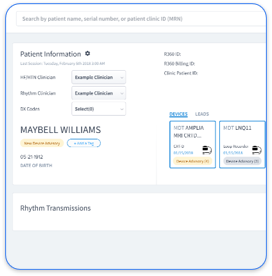
Rhythm360's vendor-neutral platform auto-generates CPT-compliant documentation for codes 93298 through 99457 and ingests multi-OEM data using AI and OCR. Practices report up to 300% revenue capture and 80% faster alert response. Unlike PaceMate or Implicity, Rhythm360 provides bi-directional EHR integration with Epic and Cerner, mobile applications, and bundled services for heart failure and hypertension. One clinic recovered $150,000 in lost revenue in the first year. Schedule a demo to see automated billing workflows in action.

Cardiology teams can follow a clear workflow to keep RPM billing compliant.
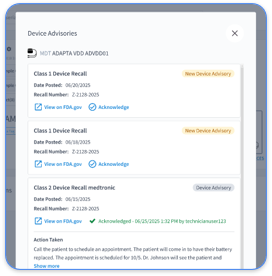
Multi-OEM data silos create compliance risks when practices manually track billing requirements across Medtronic, Abbott, and Boston Scientific platforms. Rhythm360 centralizes this workflow, reduces administrative burden, and supports full audit readiness.
| CPT Code | Medicare Rate | Private Avg | Cardiology Example |
|---|---|---|---|
| 99454 | ~$47 | $50-60 | Heart failure daily weights |
| 99457 | ~$52 | $55-65 | Monthly heart failure review |
| 99445 | ~$47 | $50-60 | Weekly hypertension checks |
| 93298 | ~$32 | $35-45 | CIED interrogation |
Revenue for 100 cardiology patients can reach $10,500 in monthly recurring revenue. This estimate uses 100 patients multiplied by 99454 at $50 and 99457 at $55. The new 99445 code creates a 100% increase in billable RPM devices by covering shorter monitoring periods that previously went unbilled.
Payer variations matter for planning. Medicaid rates often sit 10-15% below Medicare. Rural Health Clinics may qualify for enhanced reimbursement. Private payers usually reimburse 105-125% of Medicare rates for established RPM programs.
Cardiology practices can prevent denials by addressing a few recurring RPM billing issues.
Rhythm360 supports compliance through automated tracking and removes many common denial reasons while still maximizing legitimate revenue capture. Schedule a consultation to review your current billing practices.
The 16-day rule requires patients to transmit physiologic data for at least 16 days within a 30-day period to bill CPT 99454. For shorter periods of 2-15 days, practices should use the new 99445 code. This change supports patients with intermittent monitoring needs while preserving reimbursement eligibility.
Yes. RPM codes such as 99457 can be stacked with CIED codes 93298 and 93299 without bundling restrictions. This approach allows cardiology practices to bill for both physiologic monitoring, such as weight and blood pressure, and device interrogation services for the same patient during the same period, which increases revenue potential.
Rhythm360 tracks patient data transmission days across all connected devices and alerts staff when the 16-day threshold is met for 99454 billing. The platform's AI-powered data capture delivers greater than 99.9% transmission reliability and helps prevent compliance gaps that could cause claim denials.
Medicare reimburses about $52 for CPT 99457 in 2026, and private payers typically range from $55 to $65. This code requires at least 20 minutes of clinical staff time each month plus one interactive patient communication. Cardiology teams use it heavily for comprehensive heart failure and hypertension management.
Heart failure RPM billing usually combines 99454 for daily weight monitoring, 99457 for monthly clinical management, and 93298 for CIED interrogation when appropriate. Practices must obtain patient consent, maintain at least 16 days of data transmission, and document all clinical interactions to support billing compliance.
Cardiology practices can master 2026 RPM billing guidelines by choosing the correct CPT codes, following compliant workflows, and using automated platforms like Rhythm360 to support risk-free revenue growth. The expanded code set creates new opportunities for cardiology teams to capture legitimate revenue while improving outcomes for heart failure, hypertension, and arrhythmia patients.
Teams ready to automate RPM billing and reduce compliance risk can schedule a Rhythm360 demo today and see how vendor-neutral automation can transform practice revenue.