
Acute Heart Failure Symptoms: Early Recognition Guide
Spot acute heart failure symptoms before they escalate. Rhythm360's AI monitoring catches warning signs early to help prevent hospitalization.

Last updated: June 22, 2026
Key Takeaways for High-Risk Heart Failure Patients
- Acute heart failure is a rapid-onset emergency that can progress from subtle fluid buildup to hospitalization within days to weeks if not caught early.
- Key early warning signs fall into respiratory, fluid-retention, and systemic categories. Rapid weight gain and paroxysmal nocturnal dyspnea are the two most actionable red flags.
- Continuous remote monitoring of weight, fluid indices, and device data surfaces these signals days before patients recognize them, which enables timely outpatient interventions.
- AI-powered platforms reduce alert fatigue, cut critical response times by up to 80%, and capture previously missed CPT revenue while lowering hospitalization rates.
- Rhythm360 unifies CIED, CardioMEMS, and scale data into one proactive dashboard that supports daily decision-making for your practice.
Early Symptom Clusters in Acute Heart Failure
Symptoms cluster into three categories. Recognizing them early often means an outpatient diuretic adjustment instead of an emergency hospitalization.
Respiratory symptoms
- Shortness of breath at rest or with minimal exertion
- Orthopnea, or breathlessness that forces the patient to sleep upright
- Paroxysmal nocturnal dyspnea (PND), or sudden awakening from sleep with severe breathlessness
- Persistent cough or wheezing, sometimes producing pink or frothy mucus
Fluid-retention symptoms
- Rapid weight gain, defined as two or more pounds in 24 hours or five or more pounds in one week
- Bilateral ankle, leg, or abdominal swelling (edema)
- Abdominal bloating or nausea from hepatic congestion
- Decreased urine output despite adequate fluid intake
Systemic symptoms
- Extreme fatigue or weakness disproportionate to activity level
- Confusion, difficulty concentrating, or altered mental status
- Rapid or irregular heartbeat
- Cool, clammy skin indicating reduced cardiac output
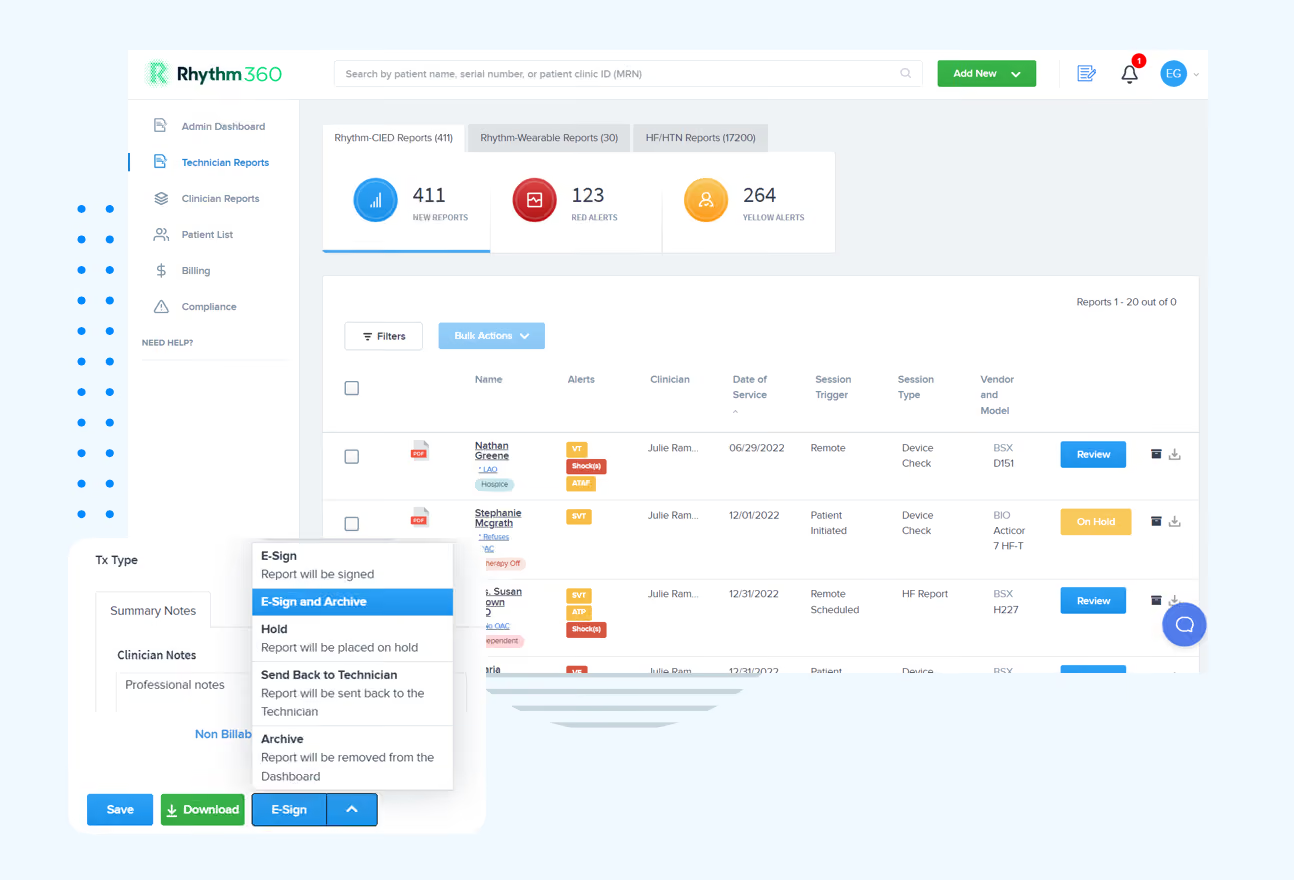
Daily automated capture of weight, fluid indices, and device data gives care teams an earlier view of these warning signs, often before a patient calls the office in distress. See how Rhythm360’s unified dashboard surfaces weight trends, fluid indices, and device alerts in real time.
Symptom Progression Timelines in Acute Decompensation
Understanding the warning signs is only half of the equation. Knowing how quickly they can escalate guides how aggressively practices must monitor for them.
Acute decompensated heart failure (ADHF) is a dynamic syndrome characterized by episodes of acute decompensation separated by periods of relative clinical stability, not a uniformly continuous decline. The underlying mechanisms, including silent ischemia, worsening valvular regurgitation, subclinical atrial fibrillation, and sodium retention, can evolve silently over days to weeks before any clinical presentation.
A simplified progression timeline looks like this:
- Days 1–7: Subclinical fluid accumulates, weight begins rising, and the patient may notice mild fatigue or reduced exercise tolerance.
- Days 7–14: Edema becomes visible, orthopnea and PND emerge, and daily weight gain accelerates.
- Days 14–21: Dyspnea at rest and possible cognitive changes appear, and the risk of rapid clinical deterioration rises sharply.
- Hospitalization threshold: In-hospital worsening heart failure is associated with a greater risk of all-cause death at six months post-discharge.
Some ADHF patients follow a downsloping progressive course culminating in advanced heart failure, while others exhibit a remitting-relapsing pattern with recurrent decompensation but preserved longer-term stability. Either trajectory requires continuous surveillance rather than periodic office visits.
Two Actionable Early Red Flags: Weight Gain and PND
Rapid weight gain is among the most actionable early warning signs. A gain of two or more pounds overnight reflects fluid accumulation, not dietary change. Cleveland Clinic guidelines recommend that patients notify their care team immediately at this threshold. When a connected scale transmits daily readings automatically, the clinical team sees the trend before the patient recognizes it as alarming.
Paroxysmal nocturnal dyspnea (PND), or waking abruptly from sleep gasping for air, signals significant pulmonary congestion. It occurs because fluid redistributes from the lower extremities to the lungs when the patient lies flat. PND is a red-flag symptom that warrants same-day clinical contact and, depending on severity, emergency evaluation. Patients often dismiss it as anxiety or a bad dream, which delays reporting by days.
Both signs become detectable earlier through continuous remote monitoring than through symptom-driven patient calls. Remote monitoring tools such as CardioMEMS and technology-enabled cardiac scales can identify heart-failure decompensation earlier, enabling treatment adjustments before hospitalization is needed.
Emergency Thresholds: When to Call 911
Certain presentations require immediate emergency services, not a next-available appointment. Use this checklist:
- Severe shortness of breath at rest that does not improve with repositioning within minutes
- Chest pain or pressure lasting more than a few minutes or radiating to the arm, jaw, or back
- Sudden confusion, fainting, or loss of consciousness
- Coughing up pink or frothy mucus
- Oxygen saturation below 90% on home pulse oximetry
- Rapid, irregular heartbeat accompanied by dizziness or near-syncope
- Sudden, severe swelling of both legs with inability to walk
If any single item on this list applies, call 911. Do not drive to the emergency department.
These emergency-threshold events represent the failure mode that remote monitoring aims to prevent. Practices that deploy continuous remote monitoring can intercept many of these events before they reach 911-level severity. Learn how Rhythm360’s AI-powered alert triage identifies deterioration days before emergency presentation.
How Continuous Remote Monitoring Prevents Decompensation
Continuous remote monitoring closes the gap between office visits by capturing daily weight, fluid indices, pulmonary artery pressures, and implanted device data automatically. In one case series, weight and fluid-index trend detection via a technology-enabled cardiac scale prompted timely diuretic and guideline-directed medical therapy adjustments that prevented hospitalization after a patient independently discontinued SGLT2i therapy.
A real-world observational pilot study using a device-agnostic AI platform reported a lower all-cause hospitalization rate than historical Medicare heart failure rates. Heart failure imposes a significant annual cost on the U.S. health system, with a substantial portion tied to hospitalizations, which makes early intervention both a clinical and financial imperative.
To support this early-intervention model at scale, practices need a unified monitoring infrastructure that can aggregate data from multiple device types and manufacturers. Rhythm360 serves as that operational layer. The platform aggregates CIED data from all major manufacturers, including Medtronic, Boston Scientific, Abbott, and Biotronik, alongside CardioMEMS pulmonary artery monitor readings and connected scale data into a single vendor-neutral dashboard.
AI-powered alert triage filters non-actionable noise and surfaces clinically significant events, delivering the response-time improvements noted earlier. Data transmissibility exceeds 99.9% through redundant feeds, computer vision, and AI-powered extrapolation. Automated CPT-compliant documentation captures billing for codes including 93298, 93299, and 99454, revenue that fragmented OEM portals routinely leave unclaimed. The Ambulatory Specialty Model payment model for heart failure, beginning January 1, 2027, aims to reduce avoidable hospitalizations through improved upstream management, which aligns directly with the workflow Rhythm360 supports.
Explore how Rhythm360 integrates with your existing EHR and device infrastructure.
Frequently Asked Questions About Acute Heart Failure Monitoring
How fast does acute heart failure progress?
The speed varies by patient and underlying cause, but the physiologic groundwork, including fluid retention, subclinical arrhythmia, and worsening valve function, typically builds over days to weeks before symptoms become obvious. Once overt symptoms appear, deterioration can accelerate within 24 to 72 hours. Patients who experience in-hospital worsening face the elevated six-month mortality risk discussed earlier. Daily remote monitoring, rather than weekly or monthly check-ins, has become the standard of care for many high-risk heart failure patients.
Which two signs indicate worsening heart failure?
Rapid weight gain and paroxysmal nocturnal dyspnea are the two most clinically significant early warning signs. Rapid weight gain at the thresholds described earlier reflects fluid accumulation and is directly measurable with a connected scale. Paroxysmal nocturnal dyspnea indicates pulmonary congestion severe enough to interrupt sleep and warrants same-day clinical evaluation. Both signs often precede emergency presentations by several days, which creates a window for outpatient intervention when monitoring is in place.
What is the role of remote monitoring in preventing hospitalizations?
Remote monitoring enables care teams to detect decompensation signals, such as rising weight, increasing pulmonary artery pressures, and new arrhythmias, before a patient reaches the emergency threshold. Platforms that aggregate implantable device data, CardioMEMS readings, and scale data into a single dashboard allow clinicians to adjust diuretics, titrate medications, or schedule urgent visits based on objective trends rather than patient-reported symptoms alone. Real-world data show hospitalization rates substantially lower than historical Medicare benchmarks in monitored heart failure populations. Unified data streams ensure that no signal is missed because of portal fragmentation.
Can practices reduce alert fatigue while improving revenue capture?
Yes. The two problems share a common root cause: fragmented, unfiltered data from multiple OEM portals. AI-powered alert triage addresses fatigue by suppressing non-actionable notifications and prioritizing clinically significant events. A centralized platform with automated CPT documentation then captures billable remote monitoring events, including complex CIED codes and RPM codes, that manual workflows routinely miss. Practices using unified platforms achieve the response-time and revenue improvements described earlier by consolidating fragmented data streams and automating documentation workflows.
Conclusion: Turning Symptom Awareness into Daily Practice Workflow
Recognizing acute heart failure symptoms such as rapid weight gain, paroxysmal nocturnal dyspnea, orthopnea, and systemic signs of low cardiac output forms the first step. Acting on them in time requires a monitoring infrastructure that delivers those signals to the right clinician before the patient deteriorates. Fragmented OEM portals, manual data retrieval, and alert fatigue create operational barriers that delay that action every day.
Rhythm360 removes those barriers by unifying CIED, CardioMEMS, and scale data into one AI-powered, vendor-neutral dashboard with greater than 99.9% transmissibility, automated CPT documentation, and the critical response-time reductions outlined earlier. This model shifts care from reactive hospitalization management to proactive daily intervention, which matches what high-risk heart failure patients need.
Explore Rhythm360 and see how it can integrate with your existing EHR and device mix within days.
.avif)