Biotronik Home Monitoring supports remote management of Biotronik devices but is not vendor neutral. The platform does not fully integrate data from manufacturers such as Medtronic, Abbott, or Boston Scientific, which complicates care for mixed-device populations.
Many practices experience data fragmentation when staff must log into multiple OEM portals. Current limitations include data overload, alert fatigue, and vendor-proprietary systems that do not integrate data streams from multiple manufacturers, which increases workflow complexity and administrative burden. Limited interoperability and the need for in-clinic device programming for alert thresholds further drive interest in alternatives.
For practices managing diverse device populations, the promise of remote monitoring can conflict with the reality of operational gaps and missed revenue.
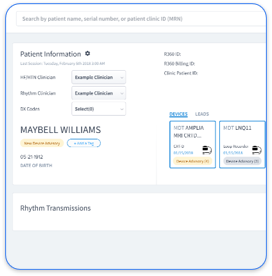
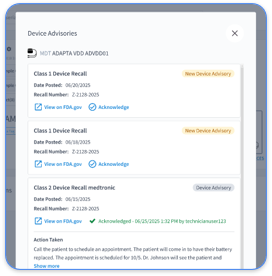
Rhythm360 by RhythmScience is a vendor-neutral, AI-supported platform for cardiac data management. It aggregates data from major Cardiac Implantable Electronic Devices (CIEDs) and Remote Patient Monitoring (RPM) devices, applies AI to triage alerts, and automates CPT code capture with compliant documentation. Rhythm360 acts as a bridge between device manufacturers and care teams, supporting high data transmissibility and faster response to critical events.
Ready for a single source of truth for your cardiac data? Schedule a demo of Rhythm360.
Vendor-neutral remote patient monitoring platforms centralize data from Biotronik, Medtronic, Abbott, Boston Scientific, and other manufacturers into one dashboard. This unified view removes the need to log into multiple OEM portals and supports more consistent clinical decision-making.
These platforms address data fragmentation, vendor-proprietary limitations, and alert overload, which reduces staff time spent on data retrieval and improves workflow efficiency. Instead of device technicians navigating several websites, teams can use one system such as Rhythm360 to see all CIED and RPM data, with more than 99.9 percent data transmissibility from normalized data feeds.
AI-powered alert triage systems go beyond basic alert settings. These tools use artificial intelligence to analyze incoming data, prioritize clinically significant events, and filter non-actionable noise. AI and machine learning can help distinguish actionable from non-actionable events and normalize disparate data.
This approach can reduce critical response times by up to 80 percent, decrease false positives, and lessen alert fatigue so clinicians can focus on patients who need urgent attention.
Rhythm360 applies AI to categorize events, route them to appropriate staff, and highlight changes that warrant timely intervention.
Integrated chronic disease management platforms extend beyond CIEDs to include heart failure and hypertension monitoring through RPM sensors such as blood pressure cuffs and scales.
These platforms support proactive care for complex patients, can improve chronic disease outcomes, and may open new revenue streams through RPM-related CPT codes.
With Rhythm360, a practice can review heart failure patients' daily weight and blood pressure alongside device data and receive alerts for concerning trends.
Automated CPT code capture and revenue optimization solutions track billable remote monitoring activities and generate documentation required for reimbursement. These systems limit manual tracking across multiple vendor portals.
By capturing more billable events accurately and on time, practices can substantially increase remote monitoring revenue while reducing staff time spent on claims.
Rhythm360 logs patient transmissions and communication touchpoints and produces auditable reports that support CPT billing with complete documentation.
Telehealth-integrated cardiac RPM platforms give clinicians secure, HIPAA-compliant mobile access to review data, sign reports, and communicate with patients.
Mobile access supports clinical flexibility, allows clinicians to manage patients while off-site, and helps maintain timely follow-up.
Through the Rhythm360 mobile app, clinicians can securely review data and coordinate care without being tied to a workstation.
Bi-directional EHR-integrated platforms connect device data with major EHR systems so information flows in and out of the EHR rather than in a single direction.
These integrations reduce manual data entry, lower transcription error risk, and align device workflows with scheduling, documentation, and billing.
Rhythm360 offers bi-directional integration with systems such as Epic and Cerner, which supports unified clinical and billing workflows.
Data-driven patient engagement tools use automated communications to improve adherence to monitoring protocols.
Stronger engagement can reduce missed transmissions, support earlier interventions, and encourage patients to participate actively in their care.
Rhythm360 can send automated reminders after missed transmissions and log outreach within the platform for coordinated follow-up.
Explore how these alternatives can update your cardiac monitoring workflows. Schedule a demo to see Rhythm360's unified approach in action.
Feature Category | Biotronik Home Monitoring | Rhythm360 | Competitors |
Vendor Neutrality | No (Biotronik devices only) | Yes (All major CIEDs + RPM) | Limited (Most CIEDs only) |
AI-Powered Analytics | Available | Includes alert triage and data normalization | Moderate to advanced |
EHR Integration | Advanced | Bi-directional (Epic, Cerner, etc.) | Strong (Bi-directional) |
RPM for HF/HTN | No (Primarily CIED) | Yes (Dedicated service lines) | Limited |
Biotronik Home Monitoring works well for Biotronik devices. Practices that manage patients with devices from several manufacturers often benefit from a vendor-neutral platform that reduces data fragmentation and manual work. A unified system can streamline operations and provide a consistent workflow across device types.
Alternatives such as Rhythm360 use AI to triage incoming cardiac data. The platform filters non-actionable notifications and surfaces critical events, which can help teams respond up to 80 percent faster to important issues and reduce alert fatigue.
Unified platforms such as Rhythm360 automate CPT code tracking and documentation for CIED and RPM services. Capturing more billable work with accurate documentation can significantly increase revenue without adding manual administrative tasks.
Platforms such as Rhythm360 integrate with major EHR systems, including Epic and Cerner, through API and HL7 connections. Most implementations complete within days to weeks, which limits disruption to existing operations.
Leading alternatives support migration of existing Biotronik and other device data so practices maintain continuity of care while gaining the benefits of unified monitoring.
Cardiac remote monitoring is shifting from single-vendor systems to unified, vendor-neutral approaches. Biotronik Home Monitoring remains effective for its own devices, but many practices now need tools that connect data across manufacturers, reduce alert fatigue, and capture revenue more efficiently.
Vendor-neutral, AI-supported cardiac data management can strengthen operational efficiency and expand clinical reach. Remote monitoring systems offer clinical and cost benefits, and these advantages grow when practices view data for their entire device population in one place.
Ready to update your cardiac data management strategy? Schedule a demo of Rhythm360 to see how unified data can streamline your workflows.