AHREs are device-detected atrial high-rate episodes that need intracardiac electrogram review to confirm true atrial fibrillation and exclude artifact before any clinical action.
CIED detection accuracy depends on rigorous IEGM adjudication because device algorithms prioritize sensitivity and can generate false positives from oversensing or noise.
Stroke risk and anticoagulation decisions hinge on confirmed episode duration and CHA₂DS₂-VASc score, with episodes ≥24 hours generally warranting therapy in higher-risk patients.
Multi-vendor clinics face fragmented workflows across separate OEM portals, which increases alert fatigue and the risk of missed clinically significant events.
Rhythm360 unifies CIED data streams, applies AI-powered triage, and streamlines documentation, and you can schedule a demo to see how it can transform your AF monitoring program.
Subclinical AF refers to AF detected in people without AF symptoms and without a prior ECG documenting AF, including AF detected by implantable or wearable devices. Clinical literature often uses the terms subclinical AF (SCAF), AHREs, and device-detected AF interchangeably.
AHREs are events detected by CIEDs that exceed the programmed detection rate limit and can describe AF burden in patients with established AF. Per the 2023 ACC/AHA/ACCP/HRS and 2020 ESC guidelines, clinicians must visually inspect stored electrograms to confirm AF and exclude other atrial arrhythmias, artifact, or oversensing. A commonly used research definition, including in the ASSERT trial, is an atrial rate of at least 190 bpm lasting more than 6 minutes.
CIEDs diagnose AF using intracardiac electrograms (EGMs) that provide high-resolution data for arrhythmia discrimination. Manual review often becomes necessary because T-wave oversensing, electrical noise, cross-talk, and ectopic beats can reduce diagnostic specificity. Devices store EGMs automatically when atrial rate and duration criteria are met, which allows retrospective adjudication during scheduled or remote transmissions.
Transmission reliability varies by OEM platform. Practices that manage Medtronic, Boston Scientific, Abbott, and Biotronik devices at the same time must log into separate, non-interoperable portals to retrieve stored EGMs. This fragmented workflow slows review, increases latency, and raises the chance that a clinically significant episode remains unaddressed between scheduled checks.
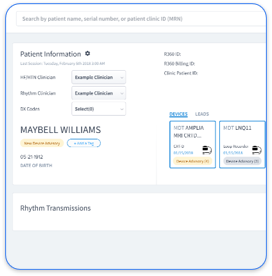
Managing a multi-vendor CIED population? Schedule a demo to see how Rhythm360 consolidates every OEM data stream into one dashboard.
AHREs detected by CIEDs do not represent AF until clinicians adjudicate the stored electrograms. Device algorithms favor sensitivity and may overcall AF because of oversensing, noise, far-field signals, or other atrial tachyarrhythmias. Electrogram review can reveal atrial flutter or focal atrial tachycardia instead of AF, and these rhythms often respond well to catheter ablation. Correct classification can prevent unnecessary long-term anticoagulation.
Clinicians must classify unconfirmed episodes as unconfirmed AHREs rather than AF and require intracardiac electrogram confirmation before considering anticoagulation. This approach protects patients from iatrogenic harm related to unnecessary oral anticoagulants. Broad CIED monitoring can create artifact, false alarms, alarm fatigue, and data overload. A unified platform with AI-powered alert triage directly addresses this burden by filtering non-actionable noise before it reaches the clinical queue.
Once a clinician confirms an AHRE as true AF through IEGM review, the next step involves assessing stroke risk and episode duration. This assessment guides whether the episode justifies anticoagulation. In the ASSERT trial of 2,580 adults older than 65 years with hypertension and CIEDs, device-detected SCAF carried a 2.5-fold higher risk of stroke or systemic embolism (HR 2.49; 95% CI: 1.28–4.85) over a mean 30-month follow-up. Longer episodes showed higher stroke risk, while episodes of 6 minutes to 24 hours showed intermediate risk.
The table below summarizes duration-based anticoagulation considerations from major trials and current guideline language.
AHRE Duration | Key Trial / Source | Stroke Risk Signal | Anticoagulation Consideration |
|---|---|---|---|
<6 minutes | |||
6 min – <24 hours | May be considered with elevated CHA₂DS₂-VASc score (ACC/AHA) | ||
≥24 hours | |||
Any duration + vascular disease |
A meta-analysis of NOAH-AFNET 6 and ARTESiA showed that oral anticoagulation in SCAF reduced ischemic stroke but increased major bleeding. In ARTESiA, most excess major bleeds on apixaban came from the gastrointestinal tract, while intracranial and fatal bleeding rates were similar between apixaban and aspirin groups.
Device technicians and clinic administrators manage a daily cycle of retrieving transmissions, reviewing EGMs, generating reports, and documenting billable events. They perform this work while handling alerts across multiple OEM portals. A 2026 HRS debate emphasized that device monitoring programs must match real clinic capacity to avoid unsustainable data overload and degraded follow-up quality when AF monitoring scales.
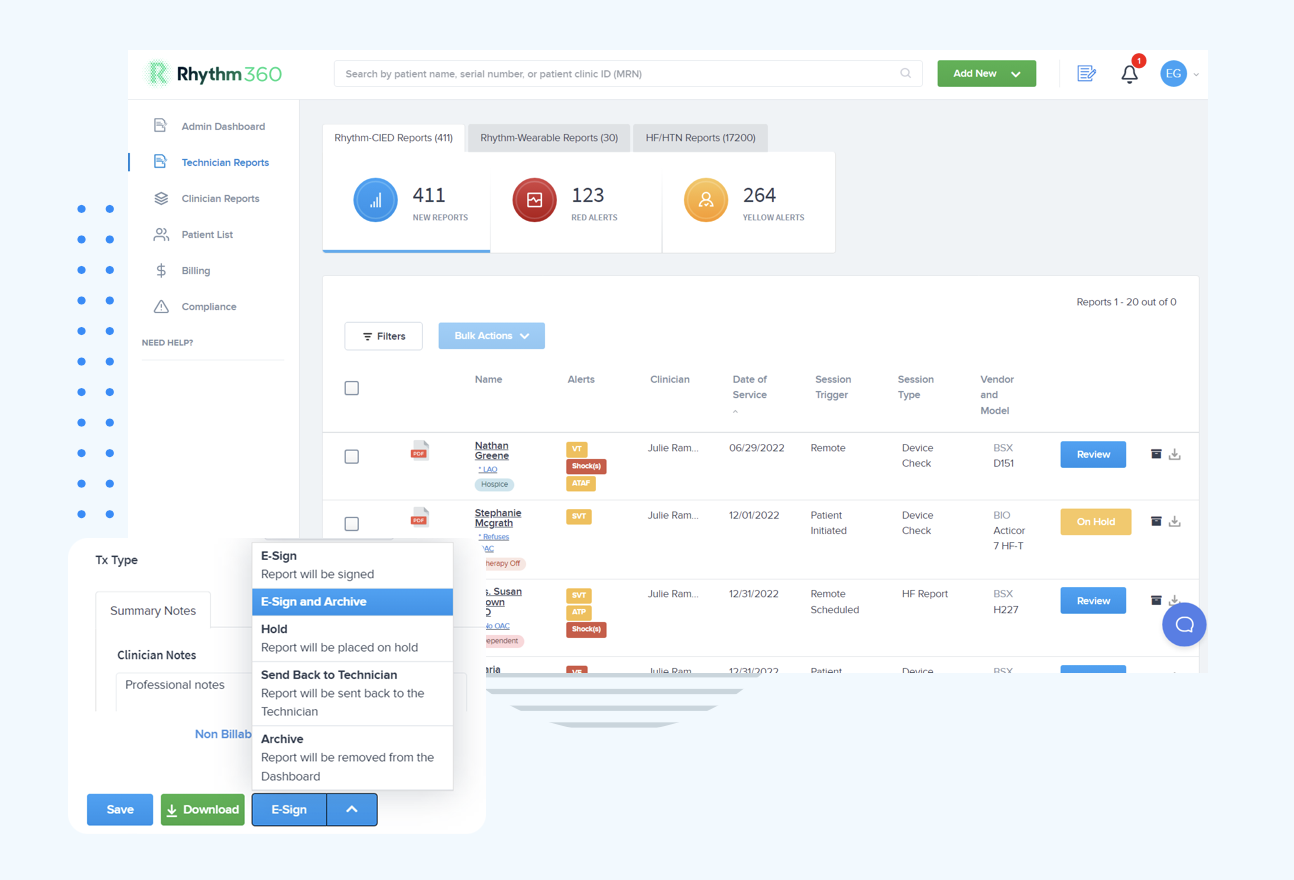
Rhythm360 ingests and normalizes data from all major device manufacturers, including Medtronic, Boston Scientific, Abbott, and Biotronik, into a single vendor-neutral dashboard. Automated report generation and CPT-compliant documentation, including codes 93298 and 93299, reduce manual work for staff and support auditable billing so practices can recover previously lost revenue.
Anticoagulation decisions for CIED-detected SCAF balance stroke risk, bleeding risk, and the duration-and-CHA₂DS₂-VASc framework outlined above. For patients with SCAF, clinicians still face a grey area and need individualized clinician-patient discussions that weigh benefits and risks together. Patients with SCAF plus prior vascular disease, including stroke or TIA, CAD, or PAD, may have higher absolute stroke rates and greater net benefit from anticoagulation than those without vascular disease. Implementing these nuanced, patient-specific anticoagulation decisions at scale requires operational infrastructure that surfaces the right alerts to the right clinician at the right time, especially in multi-vendor device populations.
Access to AI algorithms that aggregate remote monitoring data and identify mode-switch episodes linked to AF burden varies widely by practice setting and EMR capabilities. Mixed-device clinics without a unified platform must maintain separate logins, reconcile conflicting data formats, and manually track alert statuses. This workflow scales poorly as patient populations grow.
Rhythm360 uses AI-powered alert triage to filter non-actionable transmissions and surface clinically significant events, including confirmed AHREs that meet duration thresholds, with documented response times reduced by up to 80%. Bi-directional EHR integration with Epic, Cerner, Athenahealth, and other systems removes redundant data entry and supports a single source of truth across the care team.
Ready to reduce alert fatigue and unify your multi-vendor CIED workflow? Schedule a demo with the Rhythm360 team.
Patient: 72-year-old male, dual-chamber pacemaker, CHA₂DS₂-VASc score 3
Transmission date: 2026-06-14 | Device: [Vendor-neutral example]
AHRE Log Entry A: Atrial rate 194 bpm | Duration: 38 minutes | IEGM reviewed: Confirmed AF, with irregular atrial electrograms and no oversensing artifact. Action: Clinician notified. Anticoagulation discussion initiated per ACC/AHA threshold (CHA₂DS₂-VASc >3, episode <24 hours).
AHRE Log Entry B: Atrial rate 188 bpm | Duration: 4 minutes | IEGM reviewed: Unconfirmed AHRE, with far-field R-wave oversensing identified. Action: Classified as artifact. No anticoagulation change. Device reprogramming considered.
This example shows why IEGM adjudication serves as the mandatory step between an AHRE alert and any clinical decision. If a device-detected atrial episode remains unconfirmed after electrogram review, clinicians must classify and manage it as an unconfirmed AHRE rather than definite AF, because visual confirmation must precede clinical actions such as anticoagulation due to bleeding risk.
Accurate atrial fibrillation CIED detection depends on three converging elements. Devices need reliable programming that captures AHREs at validated rate and duration thresholds. Clinicians need rigorous IEGM adjudication to separate true AF from artifact and other tachyarrhythmias. Clinics need operational infrastructure that can process alert volumes across multi-vendor populations without degrading follow-up quality.
These technical and operational requirements exist because the clinical evidence from ASSERT, ARTESiA, and the NOAH-AFNET 6 meta-analysis shows that anticoagulation decisions must rest on confirmed episode duration and CHA₂DS₂-VASc score rather than device-generated flags alone. The bleeding-benefit tradeoff documented in these trials reinforces why confirmation comes before therapy and why clinics that consolidate detection, adjudication, and documentation into a single vendor-neutral platform can act on significant alerts promptly while scaling monitoring programs without proportional increases in administrative overhead.
Schedule a demo to see how Rhythm360 supports atrial fibrillation CIED detection, IEGM-based alert triage, and CPT-compliant documentation across your entire device population.
Frequently Asked Questions
What is the difference between an AHRE and confirmed subclinical atrial fibrillation?
An AHRE is a device-generated flag that indicates the atrial rate exceeded a programmed threshold for a minimum duration. It does not represent a diagnosis. Confirmed subclinical AF requires a clinician to review the stored intracardiac electrogram and verify that the episode represents true atrial fibrillation rather than artifact, oversensing, atrial flutter, or focal atrial tachycardia. Until that review occurs, the episode must be treated as an unconfirmed AHRE. This distinction matters clinically because starting anticoagulation based on an unconfirmed AHRE exposes the patient to bleeding risk without established benefit.
At what AHRE duration should a clinician consider anticoagulation?
Current ACC/AHA guideline language supports oral anticoagulation for confirmed SCAF episodes that last more than 24 hours when the patient’s CHA₂DS₂-VASc score exceeds 2. For episodes lasting 6 minutes to less than 24 hours, clinicians may consider anticoagulation when CHA₂DS₂-VASc exceeds 3, informed by ARTESiA data that showed a 37% relative reduction in stroke with apixaban versus aspirin along with a 1.80-fold increase in major bleeding. Episodes under 6 minutes have uncertain stroke significance and do not currently justify anticoagulation initiation. These thresholds do not function as absolutes, because individual bleeding risk, comorbidities, and prior vascular disease all influence the net clinical benefit.
How does alert fatigue from CIED monitoring affect patient safety?
Alert fatigue occurs when clinicians and device technicians receive a high volume of notifications, many of which are non-actionable because of artifact, oversensing, or short-duration AHREs below clinical thresholds. Over time, staff may deprioritize or miss critical alerts. In a multi-vendor clinic without a unified platform, this problem worsens because staff must navigate separate OEM portals, each with its own alert logic and display format. The practical result is delayed response to events such as confirmed new-onset AF, ventricular tachycardia, or device malfunction. Platforms like Rhythm360 address this problem by applying AI-powered triage that filters non-actionable transmissions and surfaces only clinically significant events, which can reduce critical response times by up to 80%.
What operational challenges arise when managing CIEDs from multiple manufacturers?
Clinics that implant devices from more than one OEM, including Medtronic, Boston Scientific, Abbott, Biotronik, and others, must maintain separate logins to non-interoperable manufacturer portals. Staff then need to reconcile data formats manually and track alert statuses for each vendor’s patient population. This fragmentation creates data silos, increases the risk of missed transmissions, and places a heavy administrative burden on device technicians and clinic administrators. It also complicates CPT-compliant billing documentation, because billable events may sit in multiple systems with no centralized audit trail. A vendor-neutral platform that ingests and normalizes data from all manufacturers into a single dashboard removes these silos and supports scalable, compliant clinic operations.
How does Rhythm360 support atrial fibrillation CIED detection workflows specifically?
Rhythm360 aggregates AHRE alerts and stored electrogram data from all major CIED manufacturers into a single HIPAA-compliant dashboard, which removes the need for multiple OEM portal logins. Its AI-powered alert triage system prioritizes confirmed or high-probability AF episodes based on duration, rate criteria, and patient risk profile, which lowers the noise-to-signal ratio for clinical reviewers. Automated report generation supports CPT-compliant documentation for remote monitoring codes, and bi-directional EHR integration with systems including Epic and Cerner ensures that adjudicated findings flow directly into the patient record. The platform’s mobile application allows clinicians to review transmissions and coordinate anticoagulation decisions from any location, which supports timely intervention even outside standard clinic hours.