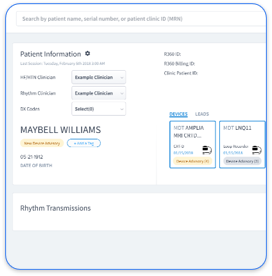
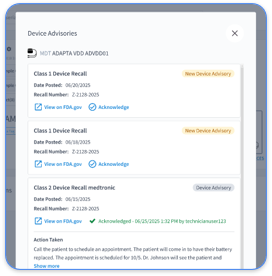
Revenue cycle management for cardiac device billing covers every step from patient data ingestion through final payment collection for cardiac implantable electronic devices (CIEDs) and remote patient monitoring services. The workflow includes automated data capture from multiple OEM portals and accurate CPT code assignment for procedures like 93298 (CIED interrogation), 99454 (device monitoring), and 93299 (technical component). After coding, teams submit claims and manage denials until payment is complete.
Traditional cardiac RCM struggles with fragmented OEM portals that require separate logins for Medtronic, Abbott, Boston Scientific, and Biotronik devices. Manual coding creates bottlenecks and errors, and more than 50% of initial denials are never resubmitted, resulting in permanent revenue loss. Remote monitoring programs add complexity because practices must track billable events across many device types and diverse patient populations.
Automated revenue cycle platforms solve these problems by unifying data streams, applying AI-powered CPT code generation, and delivering real-time denial prediction. Modern systems integrate bidirectionally with EHRs such as Epic and Cerner while staying vendor-neutral across all major cardiac device manufacturers.
Rhythm360 leads the market as a truly vendor-neutral platform that supports all major OEMs, including Medtronic, Boston Scientific, Abbott, and Biotronik, through unified API integrations. The platform reaches 99.9% data transmissibility by using redundant data feeds, computer vision, and AI-driven extrapolation, which closes connectivity gaps that limit single-vendor tools.
The AI alert triage system cuts response times for critical events by 80%, and automated CPT code generation supports accurate billing for 93298, 99454, and 93299. Practices report 300% revenue increases through consistent capture of previously missed billable events and streamlined workflows that remove manual data entry across multiple OEM portals.
Rhythm360’s mobile application gives clinicians HIPAA-compliant access to review transmissions and sign reports from any location, which supports weekend and after-hours monitoring. The platform includes integrated Twilio communication with full audit trails, 24/7 certified cardiac technician oversight, and Epic and Cerner integration that typically completes within days to weeks.

PaceMate, which recently acquired Paceart from Medtronic, offers cloud-based cardiac device management with strong compliance features and vendor-neutral support across multiple OEMs. The platform focuses on secure data handling and centralized device workflows for cardiology teams.
Implicity delivers AI-powered alert filtering with advanced algorithms that reduce non-actionable notifications. The solution concentrates on clinical workflow efficiency and clinician workload reduction but provides weaker billing automation than full revenue cycle platforms.
Murj focuses on workflow automation and cloud-based device management with vendor-neutral capabilities. The platform supports solid clinical workflows but does not publish ROI metrics that approach the 300% revenue increases reported by Rhythm360 and similar comprehensive solutions.
Octagos offers AI-driven filtering of non-actionable transmissions and supports bidirectional EHR integration. This cardiac-specialized platform helps practices improve revenue performance and reduce time spent on low-value alerts.
Legacy Paceart functions as an on-premise database system that primarily supports Medtronic devices. The system lacks modern cloud architecture, AI capabilities, and broad vendor-neutral support, which limits scalability for multi-OEM practices.
Rhythm Management Group combines software with monitoring services and provides full vendor-neutral support, AI alerting and CPT automation, and documented ROI metrics that include revenue growth up to 300%.
Platform | OEM Support (Vendor-Neutral) | AI Alerting/CPT Automation | Revenue Uplift |
Rhythm360 | All (Medtronic/BS/Abbott/Bio) | Yes (99.9%, 93298/99454) | 300% |
PaceMate | Yes | Partial | Not proven |
Implicity | Partial | Yes (alerts) | Moderate |
Murj | Yes | Partial | Low |
Octagos | Yes | Yes | Significant |
Paceart | Medtronic-only | No | Low |
RMG | Yes | Yes | 300% |
See how Rhythm360 outperforms competitors—schedule a demo and experience the impact of vendor-neutral automation.
Rhythm360 stands out through its cardiac-exclusive focus and dedicated service lines for both CIED management and HF/HTN remote physiological monitoring. The integrated Twilio communication framework, 24/7 certified cardiac technician oversight, and onboarding timeline of days to weeks create a clear advantage over generic RCM tools. The SaaS pricing model scales with practice size and delivers measurable ROI through automated CPT capture and lower denial rates.
High-performing revenue cycle platforms provide vendor-neutral unification across all major cardiac device OEMs, which removes data silos and manual portal navigation. AI alert triage reduces clinician fatigue and ensures that critical events such as new-onset atrial fibrillation or ventricular tachycardia receive rapid attention.
Automated CPT code generation for complex cardiac procedures, including 93298, 99454, and 93299, supports accurate billing and lowers denial rates. Bidirectional EHR integration with Epic, Cerner, and other major systems streamlines daily workflows and removes duplicate data entry.
Mobile access through HIPAA-compliant applications allows clinicians to review transmissions and coordinate care from any location, which supports after-hours monitoring. Predictive denial management and analytics help practices spot billing issues early and resolve them before they affect revenue.
Implementation starts with a detailed review of current pain points, including manual processes, OEM portal inefficiencies, and revenue leakage from missed billable events. The next phase includes platform demonstrations and evaluations, and Rhythm360 provides in-depth demos that highlight vendor-neutral integration and AI-driven automation.
EHR and OEM integration setup usually requires coordination with IT teams and device manufacturers to create secure data connections. Staff training covers new workflows and platform navigation, and intuitive interfaces help shorten the learning curve. Rhythm360’s implementation process typically finishes within days to weeks, while legacy systems often require several months.
AI advancements in 2026 include automated billing and coding with real-time code suggestions based on documentation during patient encounters. Predictive denial management uses machine learning to flag high-risk claims before submission, which enables proactive corrections and higher first-pass resolution rates.
Multi-modality remote patient monitoring now combines cardiac device data with wearable sensors, blood pressure monitors, and weight scales for comprehensive management. Rhythm360 supports these trends with specialty-specific AI that unifies ECG, device interrogations, and physiological monitoring data to improve both clinical and financial outcomes.
Primary CPT codes for cardiac device billing include 93298 for CIED interrogation device evaluation, 93299 for the technical component of device interrogation, and 99454 for remote patient monitoring device supply and daily recording. Additional codes include 93264 for CardioMEMS remote monitoring and implantation codes such as 33249 for ICD system insertion. Rhythm360 automates accurate assignment of these complex codes to support full reimbursement.
Modern AI platforms can automate 95% or more of cardiac device billing tasks through intelligent data capture, automated CPT assignment, and predictive denial management. Rhythm360 reaches 99.9% data transmissibility and automates most billing workflows while keeping human oversight for complex scenarios and quality review.
Rhythm360 functions as a leading vendor-neutral platform with comprehensive support for all major OEMs, including Medtronic, Boston Scientific, Abbott, and Biotronik. The platform’s documented 300% ROI, 80% reduction in critical response times, and seamless integration capabilities make it a strong choice for practices that want unified cardiac device management.
Cardiology revenue cycle management covers the full process of capturing, coding, billing, and collecting payment for cardiac services, including device implantations, interrogations, and remote monitoring. The work requires complex CPT code management, multi-OEM data integration, and specialized billing workflows for CIED and RPM programs.
AI improves cardiac billing through automated CPT code generation, real-time documentation analysis, and predictive denial management. Machine learning models review historical billing patterns to uncover improvement opportunities, and computer vision tools extract data from PDFs and unstructured reports. Rhythm360’s AI delivers industry-leading accuracy for complex cardiac billing situations.
Healthcare organizations experience significant revenue leakage, and denial rates can reach 20% for complex cardiac procedures. Manual workflows and fragmented OEM portals cause missed billable events and coding errors that reduce profitability. Automated platforms such as Rhythm360 capture previously missed revenue and streamline billing workflows to protect margins.
Multi-OEM portal chaos and manual billing workflows cost cardiology practices millions in lost revenue and strain clinical staff. Rhythm360 leads automated revenue cycle platforms for cardiac device billing and delivers documented 300% revenue increases through vendor-neutral integration and AI-driven automation. Schedule a demo today to improve financial performance and remove billing inefficiencies that drain resources and affect patient care.