Cardiology teams make better platform decisions when they focus on a small set of concrete, measurable capabilities. The factors below work together to determine how well a solution supports clinical care, staff efficiency, and revenue capture.
Leading RPM platforms prioritize seamless EHR integration and multi-device syncing to reduce clinician workflow burden while supporting comprehensive cardiac monitoring across diverse patient populations.
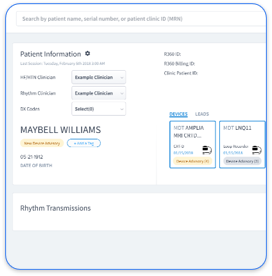
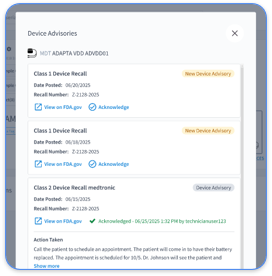
Rhythm360 functions as a vendor-neutral cardiac RPM platform that unifies data from all four major device manufacturers and applies advanced AI triage to reduce critical response times by 80%. Its data normalization engine processes APIs, HL7, XML, and unstructured PDFs with computer vision, which achieves greater than 99.9% data transmissibility through redundant feeds. Bi-directional EHR integration with Epic, Cerner, and Athenahealth supports automated workflows, while automated CPT code capture can increase practice revenue by up to 300%.
A HIPAA-compliant mobile app enables real-time monitoring from any location, and the integrated Twilio framework tracks patient engagement across channels. Rhythm360 performs especially well in multi-OEM environments, so it fits practices that manage diverse device populations and want both operational efficiency and strong revenue performance.

PaceMate delivers cloud-based cardiac device monitoring with solid workflow automation features that support daily clinical operations. The recent acquisition of PaceArt from Medtronic expanded its device compatibility and strengthened its market footprint. PaceMate offers robust EHR integration with more than 700 deployments, including real-time and bi-directional connections with Epic and other systems, plus automated reporting tools.
The platform, however, does not match the comprehensive AI triage capabilities or vendor-neutral depth available in Rhythm360. Practices with moderate device volumes that need reliable cloud-based monitoring often find PaceMate a practical fit.
Implicity centers its value on AI-powered algorithmic alert filtering that reduces non-actionable notifications for clinical teams. The platform brings strong technical capabilities in data analysis and pattern recognition and holds particular strength in European markets.
Its vendor-neutral integration and revenue cycle automation features remain less extensive than those of Rhythm360, which limits its impact on billing and end-to-end workflow. Implicity works best for practices that place advanced AI analytics above comprehensive operational integration.
Murj offers cloud-based workflow automation that focuses on simplifying clinical processes for device clinics. The platform supports vendor-neutral multi-device connectivity across all major manufacturers and provides advanced EHR integration with proprietary billing logic and automated revenue tools.
Its AI triage capabilities, however, trail industry leaders such as Rhythm360, which can leave more manual review work for staff. Smaller practices that want straightforward workflow improvements without heavy customization often choose Murj.
Octagos highlights AI-driven filtering of non-actionable transmissions and supports bi-directional EHR integrations with more than 200 connections. The platform delivers solid technical infrastructure, vendor-neutral workflows, and broad device compatibility, including features that cut unnecessary transmissions by more than 65%.
Depth of integration and workflow automation can vary by deployment when compared with Rhythm360, which may affect larger or more complex practices. Octagos suits organizations that prioritize specific AI filtering capabilities within an existing infrastructure.
Paceart functions as a legacy on-premise database system that lacks modern cloud architecture and AI-driven workflow automation. It played an important historical role in cardiac device management but now shows limitations in scalability, remote access, and integration flexibility. Practices that only need basic organizational tools without advanced integration or automation sometimes maintain Paceart, although it does not align well with 2026-ready digital strategies.
Rhythm Management Group combines a software platform with outsourced monitoring services, which adds clinical support but can create reliance on an external team. The solution offers reasonable device compatibility and core workflow features but does not provide the same level of AI triage or revenue-focused automation as leading platforms. Practices that prefer to offload monitoring tasks rather than build in-house expertise often consider this hybrid model.
This comparison reviews seven leading cardiac RPM platforms across factors that shape clinical outcomes, operational efficiency, and financial performance. The table below shows a clear pattern: several platforms excel in individual areas, yet Rhythm360 delivers consistently strong results across vendor neutrality, AI triage, EHR integration depth, and revenue impact.
Platform | Vendor-Neutral | AI Triage | EHR Integration | Revenue Optimization |
Rhythm360 | Yes | 80% Reduction | Epic/Cerner/Athena | 300% Increase |
PaceMate | Partial | Basic | Strong | Moderate |
Implicity | Partial | Advanced | Basic | Limited |
Murj | Yes | Basic | Standard | Advanced |
Rhythm360 consistently outperforms competitors across these core criteria and delivers the most complete combination of vendor-neutral integration, advanced AI capabilities, and measurable revenue gains for cardiology practices.
Cardiology practices can simplify platform selection by scoring each option against a weighted set of criteria. Assign a score from 1 to 10 for each factor based on how well a platform fits your specific environment, then apply the weights below to compare total scores.
For practices managing multiple OEM devices, Rhythm360 typically scores highest across these evaluation areas and delivers the revenue improvements documented in real-world deployments through comprehensive vendor-neutral integration and AI-driven workflow automation.
Calculate your practice's specific ROI potential based on current patient volume and device mix.
Rhythm360 by RhythmScience ranks as the leading vendor-neutral cardiac RPM platform for 2026, offering comprehensive integration across all major CIED manufacturers with AI-powered alert triage that reduces response times by 80%. Its data normalization engine achieves greater than 99.9% transmissibility, and automated CPT code capture can increase practice revenue by up to 300%.
Bi-directional EHR integration with Epic, Cerner, and Athenahealth supports seamless workflow automation, which makes Rhythm360 a strong choice for practices that want to eliminate data silos while improving efficiency and financial performance.
The most effective cardiac monitoring devices for practices include CIEDs such as pacemakers, ICDs, and implantable loop recorders from all major manufacturers, CardioMEMS pulmonary artery monitors for heart failure patients, and cellular-connected blood pressure monitors, scales, and pulse oximeters for broader cardiac risk management.
Rhythm360 supports this full spectrum of devices through vendor-neutral integration, so practices can choose hardware based on clinical need rather than platform constraints while still maintaining unified data management and automated workflows.
Cardiac RPM EHR integration relies on bi-directional data exchange using HL7 and FHIR protocols, which enables automatic data flow between monitoring platforms and electronic health record systems such as Epic, Cerner, and Athenahealth.
Advanced platforms like Rhythm360 remove manual data entry by populating patient records with device transmissions, alerts, and billing documentation while also pulling relevant patient information to support clinical decisions. This approach reduces administrative work, improves data accuracy, and supports complete documentation for both patient care and revenue capture.
The most effective remote patient monitoring technology for 2026 combines AI-powered triage, redundant data feeds, and vendor-neutral device integration into a single platform. Leading solutions use artificial intelligence to filter non-actionable alerts and prioritize critical events, apply computer vision to process unstructured data formats, and rely on multi-channel data ingestion to deliver near-perfect data reliability.
Rhythm360 represents this next-generation model by delivering the response time improvements described earlier while maintaining broad device compatibility and automated workflow integration for strong clinical and operational performance.
Cardiac RPM platforms improve practice revenue through automated CPT code capture and documentation for remote monitoring services (93298, 93299, 99454), reduced manual data entry costs, and expansion of billable monitoring programs.
Leading platforms such as Rhythm360 generate substantial revenue gains by streamlining workflows, lowering staff overhead through unified data management, and helping practices capture billing opportunities that previously went unclaimed. Additional benefits include better patient adherence, fewer emergency interventions, and the ability to monitor larger patient panels without sacrificing quality of care.
The 2026 cardiac remote patient monitoring landscape favors vendor-neutral platforms that unify fragmented OEM data, apply AI-driven clinical intelligence, and support comprehensive revenue programs. Rhythm360 by RhythmScience emerges as the clear leader, offering unmatched vendor-neutral integration, the response time improvements mentioned earlier, and proven revenue optimization for cardiology practices.
Organizations that adopt a comprehensive RPM solution now gain meaningful advantages in clinical outcomes, operational efficiency, and financial performance.
Explore how Rhythm360 can transform your cardiac RPM program and see the impact unified, intelligent monitoring can have on both patient care and practice revenue.