Platform | Interoperability (OEMs/HL7 FHIR) | AI Alerts/HIPAA/Billing | Scalability/ROI |
Rhythm360 | All major OEMs, bi‑directional Epic/Cerner | AI triage, full HIPAA, automated CPT | 300% revenue increase |
PaceMate | Limited OEM breadth | Strong AI, basic billing | Moderate scalability |
Implicity | Vendor‑specific gaps | AI alerting leader | Good for specialized use |
Murj | Basic cloud workflows | Standard compliance | Small clinic focus |
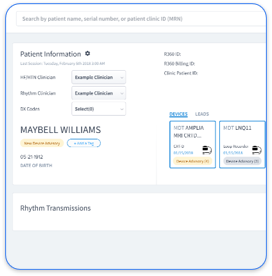
Rhythm360 serves as a unified workflow hub for multi‑vendor cardiac device integration in cardiology. The platform consolidates data from Medtronic, Abbott, Boston Scientific, Biotronik, and other OEM portals into a single AI‑driven dashboard that removes data silos and reduces administrative chaos.

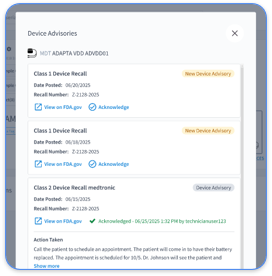
The AI alert triage engine cuts response times for critical events by up to 80%. It filters non‑actionable noise and pushes clinically significant events such as new‑onset atrial fibrillation or ventricular tachycardia to the top of the queue. AI‑enhanced systems save an estimated 559 personnel hours per year for every 600 patients on remote monitoring, which sharply reduces alert fatigue and supports safer care.
Rhythm360 uses computer vision to parse PDFs and normalize fragmented data streams, achieving greater than 99.9% transmissibility through redundant data feeds. The platform connects bi‑directionally with Epic and Cerner, and typical onboarding with integration completes within a few days to a few weeks. In a common scenario, when a critical AFib event appears on a Saturday morning, clinicians can act immediately through the mobile app and start anticoagulation protocols, which may prevent a stroke that would otherwise remain undetected until Monday.
The financial upside is significant. Practices report up to 300% profitability gains through precise CPT code capture (93298, 93299, 99454) and automated billing documentation. Rhythm360 supports complete service lines for both CIED monitoring and heart failure or hypertension remote physiological monitoring, rather than focusing on a single workflow slice.
PaceMate delivers robust AI for cardiac device monitoring and reliable cloud infrastructure for device data management. Its algorithms handle alert filtering well and support consistent performance for compatible devices.
OEM coverage remains narrower than vendor‑neutral platforms, which creates gaps for practices that rely on a broad device mix. Many teams still juggle multiple portals when they adopt PaceMate. Billing automation works, yet it lacks the deeper CPT code optimization that drives the largest revenue gains.
Implicity excels at AI‑powered alert filtering and uses advanced machine learning models to reduce false alarms and highlight urgent events. Alert accuracy improves over time as the system learns from real‑world data.
The platform’s vendor‑specific orientation introduces challenges for practices that manage devices from several OEMs. It performs well for focused use cases but does not deliver the fully vendor‑neutral environment many cardiology groups now expect. Billing automation exists, although it trails platforms that center their design on revenue performance.
Murj offers straightforward cloud‑based workflows that suit smaller cardiology practices with simple integration needs. It covers standard HIPAA requirements and core device monitoring features, which help teams move away from legacy tools.
This simplicity keeps adoption easy but limits long‑term impact. Murj does not provide advanced AI, broad OEM integration, or high‑end billing automation, so larger groups often outgrow it as they scale remote monitoring programs.
Octagos focuses on tight bi‑directional EHR integration and AI‑driven filtering of non‑actionable transmissions. It connects reliably with major EHRs and supports consistent alert management for routine cardiac device workflows.
The platform handles multi‑vendor integration and revenue improvement reasonably well. However, it does not match the cardiology‑specific depth, advanced AI alerting, and revenue focus that Rhythm360 delivers.
Paceart functions as a legacy on‑premise database for Medtronic devices and remains familiar to many long‑standing practices. It organizes device data but does not provide modern cloud capabilities or AI‑driven workflows.
Limitations appear quickly when teams introduce multiple OEMs or require analytics, mobile access, and automated triage. Paceart acts more like a filing system than a full workflow automation platform, which restricts its value for practices seeking major operational change.
Redox operates as a healthcare API engine that moves data between systems efficiently. It supports broad interoperability but does not include cardiology‑specific features, AI alerting, or built‑in clinical workflows.
Cardiology practices use Redox most effectively as an integration layer beneath specialized platforms. Its pre‑built connections speed up general healthcare data exchange, while dedicated cardiac tools handle alerting and revenue workflows.
Mirth Connect provides open‑source integration tools that appeal to organizations with strong internal technical teams. It offers flexible data transformation and routing for complex healthcare projects.
Most cardiology practices find Mirth too resource‑intensive. Extensive manual configuration, ongoing maintenance, and the absence of pre‑built cardiology workflows, AI alerting, and automated billing require substantial custom development just to match out‑of‑the‑box features from specialized platforms.
Cardiology practices in 2026 face severe data fragmentation and inefficient workflows. OEM silos force staff to log into several portals, which increases administrative work and raises the risk of missed critical events. AI‑driven triage systems markedly reduce the workload on clinicians by filtering out false alarms and routine data while ensuring urgent events are promptly addressed.
Alert fatigue adds another layer of risk as clinicians receive constant non‑actionable notifications from older systems. Modern AI platforms such as Rhythm360 counter this problem with intelligent triage that surfaces clinically meaningful events and suppresses noise. Revenue leakage from missed billing and weak documentation further strains operations, so automated CPT capture now plays a central role in financial stability.
Comprehensive vendor‑neutral platforms solve these issues by unifying device data in one dashboard, applying AI‑powered alert management, and automating billing workflows. Rhythm360 delivers a complete solution for CIED monitoring and chronic disease management, addressing integration, clinical efficiency, and measurable ROI in a single environment.
Successful multi‑vendor automation starts with a clear assessment. First, map your current OEM device mix and EHR setup, so you understand integration needs. Document existing workflows and highlight pain points such as alert fatigue, billing gaps, and repetitive administrative steps.
Next, shortlist platforms with strong AI, full HIPAA compliance, and proven cardiology use cases. All certified EHRs in the U.S. must support the latest data standards like USCDI v3 via FHIR APIs by 2025, so confirm that each option meets current and upcoming standards.
Then schedule demos with leading vendors, with special attention to Rhythm360’s 99.9% data fidelity and cardiology‑specific features. Review implementation timelines, training plans, and projected ROI for your patient volume. Schedule a demo to experience the best workflow automation platform for multi‑vendor medical device integration and see how unified workflows can reshape daily operations.
Rhythm360 offers advanced AI for cardiology workflow automation, with intelligent alert triage that cuts response times by 80% and filters non‑actionable notifications. Its AI processes data from all major OEM devices, uses computer vision for PDF parsing, and supports predictive risk stratification. Algorithms are trained specifically for cardiac device monitoring and chronic disease management rather than general healthcare use.
Rhythm360 leads in vendor‑neutral CIED integration and supports Medtronic, Abbott, Boston Scientific, Biotronik, and other major manufacturers through one interface. The platform removes the need for multiple OEM logins and normalizes data across device types. Other platforms may cover selected vendors, but Rhythm360’s breadth prevents device data from remaining siloed.
HL7 FHIR standards support consistent data exchange between devices and EHRs through standardized APIs. Rhythm360 uses advanced FHIR implementation for bi‑directional EHR integration, which sends device data directly into patient charts and powers clinical decision support. FHIR compliance keeps Rhythm360 compatible with Epic, Cerner, and other major EHRs and simplifies ongoing synchronization.
Workflow automation platforms can deliver strong ROI across clinical and financial metrics. Rhythm360 users report up to 300% profitability gains through accurate CPT capture, lower administrative overhead, and better billing accuracy. The platform removes redundant data entry, cuts staff time on routine tasks, and recovers revenue that previously went unbilled, so many implementations pay for themselves within months.
Timelines depend on platform complexity and practice needs. Rhythm360 uses a streamlined onboarding process with EHR integration and multi‑vendor connectivity that usually completes within a few days to a few weeks. The team supports data migration, staff training, and workflow tuning so practices see value quickly while daily patient care continues.
Across the eight platforms reviewed, Rhythm360 stands out as the most complete choice for cardiology practices in 2026. Competitors address pieces of the workflow, yet Rhythm360 combines vendor‑neutral integration, advanced AI alerting, full HIPAA compliance, and proven revenue gains in one platform.
Montefiore Health System reduced repetitive tasks by over 50% using integrated cardiac remote monitoring, which shows how unified automation can reshape daily work. 74% of healthcare executives with production AI report ROI on workflow integration use cases, confirming the business case for advanced automation.
Schedule a Rhythm360 demo today to see how 99.9% data reliability, 80% faster alert response, and up to 300% revenue growth can elevate patient care and practice performance.