Separate OEM portals create unsustainable operational burdens for cardiology practices. Device technicians spend hours logging into multiple systems, manually transcribing data, and reconciling conflicting information across Medtronic CareLink, Boston Scientific LATITUDE, and Abbott platforms.
This fragmentation delays responses to critical events such as new-onset atrial fibrillation or ventricular tachycardia episodes that can lead to strokes or sudden cardiac death.
Alert fatigue intensifies these problems as staff face a constant stream of non-actionable notifications from legacy systems. AI-enhanced RPM programs achieve up to 70% fewer readmissions for chronic conditions including heart disease, which shows how intelligent alert prioritization directly supports better outcomes.
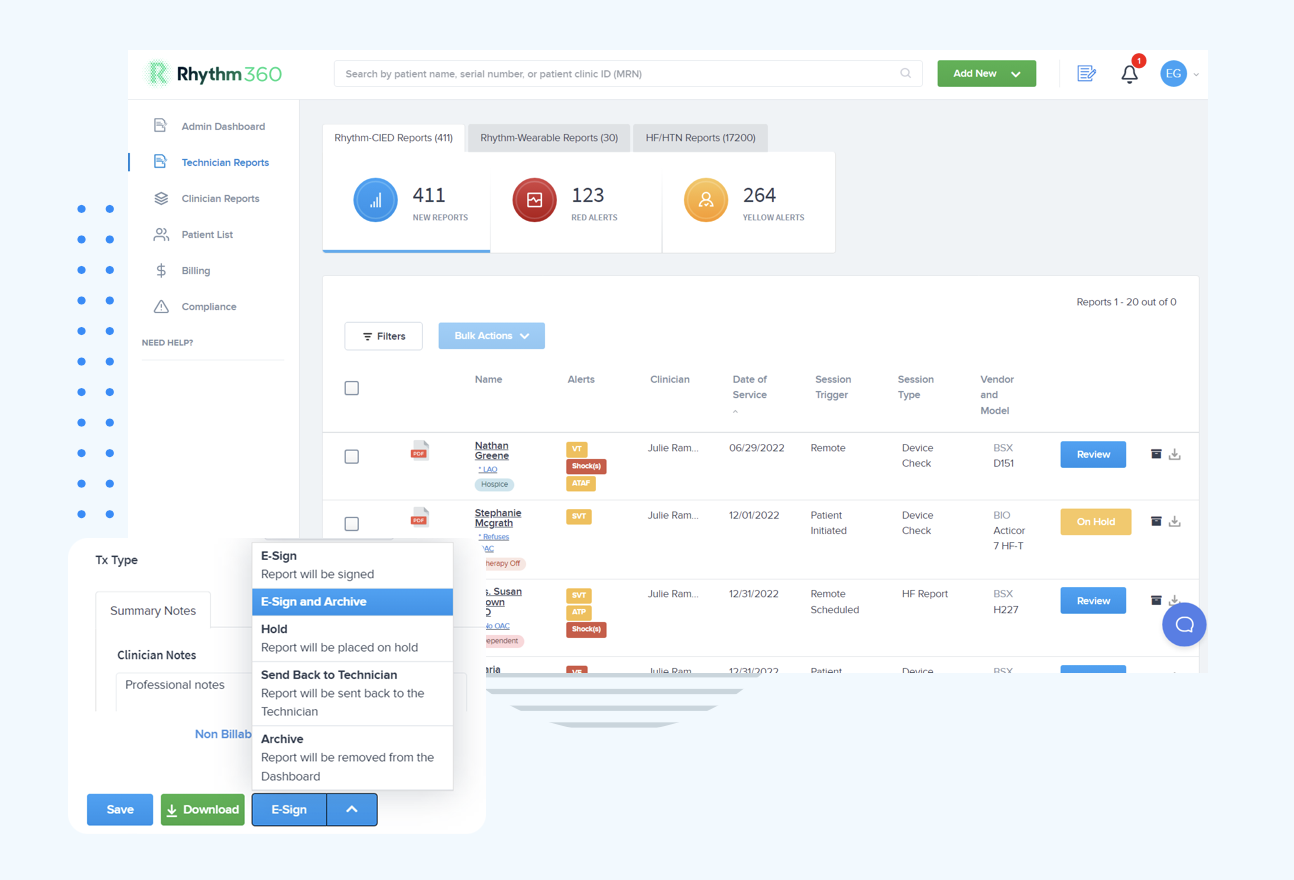
Modern vendor-neutral platforms address these pain points by unifying fragmented data sources and intelligently filtering alerts. Complete vendor neutrality across all major OEMs removes portal-hopping and repetitive data entry. AI-powered triage dramatically reduces alert fatigue so staff can focus on high-risk patients instead of notification noise.
Bi-directional EHR integration with Epic and Cerner closes the loop between device data and clinical workflows. Automated billing documentation captures CPT code opportunities that manual processes miss, creating substantial billing ROI improvements. High data reliability, secure mobile access for on-call clinicians, rapid implementation, and scalability from solo practices to integrated health systems round out the core requirements.
Revenue capture now represents a central evaluation factor. Practices lose significant income through missed CPT code opportunities (93298, 93299, 99454) when manual workflows fail to document billable events. Vendor-neutral platforms with automated billing documentation help practices recover this lost revenue while staying compliant with Medicare remote monitoring requirements.
The 2026 landscape features several competitive platforms, each with distinct strengths and limitations. Our analysis evaluates seven leading solutions across critical performance metrics. The table below highlights how each platform performs on three core factors for multi-OEM practices: complete vendor neutrality, AI-driven alert reduction, and bi-directional EHR integration.
Platform | Vendor Neutrality | AI Triage | EHR Integration |
Rhythm360 ⭐⭐⭐⭐⭐ | Complete (All OEMs) | 80% Alert Reduction | Epic/Cerner Bi-directional |
PaceMate ⭐⭐⭐⭐ | Complete (All Major OEMs) | Advanced AI Triage | Bi-directional with Major EHRs |
Implicity ⭐⭐⭐⭐ | Multi-OEM Support | Advanced AI Filtering | Standard Integration |
Murj ⭐⭐⭐ | Workflow Focused | Automation Tools | Basic EHR Support |
Rhythm360 stands out with comprehensive vendor neutrality that supports all major OEM platforms through API integration, HL7 messaging, XML parsing, and computer vision-powered PDF analysis. The platform’s AI-powered alert triage system delivers the 80% alert reduction mentioned earlier while maintaining more than 99.9% data transmissibility through redundant data feeds.

Key differentiators include 24/7 certified cardiac technician oversight, an integrated Twilio communication framework, mobile app access for on-call clinicians, and substantial revenue gains through automated CPT code capture. The SaaS-based pricing model scales from solo practices to large health systems, and implementation typically completes within days or weeks instead of months.
PaceMate offers strong capabilities after its acquisition of Medtronic’s PaceArt platform and provides broad vendor neutrality with advanced AI features. Implicity delivers advanced algorithmic filtering but has more limited billing automation features.
A typical mid-sized cardiology practice may manage 500 CIED patients across multiple device manufacturers. Before Rhythm360, the practice administrator might spend hours each day logging into separate OEM portals, generating reports by hand, and chasing billing documentation. Staff turnover often rises under these conditions because repetitive administrative tasks and constant alerts create burnout.
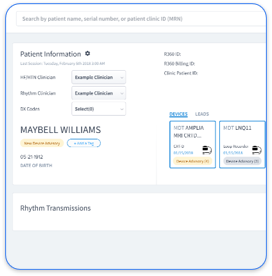
After Rhythm360 deployment, the same practice works from a single dashboard that displays all patient data regardless of device manufacturer. AI-powered triage automatically prioritizes critical alerts while filtering non-actionable notifications. Automated billing documentation captures revenue that previously slipped through the cracks, leading to significant increases in RPM-related income.
Clinicians experience a major shift in on-call responsibilities through mobile access. An electrophysiologist can receive a prioritized alert about new-onset atrial fibrillation on a weekend morning, review the complete patient history in the mobile app, and start anticoagulation protocols before stroke symptoms appear. Repeated across large patient populations, this pattern shows how vendor-neutral platforms prevent adverse outcomes while improving workflow efficiency.
The contrast between OEM-specific and vendor-neutral approaches becomes clear when practices manage devices from several manufacturers. Traditional workflows require separate logins, different interfaces, and manual data reconciliation. Rhythm360 removes these inefficiencies through unified data normalization and intelligent alert management.
Modern pacemakers and other cardiac implantable electronic devices transmit data automatically through cellular networks and wireless protocols. Medtronic’s CareLink remote monitoring network enables real-time detection of arrhythmias and device alerts with AI-driven predictive analytics, while Boston Scientific’s LATITUDE NXT system supports automatic wireless transmission of cardiac device data with AI-driven alert prioritization.
The transmission process follows a consistent pattern. The device undergoes interrogation during scheduled or triggered events. Data then moves through encryption and cellular transmission to manufacturer servers. Finally, platforms ingest this information through APIs or data parsing. Advanced platforms such as Rhythm360 normalize these disparate data streams into unified patient records that clinicians can review in a single dashboard.
Accessing comprehensive pacemaker data requires a clear integration sequence. Begin by enrolling patients in OEM remote monitoring programs such as CareLink and LATITUDE, since these manufacturer systems provide the initial data source. After enrollment, configure vendor-neutral platform connections to ingest data from all manufacturer sources so fragmented OEM feeds converge into one system.
Once data flows into a single platform, establish unified dashboard access for clinical staff with appropriate permissions so the team can use the consolidated information. Next, implement automated alert routing and escalation protocols that rely on this unified data to prioritize critical events across all device types. Finally, integrate billing documentation workflows to capture CPT code opportunities automatically and ensure that clinical data also supports consistent revenue capture.
Rhythm360 streamlines this entire process through automated data ingestion, intelligent normalization, and seamless EHR integration. Practices reduce implementation complexity while gaining complete data capture across all device manufacturers.
Choosing a pacemaker remote monitoring platform works best when you follow a structured decision framework. Start by assessing your current OEM device mix and future implant plans, since this baseline reveals which platforms can truly support your patient population. After you confirm vendor compatibility, prioritize AI-powered alert triage and bi-directional EHR integration because these capabilities directly address alert fatigue and workflow fragmentation.
With technical requirements defined, verify financial performance through client references that speak to ROI improvements and automated billing features. This step ensures the platform delivers measurable financial gains instead of only operational promises. Next, test mobile access functionality and scalability for your practice size, because on-call workflows and growth plans will stress-test real-world usability. Finally, schedule demonstrations with top-ranked platforms and pay close attention to Rhythm360’s vendor-neutral approach for multi-OEM environments.
This framework keeps platform capabilities aligned with practice requirements while supporting strong financial performance. Apply this decision framework in a live Rhythm360 demonstration to see how vendor-neutral integration addresses your specific practice needs.
Vendor-neutral remote patient monitoring platforms integrate data from all major device manufacturers, including Medtronic, Boston Scientific, Abbott, and Biotronik, into unified dashboards. This approach removes the need for separate OEM portal logins and reduces administrative burden. Practices gain more accurate data, consistent population-level views, and simplified training because staff learn one interface instead of several. The result is better patient care and fewer data silos.
AI-powered alert triage systems analyze incoming device data and separate clinically significant events from routine notifications. Advanced algorithms prioritize critical arrhythmias, device malfunctions, and meaningful physiological changes while filtering non-actionable alerts. This intelligent filtering can cut alert volume by up to 80 percent, which allows clinical staff to focus on patients who need immediate attention instead of managing overwhelming queues.
PaceMate and Rhythm360 both provide strong vendor neutrality across major OEM platforms. Rhythm360 adds a tightly integrated combination of AI-powered triage, comprehensive EHR connectivity, automated billing documentation, and robust mobile access. Together, these capabilities create a complete solution for practices that manage diverse device populations and seek the revenue gains and alert reduction results described earlier.
Key CPT codes for cardiac device remote monitoring include 93298 for initial setup and patient education, 93299 for technical monitoring and report generation, and related RPM codes (99453-99458) for physiological data collection and interpretation. Each code carries specific documentation requirements and time thresholds. Automated platforms such as Rhythm360 track these details and capture billable events through intelligent documentation, which supports Medicare compliance and consistent revenue recovery. Manual workflows often miss these opportunities and create avoidable financial losses.
Modern platforms provide secure, HIPAA-compliant mobile applications that allow clinicians to review transmissions, sign reports, and coordinate care from smartphones or tablets. This mobility reshapes on-call responsibilities by enabling immediate responses to critical alerts from any location. Rhythm360’s mobile platform includes full patient history access, alert prioritization, and integrated communication tools for comprehensive remote patient management.
The available evidence supports Rhythm360 as a leading vendor-neutral pacemaker remote monitoring platform for 2026. Comprehensive OEM integration, AI-powered alert triage, and strong revenue performance turn long-standing operational challenges into strategic strengths. The SaaS-based pricing model and rapid implementation timeline make adoption realistic for practices of all sizes.
Cardiovascular implants hold a 75.4% share of the global smart implants market, and 81% of US clinicians use RPM with 305% growth since 2021. These trends show how unified cardiac data management continues to grow in strategic importance. Practices that adopt vendor-neutral platforms now gain clear advantages in patient care quality, operational efficiency, and financial performance.
The choice remains straightforward. Practices can continue struggling with fragmented OEM portals and manual workflows, or they can transform operations with Rhythm360’s comprehensive solution. Request your personalized demonstration to see how vendor-neutral AI-powered cardiac monitoring can reshape your practice operations and patient outcomes in 2026.