Current remote monitoring workflows impose significant operational costs on cardiology practices. Administrative staff spend 15 to 20 hours each week logging into multiple OEM portals, manually transcribing data, and reconciling conflicting information across platforms. This fragmentation creates clinical anxiety because providers worry about missing critical events buried in overwhelming alert volumes.
Financial implications extend beyond staff overhead. CMS CY 2026 final rule expansions for remote monitoring services create new revenue opportunities worth thousands of dollars per patient annually, but practices cannot capture this revenue without unified data systems. Manual workflows block the consistent documentation required for CPT code compliance, which results in rejected claims and leaves this money on the table.
Heart failure patients require specialized monitoring parameters such as thoracic impedance thresholds, fluid index trends, and weight gain patterns. Traditional OEM portals lack integrated heart failure protocols, so clinicians must piece together critical information from disparate sources while managing time-sensitive clinical decisions.
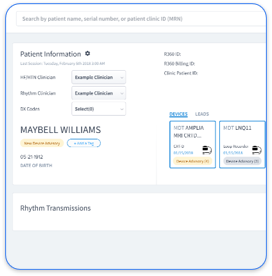
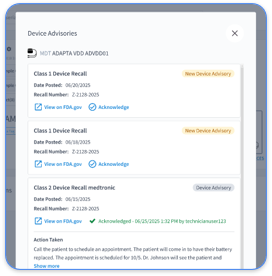
These fragmented workflows, wasted staff hours, missed revenue, and scattered heart failure data require a fundamentally different approach. Rhythm360 by RhythmScience addresses these challenges through a comprehensive, HIPAA-compliant cloud platform that unifies multi-vendor CIED data into a single clinical workspace.
The system normalizes data from all major manufacturers, including Medtronic, Abbott, Boston Scientific, and Biotronik, using AI-powered algorithms and computer vision technology.

This unified approach delivers six core capabilities that directly address the operational and clinical challenges described above.
Clinical testimonials demonstrate real-world impact. “Rhythm360 prevented multiple weekend catastrophes by flagging critical arrhythmias that would have been missed in our old fragmented workflow,” reports a leading electrophysiology clinic.
See this unified workflow in action with a live Rhythm360 session for your team.
Use these 12 evidence-based steps to unify CIED data, cut alert fatigue by up to 80%, improve heart failure outcomes, and strengthen billing compliance for better practice profitability.
Implementing these twelve practices requires a platform that can execute all of them at once, which exposes critical gaps in many competing solutions. Rhythm360 delivers superior clinical and operational outcomes compared to traditional remote monitoring options. The comparison below highlights three differentiators that directly affect clinical effectiveness and practice revenue.
Feature | Rhythm360 | PaceMate | OEM-Tied Solutions |
Multi-OEM Unification | Yes (All major manufacturers) | Limited compatibility | Single vendor only |
AI Alert Triage (80% faster) | Advanced AI filtering | Basic rule-based alerts | Manual review required |
CPT Billing Automation (3x revenue increase) | Fully automated documentation | Manual billing support | No billing integration |
Clinical impact data shows measurable improvements. “Our Saturday morning atrial fibrillation detection rate increased 80% after implementing Rhythm360 unified monitoring, preventing multiple potential strokes,” reports a multi-physician cardiology practice.
Transform your practice outcomes today. Request a personalized ROI assessment to compare your current monitoring costs with Rhythm360 results.
Heart failure patients require monitoring of thoracic impedance trends, fluid index calculations, daily weight measurements, and activity levels. Thoracic impedance decreases often precede clinical decompensation by 2 to 3 weeks, which allows proactive intervention. Combined with home scale data and blood pressure monitoring, these parameters create a comprehensive early warning system for heart failure exacerbations.
AI-powered alert triage systems such as Rhythm360 filter non-actionable notifications while prioritizing clinically significant events. Effective strategies include setting patient-specific thresholds rather than default values, using trending analysis instead of single-point alerts, and relying on certified cardiac technician oversight for initial screening. This approach reduces alert volume by 70 to 80 percent while maintaining clinical sensitivity.
Remote physiological monitoring codes offer significant revenue potential, with the primary codes detailed in Best Practice #9 generating more than $140 per patient per month when documented and billed correctly. Consistent use of device-specific codes further increases revenue and supports sustainable remote monitoring programs.
Vendor-neutral platforms remove data silos that appear when practices use devices from multiple manufacturers. They provide unified workflows, reduce staff training requirements, and enable comprehensive patient views regardless of device brand. This approach scales efficiently as practices expand both their device mix and patient populations.
HIPAA-compliant mobile applications must provide secure access to patient transmissions, alert notifications, report signing, and communication tools. Essential features include offline data access, push notifications for critical events, integration with hospital call systems, and audit trails for all mobile activities. These capabilities support continuous care during on-call periods and emergency situations.
Remote monitoring of implanted cardiac devices in heart failure patients requires a sophisticated, unified approach that traditional fragmented systems cannot deliver. Rhythm360 vendor-neutral technology removes data silos, reduces alert fatigue, and strengthens billing compliance while driving measurable gains in clinical outcomes and practice profitability.
Do not wait for the next critical heart failure event to go undetected. Connect with our clinical team to put these best practices into place at your clinic.