Cardiology practices face a perfect storm of operational challenges that hurt patient safety and financial performance. OEM silos force clinicians to log into separate portals for Medtronic, Abbott, Boston Scientific, and Biotronik devices, which creates administrative chaos and fragmented data. About 60% of alerts are false positives, so clinical staff drown in non-actionable notifications while critical events like ventricular tachycardia or low battery indicators slip through.
These issues extend beyond missed clinical events and touch every part of the practice. Delayed reactions to critical alerts, driven by sensory overload from constant alarms, increase liability risk and worsen patient outcomes. Manual triage consumes scarce clinical time, fuels staff burnout, and causes revenue leakage from missed CPT billing opportunities. When practices lack redundant data feeds, OEM server outages can create data gaps that exceed 99%, leaving patients exposed during high‑risk moments.
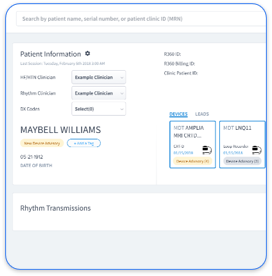
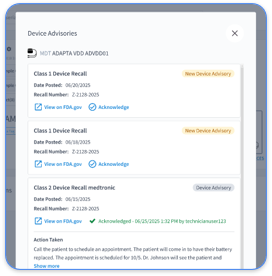
Rhythm360 solves these challenges with a cloud-based platform that unifies CIED and RPM data from all major manufacturers into a single dashboard. The AI-powered system delivers >99.9% data transmissibility through redundant feeds, computer vision, and intelligent extrapolation, so critical events stay visible even during OEM disruptions.

Core capabilities include vendor-neutral OEM integration across all major device manufacturers, AI triage with >99.9% reliability for alert prioritization, and intelligent alerting with optional CCT oversight. Bi-directional EHR integration with Epic and Cerner, secure mobile apps for on-call access, and automated CPT 93298/99454 billing capture round out the platform. These features convert fragmented workflows into a single, streamlined operation that protects patients and increases revenue.
Teams that want to eliminate alert fatigue and improve efficiency can schedule a demo and see Rhythm360’s critical alert management in action.
Critical alerts in cardiology RPM fall into clear categories that demand rapid clinical attention. Symptom-based alerts include new-onset atrial fibrillation that requires anticoagulation review, ventricular tachycardia episodes that may need device therapy, and marked heart rate variability that suggests autonomic dysfunction. Device-specific alerts include battery depletion warnings such as ERI or RRT status, lead impedance changes that signal possible malfunction, and inappropriate shocks that require immediate device interrogation.
Physiological monitoring alerts focus on weight gain above 3 pounds in 24 hours for heart failure patients, blood pressure readings outside defined parameters for hypertension, and oxygen saturation drops below critical thresholds. Rhythm360’s AI prioritization engine reviews these alerts within clinical context and considers patient history, medications, and recent encounters to assign urgency and routing.
The platform’s classification system separates actionable clinical events from routine device maintenance notifications. Critical alerts such as sustained ventricular arrhythmias move to the front of the queue, while non-urgent notifications wait for routine review during business hours.
AI-powered triage reduces false-positive alerts by 60% and improves decompensation sensitivity from 71% to 89%. Machine learning models analyze patient-specific baselines, medication effects, and historical patterns, so each alert is interpreted within that patient’s unique profile.
Rhythm360’s AI engine processes multiple data streams at once and correlates device telemetry with patient-reported symptoms and clinical notes to create risk-stratified alerts. The system learns from clinician feedback and refines its accuracy over time, which reduces noise while keeping critical events front and center. Pattern recognition surfaces subtle trends that may signal early deterioration, so clinicians can intervene before an acute event.
Consider a Saturday morning scenario with a 72-year-old patient who has a CHA2DS2-VASc score of 4. Rhythm360 detects new-onset AFib and immediately routes a high-priority alert to the on-call clinician’s mobile device, along with clinical context and suggested actions. By Saturday afternoon, the patient receives appropriate anticoagulation, which helps prevent a stroke that traditional monitoring might not catch until Monday.
HIPAA-compliant critical alert reporting depends on strong technical safeguards that protect patient data from capture through resolution. Best practices call for TLS 1.2+ encryption in transit and AES-256 encryption at rest, along with robust key management, role-based access controls, least-privilege permissions, and multi-factor authentication.
Audit logging must track every alert access, edit, and routing decision with timestamps and user identifiers. Rhythm360 supports these requirements with end-to-end encryption, granular role-based permissions, and detailed audit trails that simplify compliance reporting and breach investigations.
The platform’s architecture includes secure HL7 FHIR-based API integrations with EHR systems, automated de-identification for research and quality improvement, and documented breach notification procedures. These safeguards support rapid incident response while maintaining transparency with patients and regulators.
Effective alert management depends on consistent tracking of performance indicators that show clinical and operational gains. Key metrics include transport delay, processing latency, alerting latency for critical readings, and device reporting gaps that may signal non-compliance or malfunction.
Mean Time to Acknowledge (MTTA) measures how quickly clinicians recognize and act on critical alerts. Mean Time to Resolution (MTTR) tracks the full journey from alert creation to completed intervention. Rhythm360 customers see major MTTR reductions through AI filtering and automated workflows that remove manual steps.
Metric | Pre-Rhythm360 | Post-Rhythm360 | Improvement |
MTTR (Critical Alerts) | 4-6 hours | 15-30 minutes | 80% reduction |
False Positive Rate | 60% | 24% | 60% reduction |
Alert Processing Time | 45 minutes | 5 minutes | 89% reduction |
Revenue per Patient | $150/month | $450/month | 300% increase |
Strong alert management programs rely on clear ownership and automated escalation paths that work across shifts and staffing levels. Rhythm360’s routing engine escalates alerts based on severity, time of day, and clinician availability, while mobile notifications keep on-call teams connected to critical events.
Automated runbooks provide step-by-step response playbooks for scenarios such as new-onset AFib, device battery depletion, and heart failure decompensation. These runbooks include decision trees, medication adjustment guidance, and documentation checklists that support consistent, high-quality care. Quarterly tuning sessions review alert patterns, false positive rates, and response times, which helps teams refine thresholds and workflows.
Practices that want to modernize alert management can schedule a demo and see how Rhythm360’s automation and runbooks work in real environments.
Feature | Rhythm360 | Paceart | PaceMate/Implicity |
Vendor-Neutral | Yes | No | No |
AI Triage | Yes (80% MTTR cut) | No | Yes (less neutral) |
Mobile/EHR | Yes | No | Partial |
Revenue Automation | 300% gains | Manual | Limited |
AI in RPM markets are projected to grow at 27% CAGR from 2025 to 2032, driven by predictive scoring and multimodal data integration. New platforms combine ECG, blood pressure, and SpO2 monitoring in real time and predict cardiac events before symptoms appear, which supports preventive care models that reduce hospitalizations and improve outcomes.
Rhythm360 uses vendor-neutral ingestion that connects to all major CIED manufacturers, including Medtronic, Abbott, Boston Scientific, and Biotronik, through APIs, HL7 interfaces, and computer vision parsing of PDF reports. The platform normalizes these different formats into a single dashboard, so staff no longer juggle multiple OEM portals and still capture complete data from every device type.
The platform automatically captures and documents billable events for CPT codes 93298 and 93299 for CIED remote monitoring and 99454, 99453, and 99457 for RPM services. Automated documentation includes transmission frequency, clinical review timestamps, and intervention records, which supports compliant billing and reduces claim denials.
Rhythm360’s analytics dashboard tracks alert generation times, clinician acknowledgment times, intervention completion, and related outcome data. The system provides real-time MTTA and MTTR trends, false positive rates, and revenue capture metrics, so practices can show measurable gains in response speed and clinical results.
The platform uses TLS 1.2+ for data in transit and AES-256 for data at rest, backed by structured key management and role-based access controls. Multi-factor authentication, full audit logging of system access, and automated breach detection support HIPAA compliance while preserving smooth clinical workflows and mobile access for on-call teams.
Clinical alarm management markets show 32.2% CAGR growth as alert fatigue incidents increase and cause delayed reactions and missed critical events. AI-enhanced platforms now cut false positive rates by 60% and improve sensitivity for detecting deterioration, which highlights the need for intelligent alert filtering in cardiology.
Alert fatigue and OEM fragmentation threaten both patient safety and practice profitability in cardiology. Rhythm360’s AI-powered, vendor-neutral platform turns chaotic alert streams into structured workflows that highlight critical events and support consistent revenue capture. Intelligent triage, automated documentation, and secure mobile access help ensure that critical events receive timely attention while reducing administrative load on clinical staff.
Teams ready to address alert fatigue and improve efficiency can schedule a demo today and see how Rhythm360 improves critical alert management, patient outcomes, and financial performance.