Remote heart failure monitoring can reduce hospitalizations by up to 50% and improve quality of life in real-world practice and trials like MONITOR-HF.
Multidisciplinary teams with clear roles, supported by vendor-neutral platforms, manage data from Medtronic, Abbott, and other device manufacturers in one place.
AI-powered alert triage cuts response times by 80% and reduces alert fatigue while surfacing critical events such as atrial fibrillation.
Automated billing for 2026 CPT codes like 99445 and 99457 can increase RPM revenue by up to 300% with compliant documentation.
Rhythm360 unifies data, streamlines workflows, and supports 24/7 mobile access; connect with the Rhythm360 team to see how this works in your clinic.
Remote heart failure monitoring works best when a coordinated team shares responsibility. Electrophysiologists, cardiologists, nurse practitioners, certified cardiac technicians (CCTs), and administrative staff each handle specific tasks in data review, alert triage, patient communication, and billing documentation.
The team structure should designate primary and backup personnel for critical alert response, which supports 24/7 coverage without overwhelming individual staff members. To make this coverage model work effectively, staff need training on tool operation, data interpretation, and alert response protocols so backup personnel feel confident acting on urgent alerts.
Rhythm360 supports multidisciplinary teams with role-based access controls and automated workflow routing. The right alerts reach the right team members, and the platform maintains full audit trails for compliance and quality assurance.
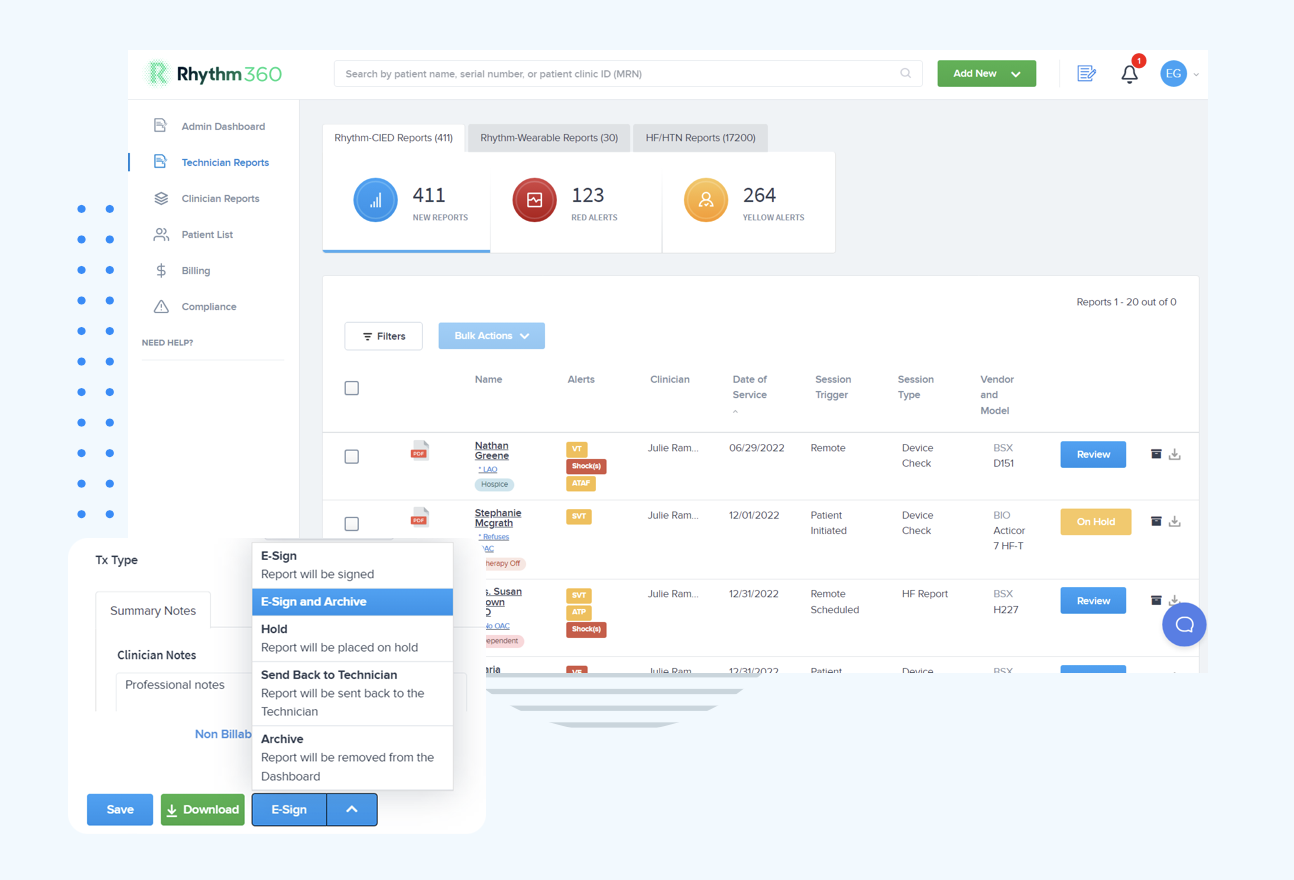
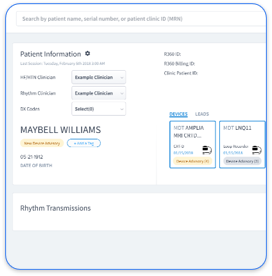
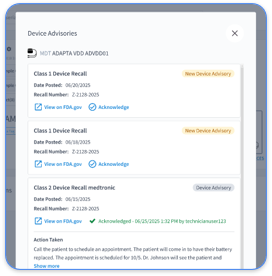
Cardiology practices often manage devices from Medtronic, Abbott, Boston Scientific, and Biotronik, which creates data silos and extra logins. A vendor-neutral platform replaces separate OEM portals with a single view of all patient data, regardless of device brand.
Technology integration issues often arise from incompatible wearables, software, mobile apps, and EHRs, which slows implementation and frustrates staff. Platforms that use open APIs, cloud-based architecture, and standards such as HL7 or FHIR handle these connections more reliably.
Rhythm360’s vendor-neutral architecture ingests data from all major CIED manufacturers, CardioMEMS sensors, and RPM devices through APIs, HL7, XML parsing, and computer vision. This approach reduces the risk of missed data due to technical incompatibilities or OEM server outages.
Alert fatigue remains a major barrier in remote monitoring programs because clinicians receive many non-actionable notifications. Healthcare workers face heavy routines for reviewing dashboards, alerts, and data streams, which makes it harder to spot truly urgent issues.
AI-powered triage systems review incoming alerts using clinical significance, patient history, and trends to rank urgency. These systems highlight events such as new-onset atrial fibrillation, ventricular arrhythmias, or device malfunctions and suppress low-value noise.
Rhythm360’s AI algorithms have demonstrated an 80% reduction in response times for critical alerts by automatically categorizing and prioritizing notifications. The system learns from clinical outcomes over time, which improves triage accuracy and helps prevent events such as strokes from missed atrial fibrillation episodes.
Consistent patient onboarding and education increase compliance with remote monitoring. Common barriers include discomfort with technology, forgetting to wear devices, confusion during setup, and privacy concerns, especially among older adults.
Standardized onboarding should cover device setup verification, clear education materials, and a defined follow-up schedule. Many programs focus on patients with NYHA Class II to IV heart failure, who often gain the most from remote monitoring.
Transparent explanations of data privacy, device function, and clinical benefits improve acceptance and adherence. Rhythm360’s integrated communication hub supports automated patient messaging and tracks all interactions with full audit trails, which helps teams maintain consistent follow-up.
Bi-directional EHR integration keeps remote monitoring data inside the permanent medical record and removes manual data entry. This connection supports clinical decisions and supplies documentation for billing and quality reporting.
Modern platforms should connect with Epic, Cerner, Athenahealth, eClinicalWorks, and other major EHRs through HL7 FHIR standards. The integration should populate relevant fields automatically and generate structured reports that clinicians can review and sign electronically.
Rhythm360 offers deep, bi-directional EHR integrations that typically go live within days to weeks. The platform syncs patient demographics, device data, and clinical notes while supporting customizable workflows that match existing practice patterns.
Remote patient monitoring can become a strong revenue stream when billing stays accurate and consistent. Manual processes often cause missed claims and compliance gaps, especially as codes and rules change.
The 2026 Medicare Physician Fee Schedule introduces CPT 99445 for device supply covering 2 to 15 days of data transmission and CPT 99470 for brief clinical management services. Practices must track these activities precisely.
The updated billing landscape includes national average non-facility payments of $52.11 for CPT 99445, $51.77 for CPT 99457, and $26.05 for CPT 99470. Accurate documentation of transmission days, clinical time, and live patient interactions keeps claims compliant.
Automated billing systems record all billable activities and generate compliant documentation, which helps practices capture more revenue while meeting CMS requirements. Rhythm360’s billing automation has helped practices increase profitability by up to 300% through more complete CPT code capture and lower administrative workload. The following table shows typical time savings and monthly revenue gains by practice size.
Practice Size | Time Saved (Hours/Month) | Revenue Gain (Monthly) |
|---|---|---|
Small (1-2 providers) | 40-60 | $15,000-$25,000 |
Medium (3-5 providers) | 80-120 | $35,000-$60,000 |
Large (6+ providers) | 150-200 | $75,000-$125,000 |
Mobile access keeps clinicians connected to heart failure patients outside clinic hours. Connectivity gaps in rural or underserved areas with unreliable internet can delay alerts, but mobile platforms often provide a reliable backup.
HIPAA-compliant mobile apps should allow clinicians to review transmissions, sign reports, and coordinate care from smartphones or tablets. Push notifications for critical alerts ensure rapid awareness of urgent events, even when clinicians are away from their desks.
Rhythm360’s secure mobile app delivers full platform functionality on mobile devices. Clinicians can respond to critical alerts within minutes instead of hours, which has helped prevent adverse events such as strokes from delayed atrial fibrillation detection.
Outcome dashboards give teams real-time visibility into program performance, patient adherence, and clinical impact. Key metrics include readmission rates, alert response times, patient engagement, and RPM revenue capture.
Regular review of these metrics supports continuous improvement and supplies data for quality initiatives. A 2026 meta-analysis showed that remote patient monitoring reduces all-cause mortality and heart failure hospitalizations, and local dashboards help practices see their own results.
Administrative dashboards should also track billing compliance, staff productivity, and patient satisfaction. Rhythm360’s analytics platform provides detailed reporting that demonstrates ROI and highlights opportunities to expand or refine HF monitoring programs.
Heart failure monitoring programs should support vulnerable populations, not leave them behind. Patients may struggle with technology, device setup, or privacy concerns, especially older adults or those with cognitive limitations who rely on family support.
Programs can address these gaps with multilingual education materials, simplified device interfaces, and dedicated support staff for patients with limited technology experience. Partnerships with community health workers or family caregivers often improve engagement in underserved groups.
Rhythm360’s communication hub supports multiple languages and delivers automated education sequences tailored to patient needs. The intuitive interface reduces technology barriers while preserving full monitoring capabilities.
Many practices hesitate to expand RPM because of data privacy concerns, regulatory complexity, and cost pressures, especially in smaller clinics. The clinical evidence, however, strongly supports investment in remote monitoring for heart failure.
Real-world CardioMEMS data show lower pulmonary artery pressures, better functional status, higher quality of life, and fewer heart failure hospitalizations at one year. The PROACTIVE-HF trial confirmed that sensor-guided care can achieve high patient compliance with low failure rates.
Rhythm360 addresses common barriers with strong cybersecurity, automated compliance documentation, and flexible pricing that scales with practice size. The platform’s proven track record, including the alert processing improvements and revenue gains described earlier, extends from small community clinics to large health systems.
Talk with a Rhythm360 specialist about your current HF monitoring challenges and see which workflows, integrations, and billing tools fit your practice.
The primary CPT codes for heart failure remote patient monitoring in 2026 include 99453 for initial device setup and patient education, 99445 for device supply covering 2 to 15 days of data transmission, 99454 for 16 to 30 days of data, 99470 for brief clinical management of at least 10 minutes, and 99457 for comprehensive management of at least 20 minutes.
Additional time can be billed using 99458. Rhythm360 automates documentation and billing for these codes, which supports complete revenue capture while maintaining compliance.
Vendor-neutral remote patient monitoring platforms such as Rhythm360 integrate data from Medtronic, Abbott, Boston Scientific, Biotronik, and other manufacturers into a single dashboard. This approach removes the need for multiple OEM logins and presents a unified view of patient data regardless of device brand.
The platform uses APIs, HL7 standards, XML parsing, and computer vision to normalize data from different sources so clinicians can monitor comprehensively without vendor lock-in.
AI-enabled RPM platforms can significantly reduce alert fatigue by triaging notifications based on clinical importance. Rhythm360’s AI algorithms have demonstrated an 80% reduction in response times for critical alerts by filtering non-actionable notifications and prioritizing urgent events such as new-onset atrial fibrillation or device malfunctions. Clinicians can then focus on patients who need immediate attention instead of sorting through routine alerts.
Heart failure remote monitoring often uses CardioMEMS pulmonary artery pressure sensors, connected weight scales to detect fluid retention, blood pressure monitors, pulse oximeters, and cardiac implantable electronic devices (CIEDs) such as pacemakers and ICDs.
Rhythm360 integrates data from all these device types to provide comprehensive monitoring that can detect early signs of heart failure worsening before hospitalization becomes necessary.
Telemonitoring reduces heart failure readmissions by identifying clinical deterioration early, before symptoms escalate. Connected devices can detect subtle changes such as a three-pound weight gain that suggests fluid retention, which allows clinicians to adjust medications remotely and intervene sooner.
Clinical trials have reported 25 to 40% reductions in heart failure hospitalizations with remote monitoring, and some real-world programs have achieved up to a 50% reduction in 30-day readmissions.
These nine best practices give cardiology clinics a clear framework for building effective remote heart failure monitoring programs. Each practice addresses a specific challenge, from team structure to AI triage and billing, and together they support better outcomes and stronger financial performance.
Rhythm360 brings these practices together in a vendor-neutral, AI-powered platform that unifies device data, automates workflows, and strengthens billing compliance. The platform’s documented improvements in alert processing speed and RPM revenue show how a well-designed HF monitoring program can transform both patient care and practice operations.
To explore how these results translate to your clinic’s readmission rates and RPM revenue, connect with Rhythm360’s cardiology team and review a tailored HF monitoring plan.