The ideal remote heart failure monitoring solution combines vendor-neutral data integration, high transmission reliability, AI-powered alert triage, and automated CPT code documentation for Medicare's 2026 RPM codes 99453, 99454, and 99457.
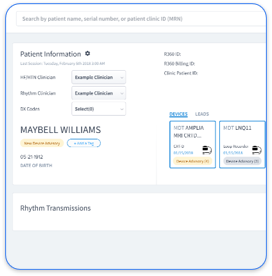
Leading platforms such as Rhythm360 bring CardioMEMS, Medtronic, and other OEM data into a single dashboard that supports mobile access for on-call clinicians. These capabilities reduce critical response times and support consistent documentation.
The most effective platforms eliminate data silos, reduce alert fatigue, and increase revenue capture through tight EHR connectivity and automated billing workflows.
Rhythm360 functions as a vendor-neutral platform that unifies all major cardiac device manufacturers into one AI-powered dashboard. The platform maintains very high data transmissibility through redundant feeds, computer vision parsing, and API integration across Medtronic, Abbott, Boston Scientific, and Biotronik systems.
Practices using Rhythm360 report faster response times for critical heart failure alerts and substantial revenue increases through accurate CPT code capture and automated billing documentation. These outcomes come from three connected capabilities: 24/7 certified cardiac technician oversight that catches every critical event, bi-directional EHR integration with Epic and Cerner that removes manual data entry delays, and mobile access that lets clinicians respond from any location, which supports on-call coverage and multi-site practices.

Request a Rhythm360 demo to see how unified data and automated billing can reshape your heart failure monitoring program.
CardioMEMS serves as a clinical reference standard for implantable heart failure monitoring, with the MONITOR-HF trial demonstrating a 44% reduction in heart failure hospitalizations at 12 months. The wireless pulmonary artery pressure sensor delivers real-time hemodynamic data that supports proactive medication adjustments before clinical decompensation.
CardioMEMS integrates with Rhythm360, which allows practices to pair the device's clinical performance with unified data management and automated billing workflows. CardioMEMS requires invasive implantation and consistent patient adherence to daily readings, yet its outcomes make it a strong option for high-risk heart failure populations.
Medtronic's MyCareLink platform supports monitoring for the company's broad cardiac device portfolio, including CRT-D devices with heart failure diagnostics. The system delivers automated daily monitoring and urgent alerts for parameters such as fluid index trends, activity levels, and arrhythmia burden.
This comprehensive data set works best in practices that use primarily Medtronic devices, because MyCareLink ties closely to Medtronic's proprietary algorithms and diagnostics. That single-vendor focus becomes a challenge for practices with multi-vendor device populations, where MyCareLink data silos fragment workflows.
Platforms like Rhythm360 resolve this fragmentation by consolidating MyCareLink data with other manufacturers' feeds into a unified view.
KardiaMobile delivers accessible ECG monitoring through smartphone-connected devices that detect atrial fibrillation and other arrhythmias relevant to heart failure care. The platform supports strong patient engagement and ease of use, with instant ECG recordings and automated rhythm analysis.
KardiaMobile contributes valuable arrhythmia detection but does not provide the broader physiological monitoring needed for full heart failure management. Many practices feed KardiaMobile data into more comprehensive platforms to support holistic monitoring and consistent RPM billing.
The following comparison highlights how each solution's integration model affects clinical responsiveness and revenue potential:
Solution | Data Integration | HF Reduction | Revenue Impact |
Rhythm360 | Multi-OEM unified | Faster alerts | Significant increase |
CardioMEMS | Single device | 44% hospitalization reduction | Moderate |
Medtronic MyCareLink | Medtronic only | Device-specific | Limited billing |
KardiaMobile | Standalone ECG | AFib detection | Basic RPM |
PaceMate offers cloud-based cardiac device monitoring with workflow automation features that support busy electrophysiology teams. The platform generates automated reports and provides basic alert management across multiple device types.
These capabilities improve on legacy on-premise systems and help practices manage data from several manufacturers. Many groups still adopt platforms such as Rhythm360 when they need advanced AI-driven triage and consistent workflows across multiple locations.
Cordella's remote hemodynamic monitoring system combines pulmonary artery pressure tracking with additional vital sign monitoring. The PROACTIVE-HF trial validated Cordella's safety and efficacy for guiding heart failure management and documented strong patient adherence.
Cordella offers more comprehensive physiological data than pressure-only devices. Its standalone design still requires connection to broader cardiac monitoring platforms to support efficient workflows and reliable RPM revenue capture.
BioIntelliSense delivers FDA-cleared wearable sensors that continuously track heart rate, respiratory rate, and activity levels that matter in heart failure care. The BioSticker and BioButton devices provide up to 30 days of battery life, real-time clinician alerts, and cloud-based data storage.
These features create strong continuous monitoring, yet practices still need integration with comprehensive cardiac management systems to align BioIntelliSense data with clinical workflows and Medicare billing rules.
Medicare covers remote patient monitoring for heart failure under 2026 CPT codes 99453, 99454, and 99457, with at least 16 days of transmitted data required every 30 days. The 2026 Medicare Physician Fee Schedule introduces more flexible billing with reduced time thresholds and new codes for shorter monitoring periods.
Rhythm360's automated documentation and billing workflows help practices apply the revenue gains described earlier by supporting compliant data collection, accurate CPT code selection, and smooth claims submission. Medicare pays 80% of approved amounts, and most secondary insurers cover the remaining 20%, which makes RPM financially attractive for practices that implement the right platform.
Remote heart failure monitoring programs often struggle with alert fatigue from non-actionable notifications, fragmented data across OEM portals, and connectivity gaps in rural regions. Rural physicians report that inadequate staffing and disparate electronic medical record systems create significant barriers to effective monitoring.
These conditions magnify alert overload and data fragmentation, which makes consistent follow-up difficult. Rhythm360 addresses each challenge directly through AI-powered alert triage that removes most non-actionable transmissions, unified multi-OEM data integration that consolidates portals, and streamlined workflows that sharply reduce administrative burden. Mobile access and automated reporting support reliable monitoring even when staffing or location constraints exist.
To see how these problem-solving features apply in your environment, request a Rhythm360 consultation and walk through your current workflows with a specialist.
Medicare covers remote patient monitoring for heart failure through CPT codes 99453 for device setup, 99454 for device supply and data transmission, and 99457 for treatment management. Coverage requires at least 16 days of transmitted physiological data every 30 days from FDA-approved devices. Medicare pays 80% of approved amounts, and practices that document correctly can build a reliable RPM revenue stream.
Vendor-neutral platforms such as Rhythm360 provide broad coverage by unifying data from all major device manufacturers into a single dashboard. This consolidation removes the need to log into multiple OEM portals, shortens response times, and supports automated billing workflows. The strongest options combine multi-OEM integration, AI-powered alert triage, EHR connectivity, and mobile access so cardiologists can manage large heart failure panels efficiently.
CardioMEMS offers high clinical accuracy through direct pulmonary artery pressure measurement, with a documented 44% reduction in heart failure hospitalizations in key trials. Wearable devices provide broader physiological monitoring but may not match this level of precision for decompensation risk. Many programs pair implantable devices such as CardioMEMS with platforms that integrate multiple monitoring modalities to achieve complete oversight.
Practices should focus on vendor-neutral platforms that integrate multiple device manufacturers, support AI-based alert management, automate billing compliance, and offer secure mobile access. Evaluation should center on data integration depth, workflow impact, revenue features, and realistic implementation timelines. When platforms like Rhythm360 unify disparate data sources into one operational view, they convert those criteria into higher clinical efficiency and stronger long-term ROI.
Modern cloud-based platforms usually require a few days to a few weeks for full implementation, including EHR integration and staff training. Vendor-neutral solutions such as Rhythm360 use structured onboarding to limit disruption to existing workflows. Actual timelines depend on platform sophistication, current infrastructure, and the number of device manufacturers and clinical systems that need integration.
Evidence throughout this analysis shows that vendor-neutral platforms that remove data silos deliver stronger clinical outcomes and more reliable RPM revenue. Practices that adopt comprehensive solutions like Rhythm360 position their teams to manage complex heart failure populations while sustaining the financial performance needed to support long-term monitoring programs.
Schedule a Rhythm360 demo today to align your heart failure monitoring strategy with these proven results.