

Last updated: July 13, 2026
Cardiac device heart rhythm monitoring integration aggregates transmission data from all implanted cardiac electronic devices (CIEDs) across every original equipment manufacturer into one vendor-neutral platform. This includes pacemakers, ICDs, CRT devices, and implantable loop recorders. A compliant implementation normalizes data via HL7, IEEE 11073, and AI-assisted parsing, routes alerts by clinical priority, automates CPT documentation, and synchronizes bidirectionally with the practice EHR.
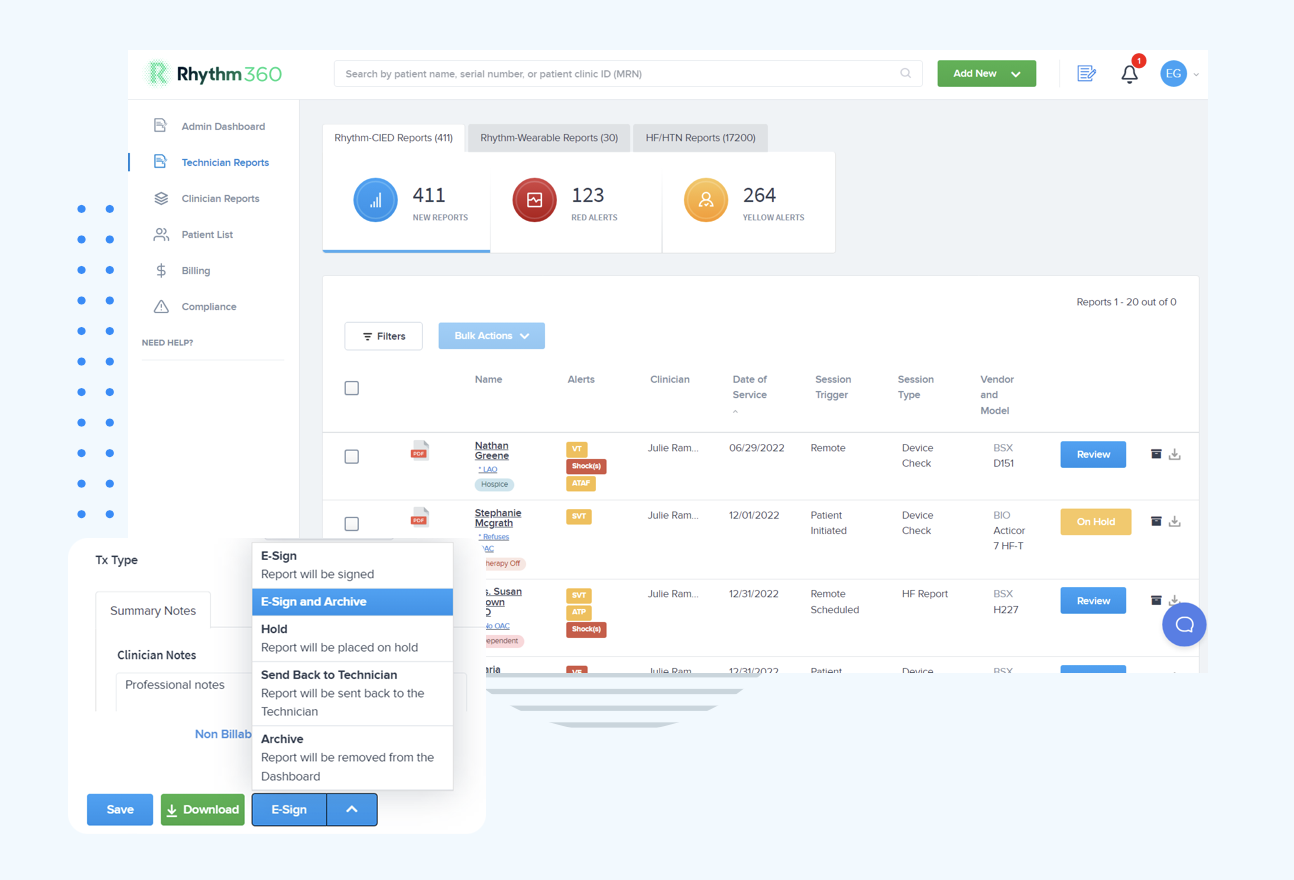
Cardiac device clinics manage data across multiple proprietary OEM portals such as Medtronic CareLink, Boston Scientific Latitude, Biotronik, and Abbott Merlin, which require manual steps like downloading transmissions, generating reports, and transferring data to the EMR, with little visibility into cumulative workload. As soon as a practice implants devices from more than one manufacturer, staff must maintain separate credentials, learn separate interfaces, and reconcile non-interoperable data formats.
Many clinics have seen significant growth in their cardiac device population since 2018. At that scale, manual multi-portal workflows become clinically unsustainable. The proliferation of third-party vendors for Holter monitors, MCTs, loop recorders, and FDA-approved wearables adds new logins and workflows for each input, which further fragments cardiovascular service lines.
When EMRs cannot receive structured reporting from device monitoring systems, staff must re-enter interpreted results manually, which creates billing risk and continuity-of-care problems. Downstream effects include missed CPT billing windows, rejected claims, and the anxiety of knowing a critical alert may sit in a portal no one checked that morning.
Misalignment between electrophysiology monitoring on a 91-day cadence and heart failure monitoring on a 31-day rhythm for CRT devices causes confusion and redundancy. Critical information can slip through the cracks. A literature review found that approximately two-thirds of patients eligible for CRT benefit from treatment.
Objective: Replace parallel OEM portal logins with one normalized data feed that covers all device manufacturers.
Action: Deploy a platform that ingests data via API connections, HL7 messaging, XML feeds, and AI-assisted PDF parsing using computer vision to capture transmissions from every manufacturer. A production-grade integration stack combines HL7 v2.5.1 for core observation messages, HL7 FHIR R4 for mobile and modern API ecosystems, and IEEE 11073 inside the device gateway for semantic interoperability. EN ISO/IEEE 11073-10103:2025 defines standardized nomenclature for implantable cardiac devices, which supports consistent transfer of device data into EHRs and centralized clinic systems.
Decision points: Confirm that the platform supports redundant data feeds as a failsafe when an OEM server is unavailable. Verify bidirectional EHR integration with your specific system, such as Epic, Cerner, Athenahealth, eClinicalWorks, or others via HL7.
Measurable result: Device technicians access one dashboard for the entire patient population. Rhythm360 achieves this with greater than 99.9% data transmissibility through redundant feeds, computer vision, and AI-powered extrapolation.
Workflow callout: At the University of Chicago Medicine, implementation of Rhythm360 enabled clinicians to review more than 73,000 reports annually, averaging more than 18,000 per quarter, while identifying more abnormalities and enabling earlier interventions.
Once all device data flows into a single dashboard, the next challenge is managing the volume of alerts that dashboard generates, many of which require no clinical action.
Step 2: Reduce Alert Fatigue with AI Triage
Objective: Decrease the volume of non-actionable alerts reaching clinical staff while preserving clinically significant events.
Action: Activate an AI triage layer that classifies incoming transmissions by clinical urgency before they reach the review queue. Analyses of unscheduled cardiac device transmissions show that only a minority contain a clinically meaningful finding requiring clinician action, so most are non-actionable. A cross-manufacturer analysis presented at the 2026 EHRA Congress examined 2,659 rhythm episodes from 1,710 patients with ICMs from Medtronic, Biotronik, Abbott, and Boston Scientific and found that 32.9% of flagged episodes in modern AI-equipped devices were non-actionable, with an additional 30.6% classified as indeterminate.
Decision points: Confirm that the triage system is manufacturer-agnostic and applies consistent guideline-based interpretation across all device brands. When interpretation varies across device platforms and guideline definitions are not consistently applied, physicians struggle to quickly determine which events truly require clinical attention. Evaluate whether optional 24/7/365 oversight by certified cardiac technicians (CCTs) is available for after-hours coverage.
Measurable result: AI-driven triage in cardiac device management can reduce alert fatigue while maintaining high data reliability. Rhythm360’s AI-powered alert triage reduces critical alert response times by up to 80%.
Step 3: Automate Medicare RPM Billing for Heart Rhythm Monitoring
Objective: Remove manual billing documentation gaps so every qualifying transmission generates a compliant, auditable CPT record.
Action: Configure automated report generation tied to CPT code requirements for each device type and monitoring cadence. The primary remote CIED monitoring codes in 2026 are:
- CPT 93294: Professional interpretation for single- or dual-chamber pacemakers, requiring a minimum 30-day monitoring period and documented physician interpretation.
- CPT 93295: Professional interpretation for ICDs, including single-chamber, dual-chamber, and CRT-D, requiring a minimum 30-day monitoring period.
- CPT 93296: Technical component for remote interrogation of pacemakers, ICDs, or ILRs, billable no more than once every 90 days per CMS Article A56602.
- CPT 93297: Physician interpretation of transmissions from implantable loop recorders or insertable cardiac monitors, billable per clinically indicated transmission period without a 30-day minimum.
- CPT 93298 covers up to 30 days of remote monitoring for ILR/ICM per 2026 Medicare updates.
For HF and HTN RPM service lines, CPT 99454 covers 16 or more days of monthly device monitoring at a national average reimbursement of approximately $47, while the new 2026 CPT 99445 covers 2–15 days of monthly monitoring at approximately $47, and only one of these may be billed per patient per calendar month.
Decision points: Remote monitoring frequency for pacemakers is every 3–6 months, for ICDs is quarterly, and for implantable loop recorders is monthly, so applying a monthly cycle to all devices produces denials for pacemakers and ICDs billed too frequently. Confirm that the platform tracks device-specific cadences automatically and flags approaching billing windows before they lapse.
Measurable result: Practices using Rhythm360 have captured up to 300% more revenue through optimized CPT code billing and automated documentation. Gaurav A. Upadhyay, MD, at UCM, observed, “We have improved billing and accountability for our patients after the integration.”
Workflow callout: Minimum required documentation for remote cardiac device monitoring billing includes patient demographics, device type and manufacturer, monitoring period dates, and a clinician interpretation addressing device function, programmed parameters, and actionable findings. Rhythm360 generates this documentation automatically at the point of transmission review.
Step 4: Apply AI Triage to Implantable Loop Recorder Alerts
Objective: Lower the disproportionately high false-positive burden from ILR transmissions while maintaining sensitivity for clinically meaningful arrhythmias.
Action: Layer a manufacturer-agnostic AI analysis engine over all ILR transmissions regardless of device brand. False ILR alerts had a low clinical yield in a study of unscheduled transmissions. A cross-manufacturer analysis found that many cardiac pause alerts were caused by R-wave undersensing.
Decision points: Verify that the AI layer applies consistent guideline-based definitions across Medtronic LINQ, Abbott Confirm Rx, Biotronik BioMonitor, and Boston Scientific LUX-Dx devices. Previous studies report that nearly 90% of arrhythmia alarms in intensive care settings are false positives, which leads to alarm fatigue, desensitization, and delayed responses to true clinical events. Confirm that the platform’s mobile application allows clinicians to review and sign off on ILR transmissions remotely.
Measurable result: Rhythm360’s AI triage system filters non-actionable noise and prioritizes clinically significant events, delivering the response-time improvements described in Step 2. Andrew Beaser, MD, at UCM, highlighted, “I am more likely to sign off on these while in meetings because I can easily access them on my phone.”
Workflow callout: Rhythm360’s secure, HIPAA-compliant mobile application allows clinicians to review transmissions, sign reports, and coordinate care from any location. This capability directly supports weekend and after-hours ILR triage without requiring a return to the office.
Rhythm360 Feature Comparison Across Key Outcomes
The following table highlights three core performance metrics that distinguish Rhythm360’s vendor-neutral platform from manual multi-portal workflows and summarizes the clinical and financial impact of unified cardiac device integration.
Feature Area Rhythm360 Metric Basis Clinical Impact Critical Alert Response Time Up to 80% reduction RhythmScience platform data; UCM implementation outcomes Faster intervention for arrhythmias, lead failures, and device malfunctions Data Transmissibility >99.9% See Step 1 Reduces data gaps caused by OEM server outages or format incompatibilities CPT Billing Automation Up to 300% revenue increase See Step 3 Captures previously missed billable events and lowers claim rejections from documentation gaps Validation: KPIs That Confirm Platform Performance
Practices should track the following KPIs at 30, 90, and 180 days post-implementation to confirm that the integration performs as expected. These metrics fall into three categories: clinical responsiveness, revenue capture, and operational efficiency. Together, they show whether the platform delivers on its core promises.
- Percentage reduction in non-actionable alert volume reaching clinical staff
- Average response time from transmission receipt to clinician acknowledgment for critical alerts
- CPT code capture rate per device type compared to pre-implementation baseline
- Transmission review volume per device technician per day
- EHR documentation error rate for remote monitoring reports
- Staff hours per week spent on manual portal logins and data transcription
Tailoring Rhythm360 to Practice Size, Device Mix, and EHR
Implementation timelines and configuration priorities vary by practice profile. Rhythm360’s onboarding process, including EHR integration, typically ranges from a few days to a few weeks depending on complexity.
For solo practitioners and small EP clinics, the highest-priority configuration is automated CPT documentation and mobile alert access, since a single clinician cannot monitor multiple portals continuously. The SaaS-based pricing model scales based on clinic size and platform usage.
For mid-size cardiology groups with mixed device populations, the critical configuration step is establishing device-type-specific monitoring cadences, such as quarterly for ICDs, every 3–6 months for pacemakers, and monthly for ILRs, to prevent billing frequency errors. Accurate team routing and CPT billing compliance depend on clean data segmentation between EP and HF pathways, but most clinics lack the built-in infrastructure to support this without manual workarounds.
For large integrated health systems, bidirectional EHR integration with Epic, Cerner, or Athenahealth via HL7 is the foundational requirement. Consolidating device data into one platform solves only part of the problem, because clinical workflows must also route transmissions to the correct care teams depending on transmission content. Rhythm360 supports this routing natively, directing HF data to HF teams and arrhythmia alerts to EP staff.
Advanced Optimization: AI Refinement, Mobile Workflows, and HF/HTN RPM
After the core CIED integration stabilizes, practices can extend the platform into adjacent service lines. Rhythm360 offers distinct but integrated service lines for Rhythm-CIED and HF/HTN remote physiological monitoring, which gives teams a centralized workspace to manage rhythm disorders, heart failure, and hypertension together.
For HF monitoring, CPT 99457 covers at least 20 minutes of non-face-to-face RPM services performed by clinical staff per month at a national average reimbursement of $52, with CPT 99458 as an add-on for each additional 20 minutes at approximately $41. Rhythm360’s automated patient messaging via an integrated Twilio framework logs all communications with a full audit trail, which supports the time-tracking documentation required for these codes.
Mobile access refinement continues over time. AI systems now predict life-threatening ventricular arrhythmias up to two weeks before clinical onset with nearly 80% accuracy, which represents a breakthrough in sudden cardiac death prevention. As AI triage models mature, practices can configure more precise alert thresholds by device type, patient risk profile, and arrhythmia category. This refinement reduces residual false-positive volume without sacrificing sensitivity for true events.
Frequently Asked Questions
What percentage of cardiac device alerts are typically non-actionable?
The non-actionable alert rate varies by device type, alert category, and whether the device includes built-in manufacturer AI filtering. Across unscheduled cardiac device transmissions broadly, approximately 85% do not contain a clinically meaningful finding requiring physician action. For implantable loop recorders specifically, false alerts have an extremely low clinical yield, in some analyses below 1% for clinically relevant findings. Even in modern AI-equipped devices, cross-manufacturer analyses have found that roughly one-third of flagged episodes remain non-actionable after manufacturer filtering, with an additional 30% classified as indeterminate. Alert categories also vary significantly, since VT and VF alerts carry the highest clinical yield, while ILR pause alerts are frequently caused by R-wave undersensing rather than true cardiac pauses. A manufacturer-agnostic AI triage layer applied consistently across all device brands provides the most effective mechanism for reducing this burden without suppressing true clinical events.
Which CPT codes apply to remote heart rhythm monitoring of CIEDs in 2026?
The primary CPT codes for remote CIED monitoring in 2026 are 93294 for professional interpretation for single- or dual-chamber pacemakers with a minimum 30-day period, 93295 for professional interpretation for ICDs including CRT-D with a minimum 30-day period, 93296 for the technical component for pacemaker, ICD, or ILR interrogation billable no more than once every 90 days, 93297 for physician interpretation for implantable cardiovascular physiologic monitor systems up to 30 days, and CPT 93298, which covers up to 30 days of remote monitoring for ILR and ICM per 2026 Medicare updates. For HF and HTN RPM service lines, relevant codes include 99453 for one-time device setup, 99454 for device supply with 16 or more days of data transmission, the new 99445 for device supply with 2–15 days of data transmission, 99457 for the first 20 minutes of clinical staff time per month, and 99458 for each additional 20 minutes. Practices should verify exact reimbursement rates against the CMS Physician Fee Schedule for their geographic region, since national averages may differ from local rates.
How do HL7 and IEEE 11073 support multi-vendor cardiac device integration?
HL7 and IEEE 11073 play complementary roles in a multi-vendor cardiac device integration stack. IEEE 11073 operates at the device-level semantic layer and provides standardized nomenclature and data definitions for implantable cardiac devices including pacemakers, ICDs, CRT devices, and implantable cardiac monitors. The 2025 update to EN ISO/IEEE 11073-10103 extended this nomenclature to cover device and lead advisory information, unique device identifiers for traceability, battery runtime data, therapy and episode statistics, and algorithm settings. This extension enables consistent data transfer into EHRs and centralized clinic systems regardless of manufacturer.
HL7 v2.x handles most US hospital interface traffic and carries core observation messages between device gateways and EHR systems. HL7 FHIR R4 serves as the strategic layer for mobile applications, cloud-based platforms, and modern API ecosystems, with SMART on FHIR providing the authorization framework that allows third-party applications to surface device data inside EHRs such as Epic and Cerner. In practice, a production integration typically requires both standards working together, with a middleware integration engine translating between device-level IEEE 11073 output and HL7 messages for EHR delivery. Rhythm360 uses API connections, HL7, XML, and AI-assisted PDF parsing via computer vision to normalize data from all major OEM portals into a single, consistent data layer.
What transmission reliability can a vendor-neutral platform achieve?
A vendor-neutral platform built with the redundant architecture described in Step 1 can achieve greater than 99.9% data transmissibility. This level of reliability addresses a core vulnerability of single-vendor or manual workflows, where OEM server downtime or failed parsing creates data gaps that may not be visible to clinical staff. Rhythm360 uses redundant data feeds as a failsafe when any individual OEM server is unavailable and applies AI-powered gap-filling that cross-references available data for fidelity. Clinicians can therefore make critical decisions with confidence that the data they review represents the most complete and accurate view available, not a partial picture shaped by a failed transmission or incompatible file format.
Conclusion: Four Workflow Checkpoints for CIED Integration
Unifying cardiac device heart rhythm monitoring integration across multiple OEM portals follows a four-step operational process. Practices establish a single vendor-neutral data ingestion layer, implement AI-powered alert triage, automate CPT documentation for every device type and monitoring cadence, and apply manufacturer-agnostic AI analysis to ILR transmissions. Each step has a defined objective, a concrete action, identifiable decision points, and a measurable result.
The 2023 HRS/EHRA/APHRS/LAHRS expert consensus statement recommends remote monitoring as the primary mode of follow-up for pacemakers, ICDs, CRTs, and implantable loop recorders and acknowledges that increasing transmission volumes create real operational challenges for device clinic staff. A vendor-neutral platform with AI triage, bidirectional EHR integration, and automated CPT documentation provides the infrastructure required to meet that standard at scale.
Practices that complete this implementation framework report the alert response and revenue outcomes detailed in Steps 2 and 3, supported by real-world deployments including the University of Chicago Medicine case study described in Step 1.
Schedule a demo with Rhythm360 to start your consolidation assessment.Read Next





