Fragmented CIED data across multiple OEM portals creates operational, clinical, and financial strain for cardiology practices. Fragmented cardiac implant data from multiple manufacturer portals leads to manual data compilation, inconsistent formats, and inefficient, error-prone operations. Staff members often move between separate systems for Abbott, Boston Scientific, Biotronik, and others, which increases administrative overload and contributes to burnout.
Clinical risk rises at the same time. The surge of new cardiac implant and heart monitoring technologies creates substantial complexity in extracting actionable and equitable insights from the vast data produced. Complex data flows and inconsistent formats can delay recognition of critical events such as device malfunction, arrhythmias, or early signs of decompensation.
Financial performance also suffers. Missed CPT code capture, inefficient staff utilization, and the need to hire additional personnel to handle rising data volumes all erode margins. Unified cardiac implant data aggregation addresses these issues by consolidating information into a single, reliable environment.
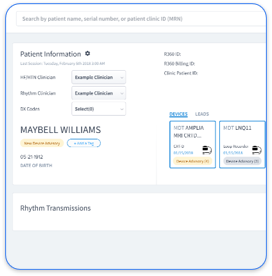
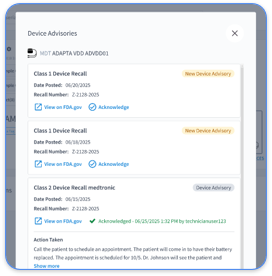
Rhythm360 by RhythmScience functions as a vendor-neutral, cloud-based platform that unifies CIED data into a single, clinically focused dashboard. The platform integrates data from all major manufacturers, applies AI to improve data reliability, and supports EHR interoperability.
Key Rhythm360 capabilities include:
Cardiology teams that want to explore a unified approach to cardiac implant data can contact RhythmScience at this Rhythm360 contact page.
Unified data aggregation reduces manual work and supports faster decisions. Each major vendor uses different interfaces, formats, and access rules, which forces staff to log in to multiple systems and reconcile inconsistent information.
Bidirectional integration between CIED vendor servers, third-party data management platforms, and EHRs is essential for eliminating manual data transfer and enabling rapid clinical decision-making. Rhythm360 serves as a single source of truth by aggregating data through APIs, HL7 interfaces, XML, and computer vision for PDF reports, then presenting it in one dashboard.
This approach reduces administrative burden, lowers error rates, and provides a complete view of each patient regardless of device manufacturer.
Consistent, reliable data underpins safe remote cardiac care. Accurate cross-manufacturer comparison and selection of CIEDs is hampered by inconsistent formats, non-standardized longevity reporting, and complex device programming differences. These differences can create gaps in monitoring data and make longitudinal analysis difficult.
AI and advanced data analytics show strong potential in predictive monitoring and alert prioritization. Rhythm360 ingests diverse data sources, applies computer vision and predictive modeling to identify and fill gaps, and uses redundant data feeds to maintain connectivity during outages. The design goal is data availability above 99.9 percent so clinicians can act on a near-complete record.
Automated solutions can reduce critical response times by up to 80% through AI-driven alert triage, event prioritization, and automated reporting, which supports timely interventions.
Alert fatigue reduces clinician attention to genuine risk. The difficulty lies in integration, how to apply output from diverse systems in a manner that enhances rather than hinders workflows. High volumes of non-actionable notifications increase the chance that critical signals are overlooked.
Intelligent alerting tools analyze incoming transmissions, elevate clinically meaningful events, and suppress low-value noise. Rhythm360 supports this approach and can pair intelligent alerting with optional 24/7 coverage by certified cardiac technicians. Automated solutions can reduce critical response times by up to 80%, while automated reports reduce repetitive documentation tasks.
The outcome is a more focused workflow that lets staff manage larger patient panels without proportionally increasing headcount.
Accurate CPT capture protects revenue and supports compliance. Remote CIED and physiological monitoring codes have detailed timing and documentation rules that are difficult to track in manual workflows.
Automated systems review transmissions and clinical actions to flag billable events and produce supporting documentation for codes such as 93298 for implantable defibrillator evaluation and 99454 for remote physiological monitoring. Rhythm360 tracks eligible activities, maintains audit trails, and helps practices submit clean claims.
Such platforms improve revenue capture with automated CPT code documentation, leading to up to 300% revenue growth by reducing missed charges and denials.
Coordinated monitoring across conditions improves care for complex patients. Many individuals with CIEDs also live with heart failure, hypertension, or other chronic diseases that benefit from remote physiological monitoring.
Integrated programs allow practices to combine CIED oversight with RPM services within a single operational model. Rhythm360 supports this by linking CIED data with remote monitoring workflows for heart failure and hypertension, and by aligning activity with CPT codes such as 99453 for setup and education, 99454 for device supply and daily recording, and 99457 for interpretation and management.
This structure expands service lines, supports additional revenue, and gives clinicians a broader picture of each patient's cardiovascular status.
Mobile access supports timely decisions when clinicians are away from the office. Urgent device alerts and symptom changes may occur outside normal clinic hours, and teams need secure access to key information anywhere.
HIPAA-compliant mobile tools allow clinicians to review transmissions, approve reports, and coordinate care from smartphones or tablets while preserving security controls. Rhythm360 offers a secure mobile application that gives clinicians access to prioritized alerts and key summaries on the go. Mobile access enhances staff engagement and enables more flexible workflows, which can improve job satisfaction and coverage.
Robust security and governance frameworks protect patient trust and regulatory standing. Major regulatory and compliance concerns include medical data privacy, secure data sharing, and alignment with HIPAA in the United States and comparable laws elsewhere.
Security and privacy for aggregated cardiac implant and patient data often rely on advanced techniques such as homomorphic encryption and multi-region data governance to protect sensitive information. Rhythm360 incorporates a security framework with encryption, role-based access, audit trails, and processes that align with healthcare privacy regulations.
This structure supports compliant data sharing while keeping sensitive information protected.
Cardiology leaders who want to evaluate their security and aggregation approach can reach the RhythmScience team through this Rhythm360 contact form.
Feature | Traditional OEM Portals | Rhythm360 |
Data Aggregation | Fragmented, multiple logins | Unified, vendor-neutral platform |
Workflow Efficiency | Manual, time-consuming | Automated, AI-assisted |
Alert Prioritization | High alert fatigue, many non-actionable alerts | Intelligent, clinically prioritized alerts |
Revenue Capture | Manual, often incomplete | Automated, optimized documentation |
Mobile Access | Limited or none | Secure, HIPAA-compliant mobile application |
Data Reliability | Inconsistent, frequent gaps | High transmissibility with AI-supported reliability |
Vendor-neutral aggregation is important because most practices manage devices from several manufacturers, each with its own portal and workflow. A unified platform consolidates data from Abbott, Boston Scientific, Biotronik, and others into one dashboard, which reduces administrative burden, lowers error risk, and supports faster, more informed clinical decisions.
AI improves reliability by ingesting varied formats such as APIs, HL7 messages, XML files, and PDF reports, then standardizing them for clinical review. Algorithms highlight gaps or inconsistencies, support redundant data feeds during connectivity issues, and help achieve high data availability so clinicians can rely on the aggregated record.
Improved data aggregation can affect revenue by reducing missed billing opportunities and denials. Automated CPT tracking supports correct documentation for remote monitoring codes such as 93298 and 99454 and helps practices expand services like RPM for heart failure and hypertension, which can create new revenue streams and improve margin stability.
Primary challenges include non-standard data formats across CIED manufacturers, complex API and HL7 requirements, and strict security expectations for transmitting protected health information. Integration platforms must map device-specific parameters into EHR-compatible structures while maintaining encryption, access controls, and auditability that meet HIPAA and organizational policies.
Effective protection relies on layered controls, including encryption of data in transit and at rest, granular access rules, and detailed audit logs for all views and edits. Multi-region governance policies support compliance with regional privacy laws, while streamlined user interfaces allow clinical teams to access necessary information quickly without bypassing safeguards.
Fragmented cardiac implant data increases administrative work, delays recognition of critical events, and contributes to missed revenue. Unified, vendor-neutral aggregation supported by AI, intelligent alerting, and automated CPT capture offers a practical path to more efficient workflows, better patient safety, and stronger financial performance.
Rhythm360 provides a vendor-neutral, AI-supported platform that consolidates cardiac implant and related monitoring data into a single, secure environment and aligns that data with clinical and revenue workflows. Cardiology practices that wish to assess how this model could support their teams can connect with RhythmScience through the Rhythm360 contact page.