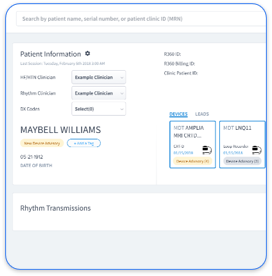
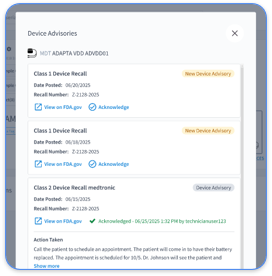
Modern cardiology practices face a heavy administrative burden from fragmented cardiac implant monitoring systems. Unconnected data silos and multiple viewer platforms force clinicians to learn and maintain different systems instead of using a consolidated workspace. Staff must move between separate portals from Medtronic, Boston Scientific, Abbott, and Biotronik, each with unique interfaces and formats. This fragmentation slows workflows, stretches staffing resources, and increases the chance of transcription or selection errors in critical device data.
Disparate monitoring systems also create gaps in patient safety. Manual consolidation across vendor portals increases the risk that important alerts are overlooked during busy periods. When device malfunctions, arrhythmias, or abnormal vitals are buried in high volumes of low-value notifications, alert fatigue grows and true emergencies may not receive timely attention.
Revenue leakage is another consequence of fragmented cardiac implant monitoring. Many practices struggle to track billable events and maintain compliant documentation for remote monitoring CPT codes such as 93298, 93299, and 99454. Limited funding and inconsistent implementation frameworks continue to slow broad CIED remote monitoring adoption. Manual tracking processes often miss eligible encounters, leaving significant revenue uncaptured.
Standardized CIED reporting guidelines exist through ISO/IEEE 11073-10103:2014, but manufacturers still rely on proprietary readout formats that do not flow cleanly into EHRs and third-party systems. Three core gaps, syntactic interoperability, semantic interoperability, and data digestibility, limit the ability to build a complete view of cardiac health across systems. These barriers make it harder to coordinate care for patients managing multiple cardiac conditions.
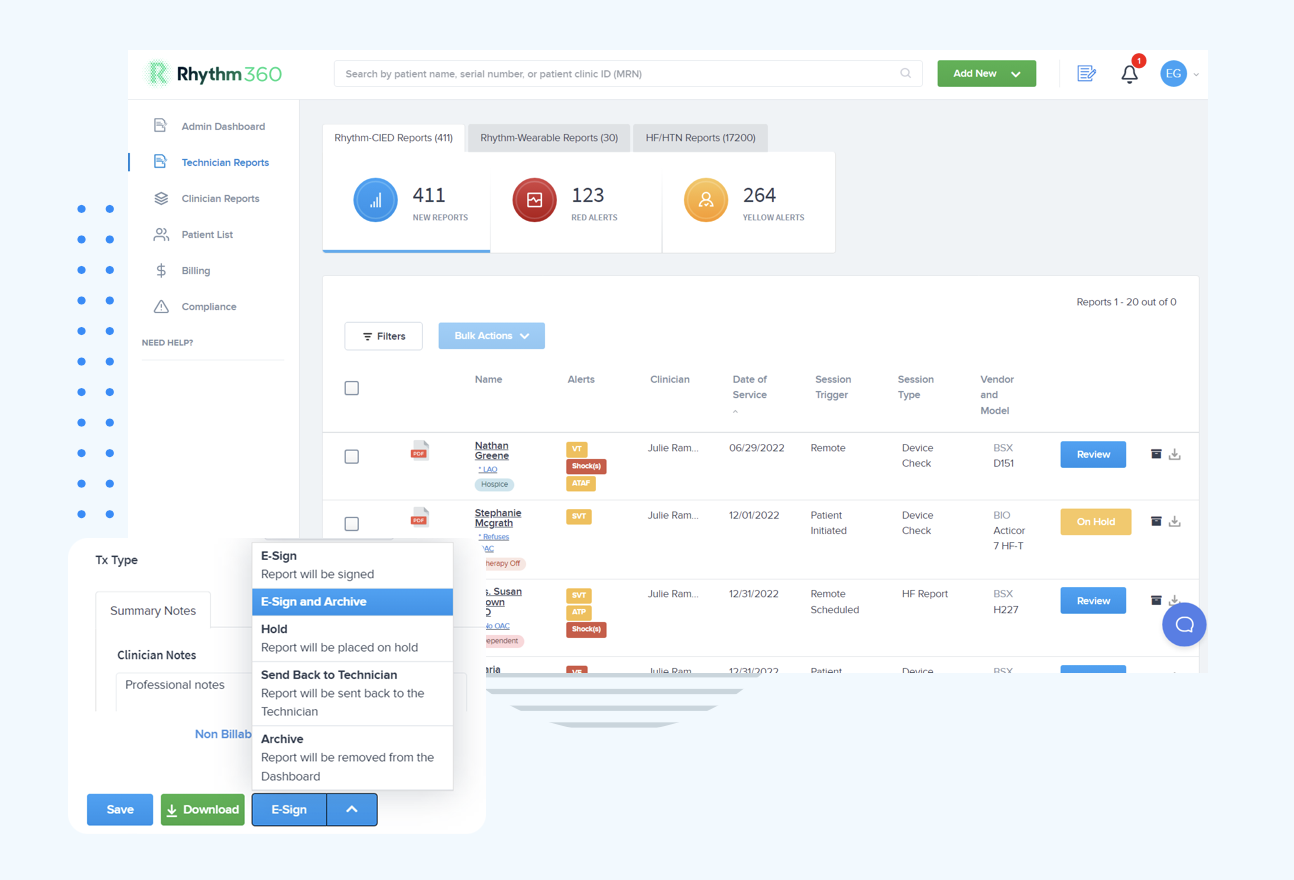
Rhythm360 by RhythmScience provides a vendor-neutral remote patient monitoring platform that consolidates cardiac implant data from all major manufacturers into one cloud-based dashboard. The platform connects Original Equipment Manufacturers, clinicians, and patients while supporting compliant workflows for CIED and chronic disease management programs.
Core Rhythm360 capabilities focus on operational efficiency, clinical safety, and financial performance.
Practice leaders can explore whether Rhythm360 aligns with their goals by scheduling a demo.
Rhythm360 centralizes device data so clinical teams spend less time switching between portals and re-entering information. Automated ingestion, normalization, and reporting tools allow device technicians and nurses to focus on direct patient care and follow-up decisions. This streamlined approach can support faster onboarding of new staff and more consistent workflows across locations.
The platform's alert engine prioritizes events such as new-onset atrial fibrillation, lead issues, or battery concerns so providers can respond quickly to the highest-risk situations. Response times may decrease significantly when teams are not overwhelmed by low-value notifications. Structured remote monitoring programs already improve CIED follow-up outcomes and reduce healthcare utilization, and Rhythm360 is designed to extend these benefits through curated alert workflows and optional round-the-clock monitoring support.
Automated CPT tracking in Rhythm360 helps practices document device checks and remote physiological monitoring in a more consistent way. The platform supports billing for CIED monitoring alongside heart failure and hypertension RPM service lines. By reducing manual errors and missed billing opportunities, practices may see substantial gains in remote monitoring revenue while maintaining compliance.
Fragmented data formats, uneven data quality, and poor interoperability make it difficult to create a clear, unified view of patient health from separate systems. Rhythm360 seeks to address these issues through consolidated dashboards and structured workflows.
Feature | Rhythm360 Platform | Traditional Multi-Vendor | Potential Impact |
Data integration | Single unified dashboard | Multiple separate portals | Shorter data retrieval time |
Alert management | AI-prioritized filtering | Manual screening, high noise | More focused clinical attention |
Revenue capture | Automated CPT documentation | Manual tracking, frequent misses | Higher realized monitoring revenue |
Data reliability | >99.9% transmissibility | Variable reliability, gaps common | Greater confidence in remote data |
Rhythm360 operates as a vendor-neutral layer that unifies data from major CIED manufacturers into a single view. The system relies on technologies such as APIs, HL7, XML, and PDF parsing with computer vision to normalize different file types. This approach reduces dependence on vendor-specific portals and supports consistent chronic disease management across cardiac conditions.
Bi-directional integrations with leading EHR platforms including Epic, Cerner, Athenahealth, eClinicalWorks, and Greenway Health are available, typically through HL7 interfaces. These connections support synchronized problem lists, medications, and device reports while reducing manual data entry and the risk of transcription errors.
AI-based alert triage helps filter non-urgent notifications and escalate serious events. Optional 24/7 coverage by certified cardiac technicians, working under physician supervision, can further shorten response times for critical findings. This structure allows practices to design coverage models that align with patient risk and available staff.
Rhythm360 supports financial performance by guiding CPT code capture and documentation for CIED and remote physiological monitoring services. Consistent workflows, higher staff efficiency, and structured RPM programs for heart failure and hypertension can shift remote monitoring from a cost center into a more predictable revenue stream.
Implementation timelines typically range from a few days to a few weeks, depending on practice size, existing systems, and integration complexity. Rhythm360 is designed to align with current workflows while providing a single access point for cardiac implant data, so teams can begin seeing administrative relief and clearer alert management soon after go-live.
Cardiology practices entering 2026 face mounting pressure from fragmented cardiac implant monitoring systems, rising patient volumes, and expanded chronic disease management needs. Disconnected vendor portals, manual processes, and incomplete interoperability create clinical, operational, and financial challenges.
A unified platform such as Rhythm360 offers a path toward more organized workflows and coordinated cardiac care. Practices can gain centralized visibility into CIED and chronic disease data, AI-supported alert prioritization, and structured billing tools for remote monitoring services. Leaders who want to explore this approach can schedule a demo to evaluate how Rhythm360 may fit their clinical and financial objectives for 2026 and beyond.