Last updated: August 27, 2026
| CPT Code | Device Type | Component | Billing Frequency / Minimum Period |
|---|---|---|---|
| 93294 | Pacemaker (single- or dual-chamber) | Professional (physician interpretation & report) | Once per 90-day period, 30-day minimum monitoring period required |
| 93295 | ICD (including CRT-D) | Professional (physician interpretation & report) | Once per 90-day period, 30-day minimum monitoring period required |
| 93296 | Pacemaker or ICD (including leadless pacemaker) | Technical (data acquisition, technician review, distribution) | Once per 90-day period, 30-day minimum monitoring period required |
| 93297 | Implantable cardiovascular physiologic monitor (e.g., hemodynamic sensor) | Global (or split with -26 / -TC modifiers) | Once per 30-day period, not reportable for periods under 30 days |
| 93298 | Subcutaneous cardiac rhythm monitor / implantable loop recorder (ILR/ICM) | Global (or split with -26 / -TC modifiers) | Once per 30-day period, not reportable for monitoring periods under 30 days |
CPT 93295 is the professional component code for remote ICD interrogation. It covers the physician or qualified non-physician practitioner’s interim analysis, clinical interpretation, and signed report. CPT 93296 is the technical component code that applies to both pacemakers and ICDs. It covers remote data acquisition, receipt of transmissions, technician review, and distribution of results. The two codes serve different functions and are not interchangeable.
Common denial triggers for this code pair include:
CPT 93294 is reported once per 90-day period per device per patient. The 90-day window functions as a hard ceiling, not a target interval. Billing 93294 a second time within any 90-day span for the same patient and device generates an automatic duplicate denial.
A 30-day minimum monitoring period must be satisfied before 93294 can be submitted. The 90-day codes (93294, 93295, 93296) may not be reported for monitoring periods shorter than 30 days per CPT 2026 instructions.
Duplicate-service denial prevention relies on period-based tracking rather than transmission-based tracking. Billing remote monitoring codes per individual transmission instead of once per monitoring period generates OA-18 duplicate service denials that require a corrected claim rather than an appeal. Practices should configure billing systems to release 93294 claims automatically on the day the 90-day period closes, not at the point of each interrogation event.
CPT 93297 covers remote interrogation of an implantable cardiovascular physiologic monitor, including analysis of recorded hemodynamic or physiologic data, review, and report, and is reported once per 30 days. This code applies to devices that track hemodynamic parameters, not cardiac rhythm data.
93297 is a global code. When the interpretation and the technical monitoring service are furnished by different parties, the claim can be split with modifier -26 for the professional component (physician analysis and report) and modifier -TC for the technical component (data acquisition and processing). Global billing is inappropriate when the technical component is performed on equipment owned by a facility.
Device-type mismatch is the primary denial risk for 93297. Using 93297 for a device type other than an implantable cardiovascular physiologic monitor produces a device-type mismatch denial. Additionally, overlapping 30-day monitoring windows reported for 93297 are a common denial trigger.
While 93297 covers physiologic monitors that track hemodynamic parameters, CPT 93298 addresses a different category of 30-day devices: subcutaneous cardiac rhythm monitors. CPT 93298 reports remote interrogation of a subcutaneous cardiac rhythm monitor, including implantable loop recorders, covering analysis of recorded heart rhythm data, clinical review, and a signed report by a physician or qualified healthcare professional. It is reported once per 30-day period and cannot be reported when the monitoring period runs under 30 days.
Like 93297, CPT 93298 follows the same global-code structure with -26 and -TC modifier splits when services are furnished by separate entities. This structure replaced the deleted G2066 code effective January 1, 2024.
Required documentation for a compliant 93298 claim includes:
Correct code pairing depends on device type, ownership of the technical component, and the applicable monitoring period. The following pairing rules govern compliant billing:
The following combinations trigger automatic denials and must never appear on the same claim for the same device and period:
A single patient implanted with both a pacemaker and a loop recorder may legitimately generate claims under both the 90-day cycle (93294, 93296) and the 30-day cycle (93298), provided each claim covers its respective device and period. When that same patient is also enrolled in home physiologic monitoring, they may be subject to three different billing intervals simultaneously: pacemaker or ICD monitoring on a 90-day cycle, loop recorder or hemodynamic sensor monitoring on a 30-day cycle, and home physiologic monitoring on a 30-day period or calendar month.
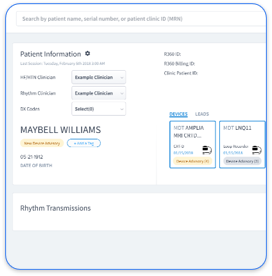
This complexity makes manual management of overlapping cycles across multiple OEM portals a primary source of missed billable events and erroneous denials. Rhythm360 automatically tracks device-specific CPT pairings and period windows across all manufacturers, preventing mismatch denials and unbilled technical components. See how a unified dashboard eliminates manual reconciliation across your entire CIED population.
The following items define the minimum audit-readiness standard for remote CIED interrogation claims under 2026 CMS rules:
Every remote CIED interrogation claim requires a supporting ICD-10-CM diagnosis code that establishes medical necessity. Device-status codes confirm the presence of the implanted device, and clinical indication codes document the underlying condition driving monitoring.
For pacemaker claims (93294, 93296):
For ICD claims (93295, 93296):
For loop recorder or ILR claims (93298):
For physiologic monitor claims (93297):
| Required Element | Applies To | Notes |
|---|---|---|
| Dated physician interpretation and clinical findings | 93294, 93295, 93297, 93298 | Must be signed within the allowed period, and missing interpretation is the most common audit failure |
| Device interrogation transmission report with start and end dates | All codes | Confirms monitoring period meets minimum threshold |
| Device identifier confirming device type matches billed CPT | All codes | Prevents device-type mismatch denials |
| Evidence that the monitoring period meets the required interval | All codes | 30-day minimum for all codes, with the specific thresholds detailed in the billing sections above |
| ICD-10-CM diagnosis code(s) establishing medical necessity | All codes | Device-status code plus clinical indication code required |
| Modifier documentation (-26 or -TC) reflecting actual component ownership | 93294, 93295, 93297, 93298 when split | Global billing is inappropriate when a facility owns the technical equipment |
Learn how Rhythm360 ensures every claim meets these audit requirements without adding staff burden.
Practices implanting devices from more than one manufacturer face a structural billing problem. Each OEM operates a separate, non-interoperable portal, and staff must manually reconcile transmission data, monitoring period dates, and documentation across all of them. This fragmentation drives missed 90-day and 30-day billing cycles, device-type mismatch denials, and unbilled technical components.
Rhythm360 addresses this challenge by ingesting and normalizing data from all major device manufacturers, including Medtronic, Boston Scientific, Abbott, Biotronik, and others, into a single vendor-neutral dashboard. The platform automatically tracks device-specific CPT pairings and period windows, flags claims ready for submission at period close, and generates the physician interpretation documentation required for audit compliance. University of Chicago Medicine reviewed more than 73,000 reports annually through Rhythm360 in calendar year 2025, averaging more than 18,000 reports per quarter. That scale illustrates the operational complexity a unified platform must manage to protect quarterly revenue. As one UCM clinical leader noted, “We have improved billing and accountability for our patients after the integration.”
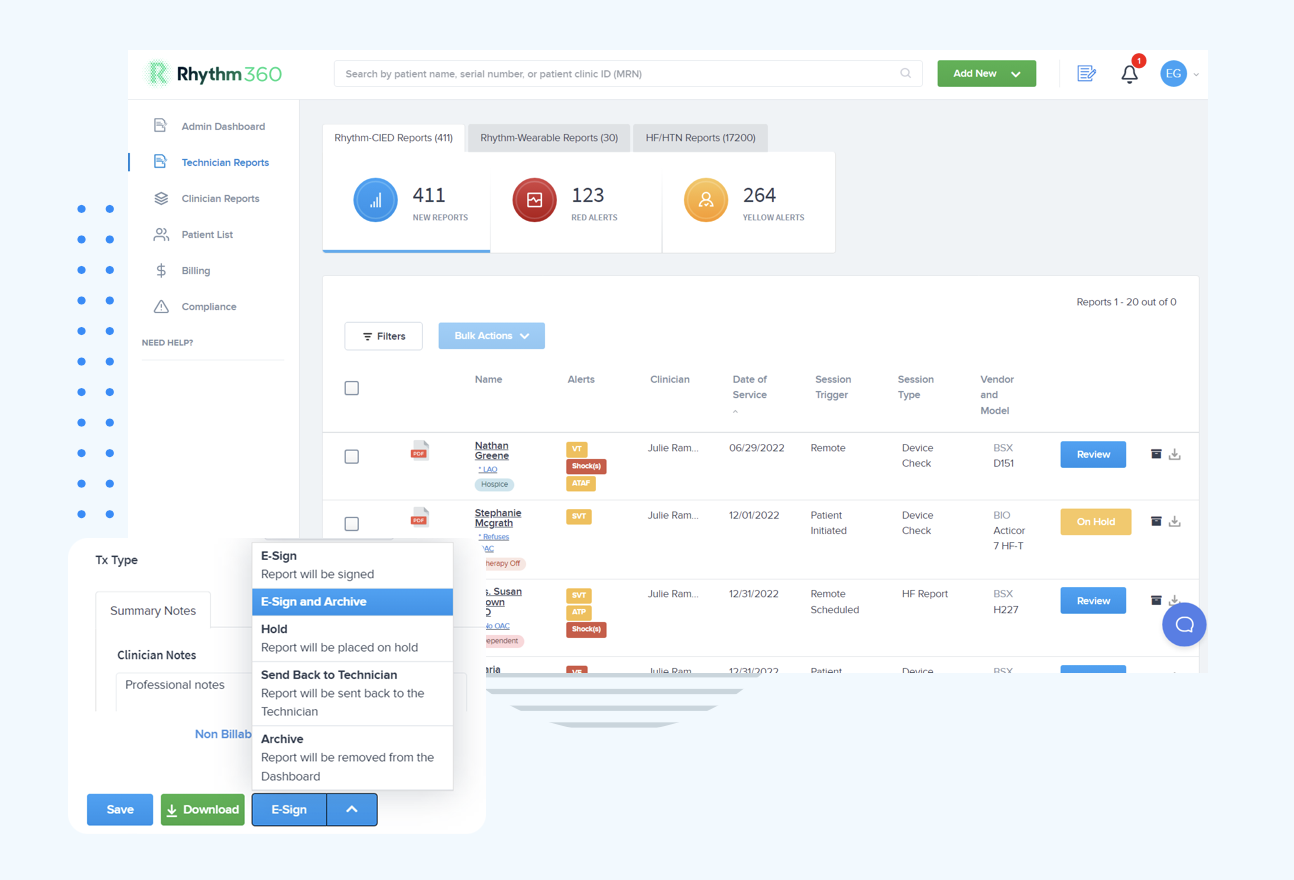
By consolidating multi-OEM data into a single source of truth, Rhythm360 helps practices reduce critical alert response times by up to 80% and capture previously lost revenue, with some practices reporting up to a 300% increase in revenue generation through improved CPT code capture and staff efficiency. Other platforms in the cardiac monitoring space, including Murj, Implicity, Rhythm Management Group, and Octagos, address portions of the remote monitoring workflow. Rhythm360’s vendor-neutral architecture and automated billing event capture support the full spectrum of CIED device types and billing cycles without adding staff burden, enabling practices to realize the revenue gains described above.
CPT 93297 and 93298 are device-specific codes for two distinct categories of implantable monitors. CPT 93297 applies exclusively to implantable cardiovascular physiologic monitors, which track hemodynamic or physiologic parameters such as pulmonary artery pressure. CPT 93298 applies exclusively to subcutaneous cardiac rhythm monitors and implantable loop recorders (ILRs or ICMs), which record heart rhythm data for arrhythmia detection. The two codes cannot be reported together for the same device and period. Neither code should be described as the professional or technical counterpart of the other, and both follow the global-code structure described in the billing guidelines sections above.
93294 and 93295 can appear in the same 90-day period when the patient has both a pacemaker and an ICD implanted as separate devices. CPT 93294 covers the professional component for pacemaker remote interrogation, and CPT 93295 covers the professional component for ICD remote interrogation. Both may appear on claims for the same patient within the same 90-day window, provided each claim references the correct device identifier and the monitoring period for each device independently meets the 30-day minimum threshold. CPT 93296, the shared technical component for both pacemaker and ICD monitoring, applies to each device’s technical service on its respective 90-day cycle.
CO-18 and OA-18 duplicate denials occur when a remote cardiac monitoring code is submitted more than once within its defined monitoring period for the same patient and device. For 90-day codes (93294, 93295, 93296), billing a second unit within any 90-day window triggers the denial. For 30-day codes (93297, 93298), reporting overlapping 30-day monitoring windows produces the same result. A particularly common error involves submitting claims at the point of each individual transmission rather than once at the close of the monitoring period. Correcting these denials requires a corrected claim, not a standard appeal, so prevention through period-based billing tracking remains essential.
A successful appeal of a remote cardiac device monitoring denial requires four core elements. The record must contain the device interrogation transmission report with documented monitoring start and end dates, the physician’s signed and dated interpretation completed within the allowed period, the device identifier confirming the device type matches the CPT code billed, and evidence that the applicable minimum monitoring window was satisfied. For commercial payers such as Aetna, Cigna, and UnitedHealthcare, frequency limits and coverage criteria may differ from CMS guidance and must be verified against the specific payer’s policy at the time of implant. Practices should maintain all four documentation elements in the patient record before submitting any remote monitoring claim to reduce the likelihood of initial denial.
Accurate, audit-ready CPT capture for remote CIED interrogation in 2026 requires precise adherence to device-specific frequency rules, correct professional and technical component splits, compliant ICD-10 linkage, and documentation that withstands CMS and commercial payer scrutiny. The 90-day cycle governing pacemaker and ICD codes and the 30-day cycle governing physiologic monitor and loop recorder codes create overlapping billing windows that manual, multi-portal workflows cannot reliably track at scale. Practices that automate period-based billing event capture, device-type pairing validation, and documentation generation are best positioned to protect quarterly revenue and maintain audit readiness as OIG scrutiny of remote monitoring billing intensifies.
Rhythm360 provides the vendor-neutral infrastructure to manage this complexity across all OEMs, consolidating data, automating compliant documentation, and flagging billable events before they fall outside their billing windows. Protect your 2026 revenue and request a walkthrough today.