Multiple device manufacturers such as Medtronic, Boston Scientific, Abbott, and Biotronik each use separate portals. Staff often spend hours logging into different systems and reconciling reports, which makes it harder to maintain a complete and accurate view of patient information.
High volumes of non-actionable alerts from legacy systems contribute to burnout and distraction. Critical patient events can be overlooked amidst the noise, risking adverse outcomes like strokes or hospitalizations.
Inefficient workflows, manual billing processes, and incomplete documentation for complex CPT codes such as 93298, 93299, 99454, 99453, and 99457 create lost revenue and higher audit risk. Many practices underbill or miss billable services entirely.
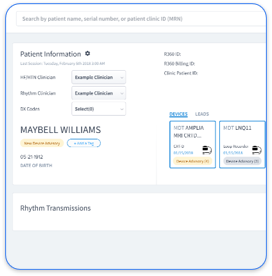
Rhythm360, offered by RhythmScience, is a cloud-based remote patient monitoring platform built for cardiology teams. The platform is vendor-neutral and HIPAA compliant, consolidates Cardiac Implantable Electronic Device and RPM data, connects with leading EHRs, and uses AI to support clinical and operational workflows.
Centralizing data from pacemakers, ICDs, ILRs, CRT or CCM devices, and heart failure or hypertension RPM creates a single source of truth for each patient. A vendor-neutral platform reduces time spent logging into multiple portals, cuts transcription errors, and supports consistent decision-making.
Platforms that use APIs, HL7, XML, and computer vision for PDF parsing can integrate diverse data streams and normalize formats. Rhythm360 provides this type of multi-source integration across major manufacturers.
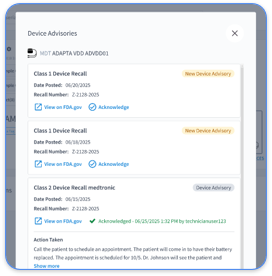
AI and machine learning can analyze incoming data from devices and RPM programs, suppress non-actionable alerts, and prioritize events that require clinical review. This approach supports faster responses to significant arrhythmias or device issues and directs attention where it is most needed.
Platforms with rules-based and AI-supported alerting help reduce response times, support patient safety, and decrease alert fatigue. Rhythm360 uses AI-driven triage to filter noise and elevate critical events in a structured workflow.
Automated CPT tracking reduces the risk of missed billing for remote monitoring services. Cardiac patient data cloud platforms can log time, generate required documentation for CIED and RPM codes such as 93298, 93299, 99453, 99454, and 99457, and prepare clean claims.
Integrated billing workflows and automated reporting help practices capture more eligible events, support compliance, and reduce manual effort. Rhythm360 automates CPT code capture and documentation and relies on high data transmissibility to support consistent billing.
Combining device data with remote physiological monitoring for heart failure and hypertension provides a broader view of a patient’s status. Platforms that ingest data from multiple sensors and apply AI to identify trends can support earlier intervention and more tailored care plans.
A platform that manages both CIED and HF or HTN RPM in one place allows centralized monitoring and documentation across conditions. Rhythm360 supports distinct service lines for these programs and includes billing support for each.
Clinical decisions improve when data is complete, accurate, and timely. Modern platforms use redundant data feeds, quality checks, and AI-enabled validation to manage both structured and unstructured information and to keep transmissibility rates high.
Clear data reliability metrics help clinicians trust what they see and lower the risk of missed information due to transmission gaps. Rhythm360 uses redundant feeds, computer vision, and AI-based extrapolation to reach greater than 99.9% transmissibility.
Clinicians benefit from secure access to device reports, alerts, and documentation when they are away from a workstation. HIPAA-compliant mobile applications allow review of transmissions, report sign-off, and care coordination from remote locations.
Solutions with built-in communication tools and automatic logging of calls or messages into the patient record support consistent follow-up. Rhythm360 offers a secure mobile app so cardiology teams can manage monitoring tasks and patient outreach while on the move.
Bi-directional EHR integration reduces duplicate entry and keeps records aligned across systems. Effective cardiac patient data cloud platforms write structured reports and key findings into the patient chart and pull demographics and encounter details back into the monitoring system.
Integrations with EHRs such as Epic, Cerner, Athenahealth, and eClinicalWorks through HL7 or similar standards help staff spend less time on data management. Rhythm360 supports quick EHR connections so device and RPM data can flow directly into existing clinical workflows.
Feature | Rhythm360 | Manual/Disparate OEMs | Legacy Systems |
Data Aggregation | Vendor-neutral, AI and computer vision | Multiple portals | Single OEM, limited scope |
Alert Management | AI-prioritized alerts | High alert fatigue | Basic, reactive alerts |
Revenue Capture | Automated CPT, up to 300% increase | Manual, significant leakage | Limited tracking |
Data Reliability | Greater than 99.9% transmissibility | Variable, OEM dependent | Limited validation |
A: AI analyzes device and RPM data streams, removes non-actionable notifications, and highlights events that require clinical action. Clinicians receive fewer but more relevant alerts, which supports faster triage and lowers cognitive load.
A: Vendor-neutral platforms connect to and standardize data from all major device manufacturers, without separate logins or workflows. This capability reduces data silos, cuts administrative time, and supports a complete view of each patient regardless of device type.
A: These platforms can track monitoring activity, generate compliant documentation for CIED and RPM codes, and organize information for billing. Practices that use automated CPT capture often see higher realized revenue because they submit more complete and accurate claims.
A: Platforms such as Rhythm360 are built for structured onboarding, with EHR integration timelines that often range from a few days to a few weeks. This approach helps practices start using consolidated data and automated workflows with limited disruption.
A: Cardiac patient data cloud platforms typically include HIPAA-compliant controls, encryption in transit and at rest, secure authentication, and regular security reviews. Role-based access and audit logs record who accessed which records and when.
Cardiology practices that rely on fragmented portals and manual workflows face higher risks of missed events, staff burnout, and lost revenue. Cardiac patient data cloud platforms offer a way to unify device and RPM data, guide alert management, streamline billing, and support EHR workflows.
Schedule a demo of Rhythm360’s cardiac patient data cloud platform to evaluate how centralized data and AI-supported workflows can fit into your practice.