Cardiac telemetry for heart failure uses real-time electrocardiographic monitoring through inpatient systems or remote devices such as cardiac implantable electronic devices (CIEDs) and specialized sensors like CardioMEMS pulmonary artery monitors. This technology detects heart failure worsening through arrhythmias, weight fluctuations, and hemodynamic changes. Understanding the practical differences between inpatient and remote telemetry helps clinicians match the monitoring approach to each patient’s clinical situation.
| Feature | Inpatient Telemetry | Remote Telemetry |
|---|---|---|
| Duration | Continuous during hospitalization | Daily/programmed transmissions |
| Alert Type | Real-time nursing station alerts | Programmed device alerts |
| Cost Structure | High hospital overhead | Lower outpatient monitoring |
The 2026 AI in Cardiology Market report projects growth from $838.87 million in 2025 to $1.66 billion by 2031, driven by AI tools that analyze continuous cardiovascular data to enable earlier detection of decompensation and arrhythmias in heart failure patients.
Heart failure patients with NYHA Class III or IV symptoms, recent hospitalizations, or reduced ejection fraction benefit from telemetry monitoring for tighter management. Key indications include:
Once telemetry monitoring is in place for these high-risk patients, clinicians track specific warning signs that signal clinical decompensation. Critical indicators include:
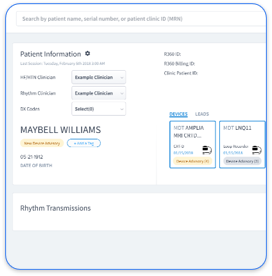
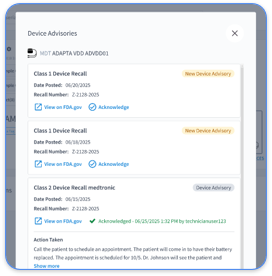
Healthcare practices that manage multiple device manufacturers face overwhelming administrative burdens from separate OEM portals, which create dangerous data silos. These silos force clinicians to log into several systems for each patient, which generates alert fatigue from non-actionable notifications and slows critical response times by up to 80%. The same fragmentation that delays clinical response also disrupts documentation, leading to billing leakage from missed CPT codes like 93298 and 99454 that costs practices significant revenue. The AMA CPT code set for 2026 describes remote monitoring components including device supply (99454) and treatment management (99457 and 99458), but fragmented systems prevent consistent capture of these billable services.
Unified cardiac telemetry platforms deliver connected clinical and financial gains for heart failure programs. AI-powered alert triage reverses the delays caused by fragmented portals and restores rapid response to high-risk events, while comprehensive monitoring substantially decreases heart failure readmissions. Practices that adopt integrated telemetry solutions also see strong revenue growth through accurate CPT code capture and more efficient workflows.
The following comparison highlights how telemetry adoption changes outcomes across clinical, operational, and financial metrics that matter to cardiology practices.
| Metric | With Telemetry | Without Monitoring |
|---|---|---|
| 30-Day Readmissions | 15-20% reduction | Baseline rates |
| Alert Response Time | 80% faster | Manual, delayed |
| Revenue Capture | 300% increase | Missed billing opportunities |
See these results in a Rhythm360 demo and explore how unified telemetry can support your heart failure population.
Cardiac telemetry outperforms traditional Holter monitoring for chronic heart failure management because it supports long-term, remote, and actionable surveillance. The comparison below shows how telemetry extends beyond short-term rhythm assessment to continuous heart failure monitoring.
| Feature | Cardiac Telemetry | Holter Monitor |
|---|---|---|
| Duration | Continuous/Long-term | 24-48 hours |
| Real-time Alerts | Yes | No |
| Remote Capability | Yes | No |
| Heart Failure Utility | Chronic monitoring | Short-term assessment |
Rhythm360 delivers cloud-based cardiac telemetry that unifies CIED and heart failure RPM data with more than 99.9% transmissibility through AI-powered data integration and computer vision technology. The platform consolidates Medtronic, Abbott, Boston Scientific, and Biotronik devices into a single dashboard, which removes the administrative burden of multiple OEM portals.
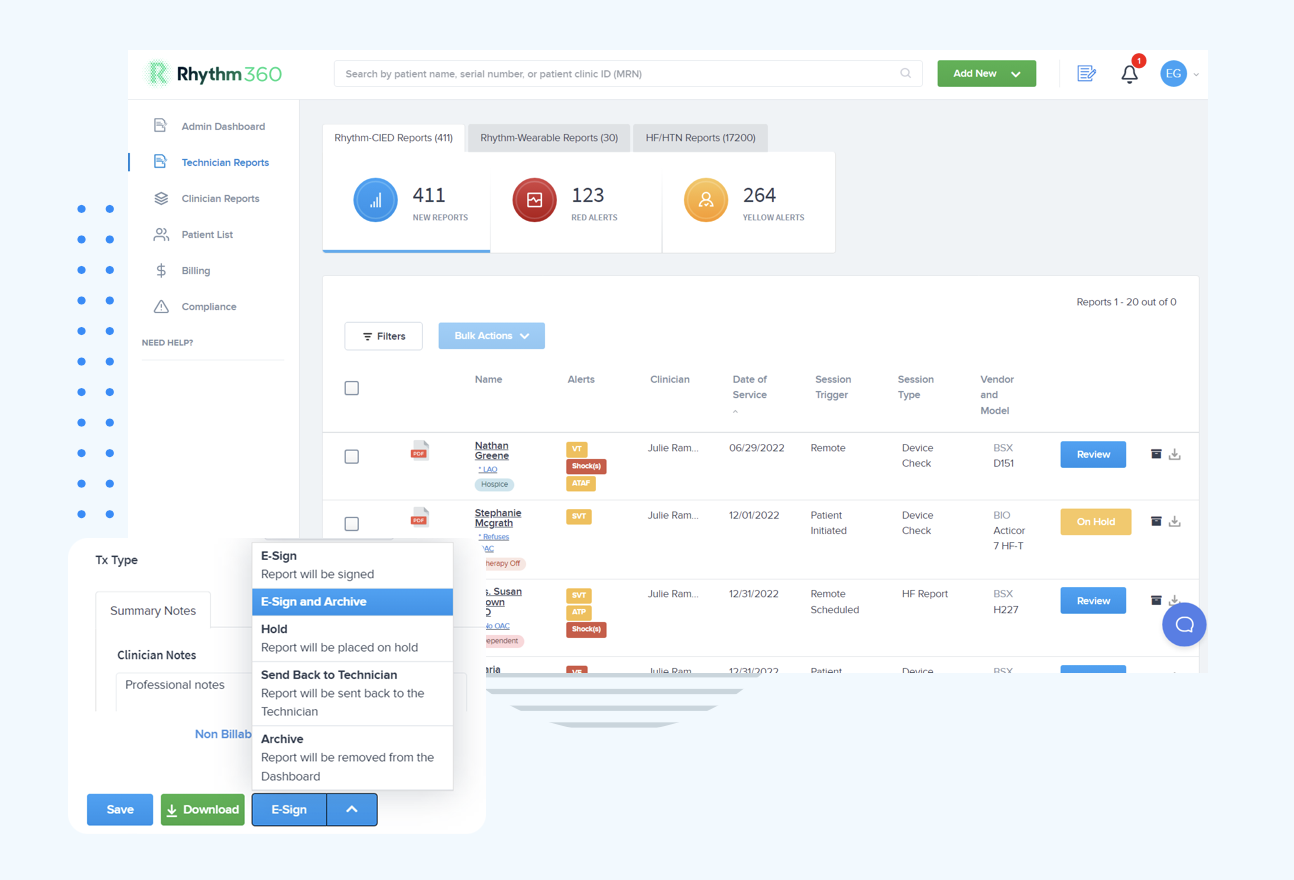
Key features include:
Consider a Saturday morning scenario. Rhythm360’s AI flags new-onset atrial fibrillation in a heart failure patient and sends a prioritized mobile alert. The clinician reviews the patient’s complete cardiac history in seconds and starts anticoagulation therapy, which prevents a potential stroke that fragmented systems might not identify until Monday.
For practice administrators, Rhythm360’s revenue cycle management dashboard tracks billable activities and automates documentation. Clinical users gain intelligent alert prioritization that removes noise while ensuring that critical events receive immediate attention. Experience how Rhythm360 reduces alert fatigue and revenue loss in your heart failure program.
Rhythm360 implementation typically requires days to weeks, depending on practice size and EHR integration complexity. The SaaS-based pricing model scales with clinic usage, which aligns costs with actual patient volume and service demand. When evaluating whether Rhythm360 fits your practice, focus on capabilities that directly address data fragmentation, delayed response, and billing leakage.
Cardiac monitoring and telemetry share core ECG surveillance functions but differ in scope and application. Cardiac monitoring covers broader cardiovascular assessment, including echocardiography, stress testing, and laboratory markers. Telemetry refers specifically to remote transmission of physiological data, typically ECG rhythms, from patient to monitoring station. In heart failure management, telemetry represents the remote monitoring component that enables continuous surveillance outside hospital settings.
Rhythm360 ingests CardioMEMS pulmonary artery pressure data through API connections and data normalization protocols. The platform correlates hemodynamic trends with device data and clinical parameters to provide comprehensive heart failure monitoring. Clinicians view CardioMEMS readings alongside CIED transmissions in a unified dashboard, which supports holistic assessment and coordinated care decisions.
Heart failure telemetry uses multiple CPT codes that vary by monitoring type and duration. The 2026 AMA CPT updates include 99453 for device setup, 99454 for 16-30 days of data transmission, 99457 and 99458 for treatment management, and new codes 99445 (2-15 days data) and 99470 for remote physiologic monitoring treatment management services requiring at least one real-time interactive communication with the patient or caregiver during the month and at least 10 minutes of professional or clinical staff time. CIED monitoring uses 93298 for device interrogation and previously employed CPT code 93299 for interrogation and evaluation of implantable cardiovascular physiologic monitoring systems (ICPMS) or subcutaneous cardiac rhythm monitors (SCRMS), prior to its deletion in 2020. Proper documentation and accurate time tracking support complete reimbursement capture.
Rhythm360 implementation ranges from several days for simple deployments to a few weeks for complex multi-site integrations with extensive EHR connectivity. Most practices achieve positive ROI within three to six months through improved billing capture, reduced administrative overhead, and enhanced patient outcomes. This revenue growth reflects three compounding factors: optimized CPT code utilization, decreased readmissions, and expanded monitoring services.
AI integration improves heart failure telemetry through intelligent alert filtering, predictive analytics, and automated data correlation. Recent collaborations like HeartBeam and Mount Sinai's March 2026 partnership develop AI models using longitudinal, real-world ECG data for earlier cardiovascular health change detection. These advances support proactive interventions, reduce alert fatigue, and enable personalized care protocols that improve patient outcomes while using staff time more efficiently.
Unified cardiac telemetry for heart failure removes dangerous data silos, reduces readmissions, and strengthens practice profitability through intelligent monitoring and automated billing workflows. Transform your heart failure program with a Rhythm360 consultation and see how unified telemetry can support your patients and your team.