Last updated: February 4, 2026
Cardiac telemetry has moved from basic wired systems to wireless networks supported by AI analytics and cloud platforms. Significant challenges still affect most hospital programs. Between 74 and 99% of clinical alarms are false or not clinically relevant, which drives alarm fatigue and undermines patient safety. This flood of non-actionable alerts desensitizes nurses and slows responses to real emergencies.
Overuse compounds the problem. Studies show that about 80% of telemetry monitoring occurs in patients who do not meet evidence-based criteria for continuous surveillance. This misuse drains staff time, increases costs, and intensifies alarm fatigue across clinical teams.
New 2026 trends focus on AI tools that directly address these issues. Wearable cardiovascular platforms now combine ECG, PPG, and other sensors with AI models that run on the device or in the cloud for real-time analysis and clinician alerts. Cloud scalability lets hospitals handle large telemetry data volumes while maintaining reliability and lowering infrastructure spend.
Legacy OEM-specific systems still create data silos that block full patient visibility and complicate transitions to post-discharge monitoring. Vendor-neutral SaaS platforms solve this by unifying data streams and integrating cleanly with EHRs and remote monitoring systems.
Health systems evaluating telemetry programs gain faster results with SaaS platforms like Rhythm360 than with custom builds. SaaS deployment usually finishes in days or weeks, while internal development often stretches into many months or longer. Financial returns appear quickly through lower administrative burden, faster alert responses, and stronger billing compliance.
Key performance metrics highlight the impact of modern telemetry platforms. Organizations typically see lower costs through right-sized utilization, up to 80% faster alert response times from AI triage, and as much as 300% revenue growth from better CPT capture and documentation. The table below summarizes projected improvements.
Metric | Baseline (Legacy) | With Rhythm360 | Projected Savings |
Telemetry Hours/Patient | 72 | 48 | 33% |
Alert Response Time | 10 min | 2 min | 80% |
Annual Cost per Bed | $50K | $35K | 30% |
CPT Revenue Uplift | Baseline | +300% | Significant increase |
Core telemetry program metrics include telemetry hours per patient, alarm-to-response ratios, false positive rates, and staff satisfaction scores. These measures reveal improvement opportunities and confirm the impact of workflow or technology changes.
Rhythm360 delivers a next-generation cardiac monitoring platform that operationalizes AHA best practices and addresses daily hospital challenges. This vendor-neutral, cloud-based system unifies data from major OEMs such as Medtronic, Abbott, Boston Scientific, and Biotronik, creating a single, consistent view of each patient.
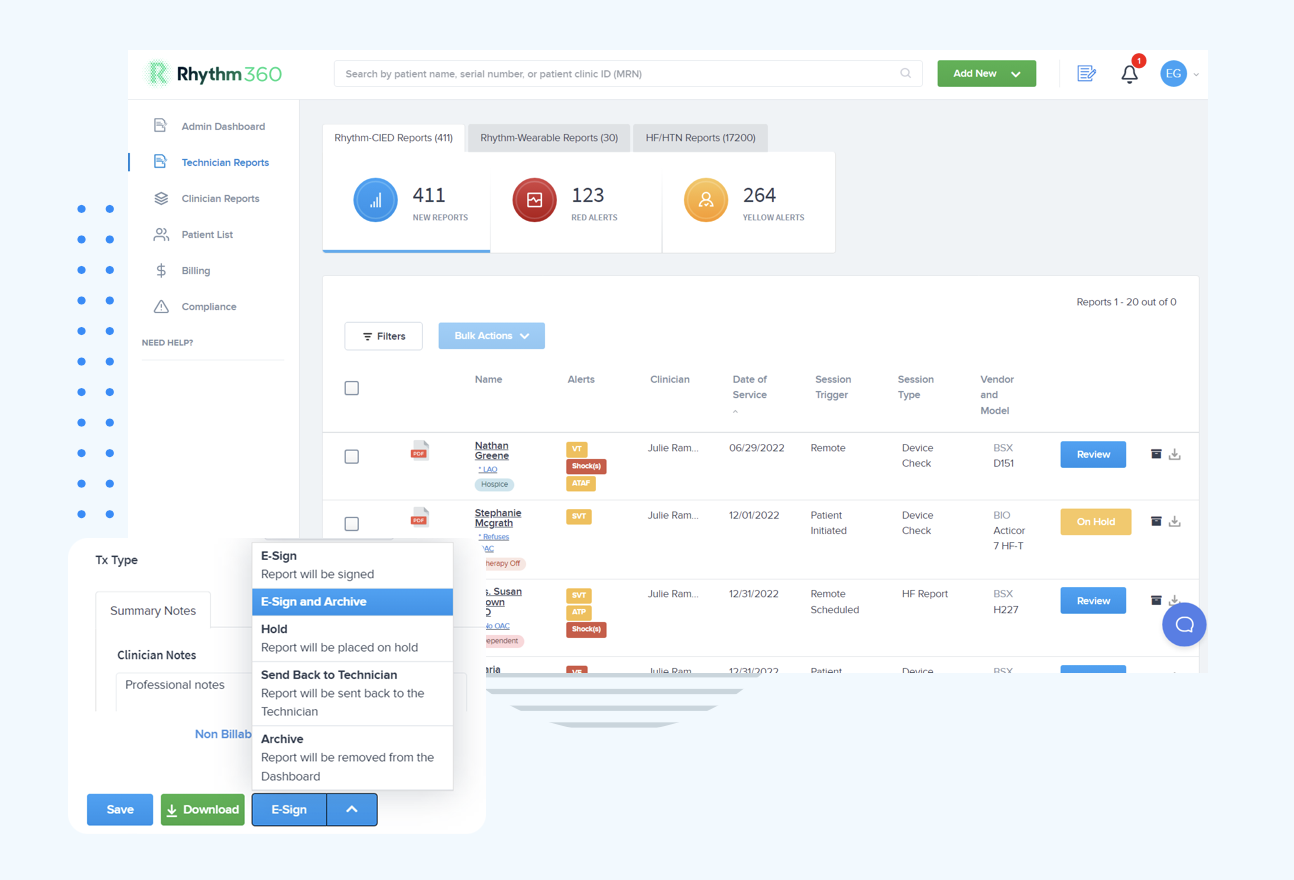
Key Rhythm360 capabilities include:
The AI-driven alert management engine targets alarm fatigue by filtering non-actionable alerts and elevating clinically meaningful events. This approach ensures rapid attention to critical arrhythmias, device issues, and other urgent conditions while sharply reducing the volume of false alarms that overwhelm traditional systems.
Schedule a Rhythm360 demo to see how a vendor-neutral platform can modernize your cardiac telemetry program.
Hospitals achieve reliable telemetry outcomes when they follow a structured implementation plan. Use this eight-step checklist as a practical roadmap for your cardiac monitoring program.
1. Conduct a Utilization Audit
Review current telemetry use, flag inappropriate monitoring, and set baseline metrics for future comparison. Document patient acuity and clinical indications to uncover clear overuse patterns.
2. Apply Tiered Clinical Criteria
Define explicit AHA-based criteria for Class I, Class II, and Class III monitoring indications. Build simple decision trees that help clinicians select appropriate patients consistently.
3. Deliver Focused Staff Training
Interdisciplinary teams can address cardiac telemetry alarm fatigue through targeted education on alarm management, electrode placement, and emergency response workflows.
4. Standardize Electrode Preparation
Adopt consistent skin preparation, electrode placement standards, and replacement intervals. These steps reduce artifact-related false alarms and protect signal quality.
5. Set Custom Alarm Thresholds
Define patient-specific alarm parameters based on condition and risk profile. Use the table below as a starting point for baseline thresholds.
Alarm Type | Threshold Example | Escalation Tier |
Asystole | >3 sec | Tier 1 (Immediate) |
VTach | >150 bpm, 30 sec | Tier 1 |
Bradycardia | <40 bpm | Tier 2 |
6. Integrate Modern Technology Platforms
Deploy solutions like Rhythm360 that provide EHR integration, AI analytics, and vendor-neutral data aggregation. These capabilities streamline workflows and support faster, clearer clinical decisions.
7. Define Transport Monitoring Protocols
Create standard procedures for telemetry during patient transport, including portable device use and structured communication handoffs between sending and receiving units.
8. Launch a Real-Time Metrics Dashboard
Track key indicators such as alarm rates, response times, utilization trends, and clinical outcomes. Use these dashboards to guide continuous quality improvement.
Many organizations face similar telemetry pitfalls during rollout and expansion. Over-monitoring low-risk patients remains the most frequent issue and drives waste and alarm fatigue. Strict adherence to evidence-based criteria and recurring utilization reviews help control this problem.
Delaying AI adoption keeps alarm fatigue in place and blocks efficiency gains. Modern platforms like Rhythm360 provide intelligent alert filtering that can cut false alarms by up to 80% while still surfacing critical events immediately.
OEM-specific data silos limit full patient visibility and complicate post-discharge transitions. Vendor-neutral platforms remove these barriers by aggregating data from all device manufacturers into a unified patient record.
Weak staff training on alarm protocols leads to inconsistent responses and higher safety risk. A four-phase evidence-based practice model supports alarm fatigue management through evidence acquisition, status review, evidence application, and effect evaluation.
Missing RPM handoff processes create gaps when patients move from hospital to home monitoring. Platforms that connect in-hospital telemetry with remote monitoring protect continuity of care and support better long-term outcomes.
Schedule a Rhythm360 demo to see how a unified platform can help you avoid these common telemetry pitfalls.
The 2025 AHA Guidelines update Class of Recommendation and Level of Evidence definitions, with Level A evidence from high-quality randomized trials and meta-analyses. The guidance highlights tiered monitoring criteria, with Class I indications for high-risk patients who clearly need monitoring, Class II for reasonable use cases, and Class III for situations where monitoring offers no benefit. Cardiac telemetry supports cardiac function and end-organ perfusion in post–cardiac arrest care, including SpO2 targets of 94–98% and electrolyte management to prevent arrhythmias. The guidelines also call for daily utilization reviews to confirm appropriate duration and prevent overuse.
Evidence-based best practices focus on electrode preparation, tailored alarm thresholds, and structured staff education. Teams should use consistent skin preparation and standardized replacement schedules to reduce artifact-related noise. Alarm management should rely on patient-specific thresholds and clear escalation tiers for each alarm type. Training programs need to cover alarm fatigue recognition and response expectations. Vendor-neutral platforms with AI alert filtering help reduce false positives while keeping critical events highly visible.
Hospitals improve utilization by auditing current patterns, enforcing evidence-based ordering criteria, and running regular utilization reviews. Clear AHA-based guidelines and decision support tools help clinicians order telemetry appropriately. AI triage systems reduce inappropriate monitoring by filtering non-actionable alerts and highlighting clinically meaningful events. Continuous metrics tracking reveals overuse trends and guides targeted changes. Platforms that connect in-hospital telemetry with remote patient monitoring also support better resource allocation.
Rhythm360 supports compliance with detailed audit trails, more than 99.9% data reliability, and automated documentation. The platform logs monitoring activity, alarm responses, and related interventions, which supports regulatory reviews. AI alert management promotes appropriate responses to critical events while lowering false alarm rates. Vendor-neutral aggregation closes monitoring gaps that can appear with OEM-specific tools. Deep EHR integration keeps documentation complete and aligned with patient safety and quality standards.
Hospitals that adopt modern telemetry platforms like Rhythm360 usually see lower costs from right-sized utilization and reduced administrative work. AI triage can improve alert response times by up to 80%, which supports better outcomes. Revenue can rise by as much as 300% through stronger CPT capture, cleaner billing documentation, and new remote monitoring services. Rapid deployment over days or weeks accelerates time to value, while continuous metrics tracking sustains long-term efficiency and clinical gains.
Evidence-based cardiac telemetry requires structured planning, the right technology stack, and ongoing quality improvement. The framework in this guide supports AHA-aligned practice while addressing alarm fatigue and resource strain. Rhythm360’s vendor-neutral platform helps hospitals capture these benefits through AI alert management, tight EHR integration, and a strong bridge to remote monitoring.
Schedule a Rhythm360 demo today to modernize your cardiac telemetry program with fast onboarding and measurable results.