Cardiology practices lose 30% revenue due to fragmented OEM portals and 15-25% RPM claim denials from poor documentation and manual tracking.
2026 CPT updates add new code 99445 for 2-15 day RPM monitoring and enforce strict 16-day and 20-minute thresholds for 99454 and 99457 billing.
A 7-step workflow aggregates multi-OEM data, automates compliance tracking, generates documentation, and integrates with EHRs to deliver dramatically faster response times.
Rhythm360 provides vendor-neutral CIED integration, AI alert triage, and automated billing capture for >99.9% data reliability and significant revenue uplifts.
Implement these improvements with Rhythm360 by scheduling a demo today to achieve >95% claim approvals and rapid ROI.
Cardiology practices face mounting pressure from fragmented OEM portals that require separate logins for each device manufacturer, which creates unsustainable administrative burdens. Manual 16-day tracking processes consume excessive staff hours while 15-25% of RPM claims are denied initially because of missing documentation, incorrect coding, and incomplete transmission records. Alert fatigue from overwhelming non-actionable notifications leads to missed critical events, and practices lose roughly 30% of potential revenue through denied claims and billing inefficiencies.
To address these challenges, practices must understand the 2026 CMS updates that introduce significant changes to RPM CPT codes and demand automated compliance tracking:
CPT Code | Description | Threshold/Reimbursement | Cardiology Application |
|---|---|---|---|
93298/93299 | CIED evaluation | Device-specific/$65-85 | Pacemaker/ICD monitoring |
99453 | RPM setup/education | 2-day minimum/$22 | Device onboarding |
99445 | New: 2-15 days RPM | 2-15 days/$47 | Short-term monitoring |
99454 | RPM device supply | 16+ days/$47 | Standard RPM billing |
99457 | RPM management | 20+ minutes/$52 | Clinical staff time |
99458 | Additional RPM time | Each 20 minutes/$41 | Extended management |
Clear differentiation between CPT 99454 and 99457 supports accurate billing. CPT 99454 covers device data transmission for 16 or more days within a 30-day period. CPT 99457 covers at least 20 minutes of clinical staff time for treatment management services. CMS requires interactive communications with patients for 99457 billing, although the communication does not need to represent the entire cumulative time.
Step 1: Aggregate Multi-OEM CIED Data
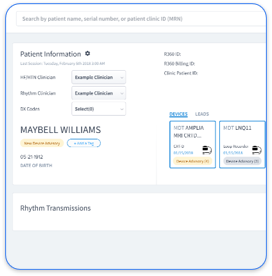
Consolidate data streams from Medtronic, Abbott, Boston Scientific, and Biotronik into a single dashboard. This consolidation eliminates manual portal logins and prevents data transcription errors that occur when staff toggle between systems. Platforms like Rhythm360 RPM billing enable this seamless vendor-neutral integration with >99.9% data transmissibility through redundant feeds and AI-powered gap filling.
Step 2: Automate Threshold Tracking and Alert Triage
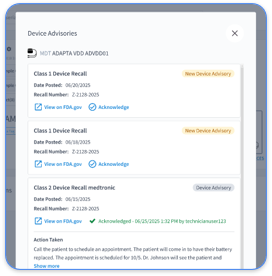
Use automated monitoring for 16-day transmission requirements for 99454 and 2-day minimums for 99445. Configure intelligent alert filtering to cut non-actionable notifications by about 80% while prioritizing critical events such as new-onset AFib or device malfunctions. Add automatic escalation protocols for urgent alerts so high-risk patients receive timely attention.
Step 3: Generate Automated CPT Documentation
Build systematic documentation for 99454 and 99457 billing requirements, including transmission logs, patient interaction records, and time tracking. Align this documentation with proper CPT-ICD-10 pairings and modifier usage to prevent common denial reasons. Standardized templates help staff capture all required elements consistently.
Step 4: Implement Bi-Directional EHR Integration
Establish reliable data flow between RPM platforms and Epic or Cerner systems through structured interfaces. Configure automated report generation and clinical note population so clinicians see RPM insights inside their daily workflow. Create standardized templates for the 20-minute management documentation required for 99457 billing.
Step 5: Improve Alert Response and Lower Denials
Deploy AI-powered triage systems that highlight actionable alerts and route them to the right team members. Pair these tools with standardized workflows for critical events and clear documentation of interactive communications required for management codes. This combination shortens response times and supports cleaner claims.
Step 6: Establish Comprehensive Audit Trails
Maintain detailed logs of all patient interactions, data transmissions, and billing activities for every monitored patient. Document setup processes for 99453, transmission patterns for 99454 and 99445, and time tracking for 99457 and 99458 to support claim validation. Robust audit trails protect revenue during payer reviews.
Step 7: Monitor RPM Financial and Clinical Performance
Track key performance indicators such as claim approval rates, revenue per patient, response times, and compliance metrics. Measure progress toward revenue growth targets through improved billing capture and reduced administrative overhead. Use these insights to refine staffing, workflows, and technology configurations.
Pro Tip: Avoid common mistakes such as billing 99445 and 99454 concurrently, weak documentation of interactive communications, and missing modifier applications that trigger automatic denials.
Rhythm360 delivers vendor-neutral integration across all major CIED manufacturers while supporting comprehensive HF and HTN monitoring programs. The platform achieves >99.9% data transmissibility through redundant feeds, computer vision OCR, and AI-powered data extrapolation when primary connections fail. This reliability supports faster alert response times and automated CPT code capture that drives 300% revenue increases through optimized 2026 code implementation.
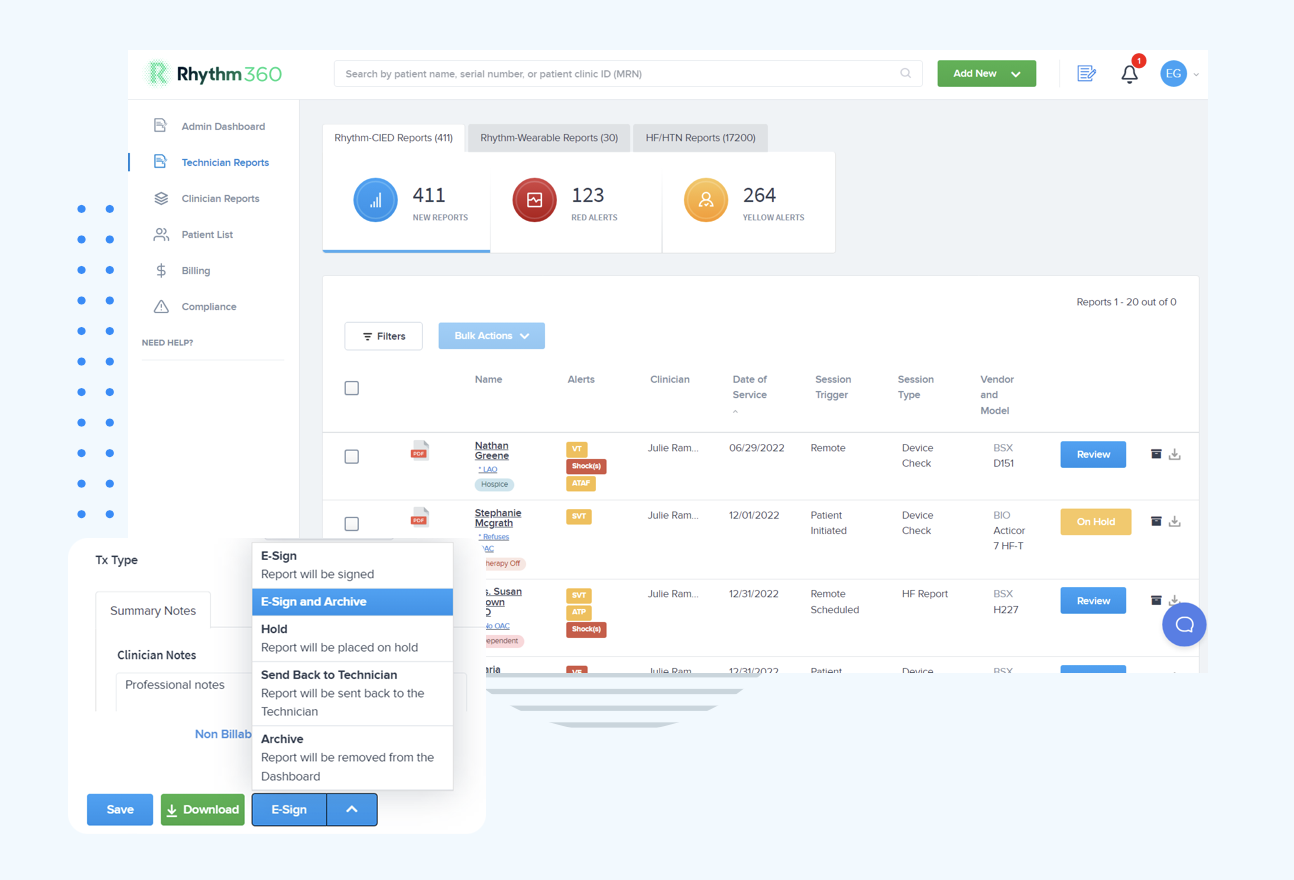
Rhythm360 also provides complete workflow automation with deep EHR integration capabilities and full vendor neutrality across all major OEMs. The platform includes integrated Twilio communication frameworks for patient messaging with full audit trails, which supports compliance with interactive communication requirements for management codes.
Real-world implementations show consistent outcomes. Practices report large reductions in critical alert response times while capturing previously lost revenue through automated billing documentation. The streamlined onboarding process typically completes within days to weeks, which enables rapid deployment without disrupting existing workflows.
Schedule a demo today to see how Rhythm360 automation delivers measurable ROI through precise CPT code billing workflows and vendor-neutral CIED data management.
Effective denial prevention strategies focus on complete transmission logs for threshold requirements, accurate modifier usage for bilateral procedures, and thorough documentation of patient interactions. Missing or inaccurate modifiers and incomplete documentation represent primary denial triggers that automated systems can remove.
Key performance metrics for successful RPM programs include strong revenue uplift through improved billing capture, faster critical alert response times, and sharp reductions in claim denial rates from 15-25% to under 5%. Advanced strategies include stacking CCM and RPM services to support comprehensive chronic disease management revenue growth.
Metric | Target | Measurement Method |
|---|---|---|
Revenue Uplift | 300% | Monthly billing comparisons |
Response Time | 80% reduction | Alert-to-action tracking |
Claim Approval | >95% | Denial rate monitoring |
Data Transmissibility | >99.9% | Connectivity analytics |
Use a vendor-neutral platform like Rhythm360 that aggregates multi-OEM CIED data and automatically tracks transmission thresholds for accurate CPT code application. The system monitors 2-day minimums for 99453, 16-day requirements for 99454, and time tracking for 99457 management services. Automated documentation generation supports billing requirements and reduces manual administrative work.
Rely on automated documentation systems that capture complete transmission logs, proper CPT-ICD-10 pairings, and interactive communication records. Implement standardized workflows for threshold tracking and maintain comprehensive audit trails for all billable activities. Automated systems can reduce denial rates from 15-25% to under 5% through consistent compliance documentation and accurate modifier application.
Bi-directional Epic and Cerner integrations through HL7 protocols provide strong workflow efficiency. Rhythm360 deep EHR integration enables automatic clinical note population, standardized reporting templates, and seamless data flow between RPM platforms and existing practice management systems. This approach removes manual data entry while maintaining comprehensive documentation for billing compliance.
Rhythm360 vendor-neutral design supports all major OEM platforms simultaneously with complete workflow automation. The platform delivers proven revenue uplifts through automation from data aggregation through billing documentation and EHR integration.
CPT 99454 covers device supply and data transmission for 16 or more days within a 30-day period, with a focus on physiological data collection. CPT 99457 covers clinical staff time for treatment management services that require at least 20 minutes of monthly non-face-to-face care coordination. These codes serve different billing purposes and can be used together when both device monitoring and management services occur in the same period.
Fragmented cardiology RPM workflows are costing practices significant revenue through inefficient processes and denied claims. The proven 7-step optimization approach combined with Rhythm360 vendor-neutral automation delivers scalable revenue growth while supporting 2026 CPT compliance.
Schedule a Rhythm360 demo today to unlock substantial revenue gains and transform your practice RPM billing efficiency.