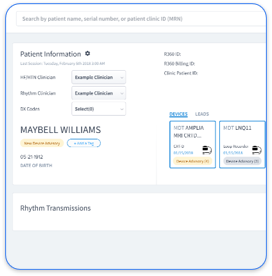
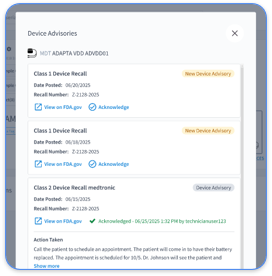
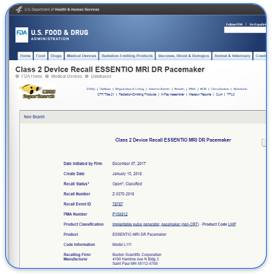
Manual OEM portal navigation creates dangerous gaps in patient monitoring, especially for hypertension spikes and device malfunctions that require immediate intervention. Clinicians waste hours logging into separate Medtronic, Abbott, Boston Scientific, and Biotronik systems while critical events go undetected.
Solving this fragmentation requires a systematic approach to data unification. Implementation follows five essential steps that build a comprehensive monitoring infrastructure. First, establish patient onboarding checklists with device-specific protocols to ensure consistent data collection from the start. Next, configure automated data normalization using AI and OCR technology to unify the different formats these devices produce. Then set up redundant data feeds to prevent transmission failures that could create monitoring gaps. Integrate physiological monitoring for weight, blood pressure, and heart rate to complement device data with broader health indicators. Finally, enable automated billing documentation for relevant CPT codes so every qualifying activity generates compliant revenue.
These steps become operationally feasible through platforms designed for vendor neutrality. Rhythm360’s architecture ingests data from all major OEMs through APIs, HL7 interfaces, and computer vision parsing of unstructured PDFs. The platform achieves >99.9% transmissibility through redundant data feeds that activate when primary OEM servers experience downtime. Medicare reimburses $52.11 per patient per 30 days under CPT code 99454 when patients provide at least 16 daily readings, which creates substantial revenue opportunities for practices that run comprehensive RPM programs.
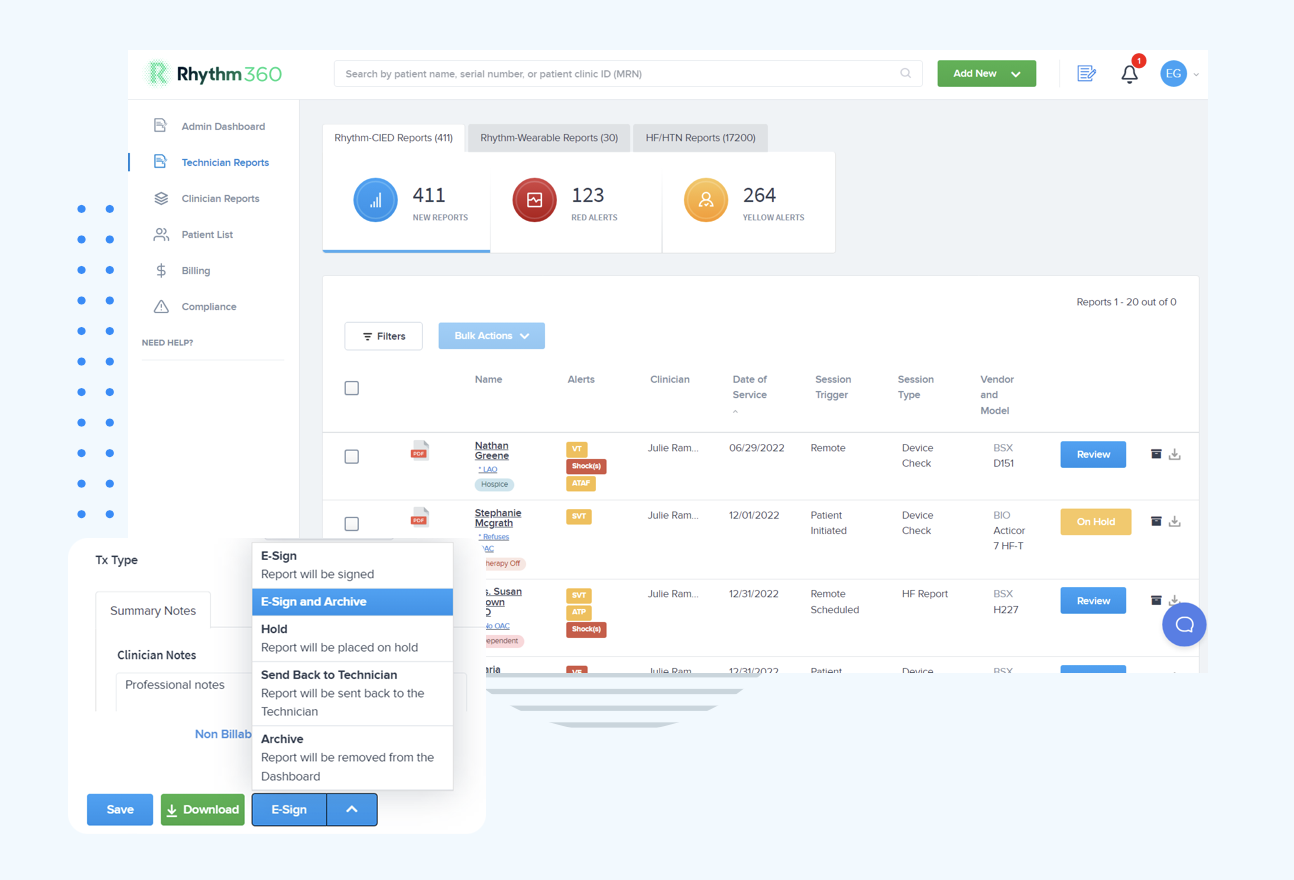
Avoid single-OEM lock-in strategies that limit future device choices and create vendor dependency. Instead, focus on platforms that normalize data across manufacturers rather than favoring specific brands, because this flexibility enables the transformative outcomes described here. When atrial fibrillation alerts trigger on Saturday morning, patients receive anticoagulation therapy by afternoon, which prevents potential strokes that might otherwise occur without unified monitoring systems.
Non-actionable alerts bury critical ventricular tachycardia and device malfunction warnings in overwhelming notification volumes. Clinicians experience dangerous alert fatigue that delays responses to life-threatening arrhythmias while staff burn out from constant false alarms.
AI-powered triage addresses this problem by learning which alerts require immediate action and which can safely wait. Effective implementation involves several coordinated steps. Enable machine learning filters trained on clinical significance patterns. Establish certified cardiac technician oversight for complex cases that need human review. Configure mobile notifications for priority events so on-call clinicians can act quickly. Set customizable threshold parameters for different patient populations. Implement audit trails for all alert decisions and clinical responses to support quality review and compliance.
Rhythm360’s AI-powered triage system prioritizes clinically significant arrhythmias while filtering routine device checks and non-urgent parameter changes. The platform provides 24/7 certified cardiac technician support through secure mobile applications, which enables immediate clinical decision-making regardless of location. Advanced algorithms learn from clinical outcomes to refine alert accuracy and reduce false positives over time.
Customize alert thresholds based on individual patient risk profiles rather than using universal settings. Patients with recent ablations require different monitoring parameters than those with stable device function. Regular algorithm tuning sessions with clinical staff keep sensitivity high without overwhelming teams with unnecessary notifications.
Practices report 80% faster response times for critical events, and weekend stroke prevention becomes routine rather than exceptional. Emergency department visits decrease when clinicians receive actionable alerts that support proactive interventions before symptoms escalate to crisis levels.
Reactive heart failure management causes preventable hospitalizations and emergency interventions that strain healthcare resources. Traditional monitoring approaches miss subtle physiological changes that precede acute decompensation events, which leads to costly readmissions and poor patient outcomes.
Predictive modeling implementation involves a structured data and workflow strategy. Aggregate comprehensive EHR data with device telemetry to create a complete clinical picture. Deploy machine learning algorithms trained on cardiovascular outcomes. Configure early warning systems that flag rising decompensation risk. Establish clear intervention protocols for high-risk predictions so teams know exactly how to respond. Monitor algorithm performance and clinical validation metrics to confirm that predictions remain accurate and useful.
Advanced machine learning approaches demonstrate significant accuracy improvements in cardiovascular disease prediction. Research shows that K-Nearest Neighbors algorithms achieve 87% accuracy in cardiovascular disease detection using clinical parameters including age, blood pressure, cholesterol levels, and heart rate. Rhythm360 uses similar ensemble methods that combine multiple algorithms to enhance prediction reliability for heart failure and arrhythmia risk assessment.
Regulatory compliance after 2025 requires algorithm transparency and clinical validation. Document prediction accuracy rates and maintain audit trails for all AI-driven clinical recommendations. Regular algorithm retraining with local patient populations improves prediction accuracy for specific demographic groups and practice patterns.
Proactive interventions based on predictive modeling prevent emergency situations and reduce healthcare costs. Patients identified as high risk for heart failure decompensation receive medication adjustments and lifestyle interventions before symptoms appear. These early actions improve quality of life and reduce hospital admissions.
Documentation gaps and billing inefficiencies cause significant revenue leakage in remote monitoring programs. Practices struggle with complex CPT code requirements and miss billable events because tracking systems and clinical documentation remain incomplete.
Billing optimization requires a repeatable framework. Implement automated event tracking for all billable activities. Generate compliant documentation with required clinical elements for every encounter. Configure audit trails that support billing compliance and internal review. Establish modifier usage protocols for complex scenarios. Monitor claim acceptance rates and denial patterns so teams can adjust workflows and improve performance.
CPT Code 93296 covers remote device evaluation of implanted cardiac devices when providers review transmitted data and perform clinical decision-making or programming adjustments. Services include device diagnostics review, lead and battery status assessment, arrhythmia detection, therapy delivery evaluation, and device setting adjustments. Medicare provides $51.77 per patient per calendar month under CPT code 99457 for at least 20 minutes of clinical staff time treating patients using RPM data. Clear internal rules help teams understand when each code applies and how to document time and clinical work.
Utilize modifier -26 for professional component billing when separating interpretation from technical data collection. For practices billing multiple services on the same day, apply modifier -59 for distinct procedural services to ensure NCCI compliance and prevent claim denials. These modifiers protect revenue only when supported by comprehensive documentation that includes device type, evaluation rationale, data reviewed, clinical decisions, patient consent, and follow-up instructions.
Practices that implement comprehensive billing optimization report 300% revenue increases through improved claim acceptance rates and expanded billable service identification. Previously missed revenue opportunities become routine income streams when automated systems track all qualifying clinical activities and generate compliant documentation.
Siloed patient views block effective population health management and hide non-compliance patterns that raise cardiovascular risk. Clinicians lack centralized visibility into device function trends, medication adherence, and physiological parameter changes across their patient panels.
Dashboard implementation involves a clear set of steps. Aggregate patient cohorts by device type and clinical condition. Configure real-time visualization of compliance metrics. Establish trend analysis views that reveal population health patterns. Create automated reporting for quality measure tracking. Enable drill-down capabilities so clinicians can move from population trends to individual patient investigation in a few clicks.
Rhythm360’s population health dashboards present comprehensive views of device compliance, transmission rates, and clinical outcomes across entire patient populations. Real-time visualizations highlight patients who require intervention, while trend analysis identifies systemic issues that affect multiple patients at once.
Track heart failure and hypertension trends alongside device-specific metrics to identify correlations between physiological changes and device function. Monitor transmission compliance rates to confirm adequate data collection for billing requirements and confident clinical decision-making.
Quality metrics improve when clinicians gain this level of population visibility. Practices identify non-compliant patients earlier, implement targeted interventions more effectively, and demonstrate stronger outcomes for value-based care contracts and quality reporting programs.
Manual EHR data entry creates transcription errors and workflow inefficiencies that compromise patient safety and clinical productivity. Clinicians lose valuable time copying device data between systems and risk documentation errors that affect clinical decisions and billing accuracy.
Integration implementation requires a structured plan. Configure HL7 interfaces for bi-directional data exchange. Establish Epic, Cerner, or other EHR connections within days to weeks, depending on local IT constraints. Map device data fields to appropriate EHR documentation sections. Test data flow accuracy and completeness. Train clinical staff on integrated workflows and basic troubleshooting procedures.
Rhythm360’s API and OCR normalization technology, the same architecture that delivers the >99.9% transmissibility mentioned earlier, enables seamless integration with major EHR systems while maintaining independence across all the major device manufacturers. Bi-directional data flow ensures device information automatically populates EHR records, and clinical notes and decisions sync back to the monitoring platform.
Avoid legacy on-premise systems that require extensive IT infrastructure and limit scalability. Cloud-based platforms provide faster implementation, automatic updates, and reduced maintenance overhead, along with strong security and compliance capabilities.
Integrated workflows eliminate redundant data entry and can reduce clinical documentation time by up to 60%. Clinicians focus on patient care instead of administrative tasks while maintaining comprehensive records that support clinical decision-making and billing compliance.
Workstation dependency delays critical care decisions and limits clinician flexibility during on-call coverage. Emergency situations require immediate access to patient data and the ability to make clinical decisions from any location, not just office-based computer terminals.
Mobile workflow implementation includes several practical steps. Download HIPAA-compliant mobile applications with full platform functionality. Configure secure authentication and access controls. Enable remote report signing and clinical documentation. Establish communication protocols for urgent notifications. Implement audit trails for all mobile platform activities to maintain accountability.
Rhythm360’s mobile application delivers complete platform functionality through secure, HIPAA-compliant interfaces powered by Twilio communication frameworks. Clinicians review transmissions, sign reports, coordinate care, and make critical decisions from smartphones while the system maintains comprehensive audit trails for compliance and quality assurance.
Clear protocols for mobile platform usage and emergency response keep teams aligned. Staff training covers secure authentication methods and backup communication channels for critical situations. Regular security audits verify compliance with healthcare data protection requirements.
On-call efficiency improves when clinicians have mobile access to complete patient information. Weekend emergencies become manageable routine events instead of stressful situations that require office visits or delayed responses that compromise patient outcomes. This mobile capability, combined with the six other strategies outlined above, positions practices to transform cardiac care delivery. Unlike platforms with longer onboarding processes, Rhythm360’s vendor-agnostic design and rapid implementation deliver immediate value across all device manufacturers. See this rapid deployment in action and experience the 2026 competitive advantage in your own practice.
Common implementation issues still arise even with robust platforms, so teams benefit from a clear troubleshooting playbook. Data transmission gaps occur when redundant feeds fail or OEM servers experience downtime. Rhythm360’s multi-pathway ingestion system automatically switches to backup data sources, which keeps monitoring continuous during technical failures. Regular connectivity testing identifies potential issues before they affect patient care.
Integration failures typically result from incomplete HL7 configuration or EHR system updates that disrupt data flow. Systematic testing protocols verify bi-directional data exchange, and dedicated technical support resolves configuration issues within hours rather than days or weeks.
Alert false positives decrease through continuous AI algorithm tuning based on clinical outcomes and staff feedback. Machine learning systems adapt to practice-specific patterns while maintaining sensitivity for critical events. Regular algorithm performance reviews keep the balance between comprehensive monitoring and alert fatigue prevention.
Rhythm360 uses vendor-neutral AI and OCR technology to normalize data from all major device manufacturers, including the Medtronic, Abbott, Boston Scientific, and Biotronik systems mentioned throughout this article. The platform ingests information through APIs, HL7 interfaces, XML feeds, and computer vision parsing of unstructured PDFs. Bi-directional Epic and Cerner integration ensures seamless EHR data flow while preserving full device manufacturer independence.
CPT Code 93296 covers remote device evaluation of implanted cardiac devices when providers review transmitted data and perform clinical decision-making or programming adjustments. Services include device diagnostics review, lead and battery status assessment, arrhythmia detection, therapy delivery evaluation, and device setting adjustments. Proper documentation must detail device type, evaluation rationale, data reviewed, clinical decisions, patient consent, and follow-up instructions for billing compliance.
AI-powered alert triage systems in Rhythm360 reduce response times for critical events through intelligent filtering of non-actionable notifications, as described in the alert triage section above. Machine learning algorithms prioritize clinically significant arrhythmias while suppressing routine device checks and parameter changes. Certified cardiac technician oversight provides additional clinical validation for complex cases so important events receive immediate attention while overall alert volume falls.
Rhythm360 maintains full HIPAA compliance through encrypted data transmission, secure cloud infrastructure, and comprehensive audit trails for all platform activities. The SaaS-based pricing model scales according to clinic size and platform usage, which removes large upfront investments and provides predictable monthly costs. Implementation includes security training and compliance documentation so organizations meet regulatory requirements.
Complete platform implementation typically requires days to weeks, depending on EHR integration complexity and staff training needs. HL7 configuration for major EHR systems proceeds rapidly while device manufacturer connections activate immediately. Clinical staff training focuses on workflow adoption and platform features rather than technical configuration, which minimizes disruption to patient care during transition periods.
As noted in the predictive modeling section, advanced machine learning algorithms demonstrate high accuracy in cardiovascular disease detection. Ensemble methods that combine multiple algorithms further enhance prediction reliability, and continuous learning from clinical outcomes improves accuracy over time. Ongoing algorithm performance monitoring ensures predictions remain clinically relevant and actionable for patient care decisions.
Beyond the 300% revenue increases from billing optimization discussed earlier, practices also see hospitalization reductions from proactive interventions and faster alert response times. Administrative efficiency gains free clinical staff for patient care activities, and automated documentation reduces billing errors and claim denials.
Cardiac data analytics platforms reshape cardiovascular care delivery in 2026 through unified OEM integration, AI-powered alert prioritization, predictive risk modeling, automated billing optimization, population health management, and mobile workflow capabilities. Rhythm360 delivers a vendor-neutral, future-ready solution that improves clinical outcomes, operational efficiency, and financial performance while staying flexible as healthcare technology evolves.
Overcome data silos and alert fatigue now, and see how Rhythm360 delivers these results in your practice.