

Last updated: July 14, 2026
Procurement teams can use the following checklist to run structured vendor evaluations. Each criterion reflects documented enterprise requirements for hospital-grade heart failure remote monitoring.
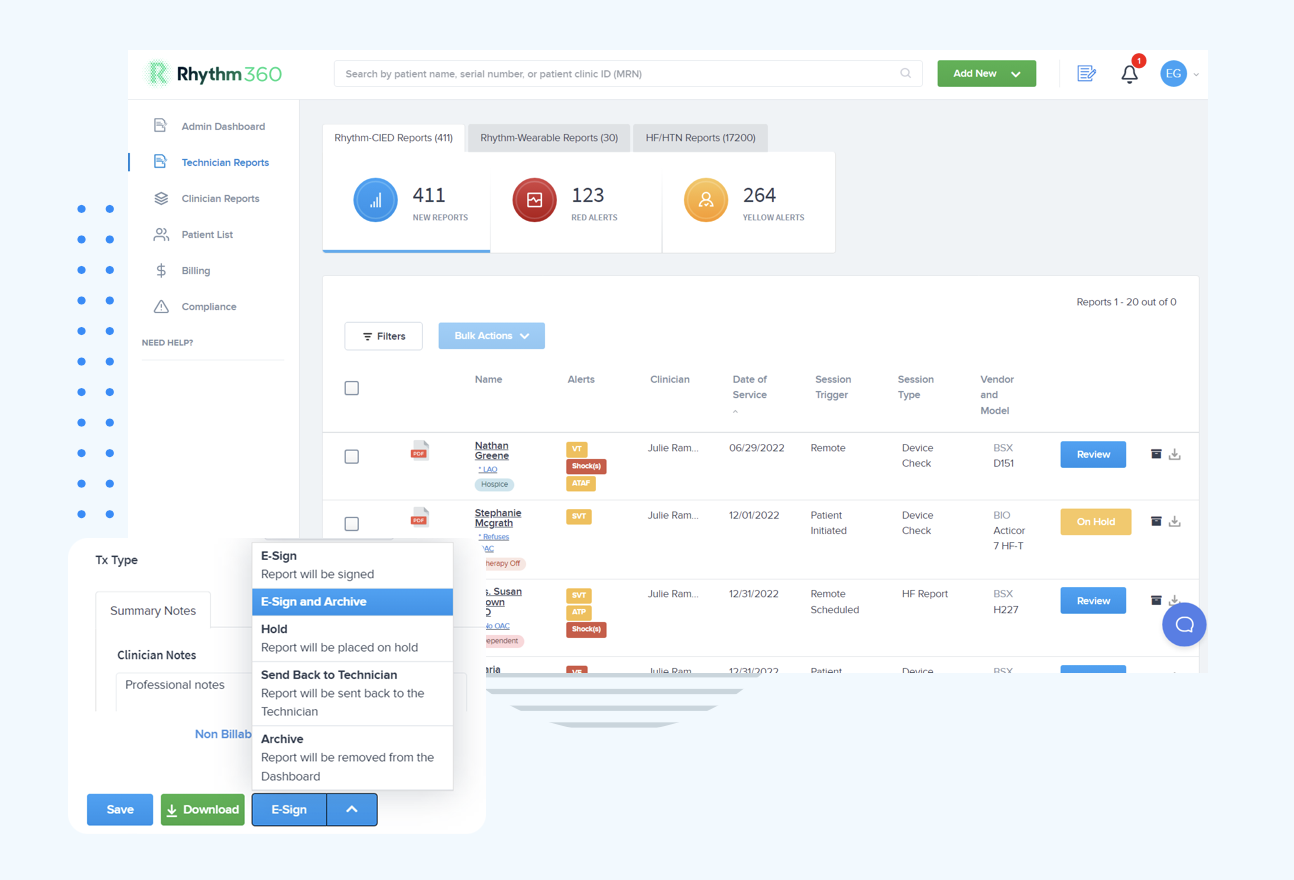
Cardiovascular service line leaders report that effective EHR integration requires discrete Epic fields for heart failure metrics so device data lands directly in the clinical workflow, similar to laboratory test results. When remote monitoring data stays in siloed dashboards, clinicians struggle to act on it and billing teams struggle to document it.
Under the 21st Century Cures Act, the ONC requires FHIR APIs only for voluntary health IT certification to the Base EHR definition. CMS-0057-F separately mandates FHIR APIs for certain payers effective 2026, so FHIR compliance becomes a key consideration for any EHR-connected remote monitoring platform. HL7 remains the established standard for healthcare data exchange. FHIR adds a modern, API-based approach using JSON that cloud platforms can implement and extend more easily.
| Criterion | Requirement | Rhythm360 Score | Evidence |
|---|---|---|---|
| Bi-directional EHR integration | Discrete field mapping into Epic/Cerner, HL7 and FHIR support, HIPAA-compliant encrypted transmission, BAA in place | Meets requirement: bi-directional integration with Epic, Cerner, Athenahealth, eClinicalWorks, Greenway Health, and others via HL7; implementation in days to weeks | UCM post-implementation: "We have improved billing and accountability for our patients after the integration" — Gaurav A. Upadhyay, MD |
| Vendor-neutral CIED data aggregation | Single platform ingesting all major OEM data streams, no manual portal switching | Meets requirement: aggregates Medtronic, Boston Scientific, Abbott, Biotronik, and others via API, HL7, XML, and AI-powered PDF parsing | University of Chicago Medicine processed a high volume of reports through Rhythm360 in 2025 |
| AI-driven alert triage | Automated filtering of non-actionable alerts, prioritization of clinically significant events, measurable response-time reduction | Meets requirement: AI-powered triage reduces critical-alert response times by up to 80%, optional 24/7/365 CCT oversight | UCM clinicians identified more abnormalities and addressed issues earlier following Rhythm360 implementation — Andrew Beaser, MD |
| Automated CPT billing capture | Automated tracking of 99453–99458, 99445, 99470 thresholds, compliant documentation pushed to EHR | Meets requirement: automated CPT-code documentation and billing support, up to 300% revenue capture improvement reported | UCM: "We have improved billing and accountability for our patients after the integration" — Gaurav A. Upadhyay, MD |
| Total cost of ownership | SaaS pricing, rapid implementation, >99.9% transmissibility, quantified clinical and financial outcomes | Meets requirement: SaaS model scales by clinic size, implementation in days to weeks, >99.9% transmissibility via redundant feeds, computer vision, and AI extrapolation | 2025 AHRQ evidence synthesis: RPM combined with structured nurse escalation pathways reduced readmissions 28%–40%; 2026 npj Digital Medicine meta-analysis of 79 RCTs: remote monitoring reduced total HF hospitalizations (incidence rate ratio 0.81, 95% CI 0.72–0.91) |
Hospitals that implant devices from multiple manufacturers encounter immediate data fragmentation. Each OEM, including Medtronic, Boston Scientific, Abbott, and Biotronik, operates a separate, non-interoperable portal. Staff must log into each system individually to retrieve patient data, which creates heavy administrative burden and clinical risk.
Enterprise programs therefore require a single platform that ingests and normalizes data from every manufacturer, including CardioMEMS pulmonary artery monitors, without manual reconciliation.
Rhythm360 delivers vendor neutrality through a multi-modal ingestion architecture that uses direct OEM APIs where available, HL7 feeds, XML parsing, and AI-powered computer vision applied to unstructured PDFs. A redundant data feed system acts as a fail-safe when an OEM server is unavailable, supporting the transmissibility guarantee introduced earlier. University of Chicago Medicine processed a high volume of reports annually through Rhythm360 in 2025, which demonstrates capacity in a high-volume academic medical center.
Alert fatigue represents a documented patient safety risk in cardiac remote monitoring. A 2026 EHRA analysis found that 32.9% of episodes remained non-actionable even after manufacturer AI filtering, so clinicians still receive many alerts that require review but do not lead to action.
In the LINK-HF2 trial of an AI-enabled remote monitoring system, 95% of AI-generated alerts were reviewed by clinicians within 24 hours, and 25% led to clinical action. This result shows a stronger signal-to-noise ratio than legacy threshold-based alerting.
Rhythm360 adds an AI-powered alert triage layer that filters non-actionable transmissions and prioritizes clinically significant events such as new-onset atrial fibrillation, ventricular tachycardia, lead malfunction, device end-of-life indicators, and significant weight gain in heart failure patients. This approach produces up to an 80% reduction in critical-alert response times. Optional 24/7/365 oversight by certified cardiac technicians supervised by physicians adds another clinical layer for high-acuity programs. As Andrew Beaser, MD, at UCM noted, "Decision support, including AI-assisted decision support, will become increasingly important as data volumes grow."
The 2026 Medicare Physician Fee Schedule introduces two new RPM codes that expand reimbursement eligibility. CMS 2026 national averages include CPT 99453 at approximately $22, CPT 99445 at $47, CPT 99454 at $47, CPT 99457 at about $52, and CPT 99458 at about $41, with CPT 99470 newly added at an unspecified national average rate.
Medicare reimbursement for RPM under CPT codes 99454, 99457, and 99458 can stack with CCM codes and increase total reimbursement per patient per month. However, capturing this revenue requires automated tracking of transmission days, clinical staff time with timestamps, and interactive communication records, all pushed directly into the EHR. Without this automation, practices risk missing billable thresholds and leaving revenue uncaptured.
A September 2024 OIG review found that roughly 43% of enrollees receiving Medicare RPM did not receive all three required service components, which highlights widespread documentation gaps. Rhythm360 addresses this problem through automated CPT-code capture and documentation workflows that track billable thresholds in real time, reduce claim denials, and support compliant billing for the full RPM code set. Practices using Rhythm360 have reported up to 300% improvement in revenue capture through stronger CPT billing and the addition of new RPM service lines.
A 2026 meta-analysis in npj Digital Medicine of 79 randomized controlled trials involving 31,669 heart failure patients found that remote monitoring reduced total HF hospitalizations (incidence rate ratio 0.81, 95% CI 0.72–0.91). These outcomes create direct financial value because avoided readmissions reduce exposure under the CMS Hospital Readmissions Reduction Program, where excess readmissions can trigger up to a 3% Medicare payment reduction across all DRGs.
Rhythm360 uses a SaaS-based pricing model that scales with clinic size and platform usage, avoiding high setup fees and rigid licensing structures tied to on-premise legacy systems. Implementation, including EHR integration, typically takes days to weeks rather than months. The platform maintains the transmissibility guarantee mentioned earlier, which helps prevent data gaps that create downstream clinical and billing risk.
Health systems that manage large CIED populations across multiple implanting physicians and device brands need a centralized data layer that normalizes transmissions from all manufacturers into a single workflow. Rhythm360 consolidates Medtronic, Boston Scientific, Abbott, Biotronik, and other OEM data into one dashboard. This consolidation removes redundant portal logins and enables population-level oversight of device compliance, alert status, and billable activity.
Post-discharge heart failure programs depend on early detection of decompensation signals such as weight gain, blood pressure changes, and symptom burden before they escalate to readmission. Virtual-ward pilots for heart failure that combine home sensors, predictive algorithms, and nurse outreach report 20–25% reductions in 30-day readmissions. Rhythm360’s HF and HTN RPM service line supports this model with automated patient onboarding, daily transmission monitoring, and integrated communication workflows that log all patient contacts with a full audit trail.
Integrated health systems that manage thousands of patients across cardiology, electrophysiology, and primary care require a platform that scales without proportional staffing increases. UCM’s implementation of Rhythm360 enabled clinicians to review more transmissions daily and identify more abnormalities, as Andrew Beaser, MD, noted: "We are able to address these issues earlier; rather than waiting for a 3-month visit, we can call patients in for evaluation." The platform’s HIPAA-compliant mobile application extends this capability to on-call clinicians, who can review transmissions, sign reports, and coordinate care from any location.
Procurement teams evaluating cloud-based heart failure remote monitoring platforms for 2026 should apply the five-criterion checklist above to every vendor. The evaluation should confirm bi-directional EHR integration depth, vendor-neutral device coverage, AI alert triage performance, automated CPT billing capture across the full 2026 code set, and a total cost of ownership that reflects implementation speed, transmissibility guarantees, and scalable pricing.
Rhythm360 is available for a structured demonstration mapped to your organization’s architecture, patient population, and RFP requirements.
Schedule a demo and receive a customized evaluation walkthrough aligned to your 2026 procurement criteria.
Rhythm360 supports bi-directional integration with Epic, Cerner, Athenahealth, eClinicalWorks, Greenway Health, and other EHR systems via HL7. Data flows in both directions, so device transmissions and clinical documentation generated within Rhythm360 populate discrete EHR fields directly, and patient demographic and scheduling data from the EHR is available within the platform. The integration layer uses HL7 messaging standards and aligns with FHIR compliance requirements under the 21st Century Cures Act and CMS-0057-F, effective January 1, 2026. All data exchanges involving protected health information are covered by a signed Business Associate Agreement and secured with HIPAA-required encryption controls. Implementation, including full EHR integration setup, typically takes days to weeks.
Rhythm360’s implementation process minimizes disruption to existing clinical workflows. From contract execution through EHR integration and staff training, onboarding usually takes a few days to a few weeks, depending on infrastructure complexity and the number of device manufacturers involved. The platform’s SaaS architecture removes the need for on-premise hardware installation. RhythmScience provides implementation support throughout, including EHR field mapping, staff training on the clinical dashboard, and configuration of alert thresholds and escalation protocols. This streamlined onboarding timeline helps control total cost of ownership and accelerates clinical and financial benefits.
Rhythm360 includes a secure, HIPAA-compliant mobile application that allows clinicians to review patient transmissions, sign reports, and coordinate care from their smartphones. This capability is particularly relevant for on-call cardiologists and electrophysiologists who must respond to critical alerts outside standard clinic hours. The mobile application provides access to the same prioritized alert queue and patient data available on the desktop platform, so a critical arrhythmia flagged on a weekend can be reviewed and acted on immediately. All mobile access uses the same role-based access controls and audit logging as the desktop environment.
Practices and health systems using Rhythm360 have reported up to a 300% increase in revenue capture through stronger CPT code billing, improved staff efficiency, and new RPM service lines for heart failure and hypertension patients. This improvement reflects the platform’s automated tracking of billable thresholds such as transmission days, clinical staff time, and interactive patient communications across the full 2026 CPT code set, including 99453, 99454, 99445, 99457, 99458, and 99470. University of Chicago Medicine specifically reported improved billing and accountability after Rhythm360 integration. The administrative dashboard provides real-time visibility into captured and potential revenue based on CPT code requirements, which supports proactive identification of billing gaps before claim submission.
Rhythm360 is a vendor-neutral platform that ingests and normalizes data from major cardiac implantable electronic device manufacturers, including Medtronic, Boston Scientific, Abbott, and Biotronik, along with specialized sensors such as CardioMEMS pulmonary artery monitors. The platform supports pacemakers, implantable cardioverter-defibrillators, implantable loop recorders, and CRT/CCM devices. Beyond CIED monitoring, Rhythm360 provides integrated service lines for heart failure and hypertension remote physiological monitoring, supporting wearable and connected devices used in chronic disease management programs. Data ingestion uses a multi-modal approach that includes direct OEM APIs, HL7 feeds, XML parsing, and AI-powered computer vision applied to unstructured PDF reports, which supports the uptime and transmissibility guarantees referenced earlier.
The five criteria in this guide, including bi-directional EHR integration, vendor-neutral CIED data aggregation, AI-driven alert triage, automated CPT billing capture, and total cost of ownership, define the minimum requirements for a hospital-grade heart failure remote monitoring platform in 2026. The clinical case for remote monitoring is established, as a 2026 meta-analysis of 79 randomized controlled trials involving 31,669 heart failure patients confirmed reductions in total HF hospitalizations. Procurement teams now need to identify which platform can deliver those outcomes at enterprise scale with the integration depth, billing automation, and implementation speed that hospital systems require.
Rhythm360 is built to meet that standard. Its vendor-neutral architecture, AI-powered alert triage, bi-directional EHR integration, and automated CPT documentation workflows address the core operational and financial challenges that limit scalable heart failure monitoring in hospital settings.
Schedule a demo to evaluate Rhythm360 against your 2026 RFP criteria and review documented clinical and financial outcomes from health systems already using the platform.





