

Medicare covers pacemaker evaluation services when they are deemed “reasonable and necessary” per NCD 20.8.1. The determination defines coverage for transtelephonic monitoring, in-office interrogation, and remote monitoring. Standard frequencies require evaluations every two weeks during the first month post-implant, followed by quarterly assessments as the patient stabilizes. Remote monitoring also creates monthly billing opportunities through CPT code 99454, which can generate substantial recurring revenue when paired with a compliant RPM platform.
Clear understanding of these requirements supports both maximum reimbursement and consistent patient safety. See how Rhythm360 automates CMS compliance tracking and billing documentation.
NCD 20.8.1 establishes an intensive early monitoring schedule that transitions into a long-term maintenance cadence as the patient stabilizes. The table below shows how monitoring frequency starts high in the first month and then shifts to a 90-day rhythm with room for physician-directed adjustments.
| Time Period | Frequency |
|---|---|
| Preoperative | As determined by physician |
| 1st month post-implant | Every 2 weeks |
| After 1st month | Typically every 90 days |
| Physician discretion | More frequent if clinically indicated |
CMS NCD 20.8.1 assigns the final decision on monitoring frequency to the patient’s physician. This flexibility allows clinicians to increase pacemaker monitoring frequency based on patient-specific factors such as device complications, battery depletion, or clinical deterioration.
Pacemaker monitoring frequency differs from ICD requirements because pacemakers typically involve less complex data and lower immediate clinical urgency. The 2026 RPM CPT code updates expand options for remote monitoring billing, so practices can capture revenue for monthly transmissions while maintaining quarterly in-person evaluation schedules.
CMS recognizes both in-person and remote pacemaker interrogation methods, but these approaches differ in billing frequency and workflow impact, which affects compliant revenue capture.
| Method | CPT Codes | Frequency |
|---|---|---|
| In-person | 93288 | Per NCD schedule |
| Remote | 93294 and 93296 | Billable no more than once every 90 days |
Remote pacemaker monitoring CMS guidelines support high data capture rates above 99.9% and remove the need for patient travel. Many practices still struggle with OEM portal fragmentation across Medtronic, Abbott, Boston Scientific, and Biotronik systems, which creates administrative burdens and potential compliance gaps.
Unified RPM platforms address these challenges by consolidating all manufacturer data streams into single dashboards. This consolidation supports comprehensive pacemaker interrogation frequency CMS compliance and reduces staff workload. Explore how vendor-neutral monitoring eliminates portal management complexity.
Successful pacemaker evaluation billing depends on meticulous documentation of medical necessity, compliant monitoring platforms, and comprehensive audit trails. These elements work together to satisfy CMS requirements. Physician interpretation of all transmissions establishes medical necessity. Documented patient consent authorizes the remote monitoring relationship. Accurate CPT code selection then ensures billing aligns with the documented evaluation complexity.
Revenue leakage often occurs through missed billing opportunities, incomplete documentation, and manual workflow errors that cause lost or delayed claims. RPM automation platforms can increase practice profitability by up to 300% through systematic capture of billable events, automated report generation, and integrated EHR documentation that supports audit requirements.
Modern RPM platforms address key compliance challenges through vendor-neutral device integration, AI-powered alert triage, and seamless EHR connectivity with Epic, Cerner, and other major systems. Rhythm360’s approach includes mobile applications for clinician access, automated billing documentation, and redundant data feeds that maintain transmission reliability above 99.9%.
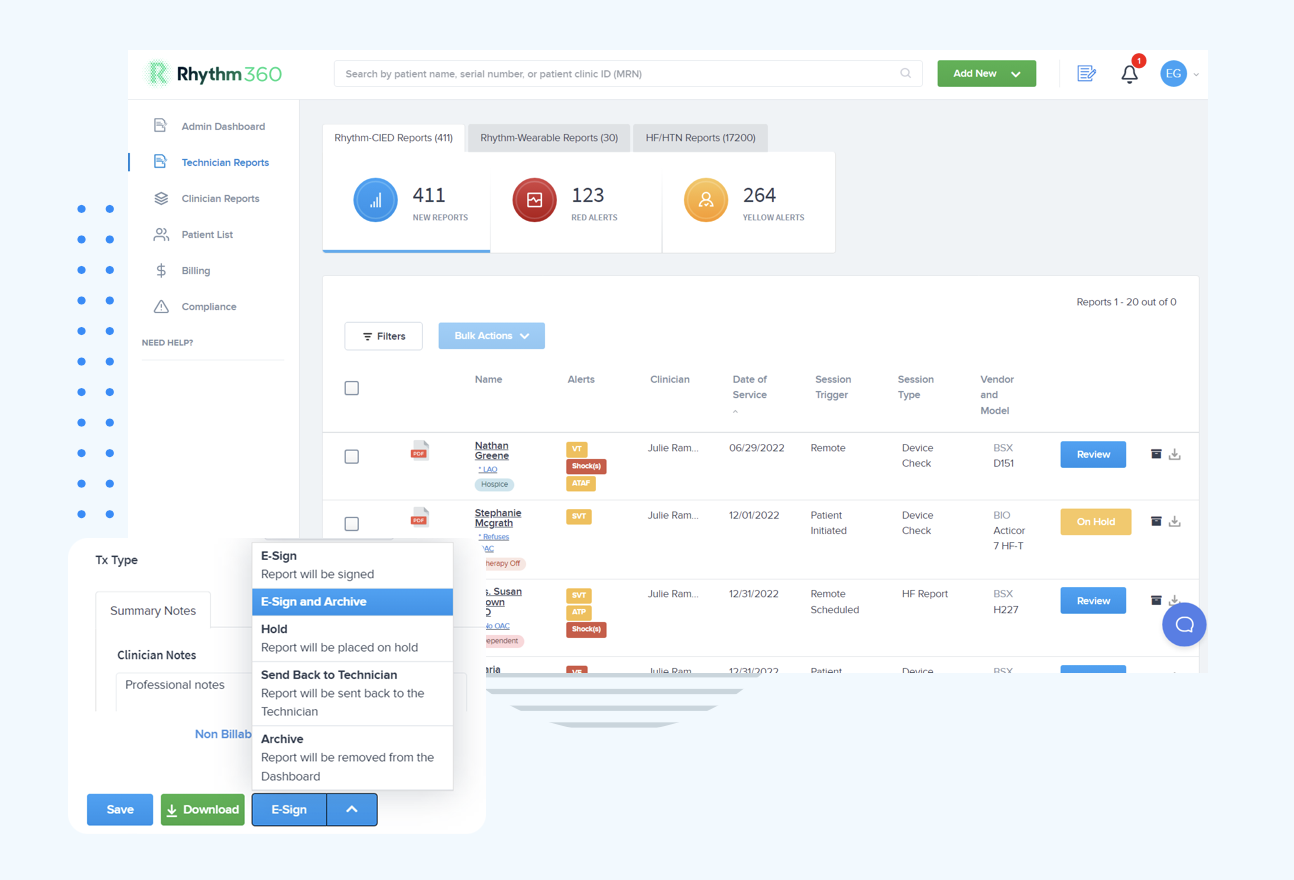
The platform also removes the data silos mentioned earlier through a unified dashboard approach. This consolidation reduces alert fatigue through intelligent filtering and supports response times that are up to 80% faster for critical events. One representative case involved weekend atrial fibrillation detection that enabled immediate anticoagulation initiation. That rapid response prevented potential stroke complications that manual monitoring might have missed.
Rhythm360’s automated CPT code capture and documentation generation supports consistent compliance with CMS pacemaker evaluation frequency requirements while also maximizing revenue opportunities. See how integrated RPM transforms practice efficiency and patient outcomes.
Frequent compliance pitfalls often stem from manual processes that create cascading failures. Manual OEM portal management leads to missed transmissions, which then combine with weak alert response protocols to delay interventions. These gaps frequently result in insufficient documentation that drives claim denials and audit risk. Manual workflows also create a human cost through staff burnout from repetitive data entry and inconsistent monitoring schedules that further erode compliance.
Best practices counter these pitfalls through automation and integrated workflows. Unified dashboards remove portal fragmentation and reduce missed transmissions. AI-powered alert prioritization surfaces critical events quickly, which supports timely interventions. Automated reporting systems then maintain the audit trails that protect revenue. These technology improvements work best when paired with comprehensive staff training, clear escalation protocols, and integrated platforms that remove manual data transcription while supporting complete documentation compliance.
Medicare requires pacemaker checks every two weeks during the first month post-implant, then every 90 days thereafter according to NCD 20.8.1. Physicians may order more frequent monitoring when clinical status, device performance, or battery status justifies closer follow-up.
Yes, Medicare covers remote pacemaker monitoring through CPT codes 93293, 93294, 93295, and 93296. Remote pacemaker monitoring is billable no more than once every 90 days and can provide meaningful recurring revenue for compliant practices.
Post-implant pacemaker monitoring requires evaluations every two weeks during the first month, followed by quarterly assessments. This schedule supports early detection of complications and maintains long-term device surveillance that protects patient outcomes.
Pacemaker interrogation frequency follows CMS guidelines of every 90 days after the initial month post-implant. Remote interrogations can occur monthly for billing under RPM codes, while in-person evaluations typically remain on a quarterly schedule unless clinical conditions require more frequent checks.
Regular pacemaker monitoring is essential for both patient safety and Medicare compliance. Systematic evaluations detect battery depletion, lead complications, and arrhythmias. These checks confirm proper device function and support optimal therapeutic outcomes through consistent surveillance protocols.
Adherence to CMS pacemaker evaluation frequency requirements under NCD 20.8.1 supports optimal patient care while protecting and growing practice revenue. Modern RPM platforms like Rhythm360 deliver integrated solutions for automated monitoring, billing documentation, and workflow efficiency that reshape traditional cardiology operations. Discover how integrated remote monitoring achieves superior compliance outcomes.





