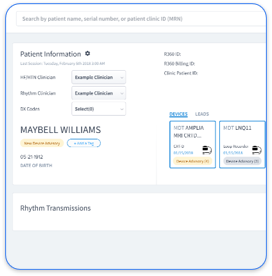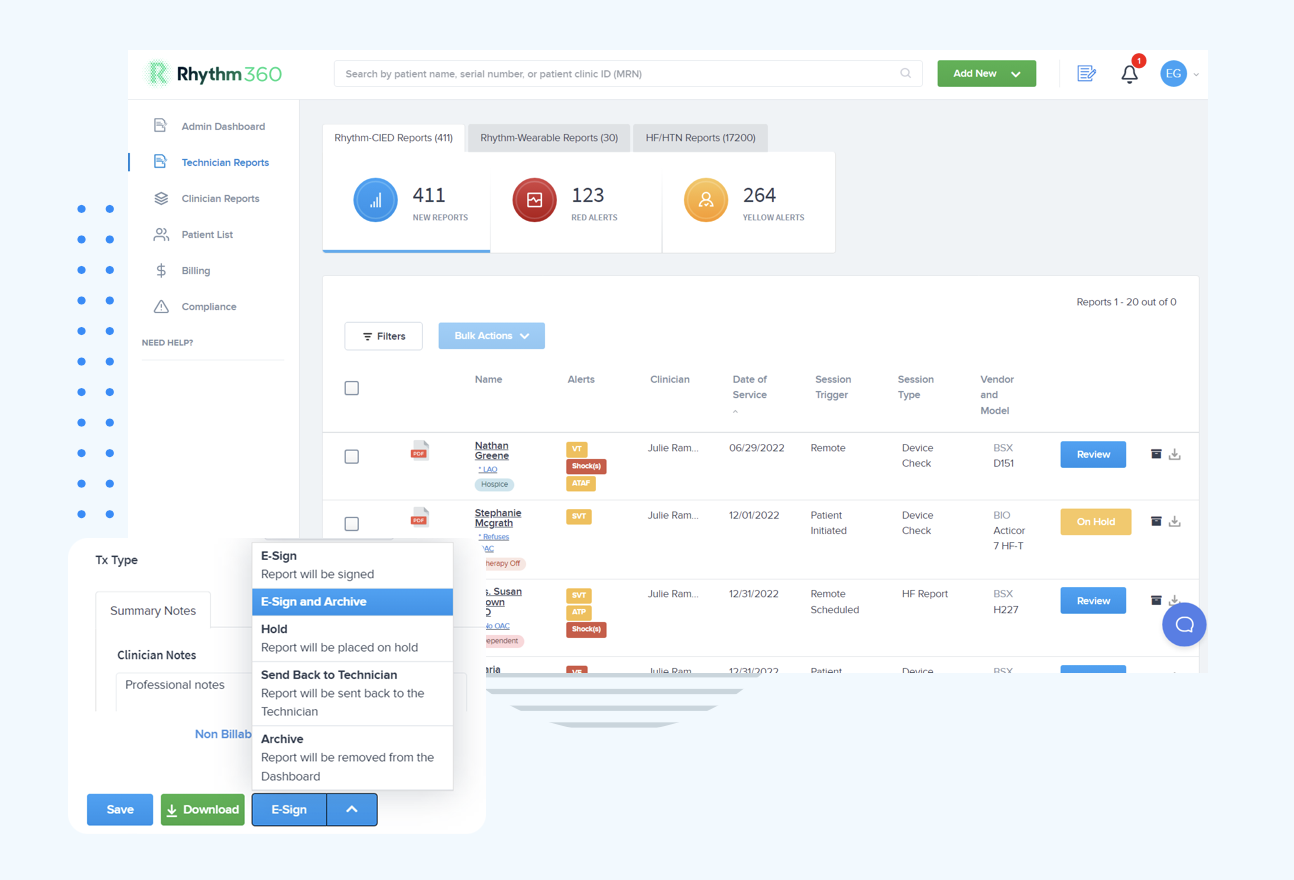
Not every critical CIED alert requires an emergency department visit. Treating all alerts as emergencies increases patient anxiety and strains staff and hospital resources. This constant high-alert state quickly contributes to alert fatigue. AI-powered systems now distinguish true ventricular tachycardia that needs urgent care from supraventricular tachycardia that clinicians can manage remotely. Modern triage protocols support appropriate risk stratification and prevent the unnecessary emergency visits mentioned earlier while still ensuring true emergencies receive rapid attention. Rhythm360’s intelligent alert prioritization keeps clinicians focused on the most urgent events and routes lower-risk alerts into clear, remote management workflows.
Most critical alerts do not indicate device failure. Many teams still assume a critical alert means a hardware problem and immediately focus on troubleshooting the device. Oversensing events often trigger alerts that look device-related but actually reflect underlying arrhythmias that need clinical action. In reality, most critical alerts reflect physiological changes or rhythm disturbances rather than device malfunction. This misunderstanding can delay appropriate cardiac care when clinicians treat the alert as a technical issue instead of a clinical one. Rhythm360’s redundant data feeds and comprehensive analysis help separate true device problems from clinically significant cardiac events that require timely intervention.
Asymptomatic critical alerts still carry real risk. The absence of symptoms leads some clinicians to push these alerts to the bottom of the queue, especially for battery depletion warnings or lead impedance changes. This misconception assumes that no symptoms mean no urgency and that routine follow-up visits provide enough protection. However, this assumption ignores a key reality. Asymptomatic alerts often act as early warning signals that appear weeks or months before serious complications. Without timely review, these alerts can progress to device failure or loss of therapy. Battery alerts, for example, may show months of remaining life yet still require scheduled replacement to avoid unexpected failure. Rhythm360’s mobile triage tools support prompt evaluation of all critical alerts, regardless of symptom status.
Advanced CIEDs still need clinical oversight. Their sophisticated algorithms create the impression that devices can detect and correct every problem automatically. Some clinicians then assume human review of critical alerts adds little value. In practice, CIEDs provide powerful self-diagnostics but still require expert interpretation and targeted intervention. Lead noise may trigger automatic mode switching, yet the underlying cause still needs evaluation and management. Rhythm360’s computer vision technology, paired with clinical oversight, ensures automated device responses receive appropriate review and follow-up when needed.
Remote monitoring increases the urgency and timeliness of critical alert response. The convenience of remote data sometimes leads teams to treat alerts as issues that can wait for business hours. This mindset delays responses to weekend or after-hours events. In reality, remote monitoring enables real-time detection and faster intervention for high-risk situations. Weekend atrial fibrillation detection, for example, allows immediate anticoagulation decisions instead of waiting for the next clinic visit. Schedule a demo to see how Rhythm360’s mobile application supports 24/7 access to critical alerts so teams can respond quickly whenever events occur.
Critical alerts are highly sensitive but not perfect. Many clinicians still treat every alert as a definitive diagnosis and act without considering false positives or artifacts. This approach can drive unnecessary interventions and worsen alert fatigue when false alarms accumulate. CIED alerts can misfire because of lead artifacts, electromagnetic interference, or algorithm limits. Modern AI filtering now reduces false positives while preserving sensitivity for true critical events. Rhythm360’s greater than 99.9% data reliability uses multiple validation methods to confirm alert accuracy and limit unnecessary responses to noise.
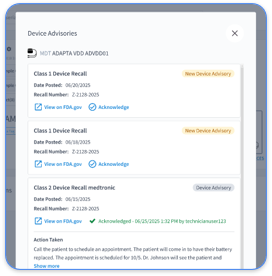
Battery alerts signal specific replacement windows that protect patients from sudden loss of therapy. Many teams still treat ERI and RRT notifications as routine maintenance items that can slide on the schedule. This belief assumes battery depletion always progresses slowly with generous warning. In practice, ERI alerts usually indicate 3 to 6 months of remaining life, while RRT alerts point to a much narrower and more urgent window. Delayed action during either phase can result in abrupt device failure. Rhythm360’s automated alert management flags battery alerts for appropriate prioritization and scheduling so patients maintain continuous protection.
Vendor-specific portals rarely support efficient, comprehensive alert management for mixed device populations. Many practices still rely on each OEM portal and assume manufacturer tools cover all monitoring needs. Fragmented portals create data silos and force staff to juggle multiple logins and workflows. This fragmentation increases administrative burden and raises the risk of missed critical alerts. Practices with devices from several manufacturers feel this pain most acutely. Rhythm360’s vendor-neutral platform pulls all CIED data into a single dashboard, removes the need to monitor separate systems, and lowers the chance of overlooking a critical event.
Alert fatigue is preventable with the right triage strategy. Many clinicians view the high volume of alerts as an unavoidable side effect of advanced devices. This belief assumes that more data always means more noise and that teams must simply cope. Intelligent triage and AI-powered filtering now change that equation. Effective systems achieve the dramatic alert reduction discussed above and still maintain sensitivity for high-risk events. Rhythm360’s AI-driven alert management uses sophisticated filtering and prioritization so clinicians can stay focused on meaningful alerts while reducing administrative overload.
Critical alert management has a direct and significant revenue impact. Some practices still see it only as a clinical responsibility and overlook its financial role. Critical alerts often qualify as billable events under CPT codes 93298 and 93299 when documented correctly. Missed alerts or incomplete documentation translate into lost revenue and potential compliance concerns. Rhythm360’s automated documentation and billing capture supports accurate CPT coding and helps practices recover revenue that previously slipped through the cracks. Some clients have seen up to 300% growth in remote monitoring revenue through better code capture and complete alert documentation.
Addressing these ten misconceptions requires more than awareness. Practices need a systematic approach that unifies data, applies intelligent filtering, and supports evidence-based decisions across every aspect of CIED management.
The shift from myth-driven alert handling to evidence-based, AI-powered triage transforms cardiology workflows. Modern unified platforms tackle the core issues behind these misconceptions through comprehensive data integration and intelligent filtering. The following table summarizes how Rhythm360’s unified approach directly addresses three of the most damaging misconceptions:
Common Myth/OEM Pitfall | Reality/Rhythm360 Benefit | Clinical Impact |
All alerts need immediate ER evaluation | AI triage prioritizes genuine emergencies | Delivers the 80% ER visit reduction noted above |
Vendor portals provide sufficient monitoring | Unified dashboard eliminates data silos | Single source of truth for all devices |
Alert fatigue is unavoidable | Intelligent filtering reduces noise substantially | Improved clinician focus and job satisfaction |
Advanced analytics clarify the difference between ICD alerts and true arrhythmias by incorporating patient history, device settings, and physiological context. This comprehensive view helps teams schedule a demo and see how unified remote monitoring turns alert management from a source of fatigue into a reliable engine for better patient care and practice efficiency.
CIED alerts can generate false positives due to lead artifacts, electromagnetic interference, oversensing, or algorithm limitations. False positive rates vary by device type and manufacturer and can reach 10 to 30% for some alert categories. Modern AI-powered platforms like Rhythm360 reduce these rates through advanced filtering that evaluates multiple data points and patient context. The platform achieves its exceptional reliability through redundant data feeds and comprehensive validation processes that separate genuine critical events from benign noise.
AI triage systems review incoming CIED alerts using machine learning models that factor in patient history, device parameters, physiological trends, and clinical context. This analysis highlights genuinely critical events and suppresses non-actionable notifications. Many practices see alert response times drop by as much as 80% when low-value alerts no longer compete for attention. The AI continuously learns from outcomes and physician feedback, which sharpens accuracy over time. Rhythm360’s AI triage blends computer vision with clinical decision support so technology enhances, rather than replaces, clinician judgment.
Common critical CIED alerts include ventricular tachycardia or fibrillation episodes, atrial fibrillation detection, battery depletion warnings such as ERI and RRT, lead impedance abnormalities, inappropriate shocks, and device malfunction indicators. Battery alerts matter because they define clear replacement windows. Arrhythmia alerts require clinical review to determine treatment, while lead issues may signal the need for surgical revision. Each alert type carries its own urgency level and clinical implications, which calls for structured triage and response protocols.
Distinguishing true alerts from artifacts requires a multi-source review. Teams examine electrograms, device diagnostics, patient symptoms, and clinical context together. Key factors include event consistency, correlation with symptoms, lead impedance trends, and comparison with baseline device behavior. Modern platforms use AI to analyze these parameters at once and then assign confidence scores for alert validity. Rhythm360’s computer vision tools and redundant data feeds cross-check information from several sources and highlight patterns that match genuine clinical events rather than technical noise.
Billing for critical alert management depends on thorough documentation of alert details, clinical interpretation, patient communication, and any interventions or follow-up actions. CPT codes 93298 and 93299 specify requirements for remote monitoring services. Practices must record time spent on alert review, decision-making, and outreach to patients. Rhythm360’s automated documentation features capture these elements consistently and support compliant claims submission, helping practices recover revenue that previously went unbilled.
These ten myths show how outdated beliefs about critical device alerts create avoidable risk and inefficiency in cardiology practices. Modern AI-powered, vendor-neutral platforms eliminate the myths explored above while ensuring genuine critical events receive the attention they deserve. The move from fragmented, myth-based alert handling to unified, intelligent triage marks a major step forward in cardiac care delivery.
Schedule a demo of Rhythm360 today to see how advanced alert management can cut response times by up to 80%, replace dangerous assumptions with data-driven workflows, and capture lost revenue while improving outcomes through consistent, evidence-based CIED monitoring.