

Last updated: July 13, 2026
Six criteria consistently separate adequate platforms from effective ones for practices managing patients across multiple device manufacturers.
With these six criteria in place, Rhythm360 can be evaluated against each benchmark as a concrete reference point for practices assessing their current monitoring infrastructure. The table below presents Rhythm360's performance, based on documented capabilities and published outcomes.
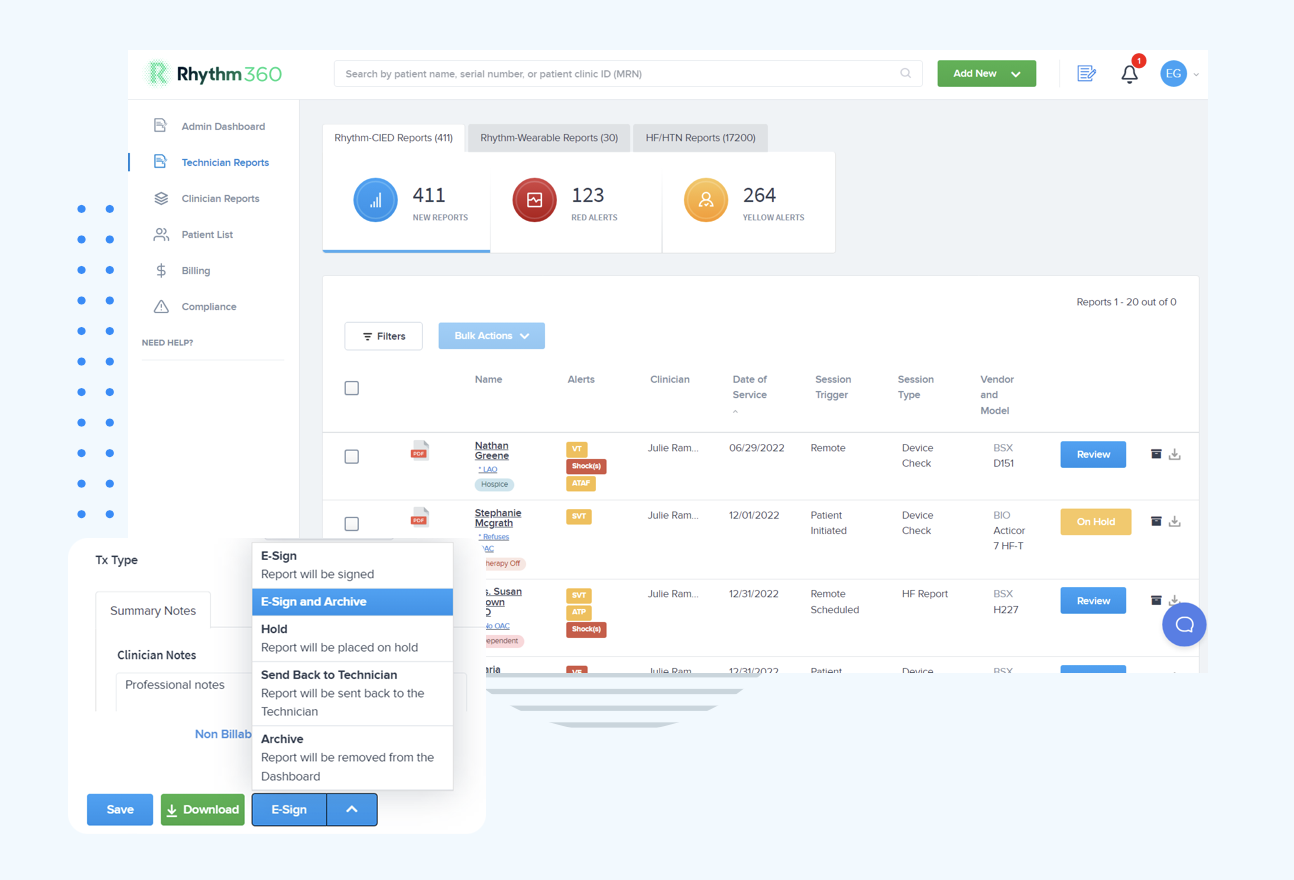
| Criterion | Rhythm360 Performance |
|---|---|
| Vendor Neutrality | Ingests data from Medtronic, Abbott, Boston Scientific, Biotronik, and others via API, HL7, XML, and AI-powered PDF parsing (computer vision), with no OEM lock-in. |
| EHR Integration | Two-way integration with Epic, Cerner, Athenahealth, eClinicalWorks, Greenway Health, and others via HL7, so data flows into and out of the EHR. |
| AI Alert Triage | AI-driven filtering prioritizes clinically significant events such as AFib, VT, lead malfunction, and ERI/RRT, with an optional 24/7/365 CCT oversight layer. |
| CPT Documentation Automation | Automated generation of audit-ready documentation for 93298, 93299, 99453, 99454, 99445, 99457, 99458, 99470, and related codes. |
| Implementation Timeline | EHR integration and full onboarding typically complete in days to a few weeks. |
| Alert Response Time Reduction | Meaningful reduction in critical alert response times. University of Chicago Medicine clinicians identified more abnormalities and addressed issues earlier after Rhythm360 implementation. |
| Revenue Capture Improvement | Higher revenue through more complete CPT billing. UCM's Gaurav A. Upadhyay, MD, noted, "We have improved billing and accountability for our patients after the integration." |
Modern platforms in 2026 must accommodate the full spectrum of cardiac implantable electronic devices alongside external monitoring modalities. CIEDs include single- and dual-chamber pacemakers, implantable cardioverter-defibrillators, cardiac resynchronization therapy devices, and implantable loop recorders. Rhythm360 also supports specialized sensors such as CardioMEMS pulmonary artery monitors for heart failure management.
On the external side, patch monitors and extended Holter systems now play a major role. Studies have found that patients often prefer patch ECG devices over traditional Holter monitors because of comfort and minimal disruption to daily activities. Implantable loop recorders provide strong long-term diagnostic yield, and real-world studies report that most diagnoses lead to a therapeutic intervention or management change.
Andrew Beaser, MD, at the University of Chicago Medicine stated, "Decision support, including AI-assisted decision support, will become increasingly important as data volumes grow." Rhythm360 supports that volume across all device types from a single dashboard.
Reliable data transmission functions as a baseline requirement rather than a differentiator. A transmission that fails silently is clinically indistinguishable from a missed event. Rhythm360 maintains greater than 99.9% transmissibility through a redundant data feed architecture. When an OEM server experiences downtime, a secondary feed maintains continuity.
AI-powered extrapolation and computer vision OCR normalize unstructured PDF data from legacy OEM portals so that even non-API data sources are captured and standardized. The clinical impact of high transmissibility is measurable. University of Chicago Medicine reviewed more than 73,000 reports annually through Rhythm360 in calendar year 2025, averaging more than 18,000 reports per quarter, with stable dismissal rates that signaled preserved data quality at scale. Andrew Beaser, MD, explained, "We are able to address these issues earlier; rather than waiting for a 3-month visit, we can call patients in for evaluation."
Fragmented multi-OEM monitoring creates a measurable operational burden. A 4,500-patient clinic accumulated a backlog of over 2,000 remote transmissions, with regularly scheduled reports sometimes waiting weeks for review. In a separate case, high-priority alerts from a prior remote monitoring vendor went undelivered to the clinic for two months.
Connectivity management compounds this problem. Studies have shown that many CIED patients become disconnected across clinics that use multiple databases and EMR systems. Reconnecting those patients requires staff to navigate several platforms, repeat outreach attempts, and troubleshoot equipment across incompatible systems.
Workforce strain follows directly. Sourcing and training replacement CCDS staff to self-sufficiency often exceeds one year, and clinics frequently cannot dedicate a full-time staff member exclusively to remote monitoring. Billing leakage then appears. EP reports follow a 91-day cycle while HF monitoring requires a 31-day rhythm; when combined in a single fragmented data stream, clinically relevant HF data can go unreviewed for weeks, which creates care gaps and missed billing opportunities.
The 2026 CMS Physician Fee Schedule introduced major RPM reimbursement changes. Two new CPT codes now affect remote heart rhythm monitoring workflows:
The maximum monthly RPM reimbursement per patient under 2026 rates, combining CPT 99454, 99457, and 99458, reaches approximately $139. When paired with CCM codes 99490 and 99439, total reimbursement can exceed $211 per patient per month.
Vague documentation now drives many RPM denials and audit findings. Rhythm360's automated CPT documentation engine generates audit-ready records, including exact transmission day counts and clinical time logs, that satisfy specificity requirements for both 99445 and 99454 claims.
On the FDA side, the FDA's January 6, 2026 General Wellness guidance update expanded enforcement discretion for wearable sensor-based products. The update clarified that consumer-facing connected sensors fall outside FDA regulation when outputs remain limited to wellness uses without clinical claims. Remote ECG monitors and implantable hemodynamic monitors such as Abbott CardioMEMS remain Class II or Class III devices that require 510(k) clearance or PMA and continue to support remote heart rhythm monitoring under the RPM framework.
The choice between implantable and external monitoring depends on clinical indication, monitoring duration, and patient characteristics rather than platform preference.
Implantable devices fit best in the following situations:
External patch monitors fit best in these scenarios:
Most cardiology practices manage both populations at the same time. Rhythm360's unified dashboard handles both CIED and external monitoring data streams and removes the need for separate workflows by device type.
Solo EP clinic: A single electrophysiologist managing 300 CIED patients across three manufacturers cannot sustain three separate portal logins alongside clinical duties. Rhythm360 consolidates all transmissions into one queue, and the HIPAA-compliant mobile app allows the physician to review and sign reports from a smartphone. This includes weekends, when a critical arrhythmia alert may arrive on Saturday morning and anticoagulation can begin by Saturday afternoon.
Multi-physician group: A five-physician cardiology group with a device technician managing 1,200 patients faces alert fatigue and billing backlog risk. Rhythm360's AI triage layer filters non-actionable transmissions and surfaces prioritized events. Automated CPT documentation then reduces the technician's administrative burden and supports accurate billing across the full 2026 CPT code set.
Integrated health system: At the scale UCM demonstrated, the 73,000-plus annual reports mentioned earlier, clinicians reviewed more transmissions daily and identified more abnormalities than under prior fragmented workflows. The platform's scalability supported this high-volume environment without degrading alert quality or billing accuracy.
Schedule a demo to explore how Rhythm360 fits your practice's patient volume and device mix.
Implementation speed now acts as a practical differentiator. Rhythm360's onboarding process, including integration with major EHRs such as Epic, Cerner, and Athenahealth, typically completes in days to a few weeks. Most RPM programs can be implemented within 4–8 weeks depending on EHR integration requirements and practice size, and Rhythm360 targets the lower end of that range through a streamlined, pre-built integration architecture.
Training burden stays low by design. The platform's centralized dashboard removes the "super-user dependency" common in fragmented multi-portal environments, where staff turnover can stall a monitoring program. A SaaS-based pricing model scales with clinic size and platform usage, so a solo EP clinic and a 50-physician health system access the same core capabilities at appropriately scaled investment levels. Ongoing maintenance, including OEM data feed updates and CPT code compliance adjustments, occurs at the platform level rather than through clinic IT staff.
This framework helps determine whether a unified vendor-neutral platform fits your current environment.
Practices answering yes to two or more of these questions operate in a multi-vendor environment where Rhythm360's unified architecture directly addresses the identified gaps.
The best device depends on the clinical indication and required monitoring duration. For long-term continuous monitoring, such as cryptogenic stroke workup, unexplained syncope, or arrhythmic risk stratification, implantable cardiac monitors and implantable loop recorders offer the highest diagnostic yield, with real-world studies reporting overall yields approaching 48 percent and therapeutic interventions in 85 percent of diagnosed cases. For shorter-term diagnostic monitoring of 7–30 days, patch ECG monitors provide strong patient adherence and comfort. For patients with existing cardiac conditions that require both monitoring and therapy delivery, ICDs and CRT devices remain the standard of care. The most effective monitoring strategy in 2026 uses a platform that manages data from all device types in a unified workflow, which aligns with Rhythm360's design.
For cardiology practices that manage patients across multiple device manufacturers, vendor-neutral cloud-based platforms with AI-powered alert triage and bi-directional EHR integration now represent the operational standard. Proprietary OEM platforms remain limited to their own device ecosystems and create data silos when a practice's population includes devices from several manufacturers. Rhythm360 ingests data from all major CIED manufacturers using API, HL7, XML, and AI-powered PDF parsing, then normalizes it into a single dashboard and integrates bidirectionally with major EHR systems. Automated CPT documentation for 2026 billing codes, including 99445 and 99470, connects the platform directly to both clinical and financial outcomes.
The most consequential disadvantage is alert fragmentation. Critical events can be missed or delayed when monitoring data sits across multiple non-interoperable portals. In documented cases, high-priority alerts from legacy monitoring systems went undelivered to clinics for weeks or months. Beyond patient safety, fragmented monitoring creates billing compliance risk because practices cannot reliably track transmission day counts, clinical time, or CPT eligibility across disconnected systems. This leads to undercaptured revenue and audit exposure under 2026 CMS documentation requirements. Workforce strain compounds the problem, since staff who manage multiple portals experience higher burnout rates, and replacing specialized CIED-trained technicians can take more than a year.
Several consumer wearables, including the Apple Watch and certain Withings devices, carry FDA clearance for AFib detection using photoplethysmography or single-lead ECG. The FDA's January 2026 General Wellness guidance update clarified that wearables making only wellness claims, without diagnostic, treatment, or disease-management language, may be commercialized without premarket review. This distinction affects billing. Consumer wearables and smartwatches do not qualify for CPT 99454 or 99445 reimbursement under 2026 CMS rules, which require FDA-cleared medical devices that automatically transmit physiologic data. Clinically validated patch monitors such as those from iRhythm (Zio) carry FDA 510(k) clearance and see routine use in clinical practice for AFib detection, but their data must feed into a practice's monitoring workflow, ideally through a platform like Rhythm360, to support compliant billing and coordinated care.
Fragmented multi-OEM monitoring functions as a structural problem with measurable consequences for patient safety, staff retention, and practice revenue. Transmission backlogs, undelivered alerts, undercaptured CPT codes, and burned-out technicians represent predictable outcomes when clinics manage disconnected portals without a unifying platform. The 2026 CPT code changes, particularly the introduction of 99445 and 99470, create new revenue opportunities for practices that have the documentation infrastructure to capture them and new compliance risk for those that do not.
Rhythm360 addresses each of these failure points through vendor-neutral data ingestion, AI-powered alert triage, automated CPT documentation, two-way EHR integration, and a mobile-accessible interface that keeps clinicians connected to their patients regardless of location. The University of Chicago Medicine's experience, with more than 73,000 reports annually, earlier interventions, and improved billing accountability, illustrates what a unified platform can deliver at scale.





