CPT 99457 covers the first 20 minutes of monthly treatment management services for remote patient monitoring. Qualified healthcare professionals or clinical staff must provide interactive communication with patients or caregivers by phone or video. The code requires at least 20 minutes of clinical staff or provider time in a calendar month, plus interactive communication with the patient or caregiver.
Cardiology practices typically use CPT 99457 for patients with heart failure, hypertension, and CIED monitoring needs. The code pairs with CPT 99454 for device setup and data collection, and CPT 99458 for each additional 20-minute increment. Remote therapeutic monitoring codes 93298–93299 apply to specific cardiac devices, while CPT 99457 focuses on physiologic parameter management and care coordination across conditions.
Cardiology RPM programs face more complexity than basic monitoring vendors. General RPM platforms such as Prevounce and Vivo support standard use cases, but cardiology teams must navigate fragmented OEM portals across Medtronic, Abbott, Boston Scientific, and Biotronik systems. Manual data aggregation increases alert fatigue, slows response times, and creates revenue leakage.
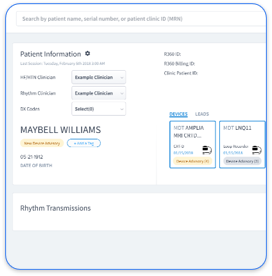
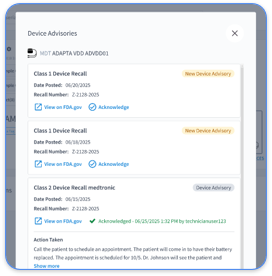
2026 trends favor AI-supported documentation logs and vendor-neutral platforms that unify these data streams. Rhythm360 addresses this environment with greater than 99.9% data transmissibility, automated AI triage for CIED alerts, and accurate CPT code capture across all device manufacturers. Practices avoid the administrative burden of logging into multiple OEM portals and reduce missed billable events.
Use this checklist to keep CPT 99457 documentation consistent and audit ready.
1. Signed Patient Consent: Record explicit consent for RPM services, device use, and data transmission before monitoring begins.
2. 16+ Days of Data Collection: Confirm CPT 99454 requirements with documented transmission days that meet the 16-day threshold within a 30-day period.
3. Time Logs with Timestamps: Capture start and stop times, activities performed, staff credentials, and total minutes spent on each patient.
4. Interactive Communication Records: Document all phone calls, video visits, or secure messages with patients or caregivers that support treatment management.
5. Clinical Data Review Notes: Log review of transmitted physiologic parameters, CIED alerts, AFib episodes, and heart failure trends with clear clinical interpretation.
6. Care Plan Adjustments: Record medication changes, lifestyle guidance, escalation steps, and other interventions that result from monitoring data.
7. General Supervision Documentation: Include notes that show physician oversight consistent with 2026 CMS general supervision rules.
8. Patient Identification Details: Maintain accurate patient identifiers, monitoring date ranges, and device information to support a complete audit trail.
| Date | Start/Stop Time | Activity Description | Total Minutes |
|---|---|---|---|
| 03/01/2026 | 9:00-9:25 AM | AFib alert review, patient call | 25 |
| 03/15/2026 | 2:30-2:45 PM | Weight trend analysis, care plan update | 15 |
For cardiology-specific cases, document CIED transmission reviews, CardioMEMS pressure readings, and arrhythmia alert responses with detailed clinical context and clear intervention notes.
Cardiology practices must tie documentation directly to clinical scenarios to satisfy auditors. For AFib alert responses, record the minutes spent reviewing transmission data, the content of patient communication, and any anticoagulation changes. For heart failure non-compliance, document weight trends, medication adherence discussions, and specific care plan modifications.
2026 CMS guidelines stress general supervision and prohibit overlapping evaluation and management services. Vague statements like “appropriate time spent” are insufficient; specify exact time such as “35 minutes spent on evaluation and management” or include start/stop timestamps.
Frequent pitfalls include missing timestamps that cause claim denials, ignoring the 16-day data requirement, and weak documentation of clinical decision-making. Detailed activity logs work better than generic templates. Practices reduce risk by using standardized documentation workflows and scheduling regular internal compliance reviews.
Rhythm360 streamlines CPT 99457 compliance through automation designed for cardiology teams. The vendor-neutral platform connects with Epic, Cerner, and other EHR systems while consolidating data from all major CIED manufacturers into one dashboard.

Key automation features include AI-based time tracking that logs clinical activities, consent management workflows, and alerts that verify the 16-day data rule. The integrated Twilio communication framework preserves complete audit trails for calls and messages, and automated reports capture billable events across CIED monitoring and RPM services.
Practices using Rhythm360 report 80% faster responses to critical alerts and 300% revenue growth from more complete CPT code capture. The platform removes manual documentation work and supports audit-ready compliance with 2026 CMS requirements.
Schedule a demo to automate documentation requirements for CPT 99457 remote patient monitoring and improve your practice’s billing efficiency.
Cardiology leaders often weigh building internal documentation systems against adopting SaaS platforms such as Rhythm360. Manual Excel-based tracking consumes staff time, increases human error, and exposes the practice to audit findings. Automated platforms launch within days and standardize documentation from day one.
The financial impact favors automation. Practices see up to 300% revenue increases from more accurate billing capture compared with the higher denial rates that follow manual processes. A major audit pitfall for RPM billing is frequency denials due to mismatched billing cycles: 99454 uses rolling 30-day periods, while 99457/99458 use calendar months. Automated systems align these cycles, prevent synchronization errors, and support deep EHR integration.
CPT 99457 requires at least 20 minutes of clinical staff or provider time per calendar month, interactive patient communication, and precise timestamps for all activities. Documentation must also include clinical data review notes, care plan changes, and physician supervision details. Records should remain specific and measurable to avoid audit flags triggered by vague time estimates.
The 16-day rule requires at least 16 days of automatic data transmission within a 30-day period for CPT 99454 billing. The 2026 updates add CPT 99445 for shorter monitoring periods of 2–15 days, which supports patients with variable adherence. These codes are mutually exclusive, so practices bill 99454 for 16 or more days or 99445 for 2–15 days, but never both in the same period.
Qualified clinical staff, including registered nurses, may perform CPT 99457 activities under physician supervision. The 2026 CMS guidelines focus on general supervision, which means the physician remains available for consultation without direct oversight of each interaction. All staff activities must list credentials and show how supervision requirements were met.
CPT 99457 covers the first 20 minutes of monthly treatment management services. CPT 99458 applies to each additional 20-minute block beyond that initial time. Practices bill 99457 once per patient per month, then add 99458 units for extended clinical engagement. Both codes require interactive communication and detailed time documentation.
The 2026 CMS guidelines introduce new codes 99445 and 99470 while keeping existing 99457 and 99458 requirements. Key changes include stronger emphasis on general supervision, options for shorter monitoring periods, and stricter documentation standards that require timestamps and explicit clinical decision-making notes. Practices must manage calendar month billing for 99457 and 99458 alongside rolling 30-day billing for 99454 to avoid denial patterns.
Successful CPT 99457 billing depends on accurate documentation, reliable time tracking, and complete audit trails that manual workflows rarely deliver. The 2026 CMS updates increase documentation expectations and make automation a practical requirement for cardiology RPM programs.
Schedule a demo today to automate documentation requirements for CPT 99457 remote patient monitoring and strengthen your RPM billing performance.