Last updated: March 12, 2026
CPT Code | Description | Frequency | 2026 Reimbursement |
99453 | Initial setup and patient education | Once per episode | ~$19 |
99454 | Device supply, 16-30 days monitoring | Monthly | ~$47 |
99445 | Device supply, 2-15 days monitoring (NEW) | Monthly | ~$47 |
99457 | Treatment management, first 20 minutes | Monthly | ~$52 |
99470 | Treatment management, first 10 minutes (NEW) | Monthly | ~$26 |
99458 | Additional 20-minute increments | As needed | ~$41 |
93298 | CIED interrogation with report | Every 90 days | ~$88 |
93299 | CIED programming | As needed | ~$143 |
99091 | Complex physiologic monitoring analysis | Monthly | ~$65 |
The 2026 updates significantly expand billing opportunities by adding 99445 for shorter monitoring periods and 99470 for reduced management time thresholds. These changes allow billing for stable chronic patients who previously did not meet the 16-day minimum requirement.
Key cardiology use cases include CIED monitoring for pacemakers, ICDs, and implantable loop recorders with 93298/93299 codes. Heart failure and hypertension patients benefit from physiologic monitoring through 99454 and 99445 codes. The new 99445 code represents a 100% increase in billing ability for devices due to lowered thresholds, so practices should update documentation systems without delay.
CPT 99454 Documentation Checklist:
Critical pitfall: Manual patient entry or texting disqualifies 99454 billing entirely. Devices must transmit physiologic data automatically without patient action.
CPT 99457 Documentation Checklist:
CPT 93298/93299 Documentation Checklist:
CPT 99091 Documentation Checklist:
Tightened 2026 documentation requirements demand audit-proof details, including precise time tracking, real-time communication verification, and thorough clinical decision notes to avoid denials.
The Excel and Google Sheets tracker template includes columns for Patient ID, Device OEM, CPT Code, Review Date and Time, Documentation Proof, Billing Status, and Clinical Notes. The template also flags missed billing opportunities and highlights common documentation gaps with simple compliance alerts.
Step-by-step implementation:
This manual tracker delivers quick value but adds significant administrative work and remains vulnerable to human error. The template works as a short-term bridge while practices evaluate automated platforms like Rhythm360 that remove manual data entry and provide real-time compliance monitoring.
Manual tracking systems create data silos that cause missed critical events and unbilled services. When teams rely on separate OEM portals for Medtronic, Boston Scientific, and Abbott devices, they can overlook atrial fibrillation events, which increases stroke risk and loses 99457 billing opportunities.
Common denials involve incomplete time documentation for 99457 claims, missing proof of live interactions, and failure to capture new 99445 opportunities for shorter monitoring periods. Practices that miss the new 99445 code lose $52 per eligible patient monthly, which creates major revenue leakage for busy cardiology groups.
HIPAA risk also rises when staff store patient data in unsecured spreadsheets. Staff burnout increases as teams repeat data entry across multiple systems. This administrative load often delays responses to critical alerts and can compromise both patient safety and regulatory compliance.
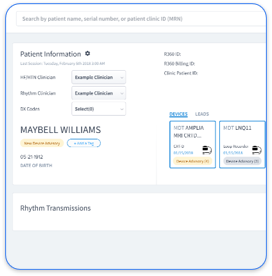
Rhythm360 offers a vendor-neutral, AI-powered platform that ingests data from all major OEM systems, including Medtronic, Boston Scientific, Abbott, and Biotronik. The system generates compliant documentation for all CPT codes and provides real-time dashboards plus EHR integration with Epic, Cerner, Athenahealth, eClinicalWorks, Greenway Health, and other major systems.
The platform improves revenue capture by up to 300% through automated billing event detection and cuts response times for critical alerts by up to 80%. Redundant data feeds support more than 99.9% data transmissibility. The software removes the need to log into multiple OEM portals and maintains complete audit trails for every billable activity.
Rhythm360 goes beyond workflow automation and supports both clinical decisions and billing accuracy. The system flags billing opportunities based on CPT requirements, tracks clinical management time for 99457 compliance, and maintains complete documentation for 93298 CIED interrogations. Schedule a demo to see how the platform reshapes cardiology RPM operations.
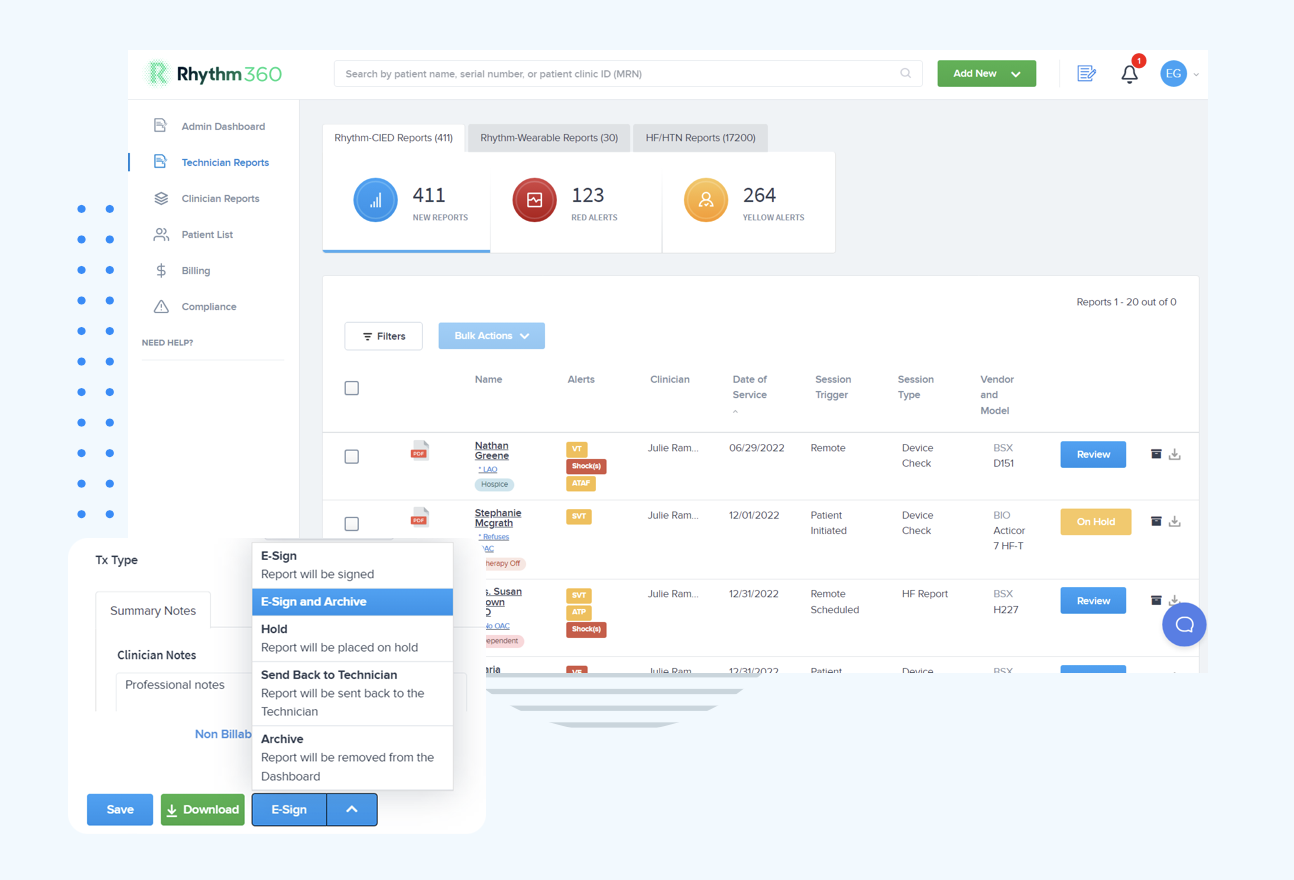
Advanced capabilities include AI-driven alert triage that reduces notification fatigue, mobile access for on-call physicians, and automated patient communication through integrated Twilio messaging. The platform scales from solo practices to large health systems while maintaining HIPAA compliance and delivering detailed reports for quality metrics and revenue performance.
Mid-sized cardiology practices that adopt Rhythm360 capture previously missed 93298 interrogation billings and uncover new RPM opportunities for stable chronic patients. The automated workflows cut administrative time and improve clinical response times for critical events by up to 80%.
These practices see rapid ROI from recovered revenue tied to accurate CPT documentation, fewer denials from incomplete records, and growth in billable patient populations. Staff satisfaction rises as manual data entry decreases and workflows align across all device manufacturers.
The platform also helps prevent adverse events through faster alert processing and continuous patient monitoring. This combination of clinical protection and financial performance makes Rhythm360 a practical choice for cardiology practices that want sustainable RPM success. Schedule a Rhythm360 demo today to uncover your practice’s revenue potential.
CPT 99454 covers device supply and data transmission for 16-30 days of monitoring in a 30-day period and focuses on technical data collection. CPT 99457 covers clinical management services that require at least 20 minutes of physician or clinical staff time per month plus at least one live patient interaction. These codes work together, with 99454 covering data collection and 99457 covering clinical interpretation and management.
CPT 99091 requires at least 16 days of complex physiologic data collection within a 30-day period and at least 20 minutes of physician review and analysis. Documentation must show detailed analysis of data trends, clinical correlations, treatment plan changes, and physician signature. This code applies to advanced monitoring that needs physician-level interpretation, such as complex arrhythmia analysis or multi-parameter heart failure monitoring with documented decisions.
CIED patients can receive both device-specific monitoring with 93298 and 93299 and general RPM services with 99454 and 99457 when clinically appropriate. The 93298 and 93299 codes cover device interrogation and programming every 90 days. RPM codes apply to additional physiologic monitoring such as weight, blood pressure, or activity tracking. These services complement each other and can be billed separately when documentation supports medical necessity.
Rhythm360 supports CPT compliance through automated documentation, complete audit trails, and real-time compliance checks. The platform tracks data transmission days for 99454, logs clinical time for 99457, and stores full records for 93298 device interrogations. Built-in rules catch billing errors before submission and help ensure documentation meets CMS standards for reimbursement.
The 2026 updates add CPT 99445 for device supply with 2-15 days of monitoring, compared with 99454’s 16-30 day requirement. They also add CPT 99470 for treatment management that requires only 10 minutes plus one live interaction, compared with 99457’s 20-minute threshold. These codes expand billing options for stable chronic patients and brief clinical interventions and can nearly double eligible patient counts for practices that track them correctly.
Accurate CPT documentation tracking now sits at the center of cardiology RPM revenue in 2026. You can start with the free tracker template for quick deployment, then move to automated solutions like Rhythm360 for full compliance and revenue performance. New billing opportunities and stricter documentation rules together make professional-grade tracking systems essential for long-term cardiology RPM success.