

Critical cardiac device alerts include life-threatening arrhythmias such as atrial fibrillation and ventricular tachycardia, along with device malfunctions and low battery warnings from CIEDs like pacemakers, ICDs, and cardiac resynchronization therapy devices. Remote cardiac device monitoring depends on patient transmissions, which can arrive late, in fragments, or not at all. Untreated atrial fibrillation and hypertension can cause serious problems including stroke and heart failure, so timely alert response directly affects patient outcomes.
Understanding why these alerts get missed requires a close look at seven connected workflow failures that appear in many traditional monitoring programs.
The Problem: Cardiac device monitoring produces overwhelming volumes of non-actionable alerts, with the majority being false positives as noted above. This constant barrage of notifications creates alarm fatigue, so clinicians become desensitized and may overlook truly critical events.
The comparison below shows how traditional alert streams overwhelm staff and how Rhythm360 reduces that noise so urgent events stand out clearly.
| Traditional Issue | Rhythm360 Solution |
|---|---|
| 80-99% non-actionable alerts | AI filters 99% of noise, prioritizes critical events |
| Clinician burnout from alert overload | 80% faster response times to real emergencies |
The Problem: Practices that support multiple manufacturers must juggle separate, non-interoperable portals from Medtronic, Abbott, Boston Scientific, and Biotronik. This fragmentation creates data silos and raises the risk that staff will miss a critical alert in one portal while working in another.
The table below highlights how scattered OEM portals compare with a single, vendor-neutral view of every device.
| Traditional Issue | Rhythm360 Solution |
|---|---|
| Multiple OEM logins required | Single unified dashboard for all manufacturers |
| Data scattered across platforms | Vendor-neutral consolidation with >99.9% transmissibility |
The Problem: Many clinics do not have enough staff for continuous monitoring, especially on weekends and holidays. Critical alerts that arrive during off-hours often sit untouched until the next business day, which creates dangerous delays in care.
The comparison below shows how continuous mobile access and real-time triage replace gaps that occur with weekday-only coverage.
| Traditional Issue | Rhythm360 Solution |
|---|---|
| No weekend monitoring coverage | 24/7/365 mobile app access for clinicians |
| Delayed response to urgent alerts | Real-time notifications with priority triage |
The Problem: Device transmissions can fail because of patient non-compliance, cellular issues, or OEM server downtime. When transmissions never reach the clinic, staff cannot see the alerts, and patients remain exposed to preventable adverse events.
The table below explains how redundant data feeds and AI-driven reconstruction reduce blind spots from failed transmissions.
| Traditional Issue | Rhythm360 Solution |
|---|---|
| Single point of failure for transmissions | Redundant data feeds ensure >99.9% reliability |
| No backup when OEM servers fail | Computer vision and AI extrapolation fill gaps |
The Problem: Many clinics lack clear, standardized protocols for triaging and responding to different alert types. Without defined escalation paths, critical alerts can sit in queues for days before anyone takes action.
The comparison below shows how automated triage and built-in guidance replace ad hoc decisions and long delays.
| Traditional Issue | Rhythm360 Solution |
|---|---|
| 3-day average response delays | Automated triage with immediate escalation |
| No standardized alert protocols | Built-in clinical decision support tools |
The Problem: Many patients do not fully understand why regular device transmissions matter or struggle with their home monitoring equipment. Poor compliance creates monitoring gaps and missed chances to detect serious events early.
The table below outlines how proactive education and compliance tracking improve transmission reliability over time.
| Traditional Issue | Rhythm360 Solution |
|---|---|
| Patient transmission compliance issues | Automated patient messaging and education |
| No tracking of missed transmissions | Comprehensive compliance monitoring dashboard |
The Problem: Traditional systems depend on manual review of every alert, which makes rapid identification of truly critical events unrealistic. Without intelligent filtering, life-threatening arrhythmias can hide among routine notifications.
The table below shows how AI triage and pattern recognition surface urgent events that manual workflows often miss.
| Traditional Issue | Rhythm360 Solution |
|---|---|
| Manual review of all alerts | AI-powered intelligent triage and prioritization |
| Critical events lost in noise | Machine learning identifies urgent patterns |
Rhythm360 operates as a vendor-neutral, HIPAA-compliant remote patient monitoring platform that directly targets all seven causes of missed cardiac device alerts. Its AI triage system filters non-actionable notifications and elevates truly critical events, while redundant feeds and computer vision support greater than 99.9% data transmissibility.
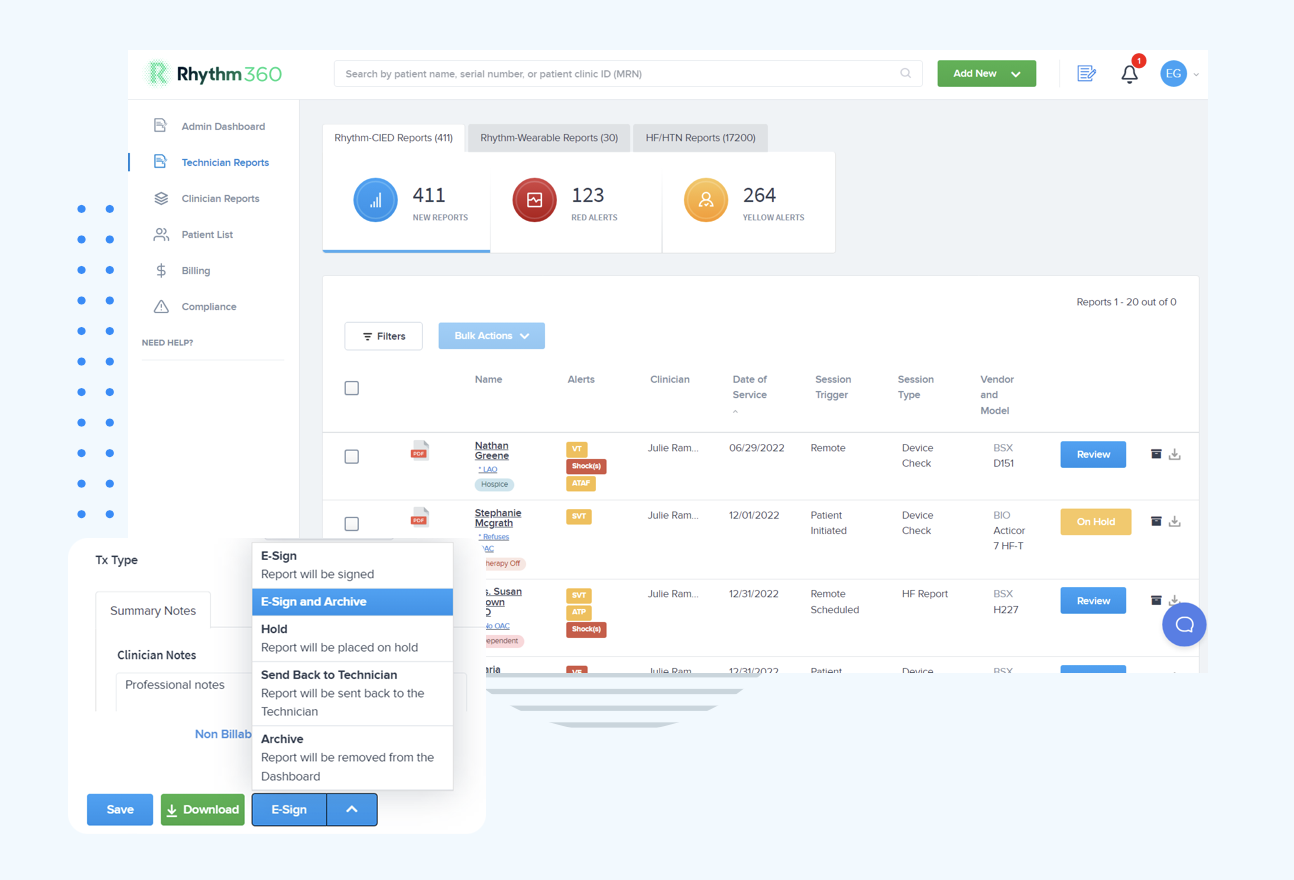
These capabilities rely on seamless EHR integration with Epic and Cerner, which brings alert data into existing clinical workflows. The secure mobile application extends this access around the clock, and automated CPT code documentation captures the billing value of each intervention. By consolidating data from all major OEM manufacturers into a single, intuitive dashboard, Rhythm360 removes the need for multiple portal logins that fragment monitoring.
One cardiologist shared a clear example: “Rhythm360 flagged a Saturday morning atrial fibrillation alert that our traditional system would have missed until Monday. We started anticoagulation immediately, potentially averting a stroke.” This story shows how unified, AI-driven monitoring can change outcomes for individual patients.
See the unified dashboard and AI triage system in action.
Clinical practices using Rhythm360 report major gains in both outcomes and finances. AI triage shortens response times to critical alerts by about 80%, while automated billing documentation delivers the revenue increases outlined above. By capturing previously missed CPT codes 93298 and 93299, practices recover revenue that once slipped away because of poor documentation and slow responses.
The unified dashboard also removes the administrative burden of managing multiple OEM portals, which frees staff to focus on patient care instead of data hunting. Practices report higher staff satisfaction and less burnout as intelligent alert management cuts down the constant noise of false positives.
Alarm fatigue in cardiac devices stems from the overwhelming volume of non-actionable alerts produced by traditional monitoring systems. With 59.8% of alerts as false positives and 80-99% requiring no clinical action, clinicians become desensitized and may overlook critical events. Fragmented OEM systems that generate redundant notifications without intelligent filtering make this problem worse.
Advanced remote monitoring platforms such as Rhythm360 reduce missed CIED alerts through AI triage that filters non-actionable notifications and highlights critical events. The system supports 24/7 monitoring with mobile access, so clinicians can review alerts promptly regardless of time or location. Unified data from all OEM manufacturers also prevents alerts from getting buried in separate portals.
Yes, Rhythm360 functions as a vendor-neutral platform that integrates with major cardiac device manufacturers including Medtronic, Abbott, Boston Scientific, and Biotronik. The system uses APIs, HL7, XML parsing, and computer vision to normalize data from different sources into one comprehensive dashboard. This approach ensures complete coverage regardless of which devices patients receive.
AI alert triage delivers strong ROI through faster care, higher revenue, and time savings. Practices see about an 80% reduction in response times to critical events, a 300% increase in revenue through better billing capture, and significant staff time savings from automated workflows. Teams avoid manual review of thousands of non-actionable alerts while ensuring that critical events receive immediate attention.
Most practices implement Rhythm360 within a few days to a few weeks, including EHR integration. The onboarding process covers data migration from existing systems, staff training, and alignment with current clinical workflows. The platform’s intuitive design limits disruption while quickly delivering the benefits of unified monitoring and AI-driven alert management.
The seven main causes of missed cardiac device alerts, including alarm fatigue, OEM fragmentation, staffing shortages, transmission failures, weak protocols, patient non-compliance, and lack of AI triage, combine into a serious risk for patients and a major revenue drain for practices. Rhythm360 addresses each of these issues through a comprehensive, vendor-neutral platform that unifies data, filters alerts intelligently, and supports continuous monitoring.
Transform your practice’s monitoring capabilities with a personalized walkthrough.





