Medicare Part B covers both remote and in-office pacemaker monitoring when practices meet specific clinical and administrative rules. CMS Article A54953 explains that coverage depends on medical necessity, correct coding, and adherence to applicable Local Coverage Determinations, and it requires strict supervision and technician certification standards.
Remote pacemaker monitoring follows the same basic coverage framework as in-office visits. Medicare covers transtelephonic monitoring of cardiac pacemakers using transmitting devices furnished to patients that require manual telephone transmission.
| CPT Code | Description | Service Type | Frequency |
|---|---|---|---|
| 93294 | Professional review (remote) | Professional component | Up to 90 days |
| 93296 | Technical component (remote) | Technical component | Up to 90 days |
The 2026 Medicare Physician Fee Schedule introduces several changes that directly affect cardiac monitoring workflows. The updated schedule revises direct supervision rules so many services can use virtual supervision with two-way audio and video technology. This shift from physical presence to virtual oversight removes the requirement for physicians to remain on-site during technical component delivery.
Virtual supervision allows cardiology practices to manage technical components in-house and bill for both professional and technical services under CPT 93296. These changes open new revenue streams for practices that previously relied on external monitoring vendors for technical services.
Payment rates for cardiac rhythm management services changed in 2026, yet Medicare kept the core coverage criteria for remote CIED monitoring consistent with prior years. Practices still must meet the same medical necessity and documentation standards.
Additionally, CMS Transmittal 13483 added CPT codes 0571T–0614T as payable under NCD 20.4 for EV-ICD procedures, effective October 20, 2023. This expansion supports reimbursement for newer cardiac device technologies.
Medicare applies equivalent coverage standards to remote and in-office pacemaker monitoring, yet the two models feel very different in daily operations. The following table highlights how they differ in patient burden and data collection while sharing the same Part B coverage framework.
| Aspect | Remote Monitoring | In-Office Monitoring |
|---|---|---|
| Coverage | Part B | Part B |
| Frequency | Up to 90 days | Reasonable and necessary |
| Patient Burden | Minimal travel required | Office visit required |
| Data Completeness | Continuous transmission | Point-in-time assessment |
Remote monitoring delivers continuous data between scheduled transmissions, which supports detection of intermittent arrhythmias and device malfunctions that brief in-office interrogations may miss. At the same time, practices must manage multiple vendor portals, which increases administrative work and raises the risk of missed critical events or incomplete documentation.
Medicare compliance for pacemaker monitoring depends on clear supervision, technician qualification, and documentation standards. Independent diagnostic testing facilities must employ nonphysician personnel who show basic qualifications and proficiency through licensure or certification by the appropriate state health or education department or, when no state licensure exists, by an appropriate national credentialing body, and they must ensure supervision by physicians who demonstrate proficiency in the performance and interpretation of each diagnostic procedure performed.
Common denial reasons include inadequate technician certification, missing or weak supervision documentation, and billing that exceeds allowed frequency. Incorrect or inconsistent CPT/HCPCS codes and modifiers often trigger Medicare denials when they do not match payer coverage lists or NCCI bundling edits.
Practices also need to confirm that each CPT/HCPCS code appears on CMS-855B enrollment forms, because claims for unlisted codes receive automatic denials. IDTFs must keep a primary business phone at the designated site that appears in local directories and directory assistance.
| Compliance Area | Requirement | Common Pitfall |
|---|---|---|
| Technician Certification | Licensure or certification by state or national credentialing body | Using unqualified staff |
| Physician Supervision | Physicians with demonstrated proficiency | Inadequate supervision documentation |
| Billing Frequency | Per coverage guidelines | Over-frequency submissions |
| Code Reporting | Listed on CMS-855B form | Billing unlisted procedures |
Cardiology practices that work with several device manufacturers often lose revenue because of fragmented workflows and missed billable events. Separate logins to Medtronic CareLink, Abbott Merlin.net, Boston Scientific Latitude, and Biotronik systems create extra steps that make complete capture of Medicare-reimbursable services difficult.
These compliance and workflow requirements become even harder to manage when staff must track them across multiple vendor portals. Fragmentation increases administrative burden, raises audit risk, and hides revenue that the practice has already earned.
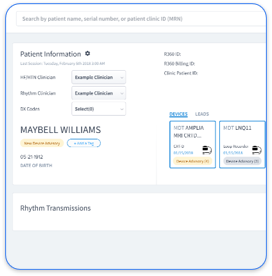
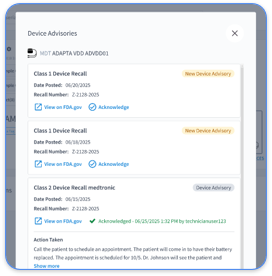
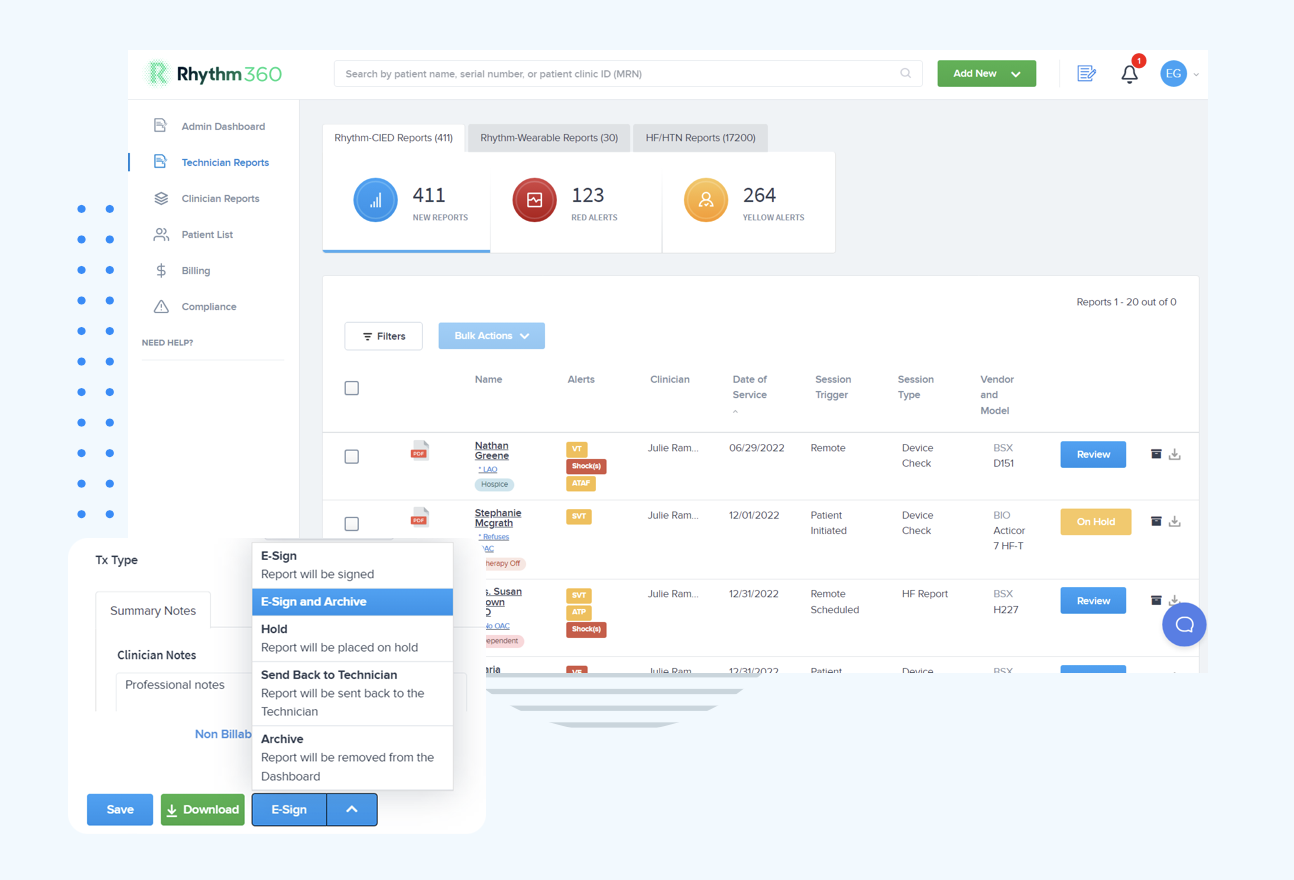
Rhythm360’s vendor-neutral platform addresses this fragmentation by consolidating all device data into a single dashboard with greater than 99.9% transmissibility through redundant data feeds and AI-powered gap filling. Automated CPT code capture and documentation generation help practices recover missed revenue while supporting Medicare compliance through structured billing workflows.
See how unified monitoring recovers missed pacemaker revenue
The platform’s AI-powered alert triage system cuts non-actionable notifications by 80%, which allows clinical staff to focus on clinically meaningful events and maintain complete documentation for billing. Bi-directional EHR integration with Epic, Cerner, and other major systems improves workflow efficiency and reduces manual data entry errors that often lead to claim denials.
Effective pacemaker monitoring programs rely on consistent tracking of billable events, clinical response times, and revenue per patient. Without baseline measurements, practices cannot see where performance lags or how workflow changes affect outcomes.
Start by measuring current billing capture rates, average response times to critical alerts, and administrative time spent on multi-vendor portal management. These three metrics reveal where revenue leakage and operational inefficiency occur.
Key performance indicators include the percentage of eligible 90-day monitoring periods billed, time from alert generation to clinical response, and revenue per monitored patient. Rhythm360’s integrated dashboard surfaces these metrics in real time and automates the compliance documentation that Medicare auditors expect.
The platform’s mobile application lets clinicians review transmissions and sign reports from any location, which supports continuity of care while still meeting supervision requirements for Medicare reimbursement. This mobile access proves especially valuable for on-call coverage and urgent patient management.
See how mobile access improves your on-call workflow
Medicare Part B pays 80% of approved amounts for pacemaker monitoring services after the beneficiary meets the annual deductible. Patients usually pay 20% coinsurance, and secondary insurance often covers some or all of that balance. Actual out-of-pocket cost varies by CPT code and local fee schedule.
The main CPT codes for remote pacemaker monitoring are 93294 for the professional review component and 93296 for the technical component. Practices can bill these codes every 90 days for eligible patients with implanted cardiac devices. Additional codes may apply for specific device types or monitoring scenarios.
Medicare Part B covers remote pacemaker monitoring under the same core criteria used for in-office monitoring. Services must be medically necessary, performed by qualified personnel, and supported by complete documentation. Remote monitoring often delivers more comprehensive data than periodic in-office visits.
The 2026 Medicare Physician Fee Schedule changed supervision requirements for CPT 93296 from physical presence to virtual supervision. This update lets practices manage the technical component internally and bill for both professional and technical services, which can increase revenue when workflows support complete capture.
Medicare allows billing for remote pacemaker monitoring every 90 days with CPT codes 93294 and 93296. More frequent billing usually results in denials unless specific medical circumstances justify closer monitoring. Practices need reliable tracking of billing intervals to avoid over-frequency violations.
Frequent denial reasons include inadequate technician certification, missing physician supervision documentation, billing outside allowed frequency, and weak medical necessity documentation. Claims also face denial when CPT codes are incorrect or when services fail to meet coverage criteria in local coverage determinations.
Medicare covers medically necessary pacemaker monitoring regardless of the technology platform, as long as services meet coverage criteria and qualified personnel perform them. Vendor-neutral platforms such as Rhythm360 can strengthen billing compliance and revenue capture while preserving Medicare eligibility.
Medicare’s broad coverage for pacemaker monitoring creates strong revenue potential for cardiology practices that manage compliance and workflows carefully. The 2026 shift to virtual supervision for technical components expands in-house billing options and supports more flexible staffing while maintaining patient safety.
Rhythm360’s vendor-neutral platform addresses multi-vendor data fragmentation, compliance documentation gaps, and missed revenue that often prevent practices from realizing the full value of Medicare pacemaker monitoring reimbursement. Learn how vendor-neutral monitoring captures lost revenue