Enterprises that manage CIED patients across multiple manufacturers face growing complexity. Fragmented systems slow clinical teams, increase error risk, and make it difficult to sustain remote monitoring programs financially.
Large cardiology groups and health systems often rely on separate OEM portals for each device manufacturer. Staff must juggle multiple logins, interfaces, and workflows each day. Data appears in different formats and at different times, which forces teams to copy and paste information into internal systems or the EHR.
This manual work increases the risk of transcription errors and delays. Clinicians lose a unified view of a patient's device history, alerts, and clinical status, which makes decision-making more difficult and can compromise safety.
Remote monitoring of CIEDs now serves as a standard of care and carries strong guideline endorsement, with earlier detection of atrial fibrillation and critical events and a 72% reduction in inappropriate ICD shocks compared with in-person follow-up alone. These benefits depend on reliable alert review and timely response.
Unfiltered, high-volume alerts overwhelm clinical teams. When every event generates a notification, staff members become desensitized and may overlook important findings. Manual monitoring processes also create gaps when teams are short staffed or workflows vary by location.
Remote CIED programs depend on accurate capture of billable services. Codes such as 93298, 93299, and 99454 require specific timing, documentation, and compliance to support reimbursement. In many enterprises, teams track these requirements with spreadsheets and reminders across disconnected systems.
This approach often leads to missed charges, delayed billing, and higher denial rates. Administrative time rises while revenue remains flat or declines. For organizations already working with thin margins, this leakage can limit the scale of remote monitoring services and future investments.
Connect with RhythmScience to review your current CIED monitoring workflows and revenue capture.
Enterprise cardiac implant monitoring software offers a single platform for managing remote CIED data, team workflows, and billing. Guideline-recommended remote monitoring programs depend on reliable systems that can handle high data volume and complex workflows at scale.
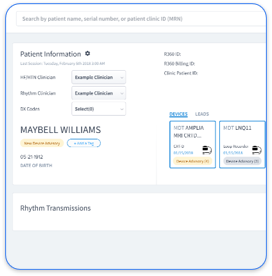
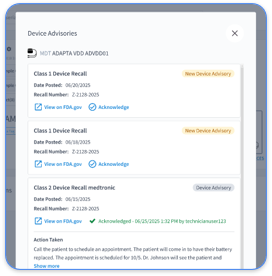
Modern platforms aggregate data from all major device manufacturers into one vendor-neutral environment. Clinicians log in once and see a complete, current picture of each patient's device activity, alerts, and trends. AI-driven rules help filter out low-value notifications and push critical items to the top of the queue.
Automated workflows support report generation, documentation, and billing. Tasks that once required manual tracking move into consistent, auditable processes. Teams gain back time for direct patient care while leadership gains clearer visibility into performance and revenue.
Rhythm360, offered by RhythmScience, is a cloud-based, vendor-neutral platform designed for enterprise cardiology environments. The system supports high patient volumes, multi-site workflows, and integration with core clinical and billing systems.
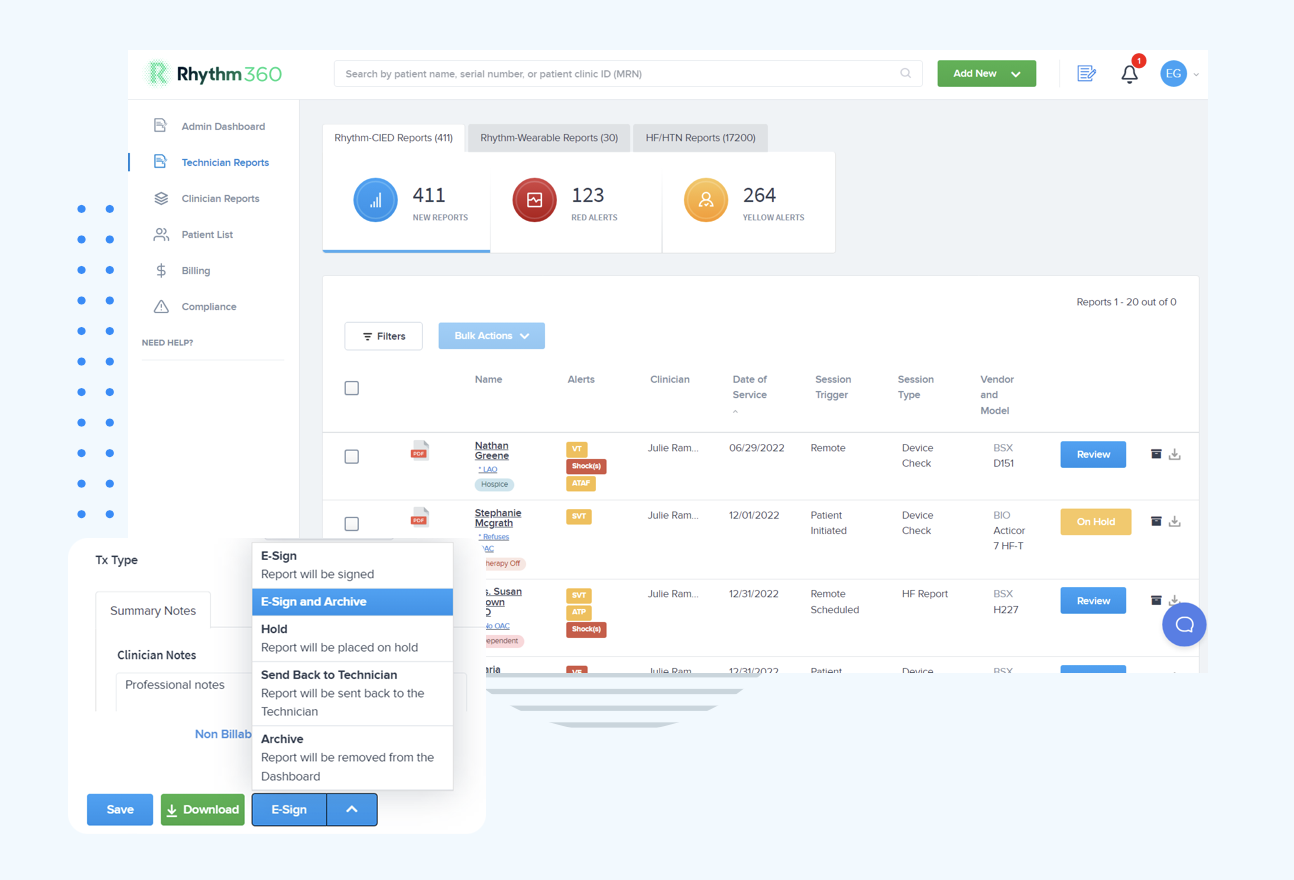
Key capabilities of Rhythm360 include:
Request a Rhythm360 demo to see how these capabilities fit your current infrastructure.
Rhythm360 replaces the need to manage multiple OEM portals with a single dashboard. Device technicians and nurses gain a consistent workspace for managing thousands of patients, which reduces time spent switching systems and re-entering data.
Automated workflows manage routine steps such as report creation, documentation, and status updates. Teams can focus on clinical decision-making, protocol adherence, and direct patient outreach instead of administrative tasks.
AI-based analytics in Rhythm360 highlight critical events and trend changes that require attention. By filtering non-actionable alerts and surfacing high-priority items, the platform supports faster review and response.
This approach aligns with standard-of-care expectations for timely intervention and continuous monitoring. Patients benefit from more reliable oversight, while providers reduce the risk of missed or delayed responses to significant device findings.
Rhythm360 tracks billable monitoring periods and supports documentation for remote CIED and physiologic monitoring codes. Automated charge capture reduces the likelihood of missed services and inconsistent billing.
More accurate claims submission helps decrease denial rates and rework. The ability to add additional RPM services on the same platform can expand revenue streams without introducing entirely new workflows or systems.
Feature | Rhythm360 Enterprise Cardiac Implant Monitoring Software | Traditional OEM Portals and Legacy Systems |
Data consolidation | Single, vendor-neutral platform for all CIED data | Multiple, siloed OEM-specific portals |
Workflow automation | Automated reporting, billing support, alert triage | Manual data entry and fragmented processes |
Alert intelligence | AI-supported prioritization and reduced alert fatigue | High volume of unfiltered, manual alerts |
Revenue optimization | Automated CPT tracking and documentation | Frequent revenue leakage and manual billing steps |
Rhythm360 uses APIs, HL7, XML, and advanced computer vision (OCR) with AI to ingest and normalize data from all major OEMs. Redundant data feeds support high transmissibility and provide a more complete and accurate view of each patient's device activity.
Rhythm360 supports bi-directional integration with leading EHR platforms such as Epic, Oracle Health (Cerner), Athenahealth, and others via HL7. These integrations help align workflows across systems and can typically be configured over a period ranging from several days to a few weeks, depending on complexity.
Rhythm360 applies AI-based rules to filter non-actionable alerts and consolidate related findings. Clinicians see a focused list of clinically significant events rather than every minor notification, which lowers alert burden and supports faster responses to urgent issues.
Fragmented CIED monitoring creates operational strain, clinical risk, and financial uncertainty for healthcare enterprises. Multiple OEM portals, high alert volumes, and manual billing workflows make it difficult to scale remote monitoring while maintaining quality.
Rhythm360 offers a unified, vendor-neutral approach that consolidates data, standardizes workflows, and supports reliable revenue capture. By adopting enterprise cardiac implant monitoring software in 2026, organizations can strengthen patient safety, support their clinical teams, and improve the financial performance of remote monitoring programs.
Contact RhythmScience to discuss how Rhythm360 can support your cardiac implant monitoring strategy.