

Manual HFM billing creates ongoing financial and operational strain. Staff must pull data from multiple OEM portals, track monitoring days, and log clinician time by hand, which increases the risk of missed events and uncaptured charges. These gaps are especially common with RPM CPT codes 99453, 99454, and 99457, where precise documentation is required for reimbursement.
These workflows also contribute to staff burnout. Teams spend hours on data transcription and sorting non-actionable alerts instead of focusing on higher value clinical work. Turnover, onboarding, and overtime costs then reduce margins and limit practice growth.
The regulatory environment for HFM and RPM billing continues to change. New and revised CPT codes, documentation rules, and payer policies require consistent updates to internal processes. Practices that rely on static, manual workflows face higher denial rates and greater compliance risk.
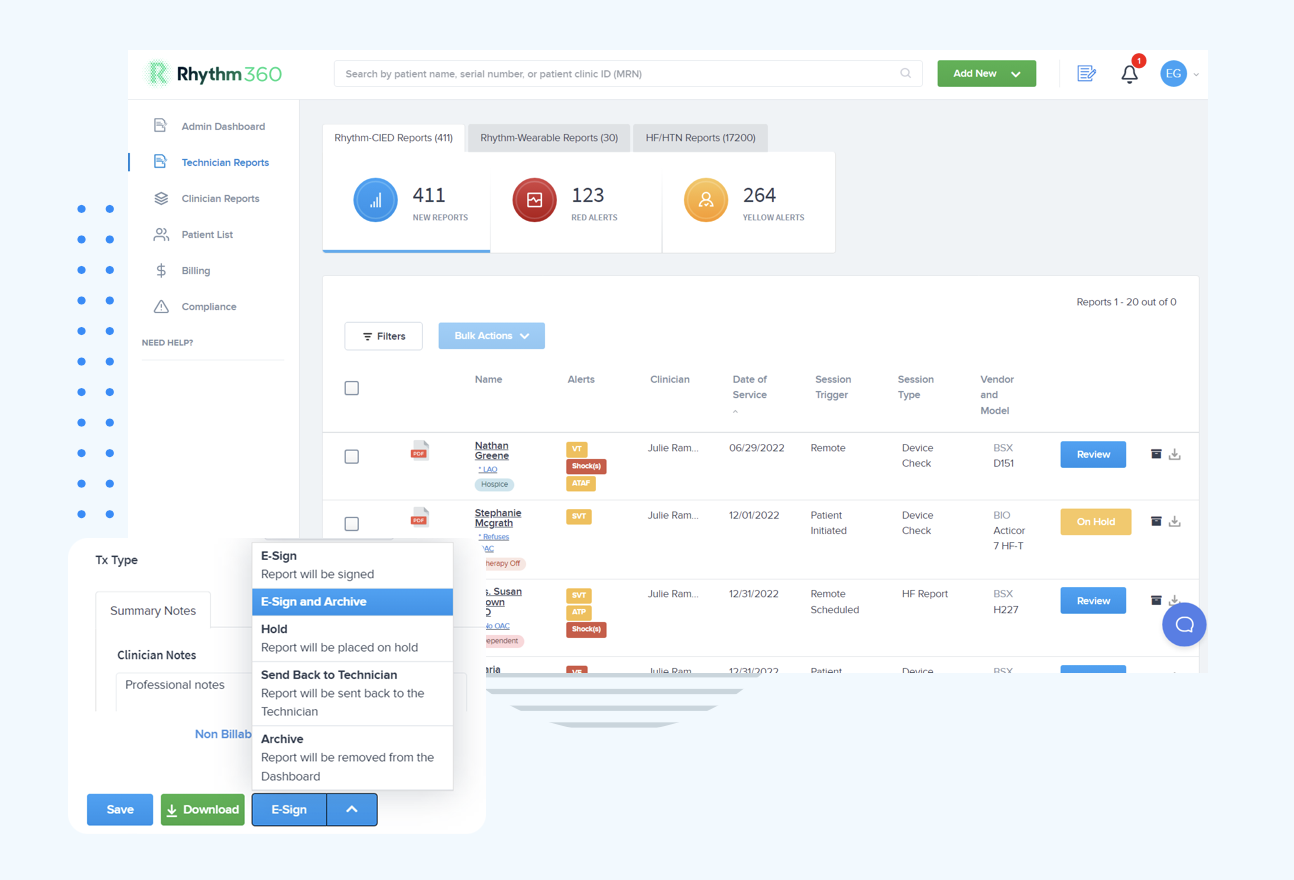
Rhythm360 addresses these challenges with an automated, vendor-neutral platform that connects OEM portals and your EHR into a single workflow. The system captures billable events, builds audit-ready documentation, and prepares claims so teams spend less time on manual tasks and more time on patient care.
Practices using Rhythm360 can reduce response times for critical alerts by up to 80 percent while significantly improving profitability through more complete and accurate billing capture. Schedule a demo to see how this approach can fit your HFM program.
Effective automation starts with a clear view of the CPT codes that support heart failure programs. Core RPM codes for many HFM workflows include 99453, 99454, and 99457, along with related codes that capture setup, device supply, monitoring days, and clinician interaction time.
Required documentation typically includes:
Rhythm360 generates this documentation automatically, creating structured, audit-ready reports that align with current code requirements and minimize errors.
Fragmented data across Medtronic, Boston Scientific, Abbott, Biotronik, and other OEM portals slows billing and creates transcription risk. Rhythm360 aggregates data from all major manufacturers through APIs, HL7 interfaces, XML parsing, and computer vision tools, then connects that information to EHR systems such as Epic, Cerner, and Athenahealth.
The platform standardizes incoming data and cross-references it for accuracy, achieving more than 99.9 percent data transmissibility through redundant data feeds. This unified view reduces manual work, prevents missed billable events, and supports consistent documentation across the entire HFM population.
Rhythm360 uses AI to detect and log HFM billing triggers, including RPM data transmissions and clinician review time. The alerting engine filters non-actionable notifications and prioritizes clinically important events, which helps reduce alert fatigue while ensuring that billable interactions are not overlooked.
Each interaction is documented with the details required for HFM-related CPT codes, so claims reflect the actual work performed.
Rhythm360 compiles clinical and billing details into structured reports that feed directly into claim generation. Required fields for complex RPM and HFM codes are pre-populated, which reduces common errors such as missing interaction time or incomplete monitoring logs.
The system maintains detailed audit trails for every billable event. Practices gain clear visibility into who reviewed data, when they acted, and how that work supports each submitted claim, which helps during payer reviews and audits.
Rhythm360 analytics highlight where revenue is being missed or under-billed. Dashboards track HFM billing performance across codes, providers, and locations so leaders can see patterns in denials, delays, or incomplete documentation.
Practices can then adjust staffing, workflows, and patient enrollment to capture appropriate CPT codes more consistently and increase net revenue without adding significant administrative overhead. Schedule a demo to review how these analytics could apply to your current patient panels.
Practices can extend heart failure workflows to include RPM for hypertension and other chronic conditions within the same platform. Rhythm360 supports multiple monitoring modalities, allowing teams to manage comorbid populations, consolidate alerts, and apply consistent billing logic across disease states.
This approach creates diversified, recurring revenue streams while keeping documentation and billing processes manageable for staff.
CPT codes and coverage policies for cardiology and RPM services evolve regularly. Rhythm360 incorporates updated guidance into workflows so documentation templates, time thresholds, and billing logic stay aligned with current requirements.
This continuous updating reduces the chance that outdated processes will cause denials or missed revenue opportunities and helps practices maintain confidence in their compliance posture.
Organizations planning to modernize heart failure management billing in 2026 can use Rhythm360 as the foundation for these strategies. Connect with Rhythm360 to review specific use cases for your practice or health system.
Automated billing platforms such as Rhythm360 capture the data produced by heart failure technologies, including monitoring details and clinician interactions. The system structures this information for compliant claim submission and preserves clear audit trails for reimbursement and compliance reviews.
Rhythm360 is designed for straightforward onboarding. Implementation, including EHR integration, typically occurs over days or weeks, depending on practice size and complexity. The platform ingests data from OEM portals automatically and generates reports in the background, which reduces manual administrative work. RhythmScience supports implementation and provides ongoing training so staff can use the platform effectively.
Rhythm360 aligns billing workflows with current CMS and payer requirements by updating documentation logic and reports as rules change. The platform maintains detailed records of all billing activity and presents them in organized audit logs, which support practices during internal reviews or external audits.
Rhythm360 tracks monitoring days, clinician review time, and other billable events with the precision required for RPM codes. This level of detail reduces missed charges, supports accurate claim generation, and can lead to substantial increases in RPM revenue capture for heart failure programs.
Practices that implement Rhythm360 often see revenue growth from more complete billing, fewer preventable denials, and lower manual workload. The reported combination of improved CPT capture and faster response to critical alerts can raise profitability while allowing teams to manage higher patient volumes without proportional staffing increases.
Heart failure management billing has become too complex to manage reliably with manual processes. Fragmented OEM portals, evolving CPT codes, and higher documentation standards put both revenue and compliance at risk when teams rely on spreadsheets and manual data entry.
Rhythm360 offers vendor-neutral data integration, AI-driven identification of billable events, and consistent generation of audit-ready documentation. The platform unifies clinical and billing data, supports accurate RPM and HFM coding, and reduces the administrative burden on cardiology staff.
Practices that adopt this type of automation are better positioned to maintain financial performance, support clinician efficiency, and deliver timely care as heart failure programs continue to expand in 2026.
Schedule a demo of Rhythm360's heart failure management billing automation solutions to see how this platform can help your organization capture appropriate revenue while maintaining a strong focus on patient outcomes.





