

Last updated: February 8, 2026
Unified cardiac implantable electronic device (CIED) and heart failure data streams form the backbone of efficient monitoring. Vendor-neutral RPM platforms remove the burden of juggling separate Medtronic, Abbott, Boston Scientific, and Biotronik portals. Rhythm360 ingests data from all major OEMs through API integration, HL7 messaging, and computer vision technology, and redundant transmission pathways support >99.9% data reliability.
AI-powered alert filtering reduces clinical fatigue by prioritizing actionable events such as atrial fibrillation onset, significant weight gain, or device malfunctions. Intelligent algorithms analyze workflow patterns and incorporate clinician feedback loops to eliminate up to 74% of non-critical alerts. Clinicians can then focus on events that require immediate intervention instead of managing notification overload.
Effective critical alert management uses tiered prioritization systems with color-coded urgency levels and role-based distribution. Rhythm360's mobile application provides secure access to patient data and alert management from any location, which supports continuity of care during on-call periods. The platform also maintains bi-directional EHR integration with Epic and Cerner systems, removing manual data transcription and preserving complete audit trails.
Clear escalation protocols and regular system audits help prevent common alert management pitfalls. Heart failure management requires continuous monitoring of multiple parameters, including fluid status, medication adherence, and functional capacity. Streamlined data presentation, therefore, becomes essential for confident and timely clinical decision-making.
Automated triage systems cut manual review time by up to 80% by filtering routine transmissions and prioritizing clinically significant events. Rhythm360's workflow automation includes pre-configured response protocols for scenarios such as device battery depletion, lead impedance changes, and arrhythmia detection. Standardized responses support consistent care delivery and reduce cognitive load on clinical staff.
Outpatient workflow standardization depends on tight EHR integration that supports GDMT adherence tracking and care coordination. CMS's Ambulatory Specialty Model mandates collaborative care arrangements with primary care providers, including bi-directional data sharing and integrated workflows. Rhythm360 supports these requirements through automated documentation, structured tasking, and secure communication tools.
Automated billing documentation captures CPT codes such as 99454 for device supply with scheduled recordings and 99457/99458 for treatment management. The platform generates compliant documentation for each billable service, which reduces administrative burden and supports full revenue capture. Integration with practice management systems then enables seamless claim submission and tracking.
Multidisciplinary team coordination improves when all communication flows through a centralized hub. Rhythm360 tracks automated messaging, phone calls, and clinical interventions in one place. The Twilio-integrated messaging system maintains complete audit trails while supporting efficient outreach for medication adherence, appointment scheduling, and symptom monitoring.
Integrated messaging systems scale patient communication with automated reminders for medication adherence, weight monitoring, and appointment scheduling. Rhythm360's Twilio framework supports personalized messaging campaigns while preserving HIPAA compliance and full documentation of every interaction.
Self-care education centers on the four pillars of heart failure management: pharmacological therapies including ACE inhibitors and SGLT2 inhibitors, lifestyle modifications such as sodium restriction and exercise, continuous monitoring of vital signs and symptoms, and participation in cardiac rehabilitation. Digital platforms deliver this content in formats tailored to each patient's needs and literacy level.
Automated follow-up protocols support adherence by triggering timely interventions when patients miss scheduled measurements or medication doses. The system alerts clinical staff when patients fail to transmit data within defined timeframes. Teams can then conduct proactive outreach to prevent clinical deterioration.
Patient portal integration offers secure access to personal health data, educational resources, and direct communication with care teams. This transparency strengthens engagement and self-management while reducing unnecessary office visits and inbound phone calls.
AI-powered dashboards provide real-time visibility into key performance indicators such as readmission rates, medication adherence, and patient-reported outcomes. Rhythm360's analytics engine highlights trends and patterns that guide quality improvement projects and population health strategies.
High-risk patient identification uses predictive algorithms that analyze device parameters, vital signs, and medication adherence patterns together. This proactive approach supports early intervention before clinical deterioration, which reduces emergency department visits and hospitalizations.
Success metrics quantify the platform's impact with clear outcomes. Organizations report an 80% reduction in critical alert response times, 300% increases in RPM revenue capture, and meaningful gains in patient satisfaction scores. Robust analytics and benchmarking against industry standards then reveal additional improvement opportunities.
Ongoing monitoring of clinical outcomes, operational efficiency, and financial performance supports continuous refinement of care delivery processes. Regular reporting to stakeholders demonstrates value and supports the expansion of RPM programs to new patient populations and clinical conditions.
Rhythm360 gives practices a practical path to comprehensive heart failure management efficiency. The cloud-based, vendor-neutral platform delivers HIPAA-compliant data integration from all major device manufacturers and combines this with AI-powered alert triage, mobile access, and seamless EHR integration. Typical implementations complete within days to weeks, which limits disruption to current workflows.
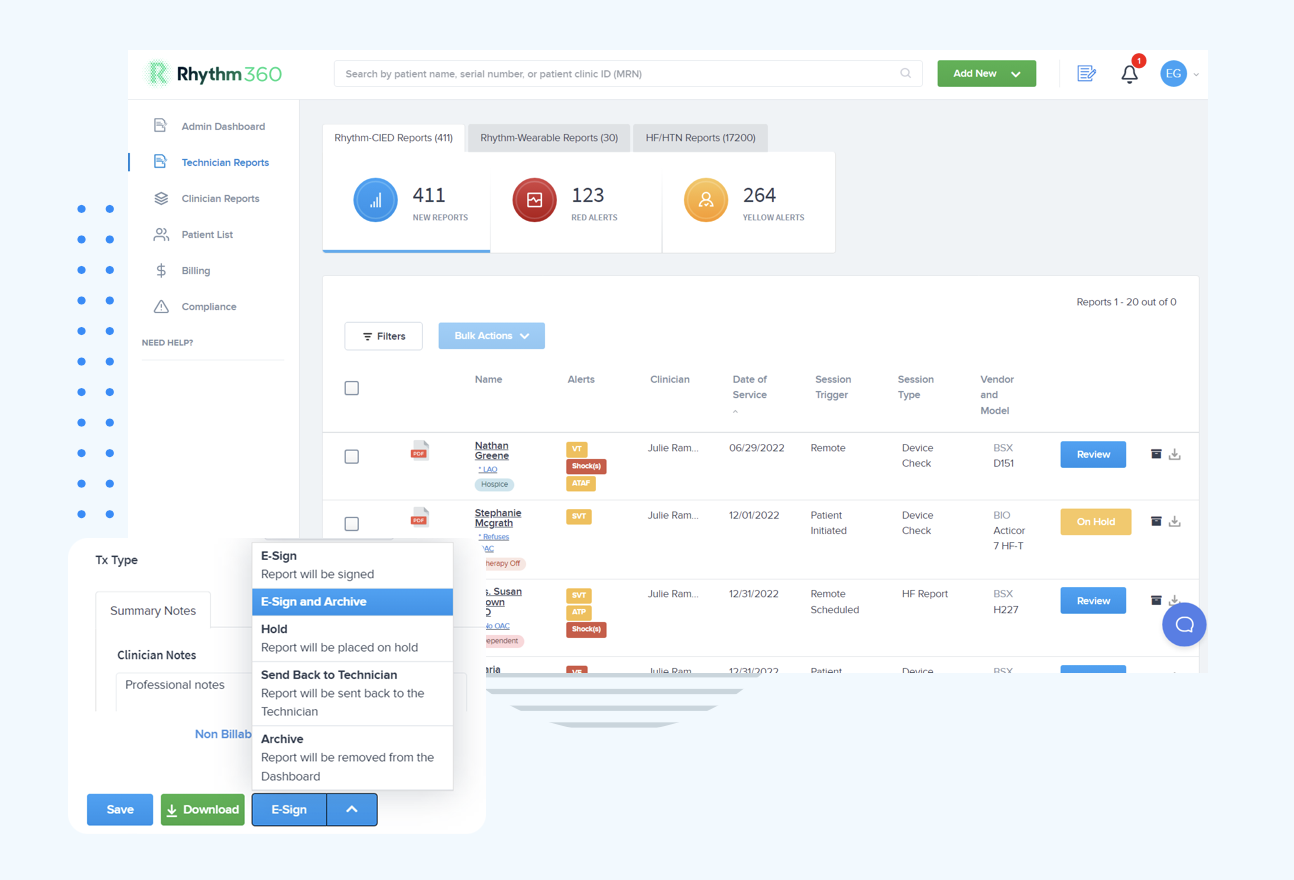
The platform's unified approach removes data silos and administrative overhead while supporting faster response times and stronger care coordination. Schedule a Rhythm360 demo today to see how it can reshape your heart failure management efficiency and financial performance.
Rhythm360 stands out through rapid onboarding measured in days to weeks, broad OEM compatibility, and documented 300% revenue improvements. Vendor-specific solutions often create lock-in and slow adaptation to new devices. Manual processes in legacy systems maintain data silos, worsen alert fatigue, and leave revenue uncaptured because of incomplete documentation and billing gaps.
Vendor-neutral architecture supports future-proof scalability as practices grow and device portfolios change. This flexibility creates a durable competitive edge in a complex and rapidly evolving healthcare technology environment.
Expanding RPM programs to include hypertension management alongside heart failure monitoring increases patient coverage and revenue potential. New CPT codes 99445 and 99470 support flexible billing for intermittent monitoring and brief management services. These codes create additional revenue streams for stable patients who need less intensive monitoring.
The four pillars of heart failure management include pharmacological therapies, lifestyle modifications, continuous monitoring, and cardiac rehabilitation. Pharmacological management covers ACE inhibitors, beta-blockers, ARNI medications, and SGLT2 inhibitors as recommended by the 2022 AHA/ACC/HFSA guidelines. Lifestyle modifications focus on sodium restriction, fluid monitoring, regular exercise, and weight management.
Continuous monitoring involves regular assessment of symptoms, vital signs, and functional capacity through both in-person visits and remote monitoring technologies. Cardiac rehabilitation provides structured exercise programs and education that improve functional capacity and quality of life while reducing hospitalizations.
Remote patient monitoring reduces heart failure readmissions by supporting early detection of clinical deterioration before symptoms become severe. Continuous monitoring of weight, blood pressure, heart rate, and patient-reported symptoms allows healthcare teams to identify concerning trends and intervene with medication adjustments, dietary counseling, or outpatient visits.
The TIM-HF2 trial showed significant mortality reduction in high-risk heart failure patients who participated in structured telemonitoring programs. AI-powered alert systems filter routine data to highlight clinically significant changes, which supports timely responses to actionable events and reduces alert fatigue among clinical staff.
Outpatient heart failure management workflows focus on GDMT adherence, multidisciplinary care coordination, and systematic follow-up protocols. Core components include EHR-triggered care pathways that prompt clinicians to adjust medications according to evidence-based guidelines. Standardized hospital-to-clinic transition processes protect continuity of care. Collaborative arrangements with primary care providers support comprehensive patient management.
The CMS Ambulatory Specialty Model requires documentation of bi-directional data sharing, shared care processes, and closed-loop communication between specialists and primary care teams. Digital platforms support these workflows through automated adherence monitoring, standardized care pathways, and analytics dashboards that track patient progress and clinical outcomes.
Heart failure RPM billing uses several CPT codes that vary by monitoring intensity and duration. CPT 99453 covers initial patient setup and education. CPT 99454 applies to device supply with at least 16 days of data transmission per 30-day period.
CPT 99457 and 99458 cover treatment management services that require substantial clinical time. Rhythm360 automates compliant documentation for these and other relevant RPM CPT codes to support accurate billing. Precise documentation of data transmission and clinical interactions remains essential for compliant billing.
Revenue growth depends on the complete capture of all billable services through automated documentation and consistent billing practices. Practices should use systems that track patient data transmission days, clinical interaction minutes, and educational services so teams can apply all appropriate CPT codes. The 2026 updates to RPM billing codes expand options for stable heart failure patients through CPT 99445 for intermittent monitoring.
Integration with practice management systems streamlines claim submission and reduces billing errors. Staff training on documentation requirements and regular billing audits helps uncover missed revenue opportunities. Expanding RPM programs to include hypertension and other chronic conditions broadens patient coverage and creates additional revenue streams while improving overall care coordination and outcomes.
This playbook outlines a practical framework for transforming heart failure management through technology integration, streamlined workflows, and stronger revenue performance. Rhythm360 offers a vendor-neutral platform that removes data silos, reduces alert fatigue, and improves clinical outcomes while capturing revenue that often goes unbilled. Schedule a Rhythm360 demo today to put these heart failure management strategies into practice and achieve measurable gains in patient care and practice profitability.





