Heart failure affects more than 6.2 million Americans, and its complexity requires management that extends well beyond basic device checks and sporadic office visits. Practices that rely on manual workflows and disconnected portals often face fragmented data, slower responses to critical events, and missed billable services that undermine financial performance.
The regulatory and reimbursement environment in 2026 places greater emphasis on documentation quality, timing of remote monitoring activities, and audit-ready reporting. Medicare and commercial payers expect detailed, reliable records of remote monitoring interactions that manual systems struggle to produce consistently.
Data-driven precision now sits at the center of cardiac care. AI and machine learning support cardiology risk stratification by analyzing patient data to predict cardiovascular risks and enable early interventions. Inadequate systems increase the risk of missed critical events, malpractice exposure, and reputational harm in a competitive cardiology landscape.
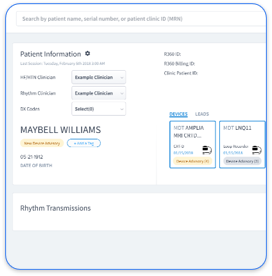
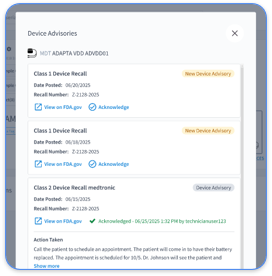
Rhythm360, offered by RhythmScience, is a cloud-based, vendor-neutral platform that centralizes heart failure and broader cardiovascular management. It integrates data from cardiac implantable electronic devices (CIEDs), remote physiological monitoring devices for conditions such as heart failure (HF) and hypertension (HTN), and electronic health records (EHRs) into a single, organized dashboard.
The platform provides vendor-neutral data integration with very high transmissibility across major device manufacturers, AI-supported alert triage that can significantly reduce critical response times, automated CPT code capture that supports higher revenue realization, secure mobile access for clinicians, and multi-modality remote monitoring for chronic disease management.
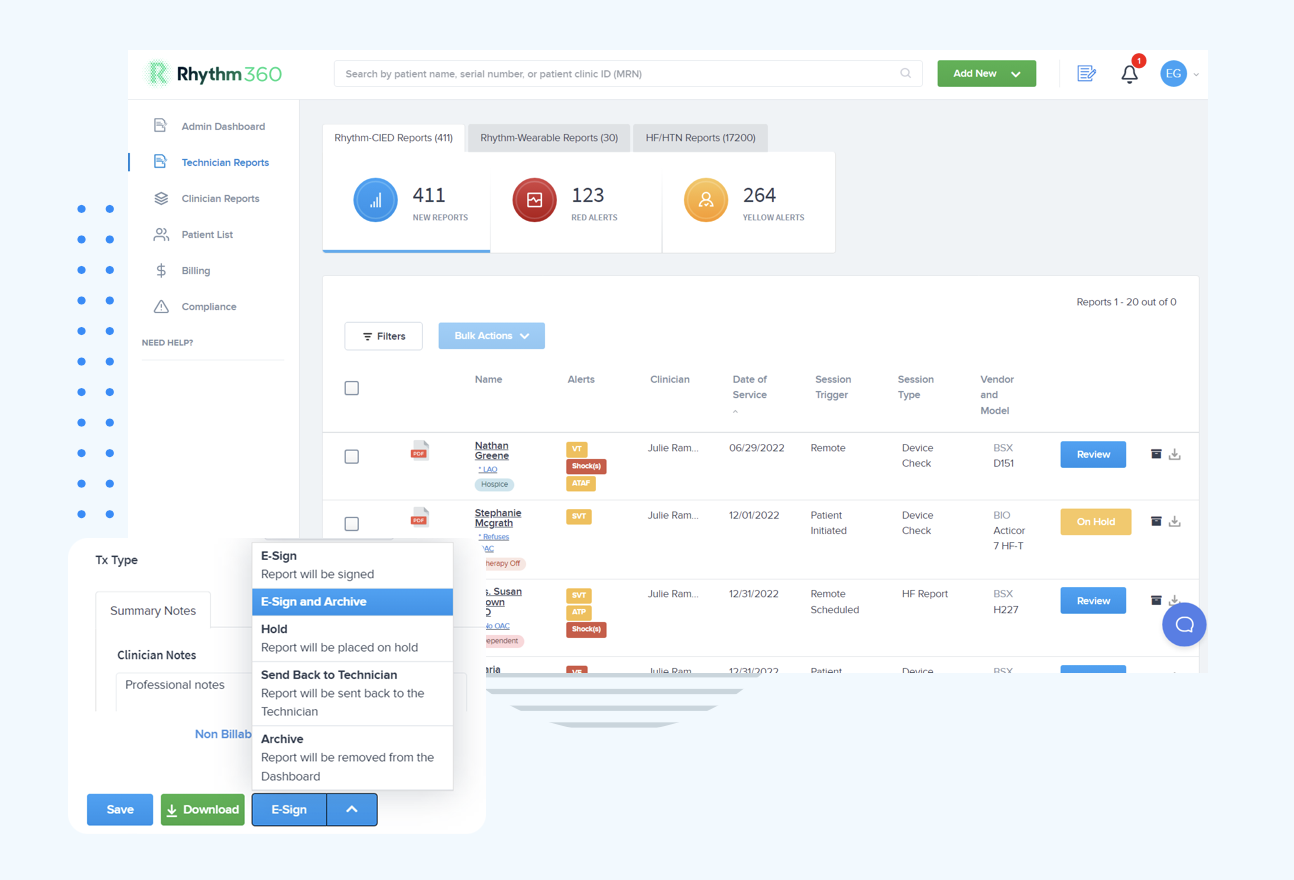
Practices that adopt a unified platform can reduce administrative complexity, support timely interventions, and align documentation with current reimbursement requirements. Schedule a Rhythm360 demo to see how a consolidated system can support your heart failure program.
A modern system aggregates data from all CIEDs, remote physiological monitoring devices, and EHRs into one view, regardless of manufacturer. This reduces the need to log into multiple OEM portals and gives clinicians a complete, consistent picture of each patient.
Strong integration uses APIs, HL7 standards, XML processing, and other tools for data normalization. Rhythm360 supports comprehensive integration across major device manufacturers with redundant data feeds to keep critical information available.
Heart failure management depends on accurate, complete data. Artificial intelligence helps monitor diverse data streams, identify gaps, and flag potential issues so clinicians can trust what they see in the dashboard.
Rhythm360 applies AI to support data transmissibility greater than 99.9 percent through redundant feeds and advanced processing, which helps reduce missing reports and supports informed clinical decisions.
Clinicians need systems that highlight urgent changes and filter routine, nonactionable notifications. Effective alert triage focuses attention on events such as arrhythmias, device malfunctions, or signs of decompensating heart failure.
Rhythm360 uses AI to prioritize clinically significant alerts and reduce noise, helping practices shorten response times to critical events while easing alert fatigue for staff.
Remote monitoring reimbursement requires precise tracking of transmissions, review time, and clinical actions. A comprehensive system automatically records these activities and maps them to the appropriate CPT codes.
Automation can reduce missed billing opportunities and support consistent compliance with payer rules. Practices using solutions like Rhythm360 report notable gains in captured revenue through better documentation and streamlined billing workflows.
Heart failure management depends on more than device data. Effective systems incorporate blood pressure, weight, and other vital sign monitoring to detect early signs of fluid overload or decompensation.
Multi-modality RPM supports proactive care and new revenue through RPM CPT codes. Rhythm360 offers structured service lines for HF and HTN RPM with standardized onboarding and integrated billing support.
Clinicians increasingly manage patients across locations and schedules, so mobile, HIPAA-compliant access to dashboards and alerts is essential. Systems limited to desktop access slow responses and constrain workflows.
Rhythm360 includes a secure mobile application that delivers core platform functionality on smartphones, helping clinicians review alerts, check data, and document actions without waiting to return to a workstation.
Heart failure care often involves frequent outreach for medication adjustments, symptom checks, and education. An integrated communication hub centralizes messages, call notes, and notifications in one record.
Rhythm360 supports automated and manual messaging within a common framework and maintains a complete audit trail of interactions, which supports coordinated care and clear documentation.
Administrators and clinicians benefit from real-time visibility into patient activity, alert volumes, and financial performance. A robust analytics dashboard surfaces trends that help refine workflows and staffing.
Rhythm360 provides dashboards that track patient compliance, clinical alerts, and revenue tied to CPT requirements, helping leaders monitor program performance at a glance.
Two-way data exchange with the EHR reduces duplicate documentation and ensures that remote monitoring insights are visible where clinicians already work. Bi-directional integration supports accurate medication lists, problem lists, and visit notes.
Rhythm360 connects with leading EHRs such as Epic and Cerner through HL7 interfaces to synchronize key data elements and reduce manual entry.
This comparison highlights how Rhythm360 aligns with the capabilities practices typically seek when moving from legacy systems to modern heart failure management solutions.
Feature | Legacy Systems | Modern Competitors | Rhythm360 |
Vendor-Neutral Integration | Limited/None | Partial (limited OEMs) | Comprehensive (all major OEMs) |
AI-Powered Data Reliability | None | Basic algorithms | Advanced data processing |
Intelligent Alert Triage | Manual/Basic filtering | Moderate filtering | AI-driven prioritization |
Automated CPT Code Capture | Manual tracking | Limited automation | Comprehensive support |
Multi-Modality RPM Support | None | Basic HF/HTN monitoring | Full CIED + HF/HTN RPM |
Secure Mobile Access | None | Limited mobile apps | HIPAA-compliant app |
Integrated Communication Hub | Separate systems | Basic messaging | Full audit trail + messaging |
Comprehensive Dashboard | Basic reports | Standard analytics | Real-time insights |
Bi-Directional EHR Integration | Minimal connectivity | Standard APIs | Deep integrations |
AI supports heart failure management by improving data reliability and organizing alerts based on clinical relevance. Platforms such as Rhythm360 use AI to maintain high data completeness and to highlight urgent events, which helps clinicians act quickly when patients show signs of deterioration.
A comprehensive system can improve revenue by automatically tracking billable activities, guiding CPT code selection, and generating audit-ready documentation. Practices using Rhythm360 report significant increases in captured revenue as billing becomes more consistent and remote monitoring programs expand.
A vendor-neutral platform consolidates data from multiple OEMs into one interface. Device technicians and clinicians no longer need to move between portals, which saves time, reduces errors, and supports faster clinical decision-making.
Real-time data and prioritized alerts help clinicians identify early warning signs and intervene before conditions worsen. Rhythm360 supports shorter response times to critical changes, which can reduce hospitalizations and improve patient stability.
Implementation timelines vary by practice size and EHR configuration, but Rhythm360 can often be deployed in a period ranging from several days to a few weeks. Once live, teams typically see immediate benefits in data consolidation and workflow efficiency.
Heart failure management in 2026 requires systems that unify data, support clinical judgment, and align with evolving reimbursement standards. Practices that invest in comprehensive platforms are better positioned to deliver consistent care, respond to critical events, and maintain financial stability.
Fragmented data sources and manual workflows create unnecessary risk for patients and providers. A unified platform offers a practical path to more reliable monitoring and clearer documentation.
Schedule a Rhythm360 demo to evaluate how a comprehensive heart failure management system can support your clinical, operational, and financial goals in 2026.