Talk With Rhythm360 About Your HF Program
Florence et al., writing in JACC: Advances (2026), draw a precise distinction: remote management is a comprehensive approach encompassing prevention, detection, and care, whereas remote monitoring mostly focuses on detecting decompensation events. That distinction has direct operational consequences. A practice that deploys connected scales and blood pressure cuffs without a defined review cadence, escalation protocol, or named clinician for Saturday alerts has built a monitoring setup. A program requires all three.
The 2022 AHA/ACC/HFSA heart failure guideline treats routine noninvasive telemonitoring evidence as uncertain rather than strongly endorsing it as a stand-alone outcome-improving therapy. For implanted pulmonary artery pressure monitoring in selected patients, the guideline recognizes stronger evidence but still characterizes clinical value as uncertain rather than definitive for all patients. Across the evidence base, the structure and staffing of the program determine outcomes.
A closed-loop program requires seven operational components:
Each component depends on the others. Enrollment criteria determine which patients receive which devices. Device selection determines which alerts are generated. Alert protocols determine who reviews them and when. Escalation authority determines what happens next. Documentation determines what gets billed. None of these elements functions in isolation.
A functional program assigns named accountability to every step. The loop starts with enrollment, when a referring cardiologist or advanced practice provider documents the clinical indication. From there, a designated clinical reviewer, typically a nurse practitioner, physician assistant, or registered nurse, monitors incoming data and alerts on a defined schedule. When that review surfaces a change, a credentialed prescriber holds titration authority for diuretics and other medications. A care coordinator or medical assistant then handles patient outreach, device compliance follow-up, and documentation, while a billing-responsible staff member closes the loop on CPT capture.
Weekend and after-hours accountability is where many programs fail. The program must specify how alerts route outside business hours, which clinician is on call, and how that clinician is reached. A critical alert on a Saturday morning, such as new-onset atrial fibrillation, a ventricular tachycardia episode, or a significant weight gain, requires the same response pathway as one generated on a Tuesday afternoon. A secure mobile platform that allows the on-call clinician to review transmissions and sign off from anywhere functions as a program requirement rather than a convenience.
Florence et al. (JACC: Advances, 2026) found that specialized remote management teams were associated with fewer hospitalizations and lower mortality. Programs that delegated alert management to less specialized providers failed to demonstrate benefit. The clinical team managing alerts therefore needs both training and authority to act.
Technology supports this work, but program design, staffing, escalation, and reimbursement determine whether readmissions actually fall.
If team specialization drives outcomes, the next question is how much the monitoring approach itself matters. A 2026 systematic review and meta-analysis by Surducan et al. in the Journal of Clinical Medicine (16 RCTs, n=8,618) quantifies that gradient. Haemodynamic-guided monitoring, using implantable sensors that transmit pulmonary artery or intracardiac pressures, conferred the largest mortality reduction (RR 0.71). Structured remote patient management followed at RR 0.79. Non-invasive telemonitoring alone, based on weight, blood pressure, heart rate, or oxygen saturation with intermittent, non-protocol-driven clinician review, did not reach statistical significance (RR 0.93; p = 0.14).
The mechanistic gradient was statistically significant (p for interaction = 0.008). Benefit tracks with intervention intensity and physiological specificity. Passive data collection without structured response does not function as a program.
Three categories of monitoring modalities are relevant to heart failure programs, and their evidence positions differ substantially.
Basic noninvasive vitals such as connected scales, blood pressure cuffs, and pulse oximeters are the most accessible and least expensive entry point. They generate data that is easy to collect and easy to ignore. Non-invasive telemonitoring alone, including weight-based monitoring without structured multidisciplinary integration, has not consistently demonstrated outcome benefit in randomized trials; the Surducan et al. 2026 meta-analysis found it did not reach statistical significance (RR 0.93; p = 0.14). Blood pressure monitoring, however, appears to be an essential component of effective remote management strategies and has been associated with fewer HF rehospitalizations. Programs that did not measure blood pressure failed to demonstrate significant benefits.
Cardiac implantable electronic devices (CIEDs) such as pacemakers, ICDs, CRT devices, and implantable loop recorders provide continuous physiological data including arrhythmia detection, thoracic impedance, heart rate variability, and activity levels. Composite algorithms such as HeartLogic (Boston Scientific), HeartInsight (Biotronik), and TriageHF (Medtronic) integrate multiple device-derived signals into risk indices. A 12-month prospective service evaluation at Liverpool Heart and Chest Hospital (Europace, 2026) found that no HF hospitalization occurred in the absence of a prior HF alert, yielding 100% sensitivity for the alert-based pathway. A post hoc analysis of the OPTILINK study (Calvanese et al., Frontiers in Cardiovascular Medicine, 2026) found that remote monitoring improved outcomes only when alerts triggered appropriate medical action (HR 0.61; 95% CI 0.39–0.95).
Implantable pulmonary artery pressure monitors, specifically the CardioMEMS HF System, represent the highest-evidence modality for selected patients. The CHAMPION trial (n=550) demonstrated a 28% reduction in HF hospitalization at 6 months (HR 0.72). The GUIDE-HF trial (n=1,022) showed a 19% reduction in the primary endpoint in a prespecified pre-COVID analysis. The MONITOR-HF trial (n=348) found a 44% reduction in HF hospitalization (HR 0.56). The COAST registry (European Heart Journal Open, 2026; n=304) reported a 69% annualized HFH risk reduction (RR 0.31; 95% CI 0.25–0.37; P<0.0001).
See Rhythm360 In Action For HF Monitoring
Every program must define its own thresholds in collaboration with its clinical team. The following examples illustrate the categories each practice must address; they do not function as universal mandates.
Common threshold categories include:
Alert fatigue directly threatens program integrity. Buczek et al. (Polish Heart Journal, 2026) analyzed 19,788 remote monitoring alerts across 407 heart failure patients over 18 months and found that only 7.5% were clinically significant, a rate of 2.8 alerts per patient-month with only 0.21 actionable per patient-month. Programs that do not filter non-actionable alerts will overwhelm clinical staff and miss important events.
Liverpool Heart and Chest Hospital (Europace, 2026) achieved a 77% reduction in average time to manage a heart failure alert after implementing a digital workflow solution, along with a 22% reduction in time patients spent in the alert state. The OPTILINK finding cited earlier, that outcomes improved only when alerts triggered action, explains why alert triage design matters. The clinical response, not the alert itself, delivers benefit.
Medicare covers remote physiologic monitoring under a set of CPT codes with distinct billing cycles and documentation requirements. Practices must understand both the RPM codes for noninvasive physiologic monitoring and the device-specific codes for implantable cardiac monitors.
For noninvasive RPM, the core codes are:
For implantable cardiac devices, two separate billing cycles apply:
These are device-specific codes. 93297 and 93298 are not a professional and technical pair. Each is billable once per 30 days, either globally or with modifier -26 (professional) or -TC (technical).
Documentation must support every claim. Five data points are required for every Medicare RPM claim: CPT codes for setup, data, and time; ICD-10 diagnosis codes; date of service when the threshold was met; place of service; and the billing provider's NPI. Practices that cannot produce a complete audit trail for transmitted data days and clinical time will face claim denials and revenue leakage. Connecting clinical actions to documentation at the point of care provides the most reliable way to support compliant billing.
CMS's calendar year 2027 Medicare Physician Fee Schedule draft rule, released July 2026, would restrict RPM and RTM billing to clinical staff employed directly by the billing practice. This proposed rule has not yet taken effect, but practices building or expanding remote care programs should monitor its status and structure their staffing models accordingly.
The reimbursement rules above cover the billing side of PA pressure monitoring. Clinically, implanted PA pressure monitoring is indicated for selected NYHA class III patients with at least one HF hospitalization in the prior 12 months or elevated natriuretic peptides. The guideline's "uncertain" characterization, noted earlier, applies specifically to this modality.
The COAST study (European Heart Journal Open, 2026; n=304; 37 centers across 6 countries) provides the most recent real-world data. Over 24 months, PA pressures were significantly lowered (PA systolic −3.90 ± 7.88 mmHg; PA diastolic −2.51 ± 4.77 mmHg; PA mean −3.07 ± 5.91 mmHg; all P<0.0001). Of 4,484 recorded medication changes, 48.5% were triggered by PA pressure variations outside suggested euvolemic ranges identified by remote haemodynamic monitoring. Patient compliance was high: 81.7% of patients transmitted daily readings and 93.3% provided at least one weekly reading. At 24 months, 31.8% of patients had improved from NYHA class III to class II and 6.0% to class I.
CardioMEMS generates data that requires a structured clinical response to produce benefit. The device is billed under CPT 93297 on a 30-day cycle. Enrollment criteria, PA pressure review cadence, titration protocols, and documentation determine whether the investment in the device translates into fewer hospitalizations.
Patient self-care reinforcement functions as a program component rather than a one-time handout. It requires the same operational design as alert triage: defined content, defined delivery cadence, defined accountability, and documented completion.
The core self-care behaviors a program must reinforce include daily weight measurement and logging, blood pressure and heart rate monitoring, sodium and fluid restriction, medication adherence, and recognition of worsening symptoms. Patients must know when to contact the program, such as for a 3-lb weight gain over 24 hours, new or worsening shortness of breath, or increased lower extremity edema, and when to call 911, such as for chest pain, syncope, or severe respiratory distress.
Automated outreach handles routine reinforcement through weekly educational messages, device compliance reminders, and symptom check-ins. Manual outreach, typically a nurse call, addresses non-adherence, missed transmissions, or concerning symptom reports. All outreach must be logged with a full audit trail in the patient record. A 2024 randomized controlled trial of structured telemonitoring for heart failure found that weekly follow-up phone calls combined with structured educational content produced a large effect size on self-care (Cohen's d = −1.26) and a moderate-to-large effect on medication adherence (Cohen's d = 0.73) compared with standard care.
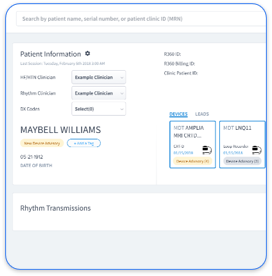
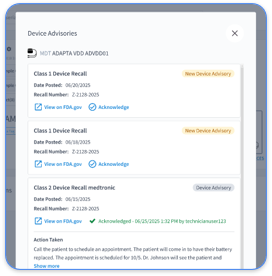
Rhythm360 by RhythmScience is a vendor-neutral, HIPAA-compliant, cloud-based platform built to execute the management layer of a heart failure remote care management program. It unifies CIED and HF/HTN data from all major manufacturers, including Medtronic, Boston Scientific, Abbott, and Biotronik, into a single source of truth, which eliminates the multi-portal workflow that causes data silos and missed alerts.
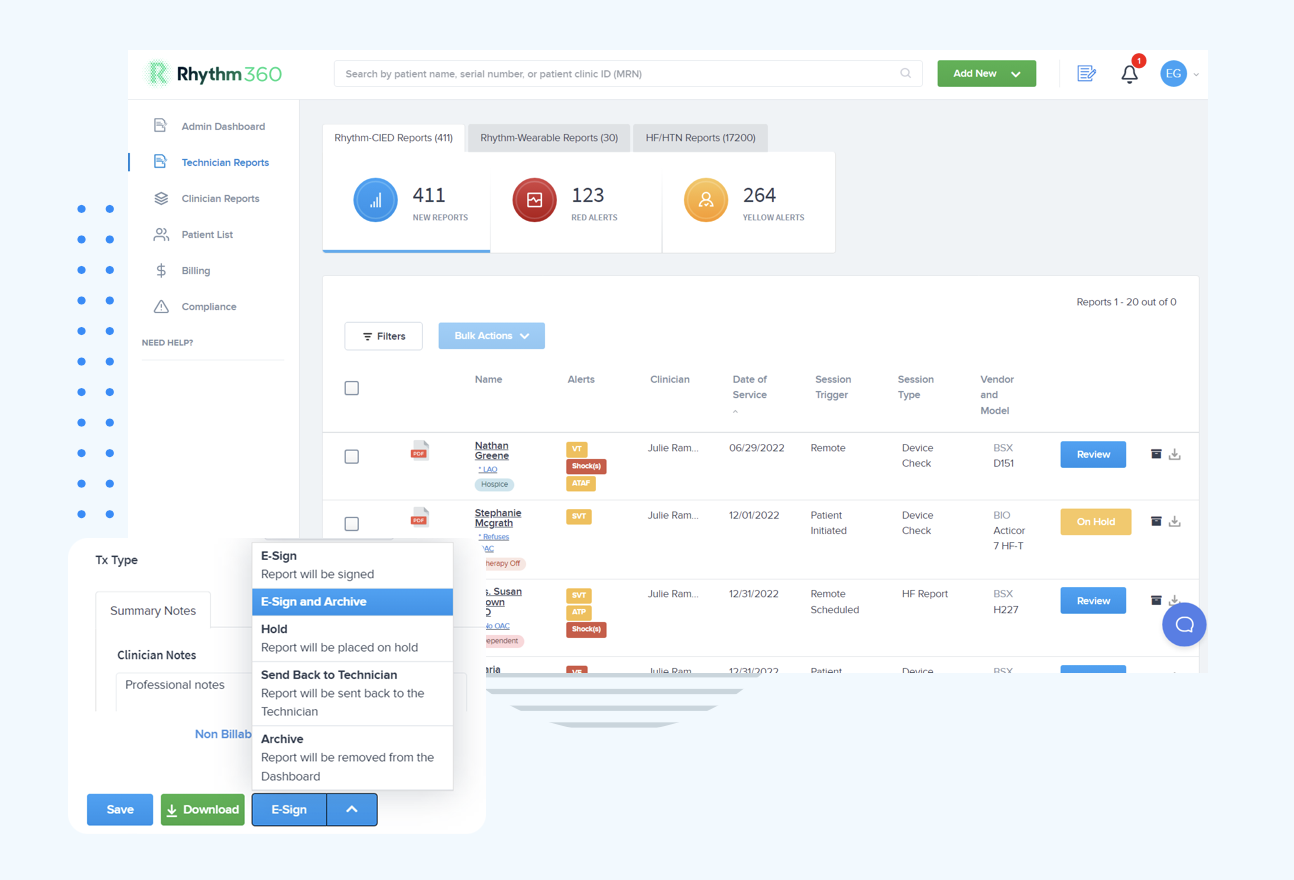
Bi-directional EHR integration with Epic, Cerner, Athenahealth, eClinicalWorks, Greenway Health, and others via HL7 allows data to flow in both directions without manual transcription. AI-powered alert triage filters non-actionable noise and prioritizes clinically significant events, reducing critical alert response times by up to 80%. Optional 24/7/365 oversight by certified cardiac technicians supervised by physicians ensures that a Saturday morning alert receives the same response as a weekday one. Automated CPT capture and documentation, including device-specific code pairing for 93294, 93295, 93296, 93297, and 93298, as well as RPM codes 99453, 99454, and 99457, closes the billing loop and supports up to a 300% increase in revenue capture.
A secure, HIPAA-compliant mobile app allows clinicians to review transmissions, sign reports, and coordinate care from anywhere. The integrated communication hub, powered by Twilio, logs all patient outreach, automated and manual, with a full audit trail.
University of Chicago Medicine implemented Rhythm360 and now reviews more than 73,000 reports annually, averaging more than 18,000 per quarter, with stable dismissal rates, demonstrating scalable monitoring in a high-volume environment. As Andrew Beaser, MD, Associate Professor of Medicine at UChicago Medicine (University of Chicago Medicine), noted: "We are able to address these issues earlier; rather than waiting for a 3-month visit, we can call patients in for evaluation." The implementation also produced documented billing improvement: "We have improved billing and accountability for our patients after the integration."
Other platforms in this space, including Murj, Implicity, Rhythm Management Group, and Octagos, address related needs, but Rhythm360 focuses specifically on running the closed-loop management layer described in this article.
Explore Rhythm360 For HF Remote Care
Program validation happens through ongoing measurement. The operational metrics that confirm a closed loop is functioning include:
Program design then adapts to practice size, care setting, patient population, device mix, and staffing model. A solo electrophysiology practice managing 150 CIED patients operates differently from a health system running a 1,000-patient HF program across multiple sites. Enrollment criteria, alert thresholds, titration protocols, and staffing ratios must be calibrated to the specific environment.
Scaling requires standardization. Practices that begin with manual workflows and informal escalation paths hit capacity limits quickly. Standardized alert protocols, automated reporting, and triage refinement, supported by a platform that surfaces the right data at the right time, allow programs to expand without proportional headcount increases. The same infrastructure that manages a heart failure program can extend into adjacent chronic disease programs, including hypertension, using the same enrolled patient population and the same clinical team.
See How Rhythm360 Supports Scaling
A functional program requires at minimum a clinical reviewer with authority to contact patients and escalate, a prescriber with titration authority, and a staff member responsible for documentation and billing. In smaller practices, one advanced practice provider may cover the first two roles. In larger programs, a dedicated remote monitoring nurse or care coordinator handles daily alert review and patient outreach, escalating to a physician or NP/PA for medication changes. As noted earlier, Florence et al. (JACC: Advances, 2026) found that specialized teams drive the mortality and hospitalization benefit, a finding that directly shapes the staffing model. The staffing model must be documented, not assumed.
Every program must define an on-call rotation and a routing protocol for after-hours alerts. Critical alerts, such as ventricular fibrillation, device battery at ERI/RRT, or new-onset sustained arrhythmia, require the same response pathway regardless of when they are generated. The on-call clinician must be reachable via a secure mobile platform that provides full access to the patient's transmission history, device data, and prior clinical notes. Programs that rely on email notification to a shared inbox with no defined on-call coverage will miss Saturday morning events. Rhythm360's optional 24/7/365 oversight by certified cardiac technicians supervised by physicians provides a structured after-hours response layer for practices that cannot staff an internal on-call rotation.
EHR integration is the most significant technical dependency. Bi-directional integration requires coordination between the platform vendor, the EHR vendor, and the practice's IT team to configure HL7 message types, patient matching logic, and document routing. Rhythm360 integrates with Epic, Cerner, Athenahealth, eClinicalWorks, Greenway Health, and others via HL7, with an onboarding process, including EHR integration setup, that typically takes from a few days to a few weeks. Device manufacturer connectivity is handled through Rhythm360's vendor-neutral data ingestion layer, which covers Medtronic, Boston Scientific, Abbott, Biotronik, and others without requiring separate OEM portal logins. Practices should also plan for patient device provisioning workflows, including how devices are distributed, activated, and linked to the monitoring platform.
Medicare RPM billing requires five documented elements for every claim: the applicable CPT codes, including 99453 for setup, 99454 for device supply with ≥16 days of transmitted data in a 30-day period, and 99457 for the first 20 minutes of treatment-management time with interactive communication; ICD-10 diagnosis codes; the date of service when the billing threshold was met; the place of service; and the billing provider's NPI. For implantable device codes, the record must support the device type, with 93297 for implantable cardiovascular physiologic monitors such as CardioMEMS and 93298 for subcutaneous cardiac rhythm monitors and loop recorders, and confirm the 30-day billing cycle has not already been billed for that patient. Rhythm360 automates CPT capture and generates documentation at the point of clinical action, which reduces the retrospective documentation burden that causes revenue leakage.
Rhythm360's implementation process, including EHR integration setup, typically takes from a few days to a few weeks depending on the complexity of the EHR environment and the number of device manufacturers being connected. The platform's vendor-neutral architecture means that adding a new device manufacturer does not require a separate implementation. Clinical training for alert review, escalation workflows, and billing documentation is included in the onboarding process. Practices that have existing CIED monitoring workflows can typically migrate to Rhythm360 without disrupting active patient monitoring during the transition period.
Request A Rhythm360 Implementation Overview
A heart failure remote care management program functions as a closed loop: enrollment, monitoring, alert review, clinical intervention, documentation, and reassessment, with named accountability at every step and a defined response pathway for every hour of the week. The evidence base is consistent: haemodynamic-guided monitoring and structured remote patient management with dedicated clinical teams reduce hospitalizations and mortality, while passive data collection without a program does not.
The checkpoints that confirm the loop is closed are measurable, including alert response time, documentation completeness, patient adherence, and billing readiness. Programs that track these metrics can identify gaps, refine thresholds, and scale without proportional headcount increases. Programs that do not track them accumulate data without clinical action, which mirrors where many practices started before they built a program.
Rhythm360 by RhythmScience is built to execute this management layer by unifying device data, triaging alerts, automating documentation, and supporting compliant billing across the full spectrum of heart failure monitoring modalities. Program design differentiates outcomes, and Rhythm360 provides the infrastructure to run that design at scale.
Discuss Your HF Remote Care Strategy With Rhythm360