A clear understanding of 2026 CPT changes helps practices capture appropriate reimbursement and avoid compliance risk. Under-billing or missed claims can add up to significant monthly losses, especially in high-volume heart failure programs. Consistent and correct code usage supports sustainable growth and reliable access to HF RPM services for patients.
The 2026 RPM structure centers on a mix of device, monitoring, and management codes. CPT 99453 covers monthly monitoring that captures at least 16 days of data in 30 days, and CPT 99454 covers device supply and transmission. Treatment management appears in CPT 99457, which requires at least 20 minutes of interactive communication in a month.
CPT 99445 supports short-term monitoring for 2 to 15 days within a 30-day period, which fits HF use cases such as weight checks two to three times per week. CPT 99470 covers brief RPM treatment management for the first 10 minutes, which helps capture shorter but meaningful HF touchpoints.
Additional relevant codes include cardiac device interrogation codes such as 93731 and 93734 and Category III codes such as 0948T for CCM systems. HF RPM programs that combine physiologic and device data can align billing across these categories.
HF RPM documentation should confirm eligibility, timing requirements, and clinical interactions for each billable code. Each encounter must link to appropriate HF diagnoses, such as ICD-10 codes I50.1, I50.20 to I50.22, and I50.41 to I50.43. Automated logs that track minutes, data days, alerts, and interventions help limit manual errors and support clean audits.
Start with a clear map of how heart failure patients move from enrollment to ongoing monitoring and follow-up. Identify where manual data entry, separate portals, and delayed review create risk for missed clinical events or incomplete billing. Document specific gaps, such as patients who meet monitoring thresholds but never generate associated RPM claims.
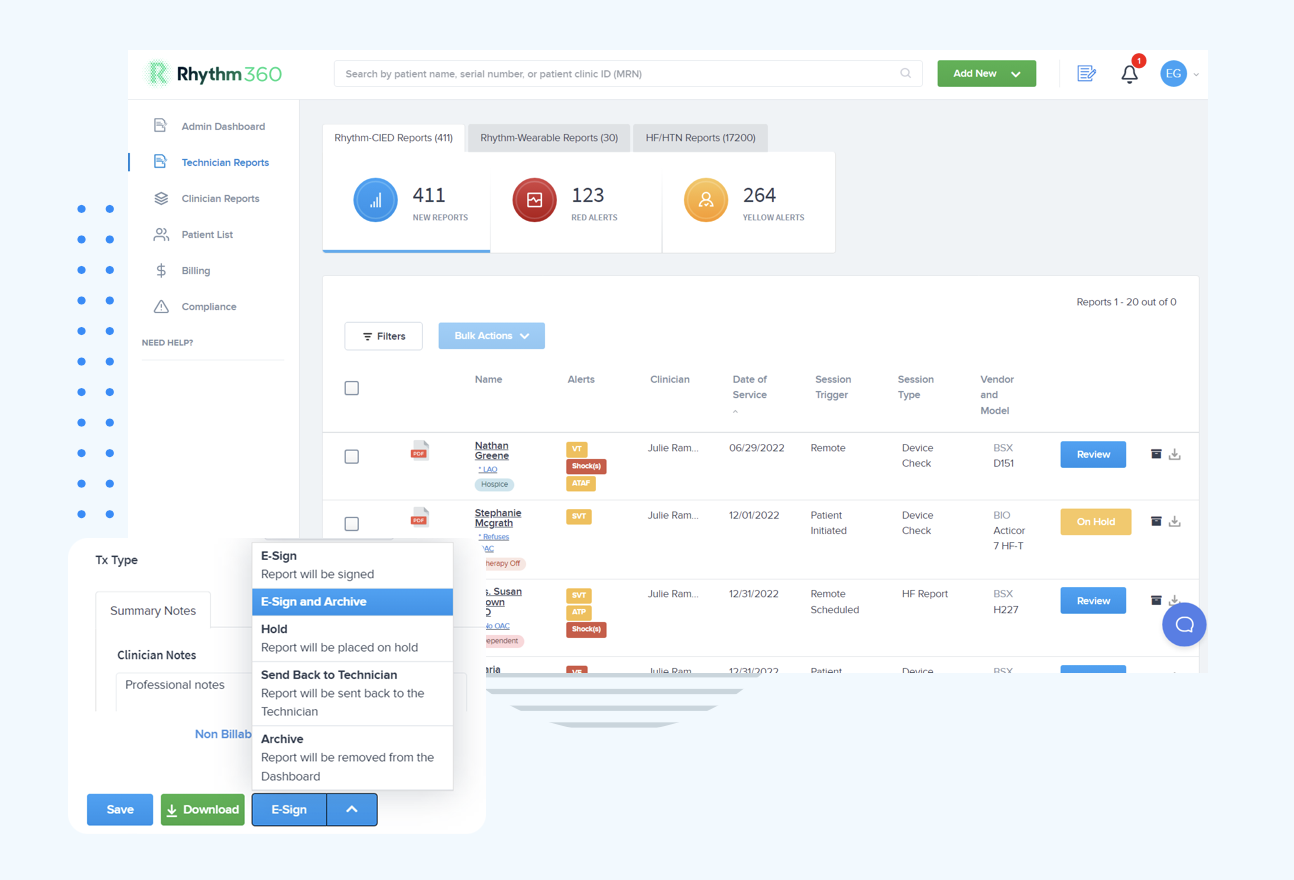
An integrated platform should aggregate HF data from multiple device vendors into a single view, automate alert triage, and connect directly with the EHR. Rhythm360 offers vendor-neutral data collection, AI-based alert prioritization, automated reporting, and HF-focused service lines that support both clinical and billing teams.
Key capabilities to prioritize include:
Consistent enrollment criteria help align HF RPM with clinical pathways and payer policies. Build checklists for identifying eligible patients, obtaining consent, assigning devices, and setting monitoring goals. Rhythm360 supports this process with integrated communication tools that send reminders and instructions to patients, which encourages regular readings and reduces data gaps.
HF RPM programs should track weight trends, blood pressure, heart rate, and relevant device metrics, then route exceptions to the right clinician. Rhythm360 uses AI to prioritize alerts so teams can respond faster to high-risk changes and avoid alert fatigue. Automated documentation captures dates, times, and actions in the background, which supports CPT 99445, 99457, 99470, and related codes without extra manual work.
Reliable financial performance requires a clear link between clinical activity and claims. Rhythm360 generates reports that summarize time spent, data thresholds met, and associated diagnoses, which helps teams submit accurate and timely claims. Practices can reduce under-billing and revenue leakage when each qualifying RPM encounter translates into a specific CPT line item with complete documentation.
Teams that want to strengthen HF RPM revenue and compliance can request a Rhythm360 demo to review workflow and billing options.
Feature / Aspect | Traditional Fragmented Approach | Rhythm360 Integrated Platform |
Data aggregation | Multiple OEM portals and logins | Single, vendor-neutral dashboard |
Workflow efficiency | Manual data entry and disconnected tools | Automated workflows with EHR integration |
2026 CPT code compliance | Manual tracking and higher risk of under-billing | Automated capture and audit-ready documentation |
Revenue performance | Frequent missed billing opportunities | Improved capture of eligible RPM encounters |
HF programs gain more value from RPM when they integrate it into broader chronic care strategies. Consider the following approaches:
CPT 99445 adds billing options for short-term monitoring windows of 2 to 15 days, which suits HF patients who need intermittent checks rather than continuous tracking. CPT 99470 allows billing for the first 10 minutes of RPM treatment management, which helps capture shorter but clinically relevant interactions and supports more accurate reflection of care effort.
HF RPM supports earlier detection of fluid shifts, blood pressure changes, and adherence issues, which can reduce escalation to emergency visits and readmissions. Rhythm360 aggregates near real-time data, flags risk-based changes, and documents follow-up steps so clinicians can intervene sooner and track the impact of interventions across their HF population.
Key heart failure ICD-10 codes include I50.1 for left ventricular failure, I50.20 to I50.22 for systolic heart failure, and I50.41 to I50.43 for combined systolic and diastolic failure. Accurate mapping of these codes to RPM encounters supports reimbursement and demonstrates that HF diagnoses justify ongoing monitoring.
Heart failure RPM success in 2026 depends on aligning clinical workflows, CPT requirements, and documentation into a single, repeatable process. The updated CPT codes create more flexibility for short-term monitoring and brief management encounters, but practices need tools that reliably convert those activities into claims.
Rhythm360 supports this alignment by consolidating HF device and physiologic data, automating alert workflows, and generating audit-ready billing records. Practices that adopt this integrated approach can reduce administrative burden, support better outcomes, and protect heart failure RPM revenue.
Teams that want a structured plan for 2026 HF RPM can contact RhythmScience to schedule a Rhythm360 demo and discuss their specific goals.