CMS 2026 updates introduce CPT 99445 for 2–15 days of RPM monitoring and expand eligibility for heart failure patients with NYHA Class II–IV.
Bill CPT 99453 (setup) and 99454 (16+ days) together in the first month to increase revenue from HF patients using FDA-cleared devices such as scales and BP cuffs.
Reach more than 90% compliance with 16+ days of data transmission using AI automation, patient reminders, and vendor-neutral device integrations.
Cut alert response times by up to 80% and reduce administrative work with platforms that handle documentation, time tracking, and EHR integration.
Implement the 7-step RPM process with expert implementation support to unlock significant new revenue while maintaining full CMS compliance.
Heart failure patients who qualify for RPM services include those with NYHA Class II–IV symptoms, recent hospitalizations, medication adjustments, or transitional care needs. CMS 2026 RPM updates expand eligibility for Medicare heart failure patients to include those with intermittent data due to medication adjustments, transitional care after hospitalization, recovery from exacerbations, or inconsistent adherence.
Essential consent documentation covers patient understanding of RPM program benefits, potential cost-sharing responsibilities, and the right to discontinue services. Once consent is complete, set clinical monitoring thresholds for each patient.
Weight monitoring thresholds often use more than 2 kg gain within 24–48 hours, while blood pressure parameters focus on systolic readings above 160 mmHg or significant changes from baseline.
FDA-cleared devices for heart failure monitoring include digital weight scales for fluid retention detection, automated blood pressure cuffs for hypertension management, and specialized sensors such as CardioMEMS for pulmonary artery pressure monitoring.
Rhythm360’s vendor-neutral platform connects with all major device manufacturers and maintains more than 99.9% data transmissibility through redundant feeds and AI-powered gap filling. This approach removes the need to manage multiple OEM portals and still meets CMS requirements for automatic transmission.
The CMS CY 2026 Medicare Physician Fee Schedule Final Rule introduces CPT 99445 for 2–15 days of physiological data transmission and keeps CPT 99454 for 16–30 days. Rhythm360’s automated monitoring keeps data flowing consistently and protects revenue tied to transmission thresholds.
Patient engagement strategies rely on automated reminders, mobile app notifications, and clinical staff outreach to keep compliance rates above 90%. The platform’s AI algorithms flag transmission gaps early so staff can intervene before billing thresholds fall short.
Understanding how each RPM CPT code fits into your workflow helps you match monitoring patterns with the right reimbursement. The table below shows how setup, monitoring, and management codes work together for heart failure RPM.
CPT Code | Description | Reimbursement (2026 Non-facility) | HF Notes |
|---|---|---|---|
99453 | Initial setup/education | ~$22 | Once per device per month, billable with 99454 in the same month |
99445 | 2–15 days device monitoring | ~$47 | New 2026 code for intermittent HF monitoring |
99454 | 16+ days device monitoring | ~$47 | Monthly physiologic data, mutually exclusive with 99445 |
99470 | 10-minute brief management | ~$26 | New 2026 code, requires one live interaction |
99457 | 20-minute review/management | ~$52 | Non-face-to-face, incident-to billing allowed |
99458 | Additional 20-minute increments | ~$41 | Unlimited monthly after 99457 threshold is met |
Under 2026 Medicare rules, CPT code 99453 (device setup) and 99454 (16+ days monitoring) can be billed together in the same month for the same patient. This pairing increases revenue during initial enrollment while staying within CMS rules.
See how automated billing works to ensure accurate CPT code capture without extra administrative work.
Rhythm360’s AI-powered alert system ranks clinically significant events first and filters out non-actionable notifications. Heart failure-specific algorithms track weight gains above 2 kg within 24–48 hours, blood pressure spikes over set thresholds, and medication adherence patterns.
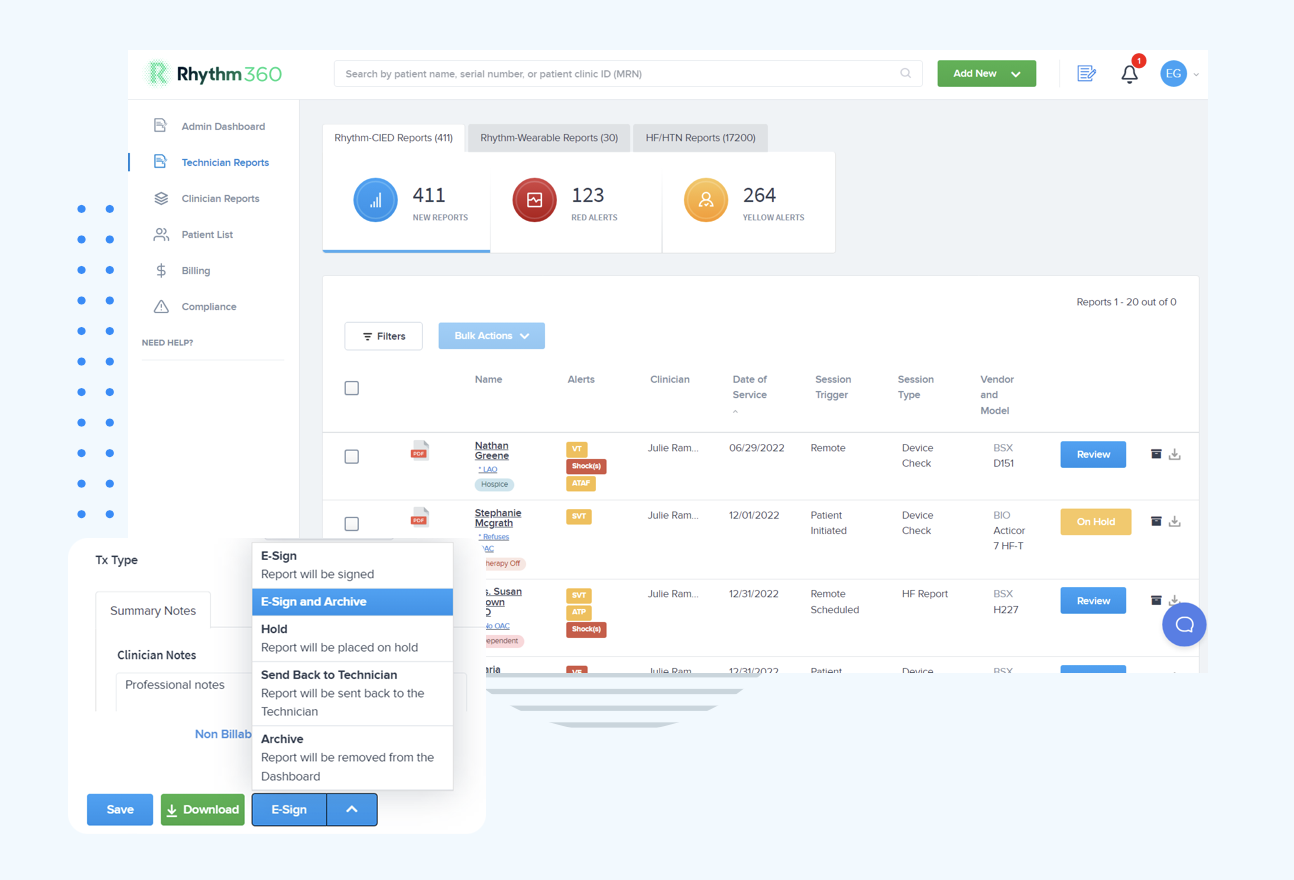
The platform achieves the response time improvements mentioned earlier by routing high-priority alerts to on-call clinicians and batching routine notifications. Integration with Epic, Cerner, and other major EHR systems keeps documentation synchronized and preserves a complete audit trail for compliance.
RPM billing for Medicare patients must be directed by a provider with a valid National Provider Identifier (NPI), including physicians, nurse practitioners, physician assistants, certified nurse midwives, clinical nurse specialists, or pharmacists under supervision. Clinical staff can handle daily monitoring under general supervision using incident-to billing rules.
Time tracking requirements call for detailed documentation of clinical minutes, patient interactions, and care coordination activities. Rhythm360’s built-in time tracking records these activities automatically and supports accurate billing while lowering administrative effort.
Revenue cycle management integration simplifies claim submission through automated CPT code selection based on transmission thresholds and documented clinical time. Medicare RPM claims require five key data points: specific CPT codes, ICD-10 diagnosis codes such as I50 for heart failure, date of service when thresholds were met, place of service, and billing provider NPI.
Audit protection relies on complete documentation of device transmissions, clinical interactions, and medical necessity. First-month billing often includes 99453 (setup) and 99454 (monitoring) codes, which then support recurring revenue for ongoing heart failure management.
Pro Tips: Start by configuring weight gain alerts for more than 2 kg increases within 24–48 hours to catch early decompensation in heart failure patients. After these protocols work reliably, extend the same device and workflow infrastructure to hypertension management to grow revenue without new hardware. To keep clinicians focused as the program scales, use Rhythm360’s mobile app to filter alerts so teams see only actionable events.
Common Mistakes: Practices often bill for fewer than 16 transmission days without using new CPT 99445, skip proper consent documentation, or overlap Remote Therapeutic Monitoring (RTM) codes in the same period. Rhythm360’s compliance engine runs automated validation checks that prevent these errors before claims go out.
Key performance indicators include maintaining more than 16 transmissions per month for 99454 billing, achieving the alert response time improvements described earlier, and meeting the revenue targets outlined in the key takeaways. Rhythm360 case studies show consistent performance on these metrics across different practice types.
Advanced strategies use CPT 99470 for brief RPM interactions such as pulse oximetry check-ins, medication titration conversations, and rapid responses to abnormal readings. Medicare Part B covers 80% of RPM service costs, and secondary insurance often covers remaining co-pays.
Explore advanced revenue optimization strategies with RPM implementation specialists.
CPT 99445 is the new 2026 code that covers device supply and data transmission for 2–15 days within a 30-day period, with reimbursement of about $47. CPT 99470 is another new code for brief 10-minute RPM management services with at least one live patient interaction, reimbursing about $26. These codes expand billing options for heart failure patients who need intermittent monitoring or short-term care.
Yes. CPT 99453, which covers initial device setup and education, and CPT 99454, which covers 16+ days of monitoring, can be billed together in the same month for the same patient. CPT 99453 is limited to once per device per month, while CPT 99454 supports ongoing data transmission. This combination increases revenue during the first month of enrollment while staying compliant with CMS rules.
CPT 99454 requires at least 16 days of physiological data transmission within a 30-day period and can be billed monthly. The code covers device supply and data collection for 16–30 days, with reimbursement of about $47. Patients must use FDA-cleared devices that automatically transmit data to qualify for billing under this code.
Start by identifying eligible NYHA Class II–IV heart failure patients and collecting complete consent documentation. Choose FDA-cleared monitoring devices that fit your population, set data transmission thresholds, and define clinical workflows for alert management. Partner with a comprehensive platform such as Rhythm360 to streamline implementation, maintain compliance, and increase revenue through automated billing.
The 7-step process above, combined with Rhythm360’s AI-powered automation, helps practices reach the revenue gains described earlier while staying fully aligned with CMS rules. Heart failure RPM programs create meaningful new revenue opportunities, especially with 2026 CMS updates that expand eligibility and introduce new billing codes.
Successful implementation depends on careful patient selection, device compliance, documentation quality, and accurate billing. Rhythm360’s vendor-neutral platform removes common barriers and maintains high data transmissibility and faster alert response times.
Talk with an RPM specialist to enable RPM billing for heart failure monitoring and unlock your practice’s full revenue potential with comprehensive cardiac data management.