The 2026 Medicare Physician Fee Schedule updates heart failure remote patient monitoring with new CPT codes for shorter monitoring periods and reduced minimum data requirements. Key changes include continued use of CPT 99454 for 16 or more days of data transmission and new options that support billing for shorter monitoring windows in heart failure patients.
CPT Code | Description | HF Use Case | Reimbursement (2026 Avg) |
99453 | Initial setup | HF onboarding with scale/BP | $19 |
99454 | Device supply/month (16+ days) | Weight/BP monitoring | $56 |
99457 | 20 min treatment mgmt | HF diuretic adjustments | $50 |
99458 | Add'l 20 min | Extended HF reviews | $41 |
99445* | Device supply (2-15 days) | Short-term HF titration | $47 |
99470* | 10 min mgmt + interaction | Brief HF check-ins | $26 |
*New 2026 codes. The updated framework supports billing for heart failure monitoring scenarios such as weight tracking, blood pressure management, and workflows that include cardiac implantable electronic devices (CIEDs). Rhythm360’s AI automation cuts clinical response times by 80% and increases revenue capture by up to 300% through precise CPT documentation and vendor-neutral device integration.

Schedule a demo to streamline heart failure RPM billing compliance and capture every eligible dollar.
CMS has reduced the minimum data transmission requirement from 16 to 2 days for certain remote patient monitoring scenarios, which opens new billing opportunities for heart failure care. The 2026 updates focus on physiologic parameters that matter most in heart failure, including weight trends for fluid retention and blood pressure for medication titration.
Medicare covers RPM for physiologic data collection in chronic conditions like heart failure using internet-connected devices. Eligible parameters include weight, blood pressure, pulse oximetry, and respiratory flow rate. AI-powered triage systems now help reduce alert fatigue while ensuring that events such as sudden weight gain or atrial fibrillation episodes receive immediate clinical attention.
Rhythm360’s vendor-neutral platform reaches more than 99.9% data transmissibility through redundant feeds and computer vision technology, which removes manual portal work and prevents revenue leakage common in OEM-dependent workflows.
Heart failure RPM billing in 2026 depends on strict adherence to CMS rules that cover consent, devices, parameters, communication, and non-duplication.
Patient Consent Requirements:
Device Specifications:
Heart Failure Specific Parameters:
Interactive Communication Standards:
Non-Duplication Rules:
CPT 99453 covers initial setup and patient education with 2025 reimbursement of $43.02, billable once per episode of care. For heart failure, this includes education on daily weight protocols and device connectivity troubleshooting.
CPT 99454 represents the primary recurring revenue stream for heart failure RPM. It covers device supply and data transmission for 16 to 30 days within a 30-day period. The 2026 reimbursement rate is approximately $47, so practices must track every qualifying period accurately.
The new CPT 99445 supports billing for shorter monitoring periods of 2 to 15 days at a similar reimbursement level, which fits heart failure medication titration or post-discharge monitoring. CPT 99457 and 99458 cover treatment management time, with 2025 reimbursement rates of $47.87 and $38.49.
Frequency limits matter. CPT 99453 is once per episode. CPT 99454 and 99445 are once per 30-day period. Management codes 99457 and 99458 depend on documented interactive time. CIED integration requires careful compliance with non-duplication rules to avoid denials.
Consistent heart failure RPM revenue depends on structured workflows that protect compliance and reduce manual work.
Patient Onboarding Checklist:
Monthly Billing Verification:
Treatment Management Documentation:
Rhythm360 automates these steps with integrated templates and real-time compliance checks, which removes manual documentation errors that commonly trigger denials.
Forty-three percent of Medicare RPM claims are denied because enrollees did not receive all three required service components. These components are setup, device supply, and treatment management.
Top Denial Reasons:
Prevention Strategies:
Rhythm360’s AI-powered gap detection flags billing risks before submission and uses redundant data feeds plus computer vision to confirm complete documentation. Automated compliance monitoring reduces denials and protects legitimate revenue.
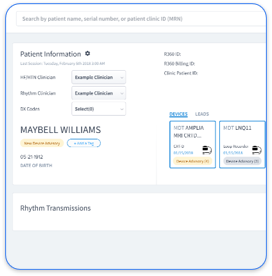
Combining CIED data with heart failure RPM creates complex billing and workflow requirements that Rhythm360 manages through a single vendor-neutral platform. The system supports all major manufacturers, including Medtronic, Boston Scientific, Abbott, and Biotronik, through one interface.
Traditional OEM portals create administrative burden and fragmented data, which forces staff to log into multiple systems for a full patient view. This fragmentation contributes to revenue leakage that can reach 300% in manual billing environments. Rhythm360 solves this problem with automated data aggregation and normalized reporting.
The platform integrates with Epic, Cerner, and other major EHRs, which keeps workflows seamless and documentation audit-ready. Mobile alerts shorten critical response times by 80% and help clinicians intervene before heart failure exacerbations require hospitalization.
One 200-patient heart failure program using Rhythm360’s integrated CIED and RPM monitoring achieved a 300% revenue increase through automated CPT capture, lower readmission rates, and more efficient clinical workflows.
Heart failure RPM programs can generate meaningful recurring revenue when CPT capture and compliance remain consistent. A typical 50-patient heart failure cohort can generate about $200 per patient per month from setup, device supply, and management billing, which totals roughly $120,000 per year.
An Urban ACO case study with 200 CHF patients showed that RPM reduced readmission rates from 22% to 14% over 12 months. The program saved $800,000 in avoided hospital costs and generated $240,000 in Medicare reimbursement. Operating costs reached $120,000, which produced positive ROI from both billing revenue and avoided readmissions.
Rhythm360 unlocks similar results through automated compliance monitoring that removes manual steps responsible for revenue leakage. AI-powered alert triage ensures that critical events receive prompt attention while reducing false alarms that drive burnout.
Key revenue drivers include:
Manual OEM portal management creates multiple failure points that affect both revenue and safety. Logging into separate Medtronic, Abbott, and Boston Scientific portals for each patient wastes time and increases the chance of missed data. Poorly filtered alerts create fatigue and can hide critical events such as new-onset atrial fibrillation or rapid weight gain.
Rhythm360 avoids these pitfalls with unified data views and AI-driven alert prioritization. Data transmissibility above 99.9% ensures that connectivity issues or manual oversights do not hide critical information. Automated billing documentation closes compliance gaps that often trigger audits and denials.
Common strategic errors include:
The 2026 CMS guidelines introduce CPT codes 99445 and 99470 for shorter monitoring periods, reduce minimum data requirements to 2 days in defined scenarios, and retain codes 99453 through 99458 for comprehensive RPM services. Heart failure patients qualify for physiologic monitoring of weight, blood pressure, and pulse oximetry using FDA-cleared devices with automatic transmission. Interactive communication must use real-time synchronous audio, with video remaining optional. Medical necessity must be documented for both chronic and acute heart failure.
Clinicians cannot bill RPM code 99454 and CIED monitoring codes 93298 or 93299 for the same patient in the same 30-day period because of CMS non-duplication rules. Practices can alternate billing periods or use integrated platforms such as Rhythm360 that coordinate billing cycles to maximize compliant revenue. The priority is avoiding overlapping services while maintaining continuous monitoring through vendor-neutral data aggregation.
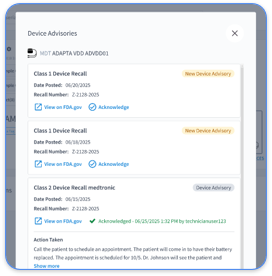
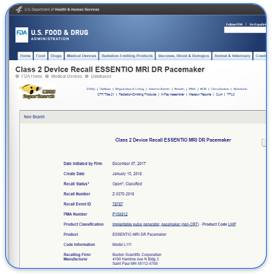
Rhythm360 supports compliance with workflows that track data transmission days, document interactive communications with timestamps, verify FDA device status, and prevent overlapping billing. AI monitoring confirms that 16-day data requirements are met and generates audit-ready documentation for CMS. Vendor-neutral integration with all major CIED manufacturers removes manual portal work and maintains more than 99.9% data transmissibility through redundant feeds and computer vision.
The 2026 rules keep the 16 or more days of data transmission requirement per 30-day period for CPT 99454 and introduce CPT 99445 for 2 to 15 days of monitoring in scenarios such as medication titration or post-discharge care. Heart failure patients need physiologic data that include daily weights and blood pressure readings. All devices must be FDA-cleared and support automatic transmission to qualify.
Frequent denial reasons include missing the 16-day data threshold, absent interactive communication documentation, use of non-FDA devices, overlapping RPM and CIED billing, and missing medical necessity notes. About 43% of Medicare RPM claims are denied for incomplete service delivery. Prevention requires accurate tracking of transmission days, standardized documentation, FDA verification, coordinated billing, and regular compliance audits.
The 2026 CMS updates create strong revenue potential for cardiology practices that manage heart failure with RPM. Success depends on automated compliance, unified device data, and AI workflows that highlight critical alerts while reducing burden on clinicians.
Rhythm360 delivers these capabilities through integrated CIED and RPM monitoring, automated CPT capture, and more than 99.9% data transmissibility that protects every revenue opportunity. Documented results include 300% revenue growth and 80% faster critical response times in complex heart failure populations.
Fragmented OEM portal strategies that cause up to 300% revenue leakage no longer fit the 2026 billing environment. Practices now need unified, automated solutions that protect compliance and maximize legitimate revenue through consistent documentation and streamlined workflows.
Schedule a demo today to modernize your heart failure RPM program with Rhythm360’s automated compliance and revenue platform.