Many cardiology practices still rely on separate OEM portals and manual workflows. This approach creates data silos, duplicate work, and a constant risk of missing events such as new-onset atrial fibrillation, ventricular tachycardia, or device malfunction.
Fragmented systems also make it difficult to track billable events for remote monitoring. Teams face alert fatigue from large volumes of low-value notifications, which can reduce attention on high-risk patients and lead to revenue leakage from missed CPT opportunities. Practices that want to reduce these risks can schedule a Rhythm360 demo and review their current workflow.
A structured approach helps practices move from scattered portals to an integrated, AI-assisted workflow. The five steps below focus on clinical quality, efficiency, and billing accuracy.
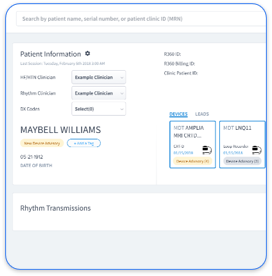
The first priority is a single source of truth for rhythm data. A unified platform pulls CIED and RPM information from all OEM portals into one view, which removes redundant logins and cuts manual data entry.
Rhythm360 serves as a vendor-neutral hub and ingests data through API, HL7, XML, and OCR for unstructured PDFs. This approach supports very high data transmissibility, above 99.9 percent, so teams can rely on near-complete capture of clinical information.
This consolidation simplifies daily monitoring, speeds up chart review, and gives every clinician access to the same up-to-date cardiac record.
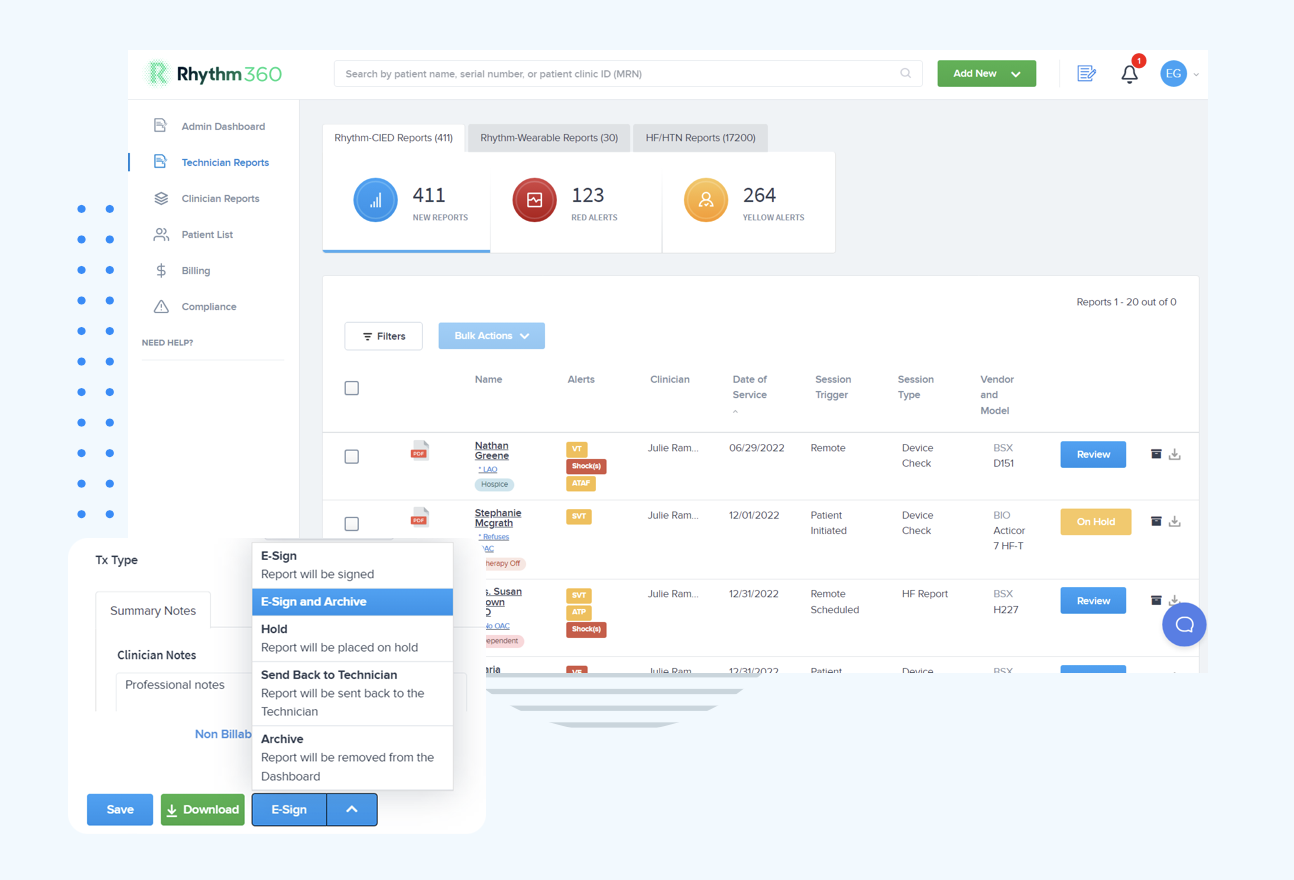
Effective triage is essential when remote monitoring volumes grow. An AI layer can classify, prioritize, and route alerts so clinicians spend time on patients who truly need attention.
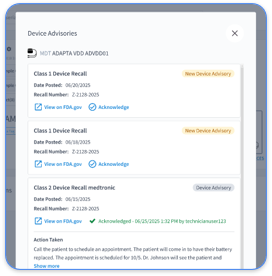
Rhythm360 uses AI to highlight events such as new-onset AFib, ventricular tachycardia, low device battery, or significant weight changes in heart failure patients. Practices using this model typically see response times for critical alerts drop by about 80 percent.
Optional oversight from certified cardiac technicians, available around the clock, can further support consistent monitoring outside standard clinic hours.
Efficient reporting and EHR connectivity keep records accurate and reduce clerical work. Automated report creation, combined with bi-directional EHR integration, limits manual typing and copy-paste errors.
Rhythm360 integrates with major EHRs, including Epic, Cerner, and Athenahealth, through HL7. Reports flow into the chart automatically, while orders and updates can return to the monitoring platform. Clinical staff recover hours each week that would otherwise be spent on documentation.
When evaluating platforms, confirm support for your EHR, clear data mapping, and an implementation plan that minimizes downtime.
Accurate CPT capture directly affects practice revenue. Many teams lose income because remote monitoring work is not documented clearly or linked to the appropriate codes.
Rhythm360 automates the identification and documentation of eligible events for CIED codes such as 93298, 93299, 99454, and RPM codes, such as 99453, 99454, 99457. The system creates an auditable record for each billable service, which supports compliance and can increase monitoring revenue by up to 300 percent compared with manual workflows.
Administrative dashboards also help leaders track volume, compliance metrics, and projected revenue in real time.
Clinicians benefit from secure access to monitoring tools when they are away from the office. Mobile access supports timely decisions and continuity of care for high-risk patients.
The Rhythm360 mobile application is HIPAA compliant and allows clinicians to review transmissions, sign reports, and coordinate care from a smartphone. Security controls match desktop standards, including encryption and governed access, so teams can work confidently from any location.
Practices that want to see these mobile capabilities in action can request a Rhythm360 demo and walk through common on-call scenarios.
Modern, AI-supported monitoring affects clinical care and operations across the practice.
Practices that adopt advanced heart rhythm monitoring often report about 80 percent faster responses to critical alerts and up to 300 percent higher revenue from remote monitoring programs when compared with legacy processes.
Understanding how different solutions handle data, alerts, and billing helps practices choose the right long-term partner. The table below summarizes core differences.
Feature / Solution | Rhythm360 (RhythmScience) | Legacy/OEM Portals | Cloud-Based Competitor A |
Data Aggregation | Vendor-neutral, supports all major CIED and RPM sources | OEM-specific, separate portals for each device family | Vendor-neutral, often focused on CIEDs only |
AI-Powered Alert Triage | Yes, prioritizes clinically meaningful events | No, generic alerts with high noise | Basic or limited filtering |
EHR Integration | Bi-directional with major EHRs | Limited, often requires manual export and import | Frequently one-way and less comprehensive |
Automated CPT Capture | Yes, for both CIED and RPM programs | Manual tracking or separate billing tools | Variable may still need manual review |
Once core workflows are in place, practices can extend their monitoring strategy.
AI improves heart rhythm monitoring by aggregating data quickly, classifying alerts, and prioritizing events that need attention. Practices that adopt AI-supported triage often see response times for critical alerts fall by about 80 percent.
The main challenge is fragmented data across multiple OEM portals, which increases administrative work and the risk of missed events. A vendor-neutral platform such as Rhythm360 aggregates CIED and RPM data into one normalized view and simplifies daily monitoring.
AI-powered systems such as Rhythm360 track remote monitoring activity, match it to CPT definitions, and create documentation for codes like 93298, 93299, 99454, 99453, and 99457. This automation reduces revenue leakage and can increase profitability by up to 300 percent compared with manual billing workflows.
Most practices can implement an advanced heart rhythm monitoring solution in a few days to a few weeks, depending on the number of locations, the mix of devices, and EHR integration needs. A structured onboarding plan helps maintain continuity of care during the transition.
Effective platforms should be HIPAA compliant and use end-to-end encryption, secure transmission protocols, multi-factor authentication, and routine security reviews. Mobile and desktop access should share the same protections and provide detailed audit logs for user activity.
Cardiology practices that depend on disconnected portals face higher clinical risk, heavier administrative work, and frequent revenue loss. Integrated, AI-assisted heart rhythm monitoring offers a practical alternative that aligns clinical quality with financial performance.
Rhythm360 provides a unified, AI-powered platform that streamlines monitoring workflows, improves patient safety, and supports stronger financial results, including faster responses to critical alerts and significant gains in remote monitoring revenue. Practices that want to modernize their heart rhythm monitoring in 2026 can schedule a Rhythm360 demo and review how the platform fits their specific needs.