Unified management of cardiovascular heart rhythm monitoring data is now a core operational skill for cardiology practices. Separate OEM portals, manual workflows, and inconsistent data formats slow teams down and raise risk.
Physicians in independent cardiology now spend only 27.2 hours on direct patient care within a 57.8-hour workweek. The rest is largely indirect care and administration, which often includes time in Medtronic, Boston Scientific, Abbott, Biotronik, and other portals.
Fragmentation typically creates three linked problems:
A unified data platform reduces these risks by consolidating device data, automating routine workflows, and tracking billable events in one place. You can schedule a demo to review how this looks inside Rhythm360.
Start with an internal inventory of every cardiac monitoring device and OEM in use across the practice. List each manufacturer portal, device types, and who on the team uses them.
Map current workflows for:
Document time spent, duplication, common errors, and delays in responding to alerts. This audit clarifies how fragmentation affects patient safety, staffing, and revenue.
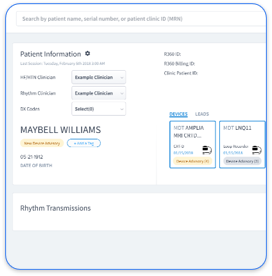
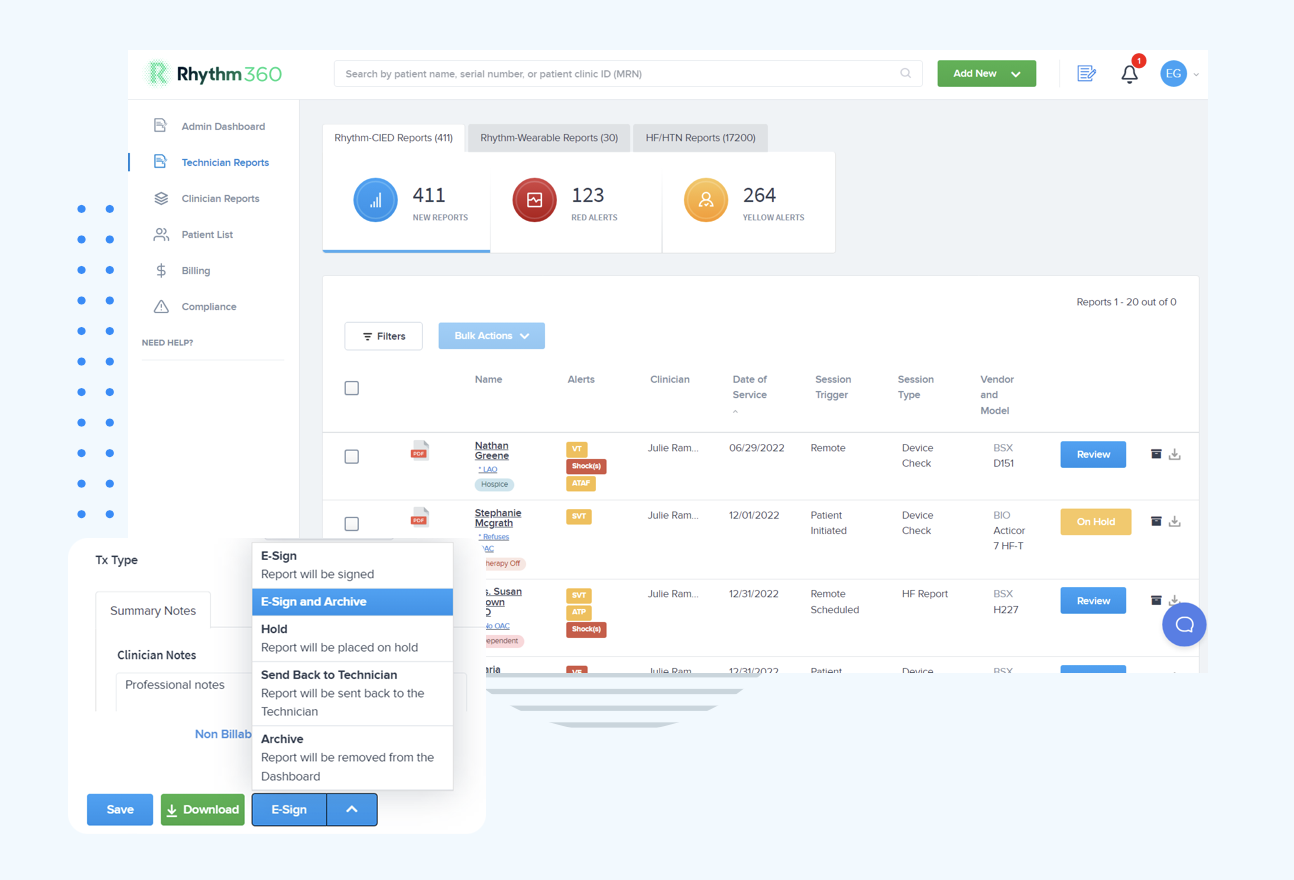
Rhythm360 uses a vendor-neutral model that connects to all major manufacturers and presents your entire device population in one dashboard, which reduces complexity and consolidates monitoring.
Unified data starts with consistent, reliable intake from every OEM. That typically requires a mix of:
The goal is a single, normalized record for each patient, regardless of source or format. Standardized data supports accurate timelines, consistent reporting, and reliable alert logic.
Rhythm360 uses an AI-based data reliability engine that ingests these varied formats, fills gaps from transmission issues, flags connectivity problems, and maintains redundant feeds to achieve more than 99.9 percent data transmissibility.
Once data flows into one platform, alert logic needs to distinguish high-risk events from routine findings. Effective triage rules filter non-actionable notifications and highlight transmissions that require rapid review.
Build standard templates and automated workflows for:
These workflows should reduce alert fatigue while improving response times and documentation quality.
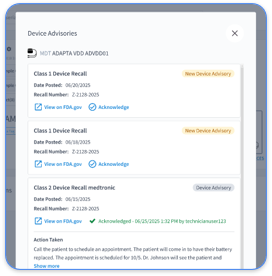
Rhythm360 uses AI-driven alert triage to prioritize clinically important events and generate routine and urgent reports in near real time. Practices commonly see up to an 80 percent reduction in response time for critical alerts, which supports earlier interventions.
Clinicians need a single view of each patient across monitoring and traditional clinical records. Integration with EHRs such as Epic, Cerner, Athenahealth, and eClinicalWorks creates that unified record.
Effective integration typically includes:
Rhythm360 supports deep, bi-directional EHR integrations and provides a HIPAA-compliant mobile application so clinicians can manage transmissions and documentation from any location.
Revenue capture relies on consistent recognition of billable events and complete documentation for each code. A unified platform should track activity for both CIED monitoring and remote physiological monitoring for conditions such as heart failure and hypertension.
Key capabilities include:
Rhythm360 automates CPT code capture for CIED and RPM services and structures the supporting documentation, which helps practices recover previously lost revenue and improve profitability.
Rhythm360 aggregates and standardizes data from all major cardiac implantable electronic devices, including pacemakers, ICDs, implantable loop recorders, CRT and CCM devices, and sensors such as CardioMEMS pulmonary artery monitors. A single dashboard replaces multiple OEM portals and provides a consistent view of each patient and device.
This vendor-neutral design prevents lock-in to any single manufacturer and allows practices to adjust device choices while keeping data workflows stable.
Rhythm360 combines API, HL7, XML, and OCR-based PDF ingestion with an AI reliability engine. The platform monitors incoming feeds, identifies interruptions, and uses redundancy to maintain complete data sets for each patient.
This approach supports accurate longitudinal views of rhythm trends and device performance, which inform both clinical decisions and population-level reporting.
Near-real-time report generation and intelligent alert filtering focus the clinician's attention on events that matter most. Practices can use built-in templates for routine checks and urgent findings, and can enable optional 24/7 oversight by certified cardiac technicians supervised by physicians when additional coverage is needed.
Rhythm360 includes a communication hub that supports automated and manual patient outreach with auditable records inside the patient file. Combined with automated CPT code capture and structured documentation, this simplifies both follow-up workflows and revenue cycle management for cardiovascular monitoring services.
Feature | Traditional Manual Methods | Rhythm360 (Unified Platform) |
Data source management | Separate OEM portals for each manufacturer | Single, vendor-neutral platform across OEMs |
Data ingestion | Manual download and transcription with format limits | Automated intake via API, HL7, XML, and OCR with AI normalization |
Clinical workflow | Fragmented data and time-consuming searches | Consolidated dashboard with prioritized alerts and standardized reports |
Patient safety | Higher risk of missed critical events in noisy alert streams | Shorter response times and unified view of device history |
Revenue cycle management | Manual CPT tracking and frequent missed billable events | Automated CPT capture with compliant documentation and fewer leaks |
EHR integration | Limited or manual data entry into the EHR | Bi-directional integration with major EHRs |
Mobile access | Often unavailable or limited | Secure mobile access for review and sign-off |
You can schedule a Rhythm360 demo to see this unified model in your own workflow.
Clinical teams using a unified platform like Rhythm360 typically report more time for direct patient care, fewer manual steps, and clearer visibility into device populations.
Faster, prioritized alerts support earlier intervention for high-risk patients, with documented reductions in response times for critical events.
Automated CPT tracking and documentation for CIED and RPM programs help practices recover previously missed revenue and confidently expand remote monitoring service lines.
Streamlined workflows reduce administrative burden for nurses and technicians, which supports staff satisfaction and more consistent patient follow-up.
Rhythm360 uses a data reliability engine that pulls information from APIs, HL7 interfaces, XML, and PDF reports through computer vision, then normalizes everything into a single patient record. Redundant feeds and monitoring of connection status support stable, high-quality datasets for clinical use.
Rhythm360 operates within a HIPAA-compliant, cloud-based architecture that uses encryption for data at rest and in transit, detailed audit trails, and role-based access controls so only authorized users can view specific patient information.
Rhythm360 supports CIED monitoring and remote physiological monitoring for conditions such as heart failure and hypertension, with implementation tools that cover patient onboarding, monitoring workflows, and CPT-linked billing support so practices can extend care beyond the clinic with manageable overhead.
Rhythm360 offers interactive dashboards that bring together CIED and RPM data, highlighting patient adherence, critical alerts, and billable activity. Teams can customize views to match clinical roles and workflows.
Fragmented OEM portals and manual workflows no longer match the demands of modern cardiovascular care. Unified, AI-enabled platforms such as Rhythm360 give practices one source of truth for device data, alerts, documentation, and billing.
Structured data ingestion, intelligent alerting, EHR integration, and automated CPT capture help reduce risk, improve patient outcomes, and strengthen financial performance.
Schedule a Rhythm360 demo to see how unified heart rhythm monitoring can work in your practice.