
How to Bill CPT 99454: RPM Billing Guide for Cardiology
Master CPT 99454 billing rules, 16-day thresholds & documentation tips. Rhythm360 automates RPM compliance so you capture every reimbursement.

Last updated: June 23, 2026
Key Takeaways for 99454 in Cardiology
- CPT 99454 covers device supply for remote physiologic monitoring and requires at least 16 days of patient data transmission within each 30-day billing period.
- Cardiology practices must maintain verified transmission logs, device identifiers, physician orders, patient consent, and complete documentation before submitting 99454 claims.
- CPT 99454 can be billed alongside 99457 and 99458 because the codes address distinct components of an RPM program and are not bundled under NCCI edits.
- Common billing pitfalls include missing transmission days, duplicate claims, and incomplete audit trails, all of which increase denial risk and revenue leakage.
- Rhythm360 automates 99454 compliance with real-time 16-day tracking, detailed reporting, and EHR integration, and see how the platform tracks your 16-day threshold in real time.
5-Step CPT 99454 Billing Checklist
- Patient Enrollment: Obtain a signed patient consent form and a documented physician order for remote physiologic monitoring. Confirm the patient has a qualifying chronic condition such as heart failure, hypertension, or post-cardiac procedure recovery. Record the monitoring plan in the medical record so staff can reference it during each billing period.
- Device Setup and Education: Supply the patient with an FDA-cleared monitoring device such as a cellular-enabled weight scale, blood pressure cuff, or wearable cardiac sensor. Document the device ID and serial number, and record that device education was provided to the patient or caregiver in clear language.
- 16-Day Transmission Verification: Track daily transmissions throughout the 30-day billing period and confirm that the patient generates readings on at least 16 separate days. Maintain a timestamped transmission log that links each reading to a specific date, because this log serves as the primary compliance proof for 99454.
- Documentation Capture: Compile the complete documentation package before billing. Include device ID, serial number, daily transmission logs, 16-day compliance confirmation, patient consent, and the ordering physician’s review signature. Store these elements in consistent locations so staff can retrieve them quickly during audits.
- Claim Submission: Submit 99454 once per 30-day period per patient. Verify the correct date-of-service range, confirm that 16-day threshold documentation is attached or easily retrievable on audit, and check that no duplicate billing exists for the same period.
Billing Frequency for CPT 99454 in a Month
CPT 99454 is billed once per 30-day period, not once per calendar month. This distinction affects scheduling because a patient enrolled mid-month will have a billing period that spans two calendar months. Medicare follows the 30-day period rule for CPT 99454, and many commercial payers use similar requirements, so a single patient can generate at most one 99454 claim per rolling 30-day cycle. Billing 99454 more than once within a single 30-day period for the same patient constitutes duplicate billing and creates significant denial and compliance risk.
Minimum Monitoring Duration for 99454
As noted earlier, the 16-day threshold is the single most audited element of 99454 claims. Each of the 16 days must reflect at least one recorded and transmitted reading from the supplied device. Days on which the device was not used or data was not transmitted do not count toward the threshold. Practices must retain transmission logs that individually timestamp each qualifying day. Submitting a claim before confirming the 16-day threshold remains the most common documentation error in RPM billing audits.
Billing CPT 99454 Together with 99457
CPT 99454 and CPT 99457 are complementary codes that cover different components of a remote physiologic monitoring program and are routinely billed together for the same patient in the same period. CPT 99454 covers device supply and the 16-day data collection requirement. CPT 99457 covers the first 20 minutes of clinical staff, physician, or other qualified health care professional time for remote physiologic monitoring treatment management services in a calendar month and requires interactive communication with the patient or caregiver. Because they describe distinct services, they do not bundle under standard NCCI edits. CPT 99458 may be added for each additional 20-minute increment of monitoring time beyond the first. Practices should confirm that the 99457 documentation includes a separate record of interactive communication with the patient, distinct from the transmission log used to support 99454.
Documentation Checklist for 99454 Claims
Whether you bill 99454 alone or together with 99457 and 99458, every claim depends on the same core documentation package. Missing even one element can trigger a denial or create audit exposure, so use the following table as a pre-submission checklist.
Documentation ElementWhat to CaptureWhere It LivesAudit Risk if MissingDevice ID and Serial NumberFDA-cleared device identifier assigned to patientEnrollment record / EHRClaim denial, device supply not verifiedDaily Transmission LogsTimestamped reading for each day data was recordedRPM platform audit trailInability to prove 16-day threshold16-Day Compliance ProofSystem-generated report confirming ≥16 qualifying daysRPM platform / billing systemAutomatic denial, threshold not metPatient ConsentSigned consent for RPM enrollment and data transmissionEHR / patient fileHIPAA exposure, claim invalidatedPhysician Review SignatureOrdering provider attestation of data reviewEHR clinical noteMedical necessity not established
2026 Payer Variations You Need to Confirm
Payer policies for 99454 vary across Medicare, Medicaid, and commercial plans, especially around coverage rules and documentation. Verifying these details before enrollment prevents claim denials and rework. The table below summarizes the key policy differences you should confirm for each payer type.
Payer Type99454 Coverage16-Day RuleKey Variation to VerifyMedicare (Traditional)under its remote patient monitoring policy, which applies to patients with chronic or acute conditionsRequired, 30-day periodPhysician or qualified NPP order required, consent documentedMedicaid (State-Administered)Varies by state, many states cover RPM codesGenerally mirrors MedicareConfirm state-specific RPM coverage policy before enrollmentCommercial (e.g., BCBS, Aetna, Cigna)Increasingly covered, prior authorization may applyGenerally mirrors MedicareCheck plan-level medical policy, some require specific device typesMedicare AdvantageCovered by most MA plans, plan rules applyGenerally mirrors Traditional MedicareConfirm plan-specific documentation requirements annually
Note: Payer policies change frequently. Verify current coverage and prior authorization requirements directly with each payer before submitting claims.
Cardiac Device Scenarios that Support 99454
CIEDs (Cardiac Implantable Electronic Devices): Patients with pacemakers, ICDs, or CRT devices managed through remote monitoring platforms may generate RPM data streams that support 99454 billing when a separate physiologic monitoring device such as a weight scale or blood pressure cuff is also prescribed for a qualifying chronic condition. The CIED transmission itself is billed under cardiac-specific codes such as 93295–93299, and 99454 applies to the separately supplied RPM device.
CardioMEMS: The CardioMEMS HF System (Abbott) is an implantable pulmonary artery pressure sensor used in advanced heart failure management. Daily pressure readings transmitted from the device can support RPM billing workflows when the practice’s documentation infrastructure captures the required 16-day transmission threshold and physician review.
Heart Failure Weight Scales: Weight scales are commonly used devices that support 99454 billing in heart failure programs. Daily weight readings transmitted directly to the RPM platform provide a clear, timestamped record for each qualifying day, and compliance tracking becomes straightforward when the platform automates the count.
Workflow: How Rhythm360 Automates 99454 Compliance
Managing these cardiac device workflows manually across separate portals for CIEDs, CardioMEMS, and RPM devices creates documentation gaps that often cause 99454 denials. Rhythm360 closes those gaps by consolidating all device data into a single compliance workflow and automating the key steps that support clean claims.
Rhythm360 is a vendor-neutral RPM platform that consolidates data from major device manufacturers such as Medtronic, Boston Scientific, Abbott, and Biotronik into a single compliance dashboard. For 99454 billing, the platform automates four critical workflow steps.
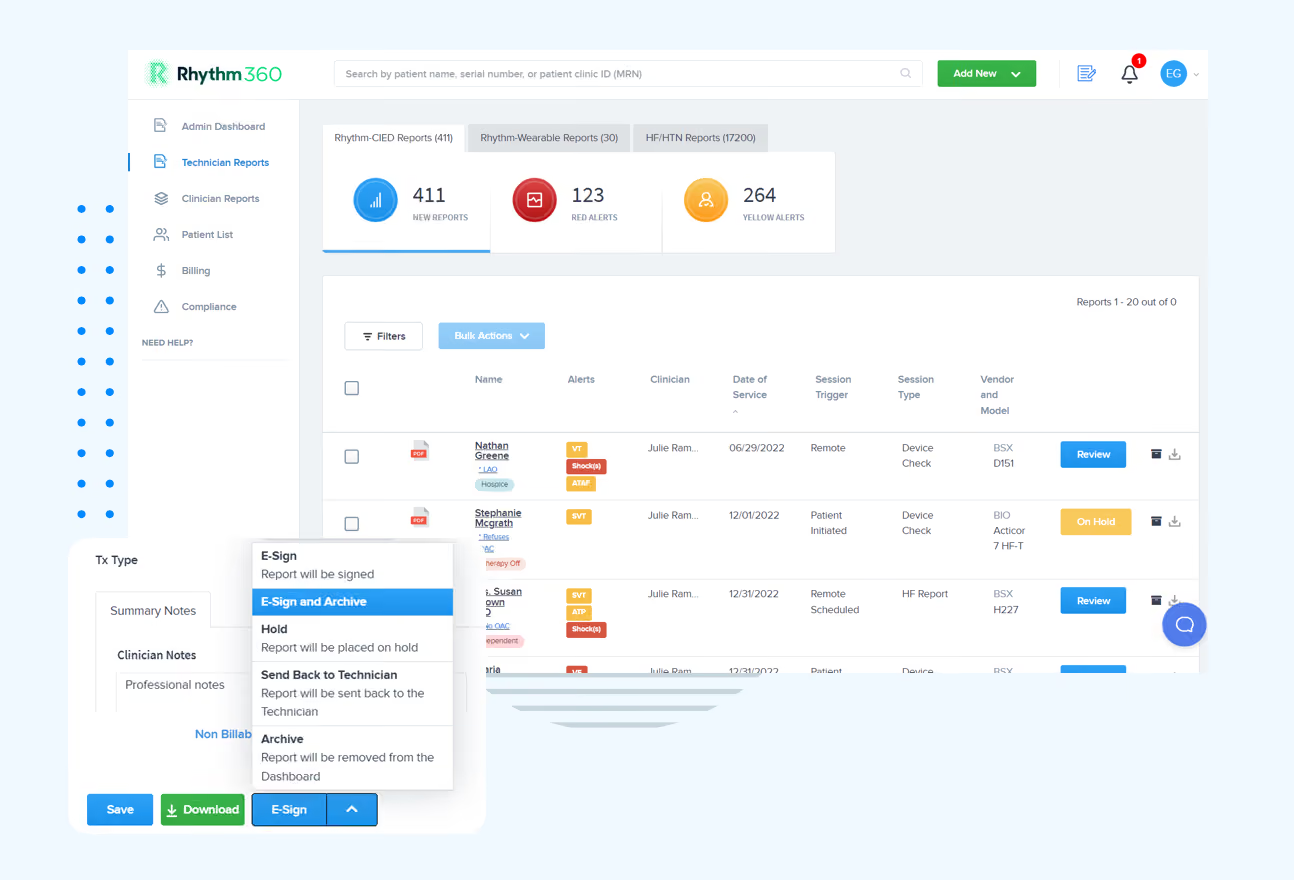
- Vendor-Neutral Data Aggregation: Rhythm360 ingests data via API, HL7, XML, and AI-powered PDF parsing, which removes the need for staff to log into multiple OEM portals. All device readings are normalized into a single patient record.
- Automated 16-Day Tracking: The platform tracks daily transmissions in real time and generates alerts when a patient is at risk of falling below the 16-day threshold before the billing period closes. Staff can then reach out to patients and restore compliance.
- Comprehensive Compliance Reporting: At the close of each 30-day period, Rhythm360 generates a report that includes timestamped transmission logs, 16-day confirmation, device ID, and physician review documentation. This report provides the complete package required for claim submission and audit defense.
- Bi-Directional HL7 EHR Integration: Rhythm360 integrates with Epic, Cerner, Athenahealth, eClinicalWorks, and other EHR systems, pushing completed documentation directly into the patient record and pulling enrollment data to eliminate duplicate entry.
See the 16-day compliance tracker in action.
Revenue Impact and Common Pitfalls
The automation described above directly addresses the most common sources of revenue leakage in manual RPM programs. These issues usually stem from fragmented portals, inconsistent documentation, and late discovery of noncompliant patients.
- Missing transmission days: Without automated tracking, staff often discover that a patient fell short of 16 days only after the billing period has closed, which makes the claim unbillable.
- Duplicate billing: Managing multiple OEM portals without a unified system increases the risk of submitting overlapping claims for the same patient and period.
- Lack of audit trails: Payer audits require retrievable, timestamped documentation. Manual spreadsheets and portal screenshots rarely meet this standard and can result in recoupment demands.
- Incomplete documentation packages: Missing consent forms, unsigned physician reviews, or absent device serial numbers are frequent technical reasons for initial claim denial.
Key Performance Indicators for Your RPM Program
To measure whether your 99454 workflow prevents the revenue leakage described above, track the following four operational metrics and review them monthly.
- Denial Rate: Track the percentage of 99454 claims denied on first submission. A rate above 5% signals a documentation or eligibility workflow problem, often tied to missing elements listed in the documentation checklist.
- Days to Payment: Measure the average time from claim submission to payment receipt. Automated documentation and clean claims usually shorten this cycle by reducing payer requests for additional information.
- 16-Day Compliance Percentage: Monitor the share of enrolled patients who achieve the 16-day threshold each period. Low compliance rates point to patient engagement or device connectivity issues that require outreach before the period closes.
- Monthly Revenue per Enrolled Patient: Calculate total 99454, 99457, and 99458 reimbursement divided by active enrolled patients. Use this metric to benchmark program profitability and identify opportunities to expand enrollment or improve adherence.
Frequently Asked Questions about CPT 99454
What is the difference between CPT 99453 and CPT 99454?
CPT 99453 is a one-time code billed for the initial patient education and setup of a remote monitoring device at the start of a new RPM program. CPT 99454 is billed on a recurring 30-day basis for the ongoing supply of the device and covers the period in which the patient must transmit data for at least 16 days. A practice bills 99453 once per patient per device type and then bills 99454 each qualifying 30-day period for as long as the patient remains enrolled and meets the transmission threshold.
Does CPT 99454 require a physician to personally review the data?
Under Medicare rules, CPT 99454 covers device supply and data collection and does not itself require a physician to personally review each transmission. The broader RPM program still requires that a physician or qualified non-physician practitioner order the monitoring and that clinical staff review data and communicate with the patient to support 99457 billing. Physician review documentation remains a best practice for audit defense and is required by many commercial payers as a condition of coverage.
Can a practice bill 99454 for a patient who misses several days of transmission?
A practice cannot bill 99454 when a patient fails to transmit data on at least 16 separate days within the 30-day billing period. In that situation, the threshold is not met and the code cannot be billed for that period. The practice should document the missed days, attempt patient outreach to restore compliance, and resume tracking toward the threshold in the next period if the patient remains enrolled.
How does Rhythm360 handle patients with both a CIED and an RPM device?
Rhythm360 manages both service lines within a single platform. CIED transmissions are tracked and documented under the cardiac remote monitoring workflow that supports codes such as 93295–93299. RPM device data from heart failure scales or blood pressure cuffs is tracked separately to support 99454 and 99457 billing. The unified dashboard allows clinical staff to manage both programs for the same patient without switching portals or duplicating documentation.
What happens during a payer audit of 99454 claims?
During an audit, the payer requests documentation proving that the device was supplied, the patient was educated, and data was transmitted on at least 16 days within the billed period. Practices must produce timestamped transmission logs, the patient consent form, the physician order, and the device ID. Rhythm360 generates a compliance report at the close of each billing period that contains all of these elements in a single retrievable document, which reduces audit response time and recoupment risk.
Conclusion: Building a Reliable 99454 Workflow
Billing CPT 99454 correctly in 2026 requires a disciplined, documented workflow that covers verified patient enrollment, confirmed device supply, 16-day transmission tracking, complete documentation capture, and timely claim submission. For cardiology practices managing patients across CIEDs, CardioMEMS, and heart failure RPM programs, manual multi-portal processes create gaps such as missing transmission days, incomplete audit trails, and duplicate billing that drive denials and suppress revenue. Rhythm360’s vendor-neutral automation closes those gaps by aggregating all device data into a single compliance dashboard, tracking the 16-day threshold in real time, and generating detailed reports with bi-directional EHR integration. Practices using Rhythm360 have recovered up to 300% more RPM revenue compared to manual workflows.
Request a personalized demo and see how Rhythm360 delivers a complete 99454 compliance workflow for your cardiology practice.
.avif)