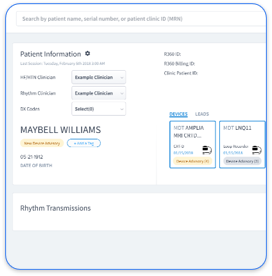
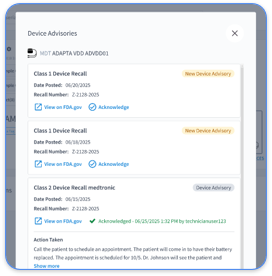
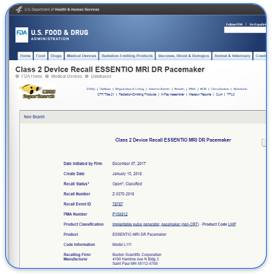
Rhythm360 ends workflow chaos by unifying all CIED data into a single, AI-powered platform. This cloud-based, HIPAA-compliant solution achieves more than 99.9% data transmissibility through redundant feeds, computer vision technology, and AI-powered data extrapolation when OEM servers fail. Teams gain one reliable source of truth instead of juggling multiple disconnected portals.
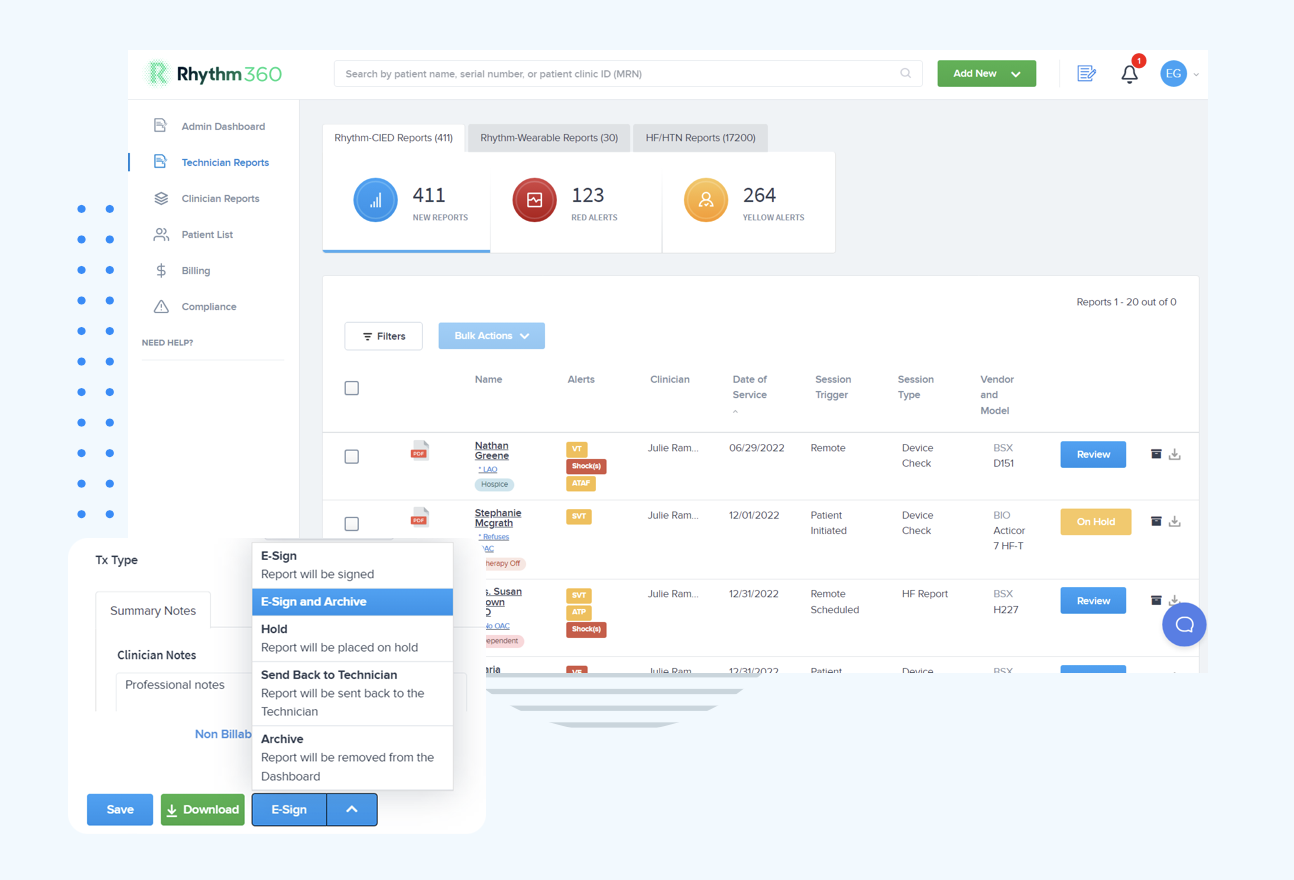
Key features that transform pacemaker monitoring workflows include:
Teams that want to eliminate workflow chaos and increase revenue can schedule a demo and see how Rhythm360 reshapes pacemaker monitoring in daily practice.
Streamlined pacemaker monitoring starts with removing data silos. Staff no longer need to log into multiple OEM portals every day when Rhythm360 aggregates all device data into a single dashboard. This vendor-neutral approach captures transmissions from every major manufacturer and converts different data formats into clear, actionable clinical insights. Practices report saving three to four hours each day by removing redundant logins and manual data reconciliation.
Traditional OEM portals generate overwhelming volumes of notifications, and most alerts do not require clinical action. Lack of consensus on management of device-detected subclinical atrial fibrillation and concerns with consumer-based ECG devices, creating patient anxiety from abnormal results, intensify alert fatigue challenges for clinicians. Rhythm360 uses an AI triage system that filters non-actionable alerts and moves genuine emergencies, such as ventricular arrhythmias, lead malfunctions, and low battery warnings, to the top of the queue. Practices see critical response times fall by about 80% with this targeted approach.
Manual data entry between OEM portals and EHR systems slows teams down and increases transcription errors. 2025 ACC/AHA guidelines emphasize computer network infrastructure for data transmission, storage, processing, study interpretation, and reporting, which supports this shift toward automation. Rhythm360 provides bi-directional integration with Epic, Cerner, and other major EHR systems, which automates data flow and keeps records aligned. The mobile app lets clinicians review transmissions, sign reports, and coordinate care from any location, which protects continuity during on-call coverage.
Revenue leakage from missed CPT code opportunities creates a major financial drain for cardiology practices. CPT 2026 introduces five new RPM codes for shorter-duration monitoring (2–15 days within a 30-day period), which support more accurate billing for acute cardiac monitoring needs. Rhythm360 automatically captures billable events for codes 93298, 93299, 99454, and the new 2026 updates, and it generates compliant documentation for each encounter. Practices report profitability gains of up to 300% from more complete and accurate billing.
Real-world patient outcomes reveal the value of streamlined workflows. Consider a Saturday morning when Rhythm360 AI flags new-onset atrial fibrillation in a high-risk patient. The on-call physician receives a prioritized mobile alert, reviews the transmission remotely, and starts anticoagulation therapy that same afternoon. That timely decision can prevent a stroke and avoid a costly hospitalization.
Another example involves automated weight monitoring alerts for heart failure patients. Rhythm360 highlights early signs of fluid retention, which allows clinicians to adjust medications before symptoms escalate. Patients avoid emergency visits, and the care team gains confidence that remote monitoring truly supports proactive intervention.
Feature | Rhythm360 | Manual OEM Portals | Competitor Platforms |
Data Unification | All OEMs, more than 99.9% | Fragmented silos | Partial coverage |
Response Time Reduction | 80% with AI triage | No automation | Basic filtering |
Revenue Optimization | 300% increase | Significant leakage | Moderate improvement |
EHR Integration | Bi-directional | Manual entry | Limited connectivity |
Practices that want similar results can schedule a demo and see how Rhythm360 improves efficiency and patient outcomes in real clinical settings.
The main barriers include interoperability challenges between different device manufacturers, alert fatigue from excessive false-positive notifications, data security concerns, and workflow inefficiencies. Technical hurdles such as unreliable device connectivity, disparities in access due to cost and technological literacy, and lack of standardized data exchange between vendors also reduce monitoring effectiveness. Rhythm360 addresses these barriers through its vendor-neutral platform, AI-powered alert triage, and comprehensive data unification capabilities.
EHR integration streamlines pacemaker monitoring by removing manual data transcription, reducing errors, and supporting consistent information flow between monitoring systems and patient records. Bi-directional integration imports device data automatically and allows clinical notes and treatment decisions to move back to the monitoring platform. This creates a unified patient record, improves care coordination, and supports compliance with clinical documentation requirements for CPT code billing.
The 2026 CPT updates introduce five new codes for remote monitoring services over 2 to 15 days within a 30-day period, plus two codes for treatment management that require only 10 minutes per month instead of the previous 20-minute requirement. These changes support more precise billing for shorter-duration monitoring episodes and better align reimbursement with modern technology capabilities. Practices can now capture revenue from short-term remote monitoring services that previously went unpaid.
AI-powered alert prioritization significantly reduces workflow burden by filtering out non-actionable notifications and highlighting genuine clinical emergencies. With only about 7% of traditional alerts being clinically meaningful, AI triage systems can reduce alert volume by more than 90% while still surfacing critical events such as arrhythmias, device malfunctions, and battery depletion. Teams see faster response times, lower clinician burnout, and stronger patient safety outcomes.
Practices typically see a strong return on investment through several channels. They experience an 80% reduction in response times for critical alerts and a 300% increase in revenue from more complete CPT code capture and automated billing. Staff overtime decreases as workflows become more efficient, and liability risk falls with improved patient monitoring. Many practices recover platform costs within the first few months of implementation.
Fragmented OEM portals, alert fatigue, and revenue leakage no longer need to define your remote monitoring program. Rhythm360 provides a vendor-neutral platform that unifies all CIED data, prioritizes critical alerts with AI, and automates billing processes to remove workflow chaos while strengthening revenue capture.
Practices that adopt comprehensive monitoring platforms achieve 80% faster response times, capture up to 300% more revenue, and deliver more proactive patient care. As CPT 2026 updates open new billing opportunities for shorter-duration monitoring, now is the right time to modernize your workflows and financial performance.
Teams ready to remove workflow chaos and unlock full revenue potential can schedule a demo and see how Rhythm360 transforms pacemaker monitoring workflows and supports a 300% boost in the bottom line.