
Medical Revenue Cycle Management in Cardiology
Master cardiology RCM with Rhythm360. Capture CPT codes, cut claim denials, and boost revenue up to 300% with AI-powered remote monitoring.

Last updated: June 24, 2026
Key Takeaways
- Medical revenue cycle management (RCM) in cardiology covers the full financial process from patient registration through final payment. This directly affects practice profitability for services such as remote CIED monitoring.
- Remote cardiac monitoring adds unique RCM complexity. Practices need precise documentation, coding, and compliance tracking for CPT codes such as 93298 and 99454 to prevent revenue leakage.
- Common RCM mistakes in cardiology include multi-OEM portal fragmentation, missed alert documentation, incomplete RPM compliance tracking, and lack of bi-directional EHR integration.
- Vendor-neutral platforms with AI-powered alert triage and automated CPT documentation can increase revenue by up to 300% while maintaining clinical quality at scale.
- Cardiology practices can strengthen RCM workflows and close CPT capture gaps by scheduling a demo with Rhythm360 today.
10 Core Steps in the Medical Billing Revenue Cycle
- Patient pre-registration. Staff collect demographic and insurance data before the encounter. For remote monitoring, this step includes confirming that the patient plan covers CIED remote follow-up services.
- Insurance eligibility and benefits verification. Coverage for remote monitoring CPT codes (93298, 93299, 99454, 99457) is confirmed before device enrollment.
- Patient check-in and consent. For RPM programs, staff obtain written consent and document device setup. This documentation is a prerequisite for billing CPT 99453.
- Clinical service delivery. The billable event occurs. For example, a CIED transmission is received, reviewed, and a clinical decision is made about a detected arrhythmia.
- Medical coding. Certified coders assign the correct CPT codes. In remote cardiac monitoring, they distinguish between single-lead (93298) and multi-lead (93297) device follow-up, and between RPM supply days (99454) and interactive management time (99457).
- Charge capture. The coded service is entered into the billing system. Missed transmissions or undocumented alert reviews create direct charge capture failures.
- Claims submission. Staff submit clean claims to the payer. Incomplete documentation of CIED alert responses is a leading cause of claim rejection at this stage.
- Payment posting. Remittances are reconciled against expected reimbursement. Staff flag discrepancies between billed and paid amounts for review.
- Denial management. Teams analyze, correct, and resubmit rejected claims. In cardiology, common denial triggers include missing device serial numbers, insufficient documentation of clinical review time, and non-compliant RPM day counts.
- Patient collections and reporting. Staff collect remaining balances and report on financial performance. RCM analytics identify systemic coding gaps, such as consistently uncaptured 99454 days, for process improvement.
How RCM Extends Beyond Medical Billing in Cardiology
Medical billing is a subset of RCM focused on claims submission and payment collection. RCM is the broader operational and financial framework that governs every step from patient intake to final account resolution. The distinction matters in cardiology because revenue leakage often starts upstream of billing in documentation gaps, alert triage delays, and fragmented device data, not in the billing department itself.
DimensionMedical BillingRevenue Cycle ManagementScopeClaims creation, submission, and payment postingEnd-to-end financial lifecycle from scheduling to collectionsCardiology exampleSubmitting a CPT 93298 claim for a CIED remote follow-upEnsuring every eligible transmission is documented, coded, billed, and collectedPrimary stakeholderBilling department or outsourced billing vendorAdministrators, clinicians, coders, and finance leadershipRevenue impactRecovers revenue from submitted claimsPrevents revenue leakage across the entire care and documentation workflow
Common RCM Pitfalls in Cardiology Remote Monitoring
The following documentation and workflow failures are frequent sources of revenue leakage in cardiology and electrophysiology practices that manage remote monitoring programs.
- Multi-OEM portal fragmentation. Practices managing devices from Medtronic, Boston Scientific, Abbott, and Biotronik must log into separate, non-interoperable portals. Transmissions retrieved late or not at all cannot be billed.
- Missed CIED alert documentation. A critical alert such as ventricular tachycardia, lead impedance change, or battery depletion that is reviewed but not formally documented in the EHR cannot support a billable claim. The clinical review must be auditable.
- Incomplete RPM device compliance tracking. CPT 99454 requires 16 or more days of device data collection in a 30-day period. Practices without automated compliance tracking routinely bill fewer days than were actually recorded or miss the threshold entirely.
- CPT code capture failures at charge entry. Coders who are unfamiliar with remote monitoring distinctions, such as the difference between 93298 (implantable cardiovascular monitor, physician review) and 99457 (RPM interactive communication), under-code or omit billable services.
- Lack of bi-directional EHR integration. When device data does not flow automatically into the EHR, manual transcription errors create documentation that does not support the submitted CPT code. These errors trigger denials.
- No centralized compliance dashboard. Without a unified view of pending transmissions, reviewed alerts, and billing status, revenue opportunities expire undetected.
Revenue Cycle Management for Remote Cardiac Monitoring Programs
These documentation and workflow failures share a common root cause. Remote cardiac monitoring introduces RCM complexity that standard cardiology billing workflows are not designed to handle. Each CIED transmission generates a discrete billable event that staff must receive, clinically review, document, and code within payer-defined timeframes. Across a practice managing hundreds of patients on multiple OEM platforms, the cumulative administrative burden becomes substantial.
A white paper published by HMP Global Learning Network documenting the University of Chicago Medicine implementation of a unified remote monitoring platform reports that the institution managed over 73,000 reports annually after centralizing its cardiovascular remote monitoring workflow. A cardiologist at the institution stated, “We have improved billing and accountability for our patients after the integration.” The same analysis highlights stable dismissal rates at high volume, a key indicator that alert triage quality remained strong as scale increased.
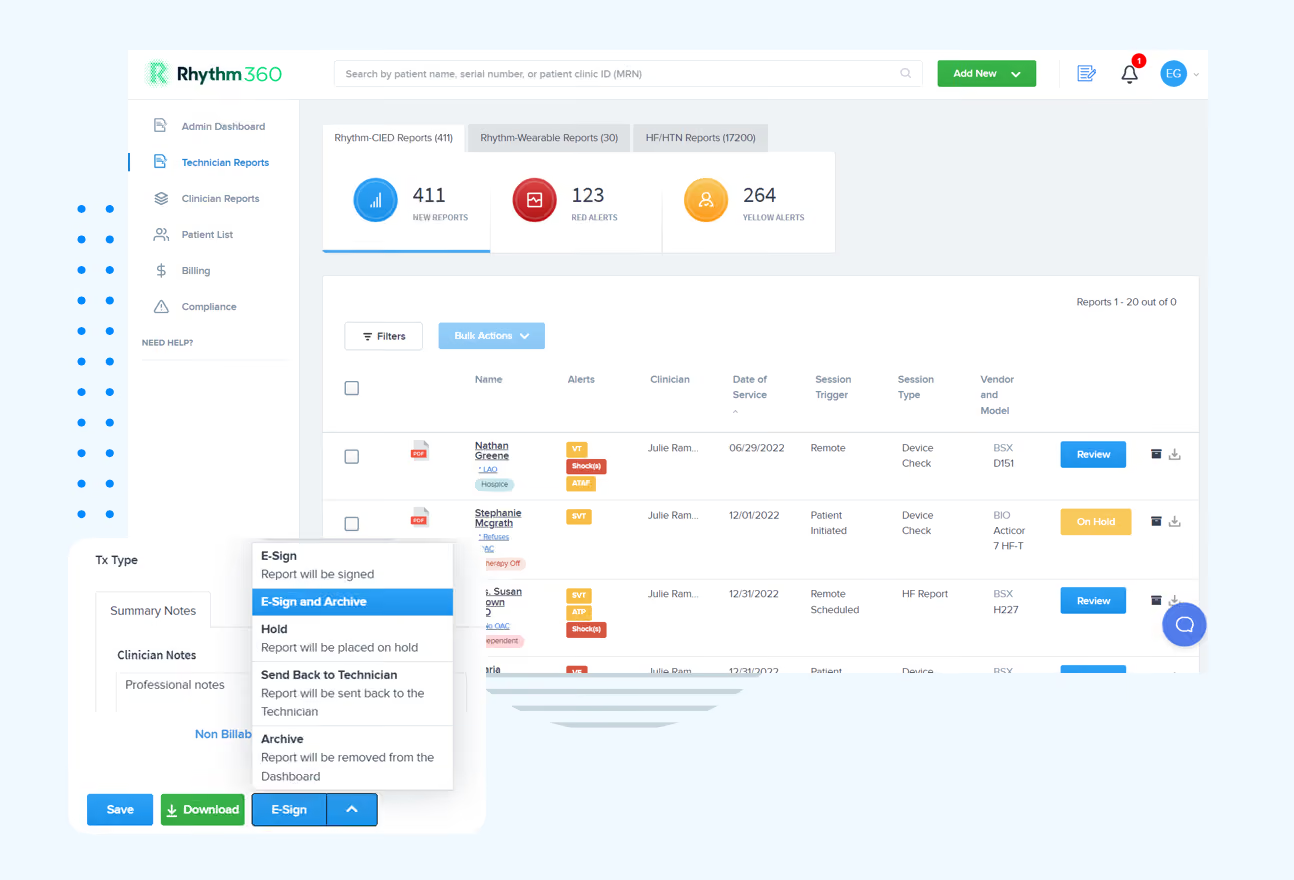
Vendor-neutral data aggregation addresses the multi-OEM fragmentation problem at its source by ingesting device data from all major manufacturers into a single normalized dataset. AI-powered alert triage then filters non-actionable transmissions and surfaces clinically significant events, reducing critical response times by up to 80 percent, so that every reviewed alert is associated with a documentable clinical decision. Bi-directional EHR integration ensures that documentation created in the monitoring platform is immediately available in the patient record, which satisfies audit trail requirements for CPT code substantiation. Automated CPT documentation maps completed clinical actions to the appropriate billing codes and closes the gap between care delivery and charge capture. Practices implementing this workflow architecture have reported revenue increases of up to 300 percent compared to fragmented, manual processes, which makes documentation compliance for the 2025–2026 billing cycles particularly important. For these upcoming cycles, practices should confirm that their workflows address payer-specific requirements for remote monitoring supervision, interactive communication thresholds under 99457, and any updated LCD criteria for implantable cardiac monitor services under the 93298–93299 code family.
Strategic RCM Priorities for Cardiology Practices
Cardiology practices that evaluate RCM improvements for remote monitoring programs benefit from focusing on a short list of operational priorities that build on one another.
- Consolidate OEM data into a single platform. A vendor-neutral solution that ingests data from all device manufacturers removes the portal-switching that causes transmission delays and missed charge capture. Once data is centralized, teams can manage compliance and documentation from one consistent workflow.
- Automate compliance tracking for RPM thresholds. Real-time dashboards that display each patient current-month device data days prevent the 99454 compliance failures that result in unbillable months. With compliance visible, staff can intervene before a billing period closes.
- Integrate the monitoring platform with the EHR bidirectionally. Data must flow in both directions, with device data moving into the EHR for documentation and patient context moving from the EHR into the monitoring platform for clinical decision support. This connection keeps the clinical record and billing record aligned.
- Implement AI-driven alert prioritization. Alert fatigue creates both a patient safety risk and an RCM risk. When clinicians face too many non-actionable notifications, critical events are delayed and the documentation that supports billing remains incomplete.
- Establish a centralized revenue dashboard. Administrators need real-time visibility into pending transmissions, completed reviews, and captured versus potential CPT revenue. This visibility allows proactive management of the remote monitoring program.
- Plan for scalable onboarding. Platforms with streamlined EHR integration that deploy in days to weeks instead of months minimize revenue disruption during system transitions and support long-term growth.
See how Rhythm360 maps to your CPT workflows to understand how a vendor-neutral platform addresses your practice specific billing gaps and OEM device mix.
Frequently Asked Questions
What CPT codes are most commonly missed in cardiology remote monitoring billing?
The most frequently missed codes in remote cardiac monitoring programs are CPT 99454 (remote physiological monitoring device supply, 16 or more days), CPT 99457 (remote physiological monitoring management, first 20 minutes of interactive communication), and CPT 93298 (physician review of implantable cardiovascular monitor data). These codes require specific documentation thresholds, such as minimum monitoring days or documented interactive communication time, that manual workflows often fail to track consistently. Automated compliance monitoring and bi-directional EHR integration are the most reliable methods for ensuring these codes are captured every eligible billing period.
How does multi-OEM device management affect RCM in electrophysiology practices?
When a practice manages devices from multiple manufacturers such as Medtronic, Boston Scientific, Abbott, and Biotronik, each OEM operates a separate, non-interoperable data portal. Staff must log into each portal independently to retrieve transmissions, reconcile data, and initiate documentation. This fragmentation creates delays between transmission receipt and clinical review, increases the risk of missed billable events, and makes it difficult to maintain a complete audit trail. A vendor-neutral platform that aggregates all OEM data into a single workflow removes these silos and ensures that every transmission is captured, reviewed, and documented in a billing-ready format.
What is the difference between RCM and medical billing for a cardiology practice?
Medical billing refers specifically to the process of creating, submitting, and collecting on insurance claims. Revenue cycle management encompasses the entire financial lifecycle of a patient encounter, from pre-registration and eligibility verification through coding, claims submission, denial management, and final collections. In cardiology, the distinction is operationally significant because the most common sources of revenue leakage, including missed transmissions, undocumented alert reviews, and incomplete RPM compliance tracking, occur upstream of the billing department. Addressing RCM requires clinical workflow changes, not only billing process improvements.
How long does it take to implement a remote monitoring platform with EHR integration?
Modern cloud-based remote monitoring platforms with pre-built EHR connectors for systems such as Epic, Cerner, and Athenahealth can typically complete implementation, including integration setup, in a few days to a few weeks. The timeline depends on the complexity of the EHR environment, the number of OEM device feeds being connected, and the scope of workflow customization required. Practices should prioritize vendors that offer structured onboarding support and have documented integration experience with their specific EHR system to reduce revenue disruption during the transition period.
What documentation is required to support a CPT 93298 claim?
CPT 93298 covers physician or qualified healthcare professional review and interpretation of data from a subcutaneous cardiac rhythm monitor system (implantable loop recorder), including analysis, review(s), and report(s). To support a compliant claim, the medical record must include documentation of the specific data reviewed, the clinical findings, the physician interpretation, and any resulting clinical decisions or care plan changes. The report must be signed by the reviewing provider and associated with the correct patient encounter date. Practices using automated report generation tools that populate these fields from device data and map them directly to the EHR encounter record have significantly lower denial rates for this code family than those relying on manual documentation.
Conclusion: Align Remote Monitoring With RCM Goals
Medical revenue cycle management in cardiology is a multi-step operational discipline that extends well beyond claims submission. For practices managing remote cardiac monitoring programs, the most consequential RCM failures occur at the intersection of clinical workflow and documentation, including missed CIED transmissions, undocumented alert reviews, and incomplete RPM compliance tracking that prevent billable services from ever reaching the billing department. Effective remediation requires vendor-neutral data aggregation, AI-powered alert triage, automated CPT documentation, and bi-directional EHR integration working as a unified system. As the centralized monitoring case study discussed earlier demonstrates, practices that unify their workflows at scale see measurable improvements in both billing accountability and clinical outcomes. Practices that align their monitoring infrastructure with their RCM objectives are positioned to recover significant lost revenue while improving the quality and consistency of patient care.
Schedule a Rhythm360 RCM workflow review to see how unified remote cardiac monitoring closes the CPT capture gaps that cost your practice revenue.
.avif)