CPT 99454 pays monthly for non-face-to-face remote patient monitoring physiologic data collection and analysis from FDA-cleared devices such as heart failure scales and blood pressure cuffs. The code applies when patients meet the 16-day transmission requirement within a 30-day period.
This code includes device supply, patient education, data transmission setup, and monthly data review by qualified healthcare professionals. It supports ongoing monitoring services and does not apply to initial onboarding alone, which falls under separate setup codes.
Requirement | Details | Cardiology Example |
Device Supply | FDA-cleared with automatic data upload | Heart failure scales with CardioMEMS |
Data Transmission | ≥16 days within 30-day period | Hypertension BP cuffs with CIED monitoring |
Physician Oversight | Review and analyze transmitted data | Electrophysiologist signs RPM reports |
Patient Education | Device usage and data transmission training | Heart failure weight monitoring protocols |
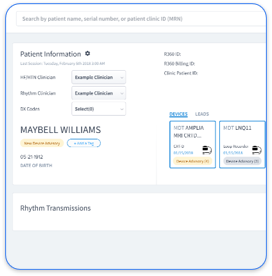
Successful CPT 99454 billing requires tight coordination between device manufacturers, clinical staff, and billing teams. Platforms like Rhythm360 streamline this work by unifying OEM data sources and automating compliance tracking across multiple device types.
The 16-day minimum is straightforward, but the 30-day calculation window often creates billing mistakes. Practices that understand how Medicare counts days and periods avoid many denials.
Medicare requires at least 16 days of data transmission within 30 consecutive days for CPT 99454 billing eligibility. Data must be collected for 16+ days out of 30 days for remote physiologic monitoring codes.
The 30-day period starts on the date of the first successful data transmission, not on the date of device shipment or setup. Practices can bill CPT 99454 when a patient starts mid-month and still reaches 16 days of transmission within that first 30-day window.
Common compliance pitfalls include:
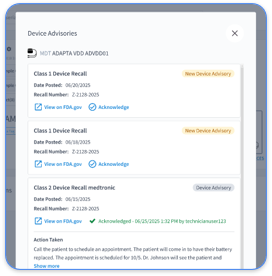
Automated tracking systems such as Rhythm360 monitor transmission days across all connected devices and surface real-time compliance dashboards. These tools prevent billing errors and create clear documentation for Medicare audits.
Medicare limits CPT 99454 billing to FDA-cleared, non-invasive physiologic monitoring devices that send data automatically. Devices must support digital transmission through cellular or WiFi connectivity without manual data entry.
Eligible cardiology devices:
Ineligible devices:
Cardiology teams often pair CPT 99454 devices with implantable cardiac devices. This approach creates comprehensive monitoring programs that address rhythm disorders along with chronic conditions such as heart failure and hypertension.
Written patient consent forms the legal and compliance foundation for CPT 99454 services. Medicare expects clear documentation that explains services, monitoring frequency, and patient responsibilities for device use.
Essential consent documentation steps:
Practices must maintain auditable logs that show patient consent, completion of device training, and ongoing authorization for services. Modern RPM platforms handle consent tracking and generate compliant documentation templates, which reduces administrative work and supports Medicare audit readiness.
See how Rhythm360's automated consent tracking closes documentation gaps that often trigger Medicare denials.
CPT 99454 bills once per 30-day period when patients meet the transmission threshold. Cardiology practices can combine it with related RPM and chronic care management codes when each service remains distinct.
Code | Billing Frequency | Stackable with 99454? | Key Requirements |
99453 | Once per 36 months | Yes, same month | Initial device setup and patient education |
99454 | Monthly per 30-day period | N/A | ≥16 days data transmission |
99457 | Monthly with ≥20 minutes | Yes, distinct services | Interactive communication and care plan |
CCM (99490) | Monthly with ≥20 minutes | Yes, non-duplicate data | Comprehensive care coordination |
The primary difference between CPT 99454 and 99457 involves service focus. CPT 99454 covers device supply and data collection, while CPT 99457 covers interactive patient communication and treatment management that requires at least 20 minutes of clinical time each month.
Cardiology practices can bill RPM codes with chronic care management when each code reflects a separate clinical activity. For example, CPT 99454 for heart failure weight monitoring combined with CCM services for broader cardiovascular risk management represents compliant code stacking that increases reimbursement.
Medicare audits frequently target RPM billing errors, especially for CPT 99454. The most common problems involve transmission thresholds, consent documentation, and overlapping services.
Top Medicare denial triggers:
Integrated compliance dashboards such as those in Rhythm360 provide real-time monitoring of transmission thresholds, automated consent tracking, and billing rule checks. These tools reduce denial risk and create a complete audit trail for regulatory reviews.
Rhythm360 converts fragmented OEM data silos into unified, compliant RPM workflows that support strong CPT 99454 revenue while lowering administrative burden. The platform connects with major device manufacturers including Medtronic, Abbott, and Boston Scientific to deliver comprehensive cardiac monitoring.

Key automation features:
Clinical outcomes highlight Rhythm360's impact. Practices report greater than 99.9% data transmissibility, 80% faster critical alert response times, and revenue increases near 300% through streamlined billing workflows. Implementation usually completes within days or weeks and includes full EHR integration and staff training.
Discover how Rhythm360's automation can transform your CPT 99454 billing compliance in a short implementation window.
The main service difference appears earlier in this guide. From a practical standpoint, timing separates the two codes. Teams can bill CPT 99454 as soon as patients meet the 16-day transmission threshold within the 30-day window, while CPT 99457 requires documented completion of at least 20 minutes of interactive management time before billing.
Yes, Medicare allows billing CPT 99453 and CPT 99454 in the same month when circumstances support both services. CPT 99453 covers initial device setup and patient education, billable once every 36 months per device type. CPT 99454 covers ongoing monthly monitoring services. This combination often appears when patients start RPM mid-month and still reach 16 days of data transmission within their first 30-day period.
Medicare permits billing RPM codes with chronic care management when each service addresses a distinct aspect of care using non-duplicate data. For example, CPT 99454 for heart failure weight monitoring combined with CCM services for comprehensive cardiovascular risk management represents compliant code stacking. Documentation must clearly show separate clinical value and avoid overlapping service components.
The 2026 Medicare Physician Fee Schedule establishes conversion factors of $33.57 for qualifying APM providers and $33.40 for non-qualifying APM providers, representing increases of 3.77% and 3.26% from 2025 rates. Actual CPT 99454 reimbursement varies by geography based on practice expense and malpractice relative value units, typically ranging from $35 to $50 per monthly billing cycle depending on local Medicare administrative contractor rates.
Rhythm360 supports compliance through real-time transmission monitoring, automated consent tracking, and integrated billing documentation. The platform's AI algorithms track the 16-day minimum requirement across all connected devices, generate Medicare-compliant reports, and create audit-ready documentation. This automation reduces billing errors by more than 95% and helps practices capture revenue that previously went unbilled.
Clear mastery of Medicare CPT 99454 billing rules allows cardiology practices to capture meaningful revenue while improving outcomes through remote monitoring. Success depends on accurate tracking of transmission thresholds, careful device selection, robust consent workflows, and thoughtful code stacking with related services.
The 2026 Medicare Physician Fee Schedule and rising RPM adoption in cardiovascular care create strong upside for practices that invest in compliant, automated workflows. Platforms like Rhythm360 remove common billing pitfalls and unify OEM data sources into streamlined clinical processes.
Start capturing the full revenue potential of your RPM program with Rhythm360's unified compliance platform and scale remote monitoring confidently.