See How Rhythm360 Supports Your MCT Program
Mobile cardiac telemetry (MCT) monitoring continuously records a patient's cardiac rhythm via a wearable skin-attached sensor. The sensor transmits ECG data wirelessly to a remote monitoring center or platform, where algorithms and trained personnel analyze the data, escalate clinically significant events, and generate reports for the ordering provider. Monitoring typically lasts up to 30 days.
The operational sequence is straightforward:
CMS LCD L40255 requires that the receiving station for MCT be staffed on a 24-hour basis with at minimum an EKG technician who has immediate access to a physician. Answering services or automated relay systems do not satisfy this requirement.
Selecting the right monitoring modality depends on symptom frequency, clinical urgency, and the anticipated monitoring duration. The table below shows how the four main options differ on wear time, transmission, and clinical use, and highlights that only MCT combines near-real-time transmission with a 30-day wear window.
| Modality | Typical Wear Time | Transmission Type | Primary Clinical Use |
|---|---|---|---|
| Mobile Cardiac Telemetry (MCT) | Up to 30 days | Near-real-time continuous transmission to a staffed monitoring center | Higher-risk patients requiring rapid clinician notification; infrequent or unpredictable symptoms |
| Holter Monitor | 24–72 hours (some extended Holter devices record longer) | Continuous recording stored on device, no real-time transmission | Daily or near-daily symptoms where short-duration capture is sufficient |
| Event Monitor / External Loop Recorder | Weeks to months | Patient- or auto-triggered, intermittent transmission | Intermittent or unpredictable symptoms occurring less frequently than daily |
| Implantable Loop Recorder (ILR/ICM) | Months to years (up to approximately 3 years in selected cases) | Automatic remote transmission, continuous subcutaneous ECG recording | Unexplained syncope, cryptogenic stroke, suspected silent AF, or infrequent symptoms not captured by external monitoring |
A meta-analysis of four RCTs (N=1,149) found that prolonged monitoring of 7 days or more increased detection of atrial fibrillation lasting at least 30 seconds to 13.8% versus 2.5% with monitoring of 48 hours or less. LCD L40255 concludes that for patients able to comply with external monitoring, a 30-day duration can capture a significant proportion of AF and should be considered before proceeding to an implantable loop recorder.
Mobile cardiac telemetry monitoring and related remote monitoring services are billed on 30-day cycles. Clear understanding of the applicable CPT codes and their correct application protects practices from missed revenue and claim denials.
The MCT professional and technical components are billed under the ambulatory monitoring code range:
For implantable devices monitored remotely, the following codes apply on 30-day cycles:
Codes 93297 and 93298 are device-specific codes rather than a professional and technical pair. Code 93297 applies to implantable cardiovascular physiologic monitors, and 93298 applies to subcutaneous cardiac rhythm monitors and ILRs. Applying either code to the wrong device type frequently causes claim denial.
The most commonly dropped billable event in cardiac remote monitoring is clinician interpretation and treatment-management time, because no one logs the clock. As a result, CPT 99457 (first 20 minutes of RPM management per calendar month) and CPT 99458 (each additional 20 minutes) often never generate a claim.
Medicare coverage and reimbursement vary by locality and payer, so practices should verify current fee schedules and payer policies before billing. That verification burden encourages many programs to adopt automated documentation. Rhythm360 captures CPT code data for remote monitoring codes including 93298, 93299, 99454, 99453, and 99457, which reduces missed billing opportunities and rejected claims.
The impact shows up in day-to-day operations. "We have improved billing and accountability for our patients after the integration," noted a clinician at the University of Chicago Medicine following implementation of Rhythm360.
Talk To Us About Automating Your CPT Capture
MCT data works best when it lives in the same operational workflow as CIED data. Practices managing pacemakers, ICDs, implantable loop recorders, and CRT/CCM devices from Medtronic, Boston Scientific, Abbott, and Biotronik often juggle multiple non-interoperable portals. Manufacturer-specific platforms such as Biotronik Home Monitoring, Boston Scientific LATITUDE, Abbott's Merlin.net, and Medtronic CareLink remain the native ecosystems for CIED remote monitoring, and vendor-neutral platforms add value by sitting above these silos and unifying data into a single operational workflow.
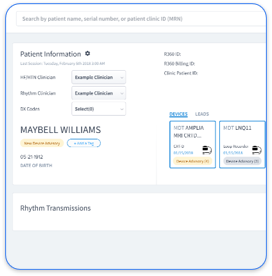
Rhythm360 is a vendor-neutral, cloud-based platform that ingests and normalizes data from all major device manufacturers and from MCT sources into a single dashboard. Redundant data feeds, AI-based gap filling, and computer vision technology combine to achieve greater than 99.9% data transmissibility. The HL7 CardX CIED implementation guide defines the interoperability model that enables disparate manufacturer data to be represented consistently across middleware and provider systems. That standard provides the technical foundation for a single vendor-neutral workflow.
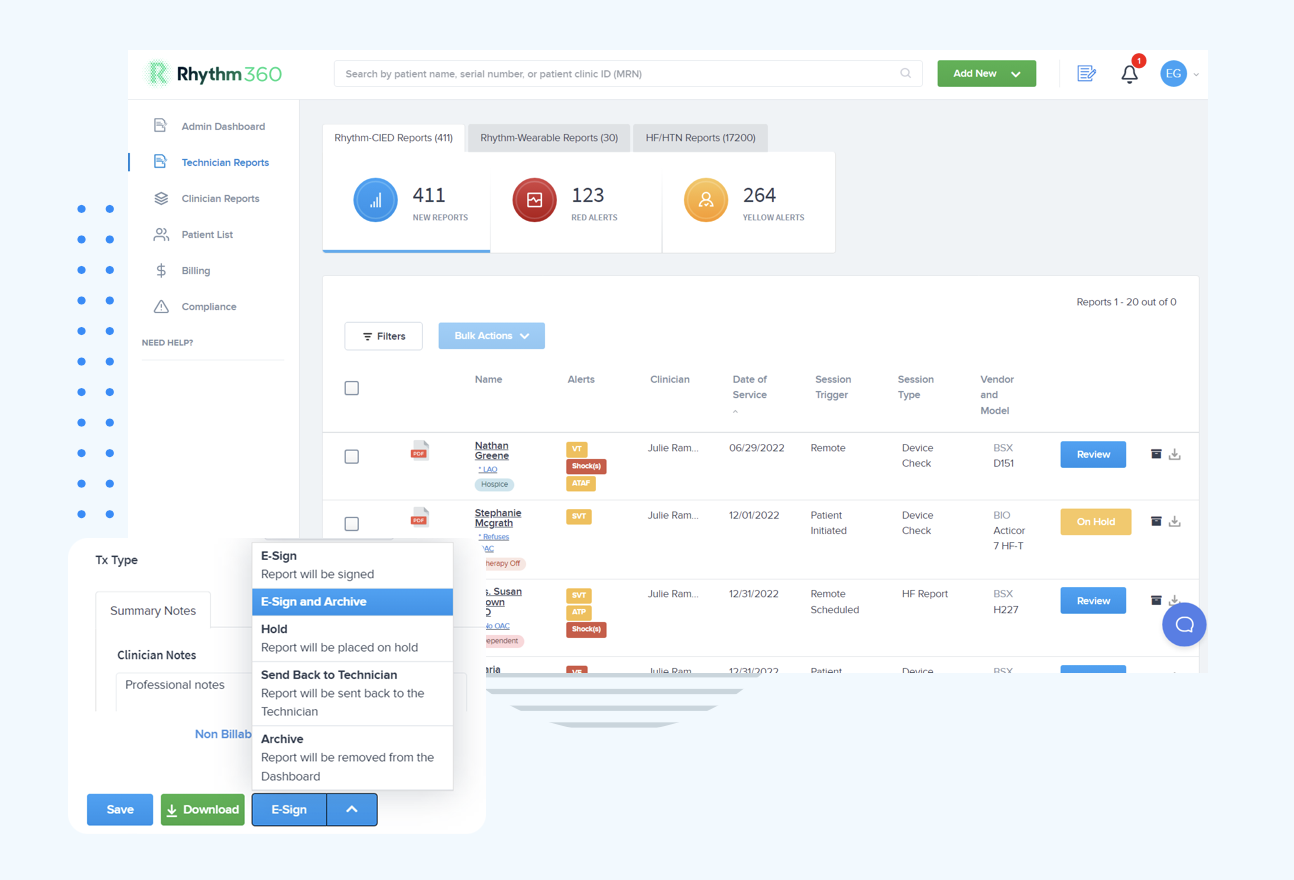
Rhythm360 provides bi-directional EHR integration with Epic, Cerner, Athenahealth, eClinicalWorks, and Greenway Health via HL7, enabling data to flow in both directions and eliminating manual transcription. Other platforms in the cardiac remote monitoring space include Murj, Implicity, Rhythm Management Group, and Octagos, and practices should evaluate each option against their integration and workflow needs.
The University of Chicago Medicine reviewed more than 73,000 reports annually through Rhythm360 in calendar year 2025, averaging more than 18,000 reports per quarter. That volume demonstrates the platform's capacity to handle large remote monitoring programs at scale.
MCT programs generate a high volume of transmissions, and only a small fraction contain actionable information. A study of 32,721 patients across 67 U.S. device clinics found that only 13% of total remote monitoring transmissions contained clinical alerts. Staff therefore review enormous data volumes to find a limited number of critical events, and poorly designed alert triage can bury those events in noise.
A post hoc analysis of the OPTILINK study found that patients who were appropriately contacted following a remote monitoring alert experienced a significant reduction in cardiovascular death or first hospitalization (hazard ratio 0.61; 95% CI 0.39–0.95; P=0.027) compared with those receiving usual care. This finding shows that passive monitoring without organized reaction pathways provides limited benefit.
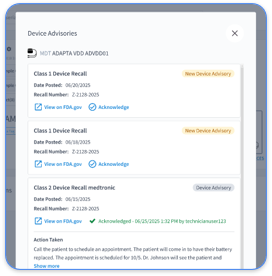
Rhythm360's AI-powered alert triage filters non-actionable noise and prioritizes clinically significant events such as new-onset atrial fibrillation, ventricular tachycardia, and device malfunction. Because those prioritized alerts feed into optional 24/7/365 oversight by certified cardiac technicians (CCTs) supervised by physicians, escalation pathways stay staffed around the clock. This structure supports the 80% response-time improvement highlighted in the Key Takeaways.
"Decision support, including AI-assisted decision support, will become increasingly important as data volumes grow," noted Andrew Beaser, MD, Associate Professor of Medicine at the University of Chicago Medicine.
Explore Rhythm360 Alert Triage And CCT Coverage
Once alert triage and oversight are in place, practices must decide how long patients will wear MCT devices, because wear duration drives both clinical yield and billing cycles. Typical MCT wear durations depend on clinical indication and the ordering provider's judgment:
Patients often ask how MCT affects daily activities, including bathing, during multi-week wear periods. Most modern MCT devices are water-resistant, but patients should follow the specific manufacturer instructions and any guidance provided by their practice. Water resistance ratings vary by device, and some sensors require removal or protective covering during bathing.
Patients wearing a heart monitor for two weeks or longer should expect the following:
Platform selection shapes data flow, staffing, and revenue capture, so practices benefit from a structured evaluation process. When assessing an MCT or unified remote monitoring platform, consider the following criteria:
Rhythm360 offers a secure, HIPAA-compliant mobile app for reviewing transmissions and signing reports from anywhere. Implementation, including EHR integration, typically takes a few days to a few weeks. Pricing follows a SaaS-based model that scales with clinic size and platform usage.
Evaluate Rhythm360 For Your Remote Monitoring Workflow
MCT programs that operate outside a unified data and billing strategy encounter predictable operational and financial problems:
Each of the pitfalls above can be caught early when the program tracks the right metrics. A sustainable MCT program requires monitoring performance across four categories:
Rhythm360 supports these measurement efforts and has helped practices capture up to 300% more revenue through improved CPT code capture and staff efficiency, while keeping headcount stable.
The total cost of an MCT program spans three categories. Device cost covers the wearable sensor supplied to the patient for the monitoring period. Monitoring service fees represent the technical surveillance component, billed under CPT 93229 or equivalent. Billing and reimbursement considerations cover the professional interpretation component, billed under CPT 93228. Medicare reimbursement for covered MCT services offsets a portion of these costs, but the net financial impact depends on payer mix, documentation quality, and CPT code capture rates. Practices should verify current fee schedules with their MAC and commercial payers before quoting specific dollar amounts.
Medicare covers mobile cardiac telemetry monitoring when it is medically necessary, ordered by a treating physician or qualified non-physician practitioner, and performed in accordance with coverage criteria. Covered indications include infrequent symptoms suggestive of arrhythmia, cryptogenic stroke workup, post-ablation monitoring, and several other clinical scenarios. Coverage requires that the receiving station be staffed 24 hours a day with personnel who have immediate access to a physician. Medicare coverage and reimbursement rates vary by locality and change over time, so practices should verify current coverage criteria and fee schedules with their Medicare Administrative Contractor and confirm commercial payer policies separately.
As summarized in the comparison table above, a Holter monitor records cardiac activity continuously for 24 to 72 hours and stores data on the device for later analysis. There is no real-time transmission. Mobile cardiac telemetry transmits data in near-real-time to a staffed monitoring center for up to 30 days, enabling active surveillance and rapid escalation of clinically significant events. MCT suits patients with infrequent or unpredictable symptoms and higher-risk patients who require prompt clinician notification.
Most modern MCT devices are water-resistant, but patients should follow the specific instructions provided by the device manufacturer and their practice. Water resistance ratings vary, and some sensors require removal or protective covering during bathing. As described in the patient-experience section above, skin irritation at electrode sites is the most commonly reported device-related adverse event, and following manufacturer guidance on electrode rotation and skin care reduces this risk.
Mobile cardiac telemetry monitoring functions as a data-integration and revenue-capture decision that affects clinical response times, staff efficiency, billing compliance, and patient outcomes. Practices that manage MCT data in isolation from their CIED workflows face fragmented visibility, missed CPT codes, and alert fatigue that puts patients at risk.
The right platform consolidates MCT and CIED data into one vendor-neutral dashboard, automates CPT billing documentation, triages alerts with AI and certified cardiac technician oversight, and gives on-call clinicians mobile access to review and sign reports from anywhere. Rhythm360 is built for this operational reality, from solo EP practices to large integrated health systems managing tens of thousands of annual transmissions.
Schedule A Rhythm360 MCT Workflow Review