

Paceart Optima is an on-premise cardiac workflow solution originally developed by Medtronic for managing CIED data and remote monitoring workflows. The system functions as a centralized database that organizes patient transmissions, device interrogations, and clinical documentation within cardiology practices.
After the August 2024 acquisition by PaceMate, existing Paceart customers continue receiving support through a collaborative transition process. PaceMate CEO Tripp Higgins stated that “Paceart customers will benefit from the continued support of Paceart employees transitioning to PaceMate, as well as enhanced service delivery and innovation.”
The acquisition represents a significant consolidation in the cardiac data management space, as PaceMate positions itself as an industry leader by expanding its global footprint through this strategic acquisition.
Paceart Optima maintains compatibility with major CIED manufacturers, although specific device model support depends on manufacturer and firmware versions. The platform traditionally supports the following combinations.
| Manufacturer | Device Categories | Remote Networks | Integration Status |
|---|---|---|---|
| Medtronic | Pacemakers, ICDs, CRT devices | CareLink | Native integration |
| Boston Scientific | Pacemakers, ICDs, CRT devices | Programmer import | Supported |
| Abbott | Pacemakers, ICDs, CRT devices | Programmer import | Supported |
| Biotronik | Pacemakers, ICDs, CRT devices | Programmer import | Supported |
After the PaceMate acquisition, PaceMate offers vendor integrations that cover major device manufacturers, which suggests expanded compatibility options for existing Paceart installations.
PaceMateLIVE supports EHR integration via HL7 FHIR APIs with Epic, Cerner, and athenahealth, which enables bi-directional data exchange with these major electronic health record systems.
These integration capabilities support automatic patient demographic updates, appointment scheduling synchronization, and clinical report delivery directly into EHR workflows. Seamless integration with electronic health records completes a closed-loop workflow that delivers decision support, documentation, and billing efficiency in a single pass for AI-driven platforms, which highlights the advantages of modern cloud-based solutions over legacy on-premise systems.
Legacy systems maintain basic EHR connectivity, but practices now require more sophisticated integration capabilities that support automated CPT code capture, real-time clinical decision support, and comprehensive audit trails for regulatory compliance.
Beyond integration limitations, maintaining Paceart Optima also requires specific infrastructure investments. Legacy Paceart Optima installations depend on compatible hardware and software configurations that may create challenges for practices that must maintain current security standards.
Operating System Requirements:
Hardware Specifications:
Security Considerations:
On-premise installations require ongoing security patch management, antivirus updates, and HIPAA compliance maintenance. Each of these tasks demands dedicated IT resources and expertise, and practices must also manage backup procedures, disaster recovery protocols, and user access controls independently. This combination of security, continuity, and access management responsibilities creates significant IT overhead compared to managed cloud solutions where the vendor handles these functions.
Migration from legacy Paceart systems affects both technical infrastructure and daily operations, so practices need a structured plan that protects workflows and revenue capture.
Data Migration Challenges:
Workflow Transition Requirements:
Staff training on new interfaces, modified clinical protocols, and updated documentation procedures is required for successful adoption. Because untrained staff can introduce errors that disrupt both patient care and billing accuracy, practices must coordinate migration timing carefully to ensure adequate training completion before go-live.
Revenue Optimization Opportunities:
Modern cloud platforms offer automated CPT code capture, enhanced billing documentation, and expanded remote monitoring capabilities that can increase practice revenue through improved compliance and workflow efficiency.
Schedule a demo to discuss your specific migration requirements and your preferred timeline for transitioning to a comprehensive cloud-based cardiac data management platform.
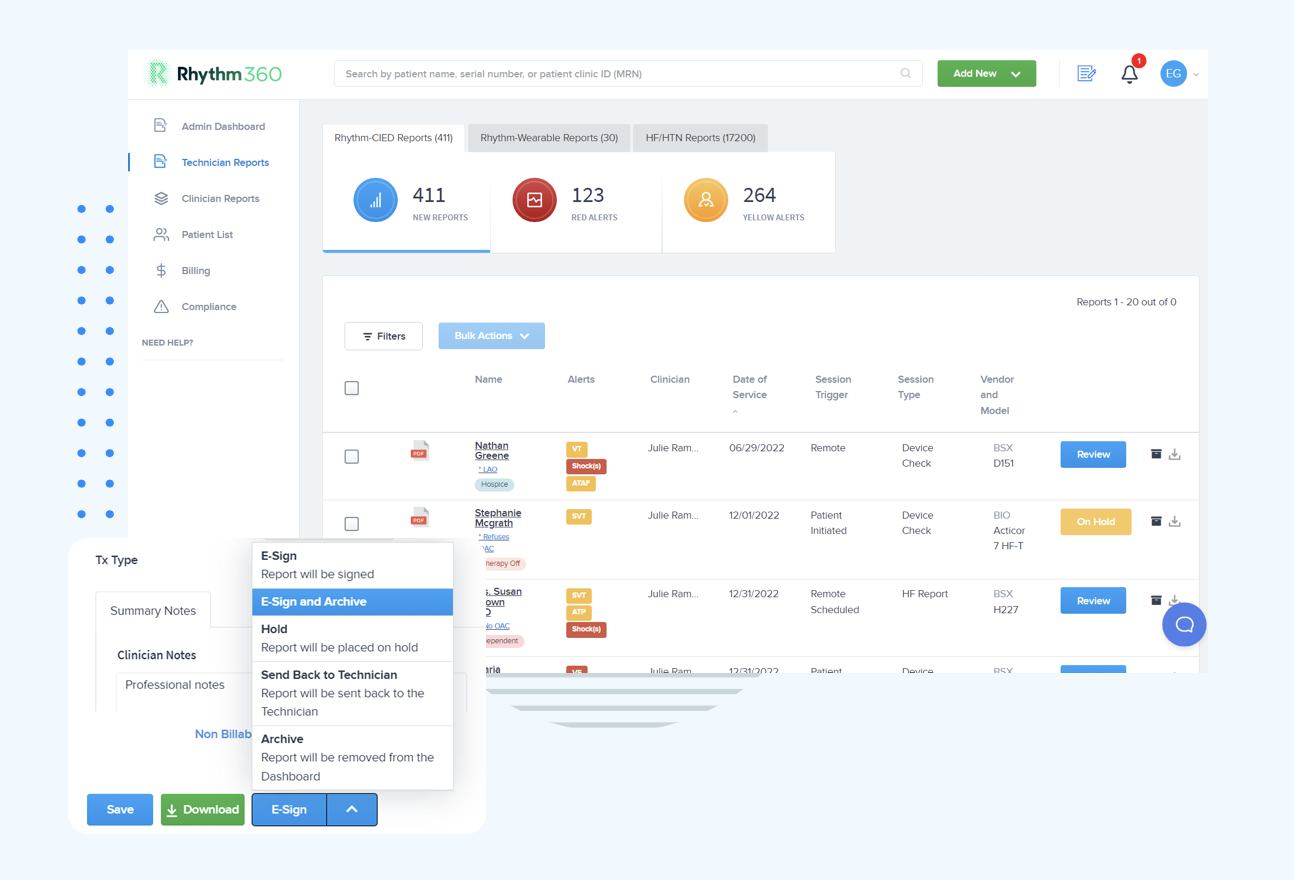
The following comparison shows how modern cloud platforms address the core operational limitations that practices encounter with legacy on-premise systems.
| Feature | Paceart Optima | Modern Cloud Platforms |
|---|---|---|
| Data Transmissibility | Variable, dependent on OEM connectivity | High with redundant data feeds |
| Multi-Vendor Support | Limited third-party integrations | Vendor-neutral with all major manufacturers |
| Alert Management | Basic notification system | AI-powered triage and prioritization |
| Mobile Access | Desktop-only interface | HIPAA-compliant mobile applications |
| Billing Integration | Manual CPT code documentation | Automated capture and compliance tracking |
| System Maintenance | On-premise IT management required | Fully managed cloud infrastructure |
The comparison demonstrates clear operational advantages of modern cloud platforms, particularly in data reliability, workflow automation, and revenue performance. Practices that manage multiple device manufacturers benefit from vendor-neutral platforms that eliminate data silos and reduce administrative overhead.
EHR integration for modern cloud platforms using tools like Redox typically requires 4–6 weeks, depending on the complexity of existing workflows and customization requirements. The process usually includes HL7 interface configuration, patient demographic synchronization, and clinical report delivery setup. Most platforms provide dedicated implementation support to help teams achieve integration with Epic, Cerner, Athenahealth, and other major EHR systems without disrupting daily operations.
Platform migration must maintain HIPAA compliance throughout the transition, including secure data transfer protocols, audit trail preservation, and patient consent documentation. Modern cloud platforms typically provide enhanced compliance features such as automated backup procedures, encryption at rest and in transit, and comprehensive audit logging that exceeds requirements for many legacy on-premise systems. Business Associate Agreements (BAAs) must be established with new vendors before data migration begins.
Vendor-neutral cloud platforms allow practices to preserve all existing device manufacturer relationships while eliminating the need to access multiple separate portals. Practices continue receiving data from Medtronic CareLink, Boston Scientific LATITUDE, Abbott Merlin.net, and Biotronik Home Monitoring networks through unified platform interfaces. This approach reduces administrative burden while maintaining comprehensive device coverage and manufacturer-specific clinical protocols.
Evaluating cardiac data management platforms requires careful review of device compatibility, EHR integration capabilities, workflow efficiency, and long-term scalability. Paceart Optima continues serving existing installations after the PaceMate acquisition, but practices increasingly require advanced features such as AI-powered alert management, automated billing compliance, and vendor-neutral device support.
Modern cloud platforms address the fundamental limitations of legacy on-premise systems and provide enhanced data reliability, mobile accessibility, and revenue-focused automation. The transition from Paceart to comprehensive cloud solutions gives practices a chance to streamline operations, improve patient care, and capture previously missed revenue through automated workflow management.
Schedule a demo to explore how Rhythm360’s vendor-neutral platform can transform your cardiac data management while maintaining full compatibility with your existing device ecosystem and EHR infrastructure.





